North Macedonia · Europe
Ohrid
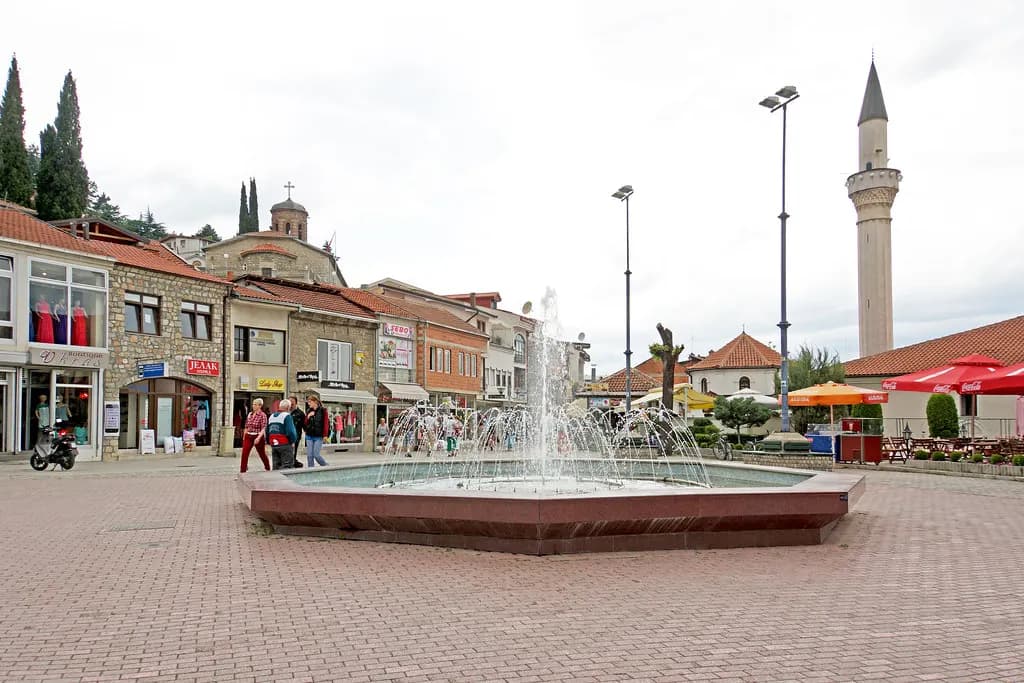
Lake Ohrid is one of the oldest lakes on Earth, roughly 2 million years old and home to species found nowhere else — and the small town on its shore has more historic churches than almost anywhere its size, one of them built directly into a cliff above the water.
Lake Ohrid ranks among the oldest lakes on Earth, an estimated 2 to 3 million years old, and its age has allowed genuinely unique species to evolve within its waters that exist nowhere else on the planet — a level of biological significance rare enough that UNESCO lists the lake alongside the town of Ohrid on its shore as a single combined natural and cultural World Heritage Site.
The town itself packs an unusual density of historic churches into a small footprint — locals sometimes describe Ohrid as having once had 365 churches, one for each day of the year, a claim more legend than precise fact but reflective of the town's real depth as a center of Byzantine Christianity and, before that, one of the oldest Slavic literary and educational centers in Europe.
The Church of St. John at Kaneo is Ohrid's most photographed landmark: a small 13th-century Orthodox church perched directly on a cliff edge above the lake, its modest stone exterior framed by water and sky in a way that's become the defining image of the town, regardless of whether visitors manage to see the equally modest interior.
Samuel's Fortress, a medieval hilltop fortification named for a 10th-century Bulgarian tsar who briefly made Ohrid his capital, overlooks the old town and lake from above, its walls giving a full panoramic view that ties together the water, the red rooftops, and the churches scattered across the hillside below.
Ohrid remains a genuinely under-the-radar destination for most Western European travelers despite its UNESCO status and biological significance, offering lake-town scenery, deep Byzantine history, and swimmable water at prices well below comparable lake destinations further west in Europe.
What a trip here actually costs
$30 / day avg.
- Guesthouse near the old town
- Local bus fares
- Casual Macedonian lakeside lunches
- Free wander through the old town and churches
What to do at this tier
- • Church of St. John at Kaneo, perched on a cliff above the lake, free to view from outside
- • Old town wander, including dozens of Byzantine-era churches, free
- • Ohrid's pebble beaches along the lakefront, free
$70 / day avg.
- 3-star hotel with lake views
- Samuel's Fortress entry
- Sit-down lake fish dinners
- Boat trip on Lake Ohrid
What to do at this tier
- • Samuel's Fortress, a hilltop medieval fortress overlooking the town and lake
- • Boat trip across Lake Ohrid, including views of the lakeside monasteries
- • Sit-down dinner featuring Ohrid trout, a local specialty found only in this lake
These are average estimates for planning purposes, not real-time prices — actual costs vary by season, availability, and how far ahead you book.
How to get there
Click anywhere on the world map — any airport works, not just our main hubs.
Click anywhere on the map above — any airport in the world works — to see estimated travel time and cost from there.
Times and prices are planning estimates, not live fares — always check a booking site before you commit. See the full Transport Comparison guide for the general tradeoffs of each mode.
Best time to visit
May-September brings the mildest weather and the only realistic window for swimming in the lake.
Safety notes
Very safe overall. Standard urban caution is enough almost everywhere in the town.
Visa & currency
Macedonian denar (MKD), not the euro. North Macedonia is not in the EU or Schengen area; most Western passport holders can enter visa-free for stays up to 90 days, though it's worth confirming current requirements for your specific nationality before flying.
Questions people ask before visiting
Is Ohrid worth visiting?
Yes — the combination of one of the world's oldest and most biodiverse lakes with a small, UNESCO-listed old town dense with historic churches and a hilltop fortress makes Ohrid one of the more distinctive lake towns in Europe, and it remains genuinely uncrowded outside the Balkan summer season.
How old is Lake Ohrid?
Roughly 2 to 3 million years old, making it one of the oldest continuously existing lakes on Earth. Its age and isolation allowed unique species to evolve within it, and UNESCO lists both the lake and the town of Ohrid together as a combined natural and cultural World Heritage Site.
Is the Church of St. John at Kaneo worth visiting?
Yes — it's a small 13th-century Orthodox church perched dramatically on a cliff edge directly above the lake, and while the interior is modest, the setting is one of the most photographed spots in North Macedonia and worth the short walk from the old town regardless of whether it's open.
Is Ohrid cheap to visit?
Yes, one of the more affordable lake and beach destinations in this guide — North Macedonia remains inexpensive across food, transit, and accommodation, even during the busier summer lake season.
How many days do you need in Ohrid?
Two days covers the old town, the Church of St. John at Kaneo, and Samuel's Fortress. A third day allows a boat trip on the lake or a visit to the nearby Bay of Bones archaeological museum, a reconstructed prehistoric pile-dwelling settlement.
Nearby destinations
 Tirana
Tirana
Albania
Albania spent nearly 50 years as one of the most isolated, paranoid dictatorships in Europe, building over 170,000 concrete bunkers for a foreign invasion that never came — and its capital has spent the last two decades literally painting over that history, one building at a time, in bright, deliberate color.
See full guide → Sofia
SofiaSofia
Bulgaria
You can ski a real mountain and be back in the city center for dinner the same day — Vitosha, a 2,290-meter peak, rises directly at Sofia's edge, close enough that it's practically a neighborhood rather than a day trip.
See full guide →Comparing more than one route? See the full transport comparison guide.