Romania · Europe
Bucharest
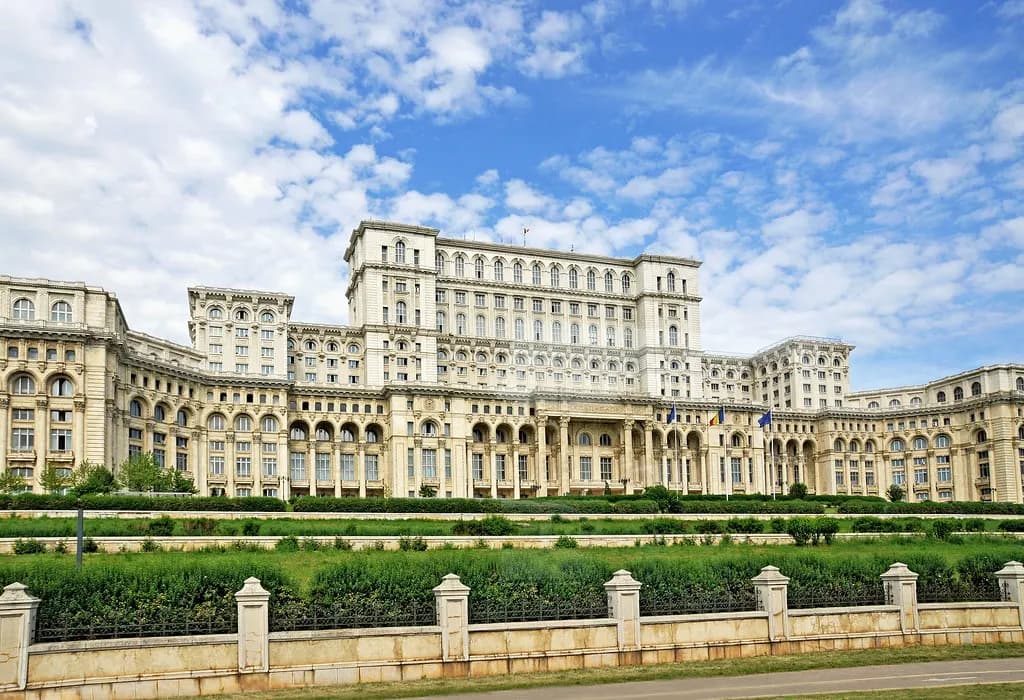
Ceaușescu's Palace of the Parliament is heavier than the Empire State Building and the Great Pyramid of Giza combined, built by a regime that flattened a fifth of historic Bucharest to make room for it.
The Palace of the Parliament is the single fact most visitors arrive already knowing about Bucharest, and it still manages to surprise in person: commissioned by Nicolae Ceaușescu in 1984, it's the second-largest administrative building in the world after the Pentagon, and by some measures the heaviest building on earth, reportedly outweighing the Empire State Building and the Great Pyramid of Giza combined. Building it required demolishing roughly a fifth of historic Bucharest — entire neighborhoods, churches, and monasteries — in a program of urban "systematization" that remains one of the most drastic acts of self-inflicted architectural erasure by any European capital in the 20th century.
That destruction is part of why the city's older nickname, "Little Paris," only partly holds up today. In the late 19th and early 20th centuries, Romania's elite deliberately modeled Bucharest on Paris — wide boulevards, Belle Époque mansions, and its own Arcul de Triumf modeled directly on the original. WWII bombing, a severe 1977 earthquake, and Ceaușescu's demolitions each took a further toll, so the Parisian resemblance today survives in scattered, sometimes crumbling pockets rather than across the whole city — which gives Bucharest an unusual visual tension between grand 19th-century facades and blunt Communist-era apartment blocks, often on the same street.
The Old Town, known as Lipscani, has been substantially restored and now functions as the city's main nightlife and dining district, with a density of bars and restaurants that outpaces its physical size.
Outside the center, the Village Museum gathers dozens of traditional wooden houses, churches, and windmills relocated from across Romania's regions, giving a rural counterpoint — thatched roofs, hand-carved woodwork — to the urban Belle Époque and Communist contrasts downtown.
Bucharest remains one of the more overlooked capitals on a typical Central and Eastern Europe itinerary, priced closer to Warsaw or Riga than to Vienna or Prague, and rewards travelers willing to sit with a city whose architecture tells a genuinely turbulent 20th-century story rather than a tidy, fully restored one.
What a trip here actually costs
$30 / day avg.
- Hostel near Old Town
- Metro day pass
- Cafeteria-style Romanian lunches
- Free wander through the Old Town and Belle Époque boulevards
What to do at this tier
- • Old Town (Lipscani) wander, free, especially good for evening nightlife energy
- • Belle Époque boulevard walk past surviving 19th-century mansions, free
- • Arcul de Triumf exterior, Bucharest's own Arc de Triomphe, free
$75 / day avg.
- 3-star hotel near the center
- Palace of the Parliament guided tour
- Sit-down Romanian dinners
- Village Museum entry
What to do at this tier
- • Palace of the Parliament guided tour, book a day ahead with passport in hand
- • Village Museum (Muzeul Satului), an open-air collection of traditional Romanian rural architecture
- • Romanian Athenaeum, a striking domed concert hall, worth a performance if the schedule lines up
These are average estimates for planning purposes, not real-time prices — actual costs vary by season, availability, and how far ahead you book.
How to get there
Click anywhere on the world map — any airport works, not just our main hubs.
Click anywhere on the map above — any airport in the world works — to see estimated travel time and cost from there.
Times and prices are planning estimates, not live fares — always check a booking site before you commit. See the full Transport Comparison guide for the general tradeoffs of each mode.
Best time to visit
May-June and September-October bring mild, comfortable weather without the heavy heat that summer can bring to inland Romania.
Safety notes
Very safe overall. Standard urban caution is enough almost everywhere in the city.
Visa & currency
Romanian leu (RON), not the euro. Romania is in the EU and the Schengen area; standard 90-day visa-free rule applies for most Western passport holders.
Questions people ask before visiting
Is Bucharest worth visiting?
Yes, and it's genuinely underrated on most European itineraries — the Palace of the Parliament alone is one of the most extraordinary buildings in the world by sheer scale, and the Old Town's Belle Époque architecture, however unevenly preserved, still explains why the city was once nicknamed 'Little Paris.'
Can I tour the Palace of the Parliament?
Yes, guided tours run daily covering a portion of the building's roughly 1,100 rooms — passports are required for entry, and booking ahead (in person the day before or online) is worth doing since access is controlled and group sizes are limited.
Is Bucharest cheap?
Yes, one of the more affordable capitals in Europe, similar to or below Warsaw and Riga — food, transit, and accommodation all run well below Western European norms.
Why was Bucharest called 'Little Paris'?
In the late 19th and early 20th centuries, Romania's elite deliberately modeled Bucharest's architecture and boulevards on Paris, complete with its own Arc de Triumf. Decades of later damage — WWII bombing, a devastating 1977 earthquake, and Ceaușescu's systematic demolition of large swaths of the historic center in the 1980s — mean the resemblance today is partial and scattered rather than citywide, but it's still visible in surviving pockets.
How many days do you need in Bucharest?
Two days covers the Old Town, the Palace of the Parliament, and the main Belle Époque boulevards. A third day allows the Village Museum, an open-air collection of traditional Romanian houses, or a slower look at the city's contrast between grand 19th-century architecture and Communist-era apartment blocks.
Nearby destinations
 Budapest
Budapest
Hungary
Two cities merged into one in 1873 — Buda's hills on one bank, Pest's flat grid on the other — and you can still feel the seam every time you cross the Chain Bridge between them.
See full guide →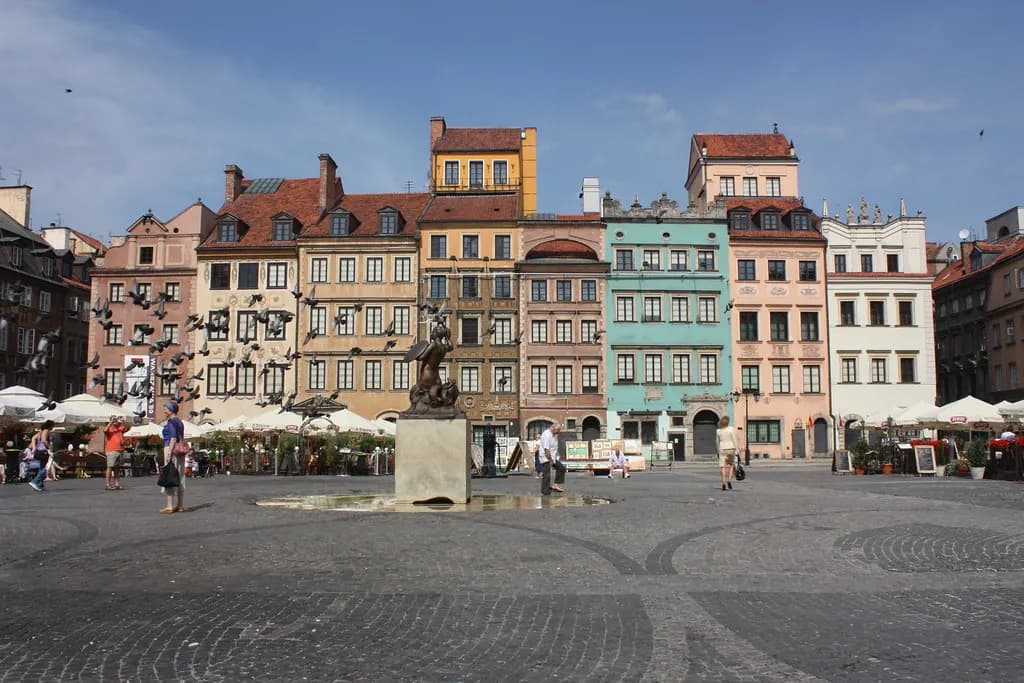 Warsaw
Warsaw
Poland
About 85% of the city was deliberately destroyed after the 1944 Warsaw Uprising, and the Old Town you see today is a meticulous postwar reconstruction, rebuilt from old paintings and photographs — the rebuild itself is what earned it UNESCO status, not original age.
See full guide →Comparing more than one route? See the full transport comparison guide.