Italy · Europe
Bologna
Bologna has been home to the oldest continuously operating university in the world since 1088 — older than Oxford, older than most of the cathedrals travelers cross Europe to see.
Bologna is home to the University of Bologna, founded in 1088 and widely recognized as the oldest continuously operating university in the world — older than Oxford, older than the Sorbonne, and old enough that its Archiginnasio building, including a 17th-century anatomical theater once used for public dissections, now functions as a genuinely striking historical site in its own right rather than an active campus building.
That university has shaped the city's character for nearly a millennium, giving Bologna a lively, youthful energy that's noticeably different from the more purely tourist-driven atmosphere of Florence or Venice. Students still make up a significant share of the population, and the city's bars and trattorias reflect that lived-in, local rhythm.
Bologna has the strongest claim of any Italian city to being the country's actual food capital. Tagliatelle al ragù — the real, considerably more restrained version of what gets marketed internationally as "spaghetti bolognese" — tortellini, mortadella, and Parmigiano-Reggiano all trace their origins to Bologna and the surrounding Emilia-Romagna region, and the city's food markets, particularly the dense cluster of shops in the Quadrilatero district, are treated with a level of seriousness that goes well beyond typical tourist dining.
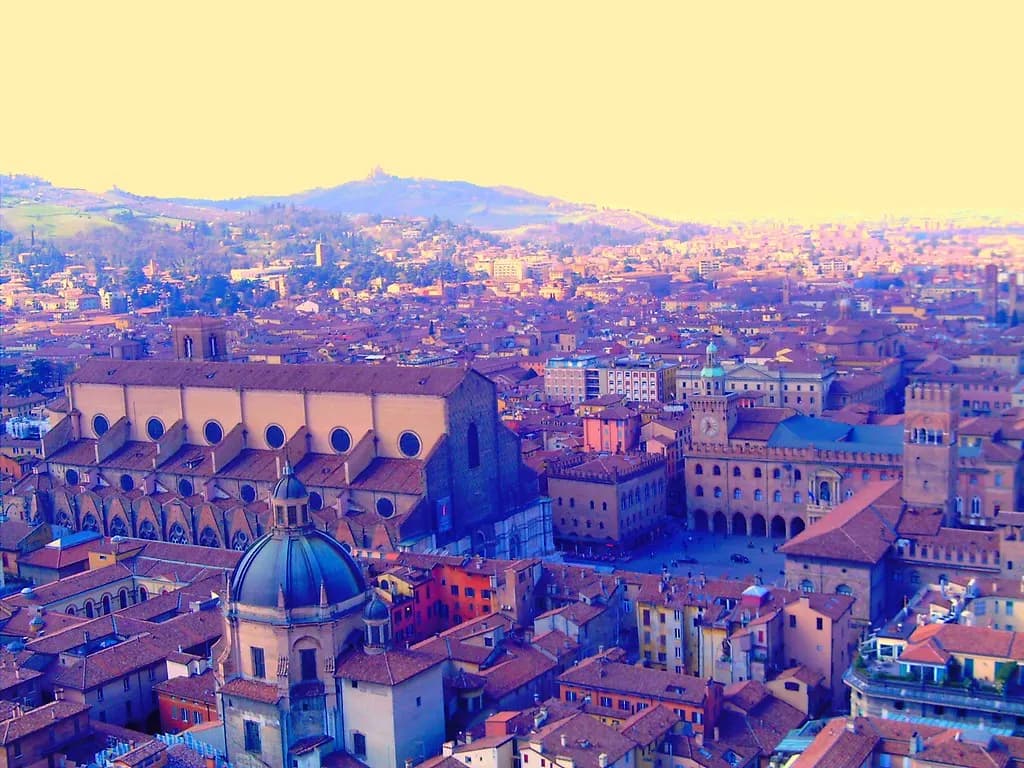
Nearly 40 kilometers of covered medieval porticoes — arcaded walkways running along building facades throughout the historic center — make Bologna one of the most genuinely walkable cities in Italy regardless of weather, a practical medieval solution to rain and sun that still functions exactly as intended today. UNESCO recognized the porticoes collectively as a World Heritage Site in 2021.
Bologna's two medieval leaning towers, Asinelli and Garisenda, once stood among dozens built by competing noble families as status symbols — the taller Asinelli Tower remains climbable, giving a panoramic view over the terracotta rooftops that earned Bologna its other nickname, "La Rossa," the red city.
What a trip here actually costs
$45 / day avg.
- Hostel near the university district
- Bus day pass
- Market lunches at the Quadrilatero food market
- Free wander beneath the porticoes and Piazza Maggiore
What to do at this tier
- • Walk the medieval porticoes, nearly 40 kilometers of covered walkways, free
- • Piazza Maggiore and the Basilica of San Petronio exterior, free
- • Quadrilatero food market wander, browsing is free
$105 / day avg.
- 3-star hotel near the historic center
- Asinelli Tower climb
- Sit-down tagliatelle al ragù dinner
- Guided food market tour
What to do at this tier
- • Asinelli Tower climb, the taller of Bologna's two leaning medieval towers, for a panoramic view
- • University of Bologna's historic Archiginnasio, including its anatomical theater, founded in 1088
- • Sit-down dinner featuring tagliatelle al ragù, the real dish behind the internationally simplified version
$230 / day avg.
- 4-5 star hotel near Piazza Maggiore
- Private guided food and history tour
- Multi-course Emilia-Romagna tasting menu
- Private day trip to a Parmigiano-Reggiano or balsamic vinegar producer
What to do at this tier
- • Private guided food and history tour connecting the university's founding to Bologna's culinary reputation
- • Private day trip to Parma or Modena for Parmigiano-Reggiano or balsamic vinegar production
- • Multi-course Emilia-Romagna tasting menu at a well-regarded Bologna restaurant
These are average estimates for planning purposes, not real-time prices — actual costs vary by season, availability, and how far ahead you book.
How to get there
Click anywhere on the world map — any airport works, not just our main hubs.
Click anywhere on the map above — any airport in the world works — to see estimated travel time and cost from there.
Times and prices are planning estimates, not live fares — always check a booking site before you commit. See the full Transport Comparison guide for the general tradeoffs of each mode.
Best time to visit
April-June and September-October bring mild, comfortable weather; the porticoes make Bologna genuinely walkable even in rain, a real practical advantage over other Italian cities.
Safety notes
Very safe overall. Standard urban caution is enough almost everywhere in the city.
Visa & currency
Euro. Standard Schengen 90-day visa-free rule applies for most Western passport holders.
Questions people ask before visiting
Is Bologna worth visiting?
Yes, and it's genuinely underrated relative to Florence, Rome, or Venice — it's widely considered Italy's food capital, has the oldest continuously operating university in the world, and holds nearly 40 kilometers of covered medieval porticoes that make it one of the most walkable cities in Italy regardless of weather.
Is Bologna really Italy's food capital?
It's the strongest claimant, at least — tagliatelle al ragù (the real version of what's marketed abroad as spaghetti bolognese), tortellini, mortadella, and Parmigiano-Reggiano all trace to Bologna and the surrounding Emilia-Romagna region, and the city's food markets and trattorias are considered among the most serious in Italy.
Bologna or Florence — which should I prioritize?
Florence has more world-famous individual sights — the Uffizi, the Duomo, Michelangelo's David. Bologna offers a more genuinely local, less tourist-saturated experience with arguably better everyday food, plus the university city's lively, youthful energy. The two are under 40 minutes apart by high-speed train, making it easy to visit both.
Is Bologna cheap to visit?
Moderate — noticeably more affordable than Florence, Venice, or Rome, while still delivering serious historic architecture and, by most measures, better everyday food value.
How many days do you need in Bologna?
Two days covers the porticoes, the two towers, and a proper food market visit. A third day allows a food-focused day trip into the Emilia-Romagna countryside, including Parmigiano-Reggiano or balsamic vinegar producers.
Nearby destinations
 Florence
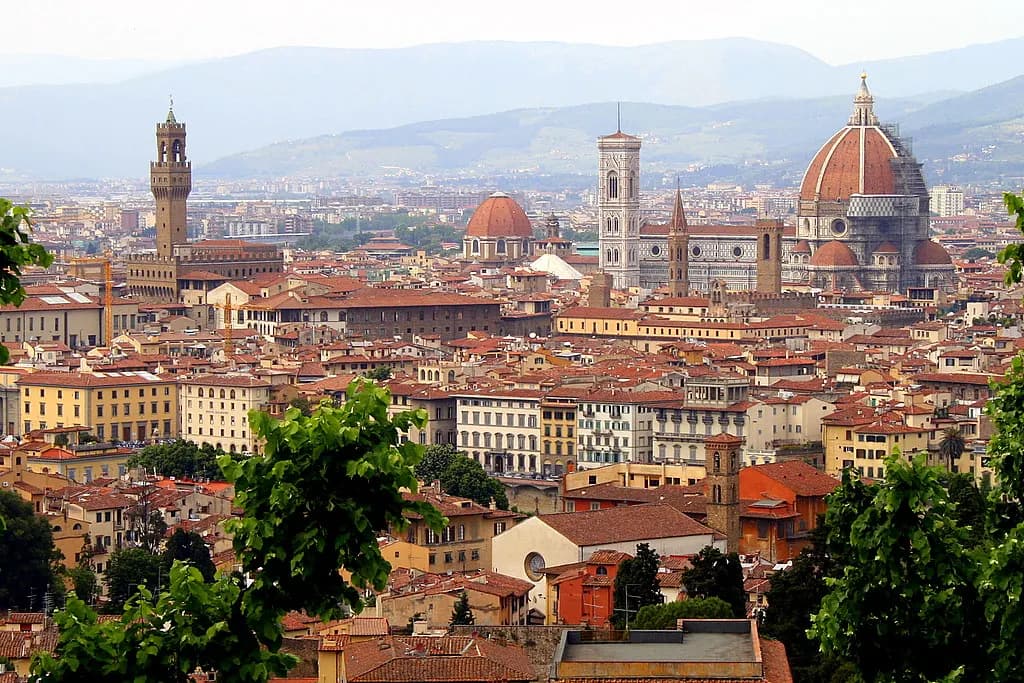
Florence
Italy
The entire historic center fits inside a walk you could do in under an hour, which is exactly why it gets so crowded — everyone's aiming for the same few blocks.
See full guide →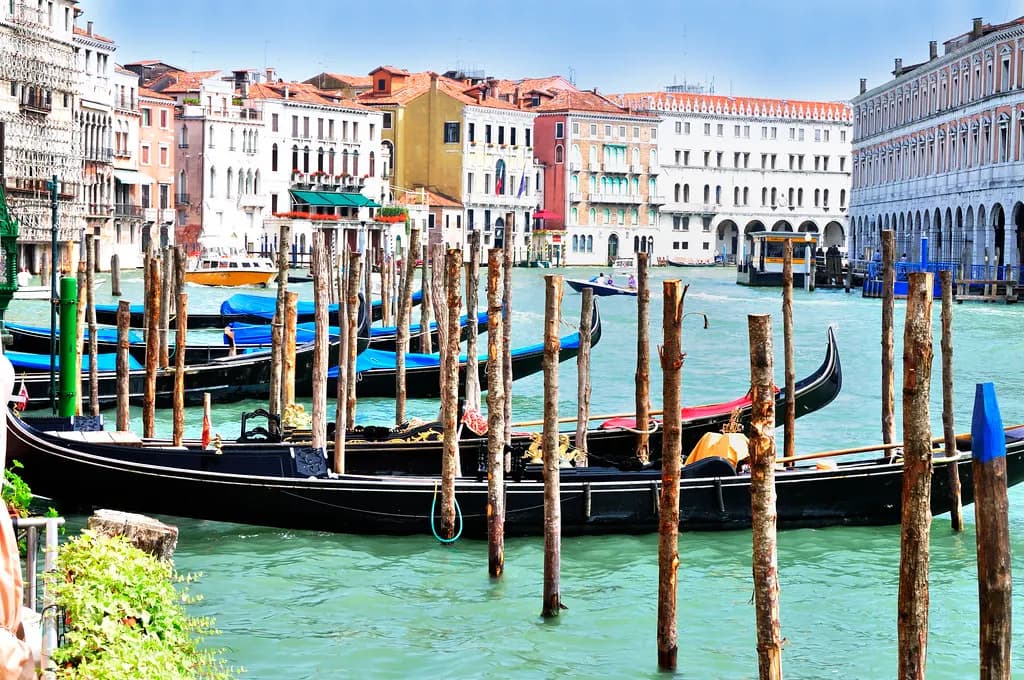 Venice
Venice
Italy
There are no cars here, not because of a pedestrian-zone policy but because the city is built across more than a hundred small islands — a boat is the only way to move anything heavier than a suitcase.
See full guide →Comparing more than one route? See the full transport comparison guide.