Indonesia · Asia
Yogyakarta
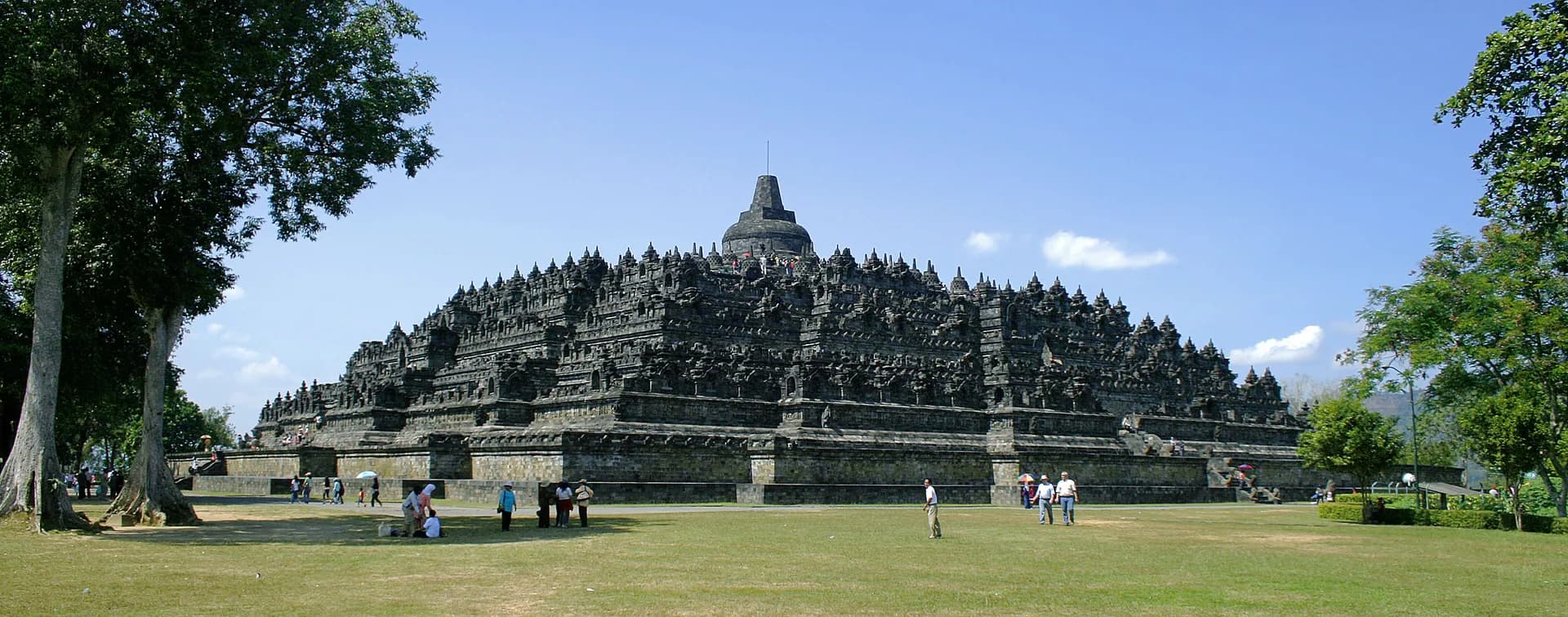
Borobudur, the largest Buddhist temple in the world, sat buried under volcanic ash and jungle growth for centuries after being abandoned, and it took a British colonial administrator's 1814 rediscovery to bring a 9th-century monument holding 2,672 relief panels and 504 Buddha statues back into view.
Borobudur, the largest Buddhist temple in the world, was built in the 9th century under the Sailendra dynasty, its structure holding 2,672 relief panels and 504 Buddha statues arranged across nine stacked platforms that together represent the Buddhist cosmology of desire, form, and formlessness. Sometime around the 14th century, a combination of volcanic activity from nearby Mount Merapi and a shift in political power toward eastern Java led to its abandonment, and the temple gradually disappeared beneath jungle growth and volcanic ash for centuries.
British colonial administrator Thomas Stamford Raffles, serving as Lieutenant Governor of Java, arranged for Borobudur's rediscovery in 1814 after hearing local accounts of a buried monument, prompting a clearing effort that revealed the temple's full scale for the first time in centuries. That rediscovery story remains almost as central to Borobudur's identity today as the temple's religious and artistic significance.
Sunrise visits have become the standard way to experience Borobudur, with early arrivals rewarded by soft morning light across the temple's stone reliefs and, on clear days, views of Mount Merapi's silhouette in the distance. The climb through each platform, moving from detailed narrative relief carvings on the lower levels to simpler, more abstract stupas near the summit, mirrors the spiritual journey the temple was designed to represent.
Prambanan, a 9th-century Hindu temple complex a short drive from Borobudur, holds the tallest Hindu temple structure in Indonesia, dedicated to the Trimurti of Shiva, Vishnu, and Brahma. Its soaring, intricately carved spires offer a striking contrast to Borobudur's massive, layered horizontal design, and most visitors combine both temples into the same trip given their proximity.
Yogyakarta itself remains a functioning sultanate, its royal palace, the Kraton, still home to the current sultan, who also serves as the region's governor, a rare surviving arrangement in modern Indonesia. That living royal tradition, combined with the city's status as a center for traditional Javanese arts like batik and gamelan music, gives Yogyakarta a cultural depth well beyond its two famous nearby temples.
What a trip here actually costs
$30 / day avg.
- Guesthouse in central Yogyakarta
- Local transport by becak or scooter rental
- Local Javanese restaurant meals
- Borobudur entry, moderate fee for foreign visitors
What to do at this tier
- • Borobudur temple visit, moderate entry fee for foreign visitors
- • Kraton (Sultan's Palace) of Yogyakarta, low entry fee
- • Malioboro Street market, free to browse
$75 / day avg.
- 3-star hotel
- Borobudur sunrise tour with a guide
- Prambanan entry and guided tour
- Sit-down restaurant dinners
What to do at this tier
- • Borobudur sunrise guided tour
- • Prambanan temple complex guided tour
- • Traditional batik-making workshop
These are average estimates for planning purposes, not real-time prices — actual costs vary by season, availability, and how far ahead you book.
How to get there
Click anywhere on the world map — any airport works, not just our main hubs.
Click anywhere on the map above — any airport in the world works — to see estimated travel time and cost from there.
Times and prices are planning estimates, not live fares — always check a booking site before you commit. See the full Transport Comparison guide for the general tradeoffs of each mode.
Best time to visit
May-September is the dry season and the most comfortable for temple visits; the wet season runs roughly October-April with heavier, though not constant, rain.
Safety notes
Generally safe with standard precautions; Mount Merapi remains an active volcano, so check current alert levels if planning to visit its slopes.
Visa & currency
Indonesian rupiah (IDR). Many nationalities can get a visa on arrival for around 30 days, extendable, or qualify for visa-free entry depending on passport.
Questions people ask before visiting
Is Borobudur worth visiting?
Yes — Borobudur is the largest Buddhist temple in the world, a 9th-century UNESCO World Heritage Site holding 2,672 relief panels and 504 Buddha statues arranged across nine stacked platforms, and sunrise visits offer some of the most striking temple views in Southeast Asia.
Why was Borobudur abandoned?
Historians believe a combination of volcanic eruptions from nearby Mount Merapi and a shift in political and religious power toward eastern Java led to Borobudur's abandonment sometime around the 14th century, after which jungle growth and volcanic ash gradually buried it until British administrator Thomas Stamford Raffles arranged its rediscovery in 1814.
What is Prambanan?
A 9th-century Hindu temple complex near Yogyakarta, dedicated to Shiva, Vishnu, and Brahma, and considered the tallest Hindu temple in Indonesia. It sits close enough to Borobudur that most visitors combine both temples into a single trip.
How many days do you need in Yogyakarta?
Three to four days covers Borobudur, Prambanan, and the city's own sultan's palace and surrounding old town at a comfortable pace, with an early sunrise start recommended for Borobudur.
Nearby destinations
 Ubud
UbudUbud
Indonesia
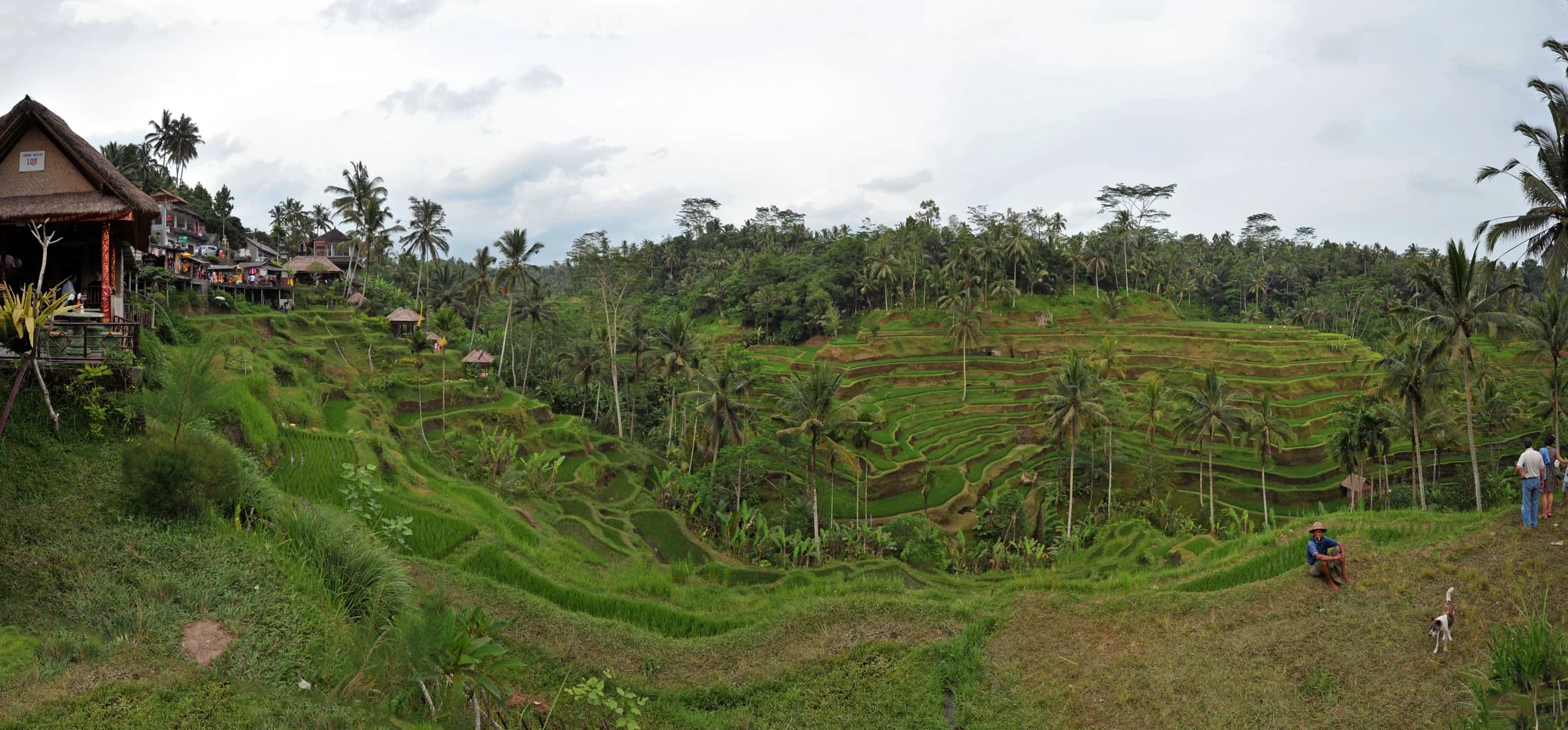
Bali is a Hindu-majority island sitting inside the world's largest Muslim-majority country, and Ubud, its cultural heart, is estimated to hold somewhere around 20,000 temples across the wider island — a genuinely distinct religious and artistic identity that no amount of post-Eat Pray Love tourism growth has managed to flatten.
See full guide →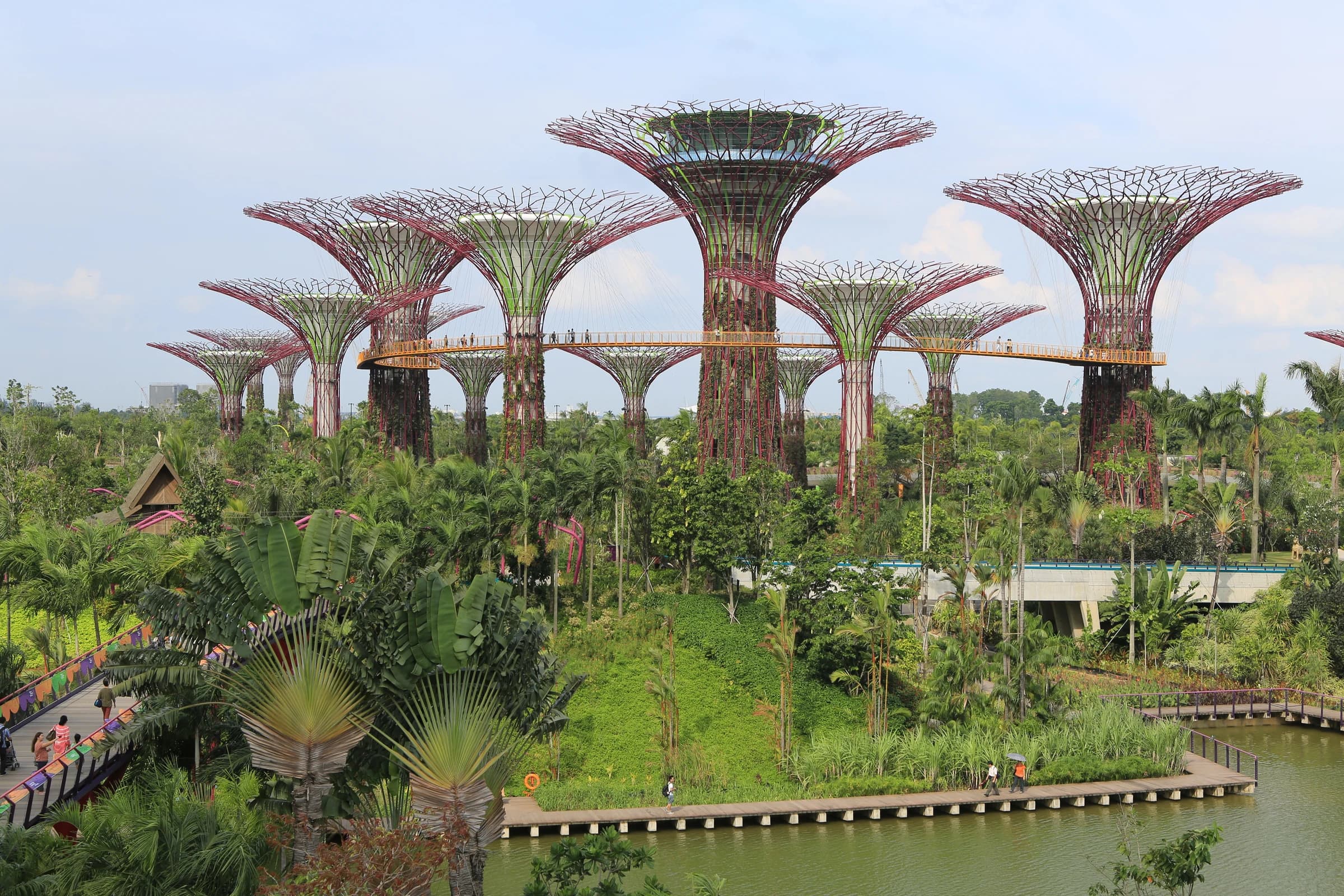 Singapore
Singapore
Singapore
Singapore is one of only three sovereign city-states left in the world, alongside Monaco and Vatican City, and it runs on rules strict enough to earn the nickname "fine city" — while its hawker centers, affordable multicultural food courts serving Malay, Chinese, and Indian cuisine side by side, hold UNESCO cultural heritage status.
See full guide →Comparing more than one route? See the full transport comparison guide.