Indonesia · Asia
Ubud
Bali is a Hindu-majority island sitting inside the world's largest Muslim-majority country, and Ubud, its cultural heart, is estimated to hold somewhere around 20,000 temples across the wider island — a genuinely distinct religious and artistic identity that no amount of post-Eat Pray Love tourism growth has managed to flatten.
Bali sits inside Indonesia, the world's largest Muslim-majority country, as a genuine outlier: a Hindu-majority island where temples, ceremonies, and daily offerings shape the rhythm of local life in a way found almost nowhere else in the archipelago. Hinduism took root here centuries ago as Islam spread across the rest of Indonesia, and Bali's relative geographic separation, along with waves of Hindu-Javanese migration as the Majapahit Empire declined, let it hold onto a distinct religious identity that persists today.
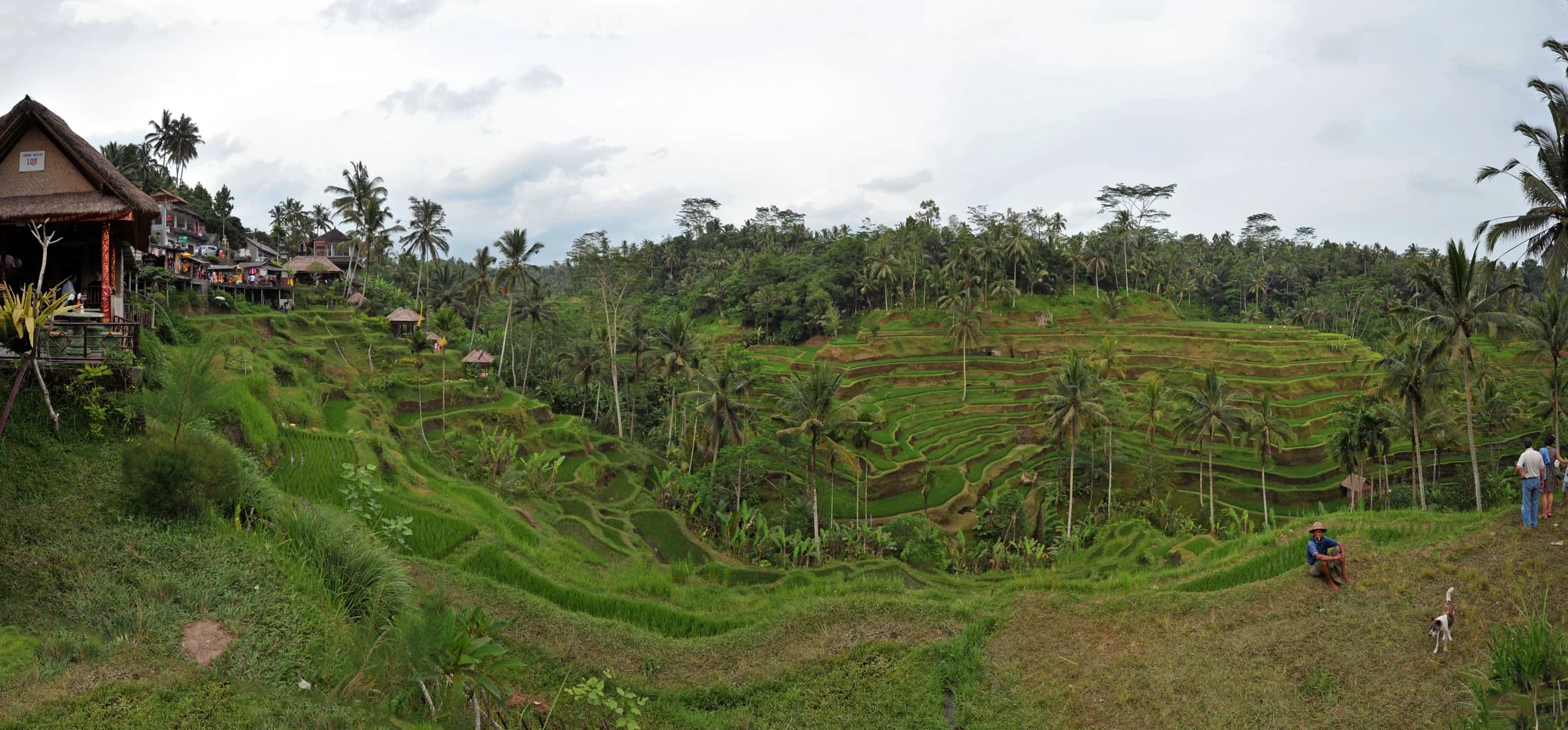
Ubud sits at the cultural center of that identity, surrounded by the kind of terraced rice paddies that appear on nearly every Bali postcard, most famously at Tegalalang, where centuries-old subak irrigation systems, themselves recognized as UNESCO World Heritage, still manage water flow across the hillside fields. Walking the narrow paths between the terraces, with farmers still working some of the plots, gives a much more direct sense of Bali's agricultural backbone than any photo from the main viewpoints.
The town's Sacred Monkey Forest Sanctuary combines a nature reserve, three Hindu temples dating to the 14th century, and several hundred free-roaming long-tailed macaques within a single forest complex, a distinctly Balinese overlap of wildlife and religious space that treats the two as connected rather than separate concerns.
Ubud's modern reputation as a wellness destination owes a lot to "Eat Pray Love," the 2006 memoir and its 2010 film adaptation, both of which sent a large wave of Western visitors specifically seeking yoga retreats, healers, and the kind of personal-transformation narrative the book built around the town. That tourism boom reshaped parts of the local economy considerably, though it layered on top of temple traditions and rice-farming practices that were already centuries old by the time the book existed.
Traditional dance performances, particularly the Legong and the fire-lit Kecak, run most evenings in Ubud, drawing on stories from the Ramayana and older Balinese mythology, performed by dancers trained from childhood in movements passed down through generations. Between the dance, the temples, and the terraces, Ubud offers a version of Bali built around slow observation rather than the beach-club pace found on the island's southern coast.
What a trip here actually costs
$30 / day avg.
- Guesthouse or homestay
- Scooter rental
- Warung (local restaurant) meals
- Sacred Monkey Forest and most temples, low entry fee
What to do at this tier
- • Sacred Monkey Forest Sanctuary, low entry fee
- • Tegalalang Rice Terrace walk, low or no entry fee
- • Ubud Traditional Art Market, free to browse
$85 / day avg.
- 3-star boutique hotel with pool
- Tegalalang Rice Terrace guided tour
- Balinese cooking class
- Traditional dance performance ticket
What to do at this tier
- • Balinese cooking class with a local market visit
- • Traditional Legong or Kecak dance performance
- • Guided cycling tour through rice paddies and villages
$280 / day avg.
- Private pool villa
- Private guided day covering temples and rice terraces
- Multi-day yoga and wellness retreat package
- Fine dining tasting menu
What to do at this tier
- • Private pool villa with rice terrace views
- • Multi-day wellness and yoga retreat
- • Private guided day covering Tirta Empul water temple and lesser-visited villages
These are average estimates for planning purposes, not real-time prices — actual costs vary by season, availability, and how far ahead you book.
How to get there
Click anywhere on the world map — any airport works, not just our main hubs.
Click anywhere on the map above — any airport in the world works — to see estimated travel time and cost from there.
Times and prices are planning estimates, not live fares — always check a booking site before you commit. See the full Transport Comparison guide for the general tradeoffs of each mode.
Best time to visit
April-October is the dry season and the most reliable for outdoor rice terrace and temple visits; November-March brings heavier, though not constant, rain.
Safety notes
Generally safe with standard precautions; scooter accidents are the most common serious risk for visitors, so wear a helmet and drive cautiously.
Visa & currency
Indonesian rupiah (IDR). Many nationalities can get a visa on arrival for around 30 days, extendable, or qualify for visa-free entry depending on passport.
Questions people ask before visiting
Is Ubud worth visiting?
Yes — Ubud is Bali's cultural and arts center, surrounded by terraced rice paddies like Tegalalang, home to the Sacred Monkey Forest Sanctuary, and dense with the temples and traditional dance performances that define Balinese Hindu culture, distinct from the beach-club scene found on Bali's coast.
Why is Bali Hindu when Indonesia is mostly Muslim?
Bali retained Hinduism as Islam spread across the rest of the Indonesian archipelago from the 13th century onward, partly due to the island's geography and the migration of Hindu-Javanese nobility there as the Majapahit Empire declined. Today it remains Indonesia's only Hindu-majority province.
How many days should you spend in Ubud?
Three to four days covers the main rice terraces, temples, and the Monkey Forest at a relaxed pace, with time for a cooking class or yoga session. Many visitors combine it with several days on Bali's southern coast for beaches.
Did Eat Pray Love change Ubud?
Significantly — the 2006 book and 2010 film brought a large wave of Western visitors specifically seeking the wellness-retreat version of Ubud, and the town's yoga studio and healer economy grew substantially in response, though its temple culture and rice-farming traditions predate that by centuries.
Nearby destinations
 Singapore
Singapore
Singapore
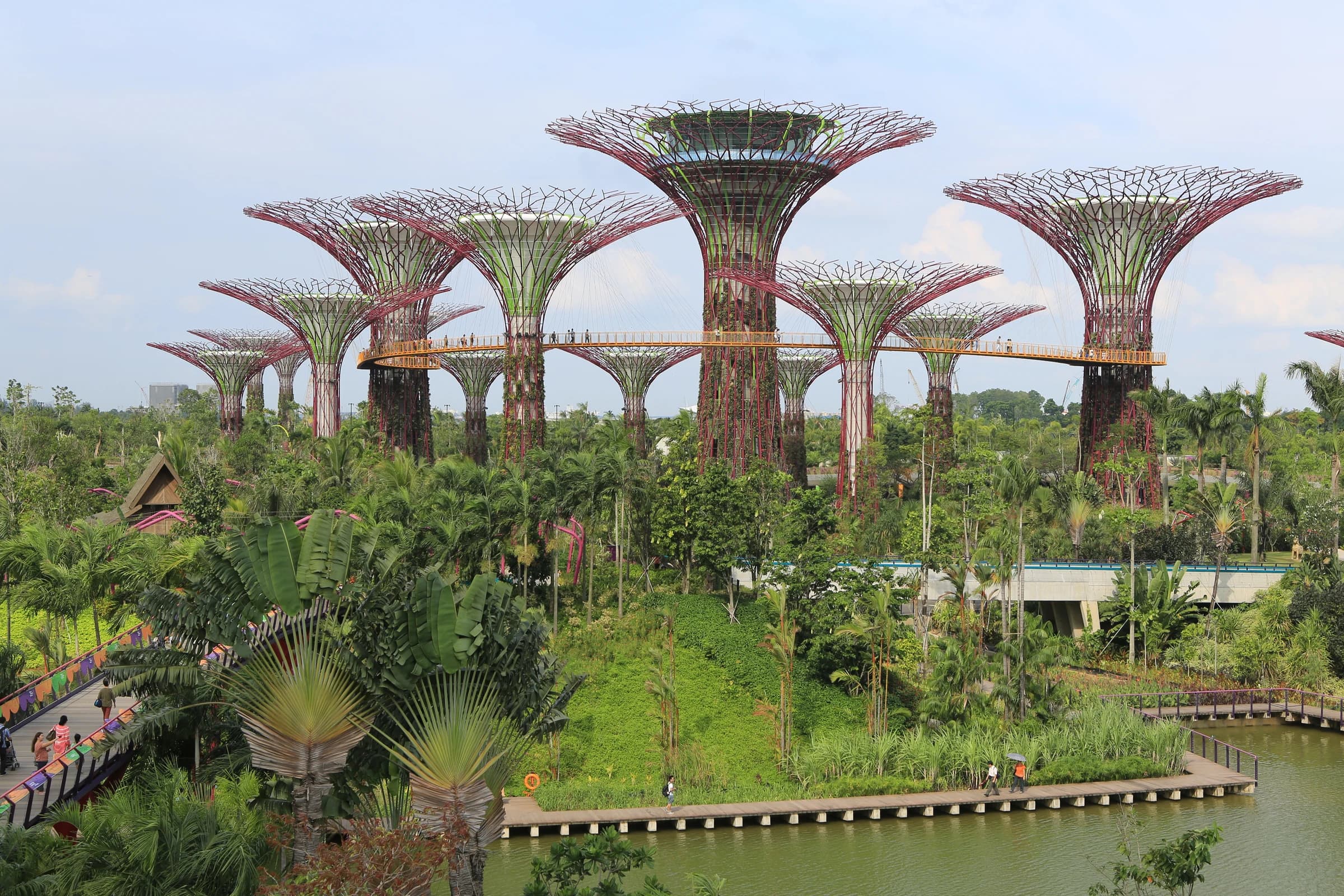
Singapore is one of only three sovereign city-states left in the world, alongside Monaco and Vatican City, and it runs on rules strict enough to earn the nickname "fine city" — while its hawker centers, affordable multicultural food courts serving Malay, Chinese, and Indian cuisine side by side, hold UNESCO cultural heritage status.
See full guide →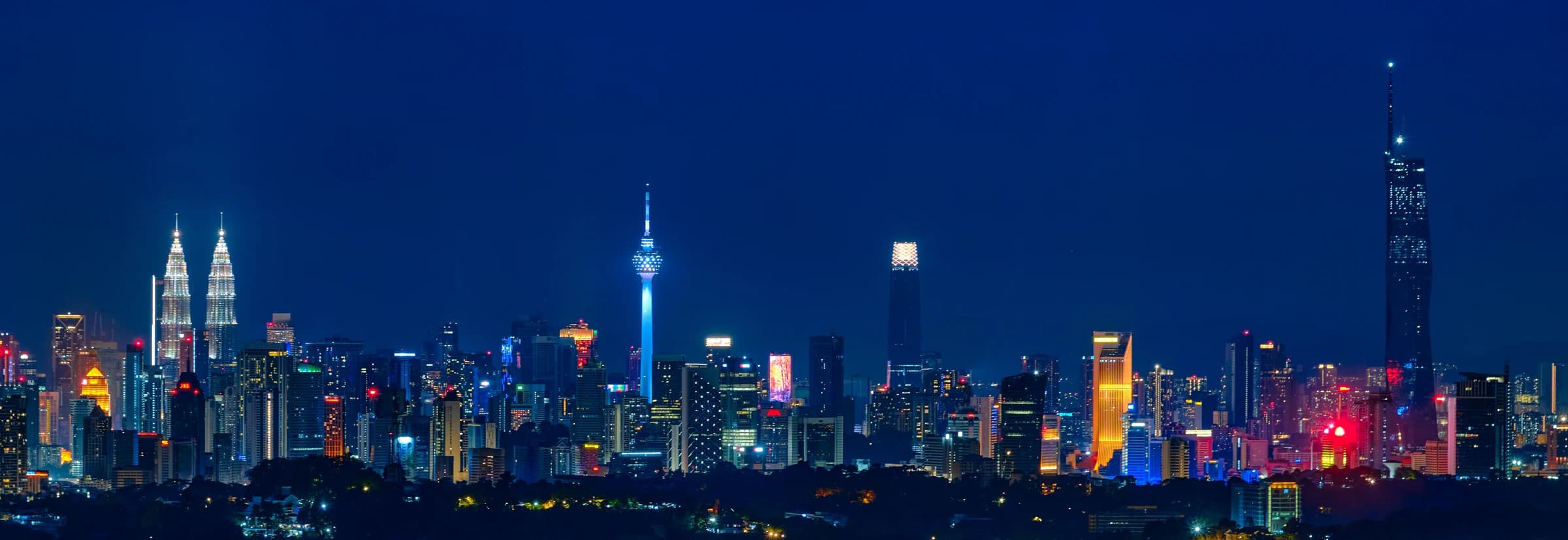 Kuala Lumpur
Kuala Lumpur
Malaysia
The Petronas Twin Towers held the title of world's tallest building until 2004 and remain the tallest twin towers on Earth today, rising over a city where Malay, Chinese, and Indian communities have shaped the same streets for generations — visible in Batu Caves' 42.7-meter golden statue, Chinatown's temples, and Little India's markets, all a short ride apart.
See full guide →Comparing more than one route? See the full transport comparison guide.