Armenia · Asia
Yerevan
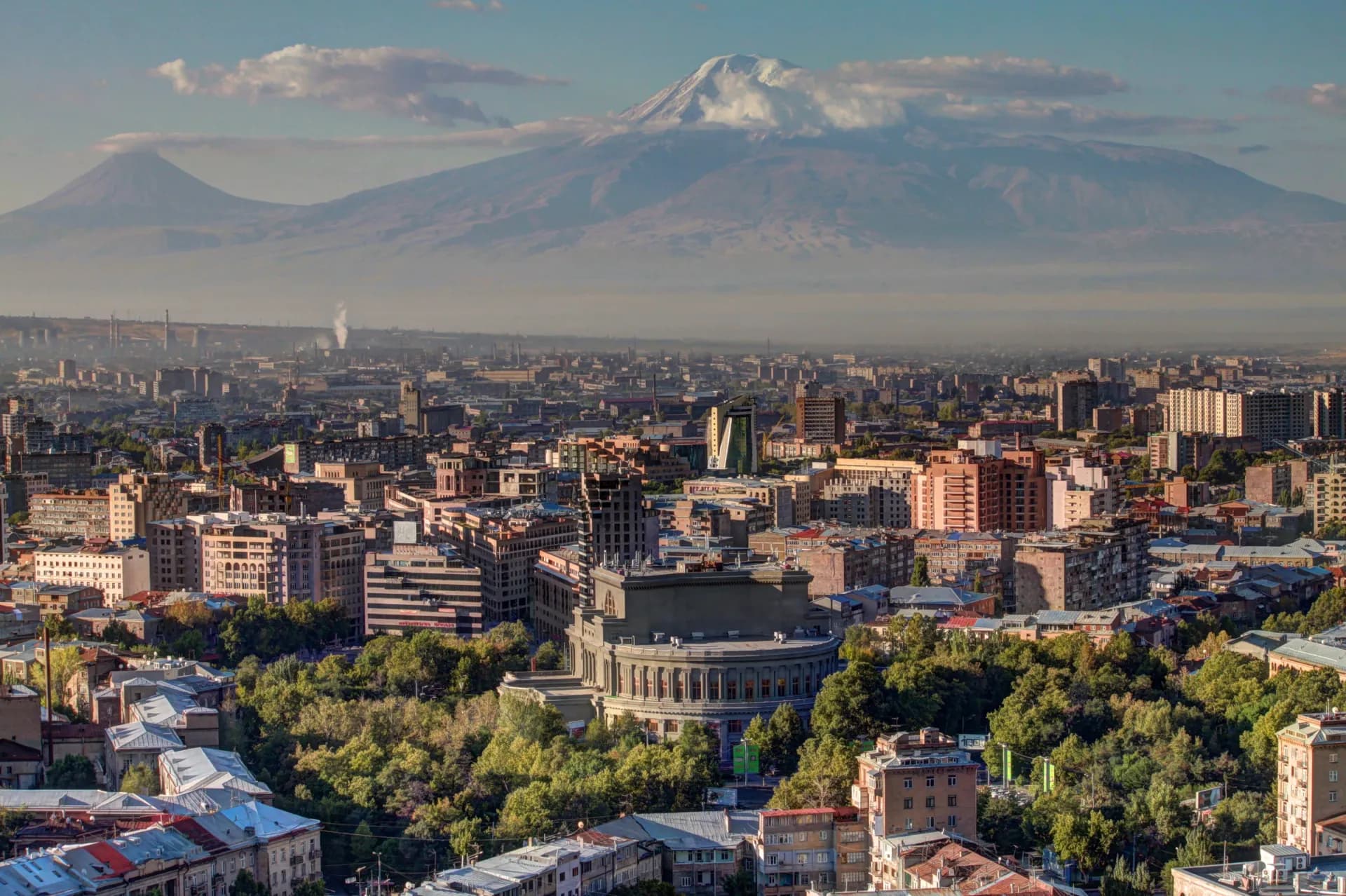
On a clear day, Yerevan looks directly across the border into a mountain it doesn't actually own — Mount Ararat, the biblical resting place of Noah's Ark and Armenia's most recognizable national symbol, sits entirely inside Turkish territory, yet it appears on the Armenian coat of arms anyway, a quiet daily reminder of a border drawn without much regard for what the view means to the people who live beside it.
Mount Ararat, Armenia's most recognizable national symbol and, according to Armenian and biblical tradition, the resting place of Noah's Ark, sits entirely within Turkish territory today, a result of border changes in the early 20th century. Despite that, the mountain still appears prominently on Armenia's coat of arms, and on clear days it remains visible directly from Yerevan, a quiet, constant reminder of a landscape that carries meaning independent of which country's border happens to contain it.
Khor Virap, a monastery built near the base of that view, offers one of the closest and most photographed vantage points of Mount Ararat available from Armenian territory, and it holds its own significance as the site where Gregory the Illuminator was reportedly imprisoned before converting Armenia to Christianity in 301 AD, making Armenia the first nation in the world to adopt Christianity as a state religion.
The Cascade, a massive outdoor staircase and terraced complex connecting downtown Yerevan to a hillside park, functions as both a public monument and an open-air contemporary art museum, its terraces lined with modern sculptures, including works by internationally recognized artists. Climbing to the top, either via the staircase or an internal escalator system, rewards visitors with sweeping views back over the city and, on clear days, toward Ararat itself.
Geghard Monastery, a UNESCO World Heritage Site partly carved directly into the surrounding cliff face, dates back to the 4th century in its earliest form, with much of the current structure completed in the 13th century. Its combination of freestanding and cave-cut chambers, decorated with intricate stone carving, makes it one of the most distinctive pieces of medieval Christian architecture anywhere in the Caucasus.
Yerevan's food and drink culture leans heavily on Armenian brandy, a spirit with a reputation serious enough that it reportedly won favor from Winston Churchill during WWII-era diplomatic exchanges, and distillery tours and tastings remain a popular addition to a Yerevan visit, alongside Armenia's own long winemaking tradition rooted in the wider Caucasus region's ancient viticultural history.
What a trip here actually costs
$28 / day avg.
- Guesthouse in central Yerevan
- Local metro and marshrutka minibus transport
- Armenian restaurant meals
- Cascade complex, free
What to do at this tier
- • The Cascade complex and outdoor sculpture park, free
- • Republic Square, free
- • Vernissage open-air market, free to browse
$70 / day avg.
- 3-star hotel
- Khor Virap and Geghard Monastery day tour
- Armenian wine and brandy tasting
- Sit-down restaurant dinners
What to do at this tier
- • Khor Virap Monastery day trip, with close-up Mount Ararat views
- • Geghard Monastery, a UNESCO World Heritage cave monastery
- • Armenian brandy distillery tour and tasting
These are average estimates for planning purposes, not real-time prices — actual costs vary by season, availability, and how far ahead you book.
How to get there
Click anywhere on the world map — any airport works, not just our main hubs.
Click anywhere on the map above — any airport in the world works — to see estimated travel time and cost from there.
Times and prices are planning estimates, not live fares — always check a booking site before you commit. See the full Transport Comparison guide for the general tradeoffs of each mode.
Best time to visit
May-June and September-October bring the mildest, most comfortable weather; summer runs hot, and winter can be cold with snow.
Safety notes
Very safe with low crime; standard precautions apply for day trips to border-area monasteries.
Visa & currency
Armenian dram (AMD). Many nationalities can enter visa-free or via a simple e-visa, worth confirming based on passport before booking.
Questions people ask before visiting
Is Yerevan worth visiting?
Yes — Yerevan combines direct views of Mount Ararat, Armenia's national symbol despite sitting across the border in Turkey, some of the oldest Christian architecture in the world nearby, and a compact, walkable city center anchored by the Cascade, a giant outdoor staircase and art complex.
Why does Armenia claim Mount Ararat if it's in Turkey?
Mount Ararat sits within Turkish territory today, a result of border changes following the early 20th century, but it remains deeply significant to Armenian national identity as a historic symbol and the traditional resting place of Noah's Ark in Armenian tradition, and it still appears on the country's coat of arms.
What is the Cascade in Yerevan?
A massive outdoor staircase and terraced complex connecting downtown Yerevan to a hillside park, filled with modern sculptures and outdoor art installations, and offering some of the best panoramic views over the city and toward Mount Ararat.
How many days do you need in Yerevan?
Three to four days covers the city center, the Cascade, and a day trip to nearby ancient monasteries like Khor Virap or Geghard at a relaxed pace.
Nearby destinations
 Tbilisi
Tbilisi
Georgia
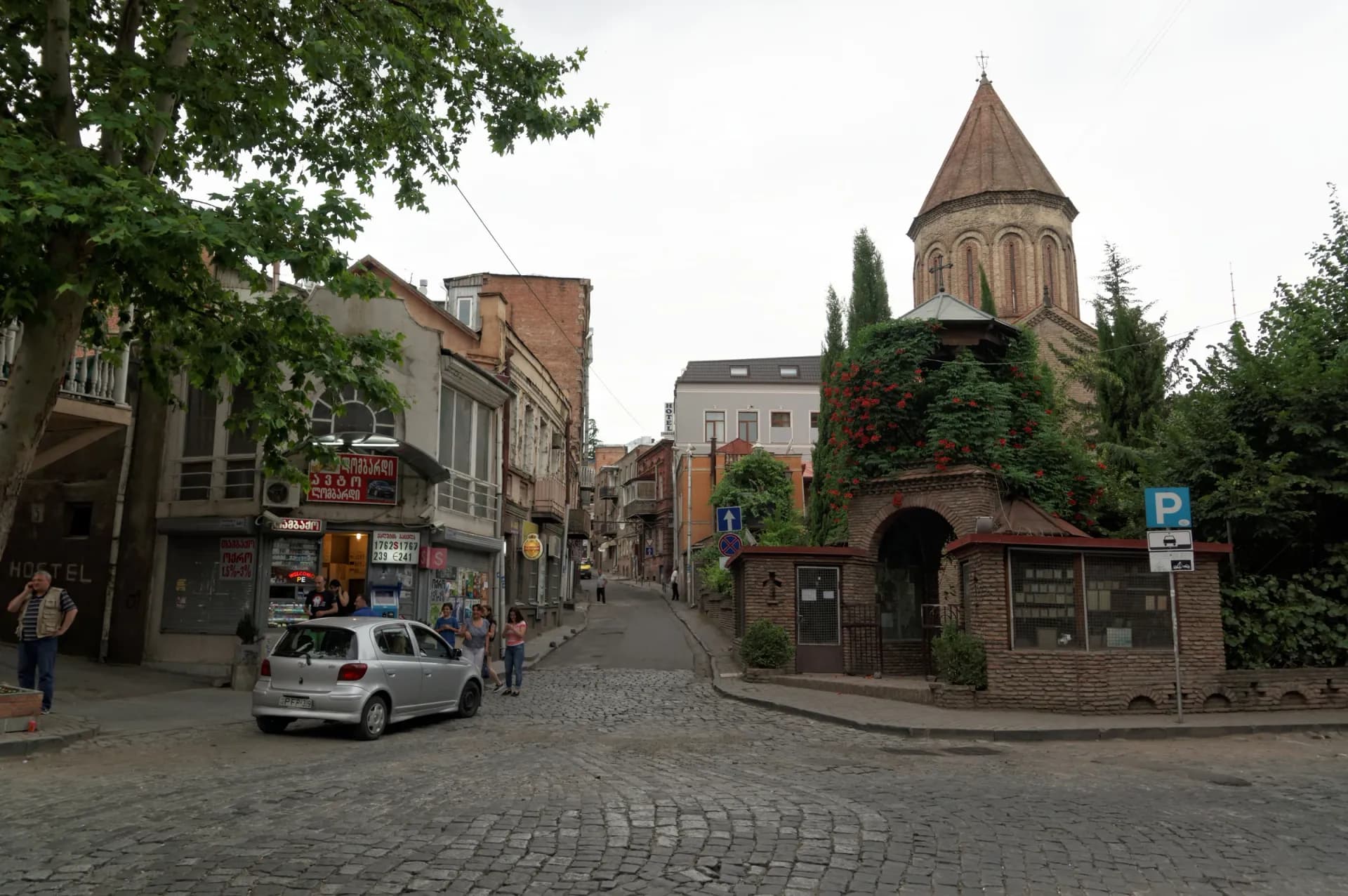
Georgian winemakers have fermented wine in buried clay vessels called qvevri for roughly 8,000 years, a method UNESCO recognizes as the world's oldest continuous winemaking tradition, and Tbilisi sits at the center of a country that considers itself the actual birthplace of wine — alongside sulfur bathhouses that gave the city its name and a balcony-lined old town clinging to a river gorge.
See full guide →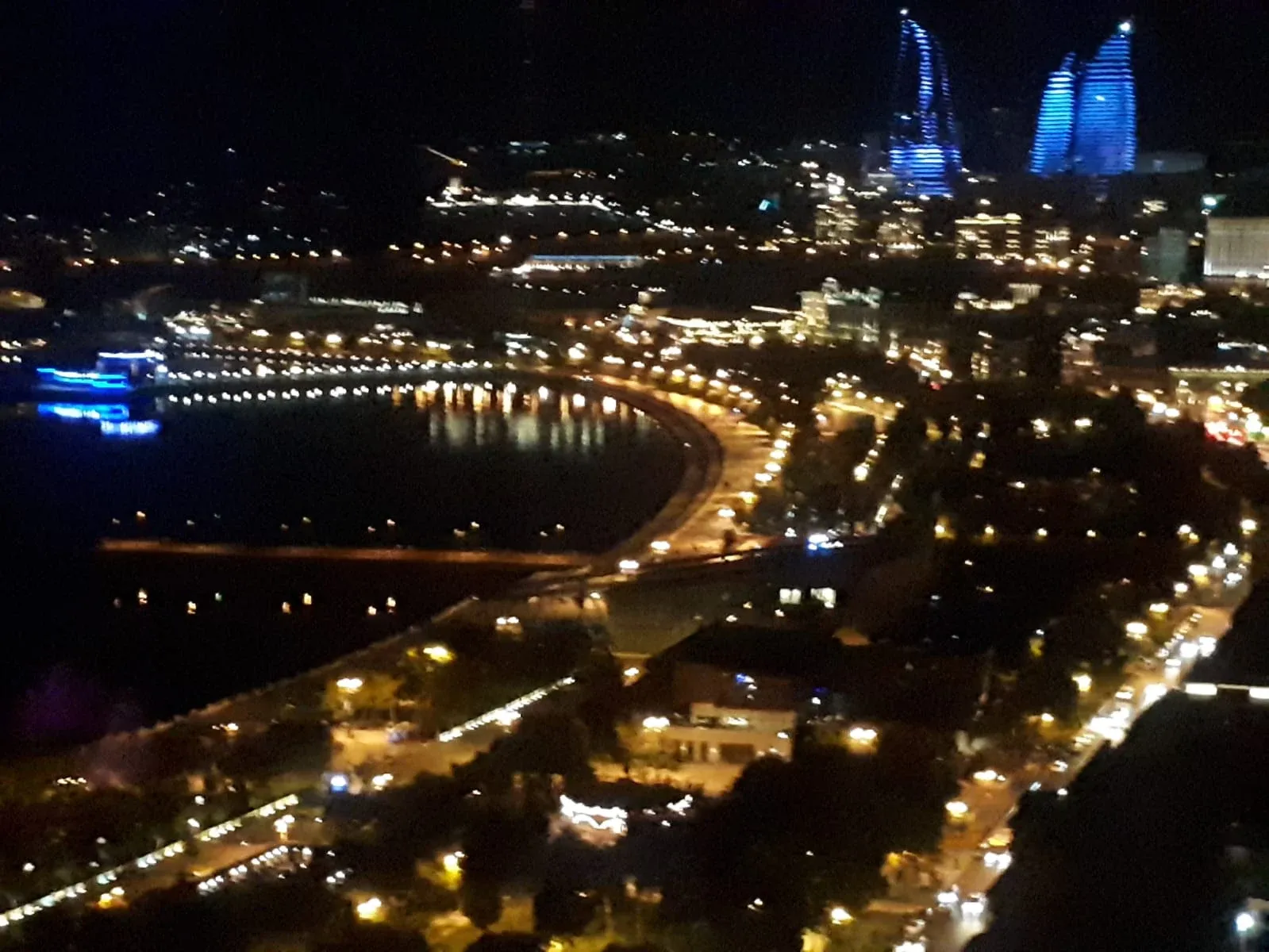 Baku
BakuBaku
Azerbaijan
Baku's three Flame Towers, completed in 2012 and covered in LED screens that flicker like actual fire after dark, sit directly above a walled Old City old enough to hold a 12th-century palace and a mysterious stone tower that predates written records of its own purpose — a skyline built almost entirely on Caspian Sea oil wealth, stacked on top of a Silk Road trading post.
See full guide →Comparing more than one route? See the full transport comparison guide.