Azerbaijan · Asia
Baku
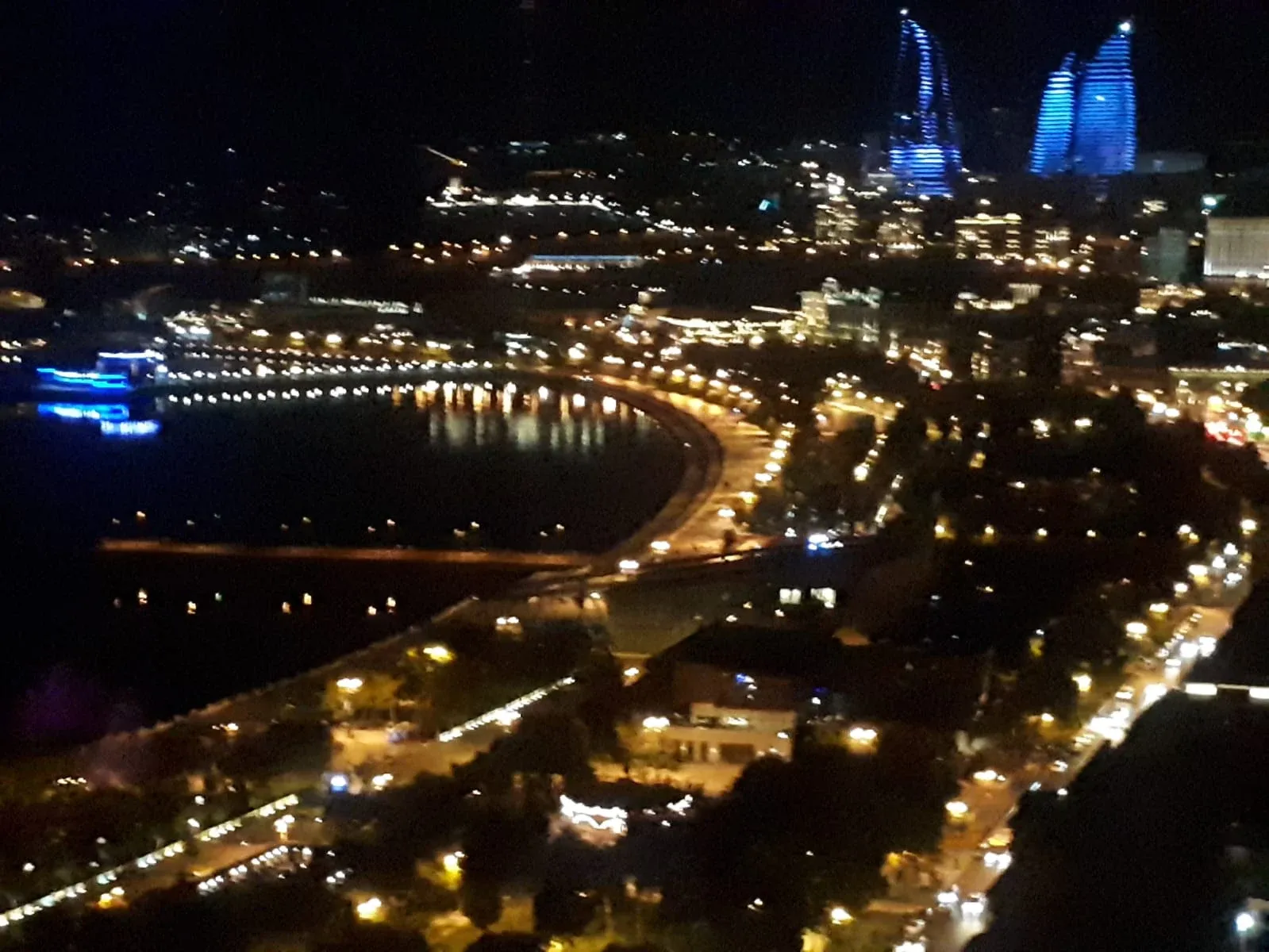
Baku's three Flame Towers, completed in 2012 and covered in LED screens that flicker like actual fire after dark, sit directly above a walled Old City old enough to hold a 12th-century palace and a mysterious stone tower that predates written records of its own purpose — a skyline built almost entirely on Caspian Sea oil wealth, stacked on top of a Silk Road trading post.
Baku's Flame Towers, three flame-shaped skyscrapers completed in 2012, dominate the city's skyline with LED screens that flicker like actual fire after dark, alongside programmed animations of waterfalls and the Azerbaijani flag. They stand as the clearest physical symbol of the oil wealth that's transformed Baku since Azerbaijan's independence from the Soviet Union in 1991, a modern skyline built rapidly on one of the world's oldest oil industries.
Directly below that skyline sits Baku's Old City, Icherisheher, a walled district earning UNESCO World Heritage status for architecture spanning many centuries of Baku's history as a Silk Road trading post and Caspian Sea port. The Palace of the Shirvanshahs, built in the 15th century as the residence of the ruling Shirvanshah dynasty, remains one of the finest examples of medieval Azerbaijani architecture, its courtyards and mausoleum offering a direct contrast to the Flame Towers looming just beyond the old walls.
The Maiden Tower, a cylindrical stone structure within the Old City, holds a genuinely unresolved history, its exact construction date and original purpose still debated among historians, with theories ranging from an ancient fire temple to a defensive fortification, likely built in stages between the 5th and 12th centuries. That ambiguity, a landmark whose story is still being pieced together, gives Baku's Old City a different kind of intrigue than more definitively documented historic sites.
Azerbaijan's oil industry, among the oldest in the world, dates back to industrial-scale extraction in the late 19th century, when Baku briefly produced roughly half the world's oil supply and drew international investment from figures including the Nobel and Rothschild families. That wealth funded some of the city's earliest grand European-style buildings, predating the modern oil-funded skyline by more than a century.
Outside the city, Gobustan National Park holds thousands of ancient rock carvings dating back as far as 40,000 years, alongside mud volcanoes, naturally occurring cold eruptions of mud and gas found in only a handful of places worldwide. Both sit within an easy day trip from Baku, adding a genuinely different kind of landscape to a visit otherwise centered on the city's old walls and modern flames.
What a trip here actually costs
$35 / day avg.
- Guesthouse near the Old City
- Baku Metro day pass
- Local Azerbaijani restaurant meals
- Old City walking, free
What to do at this tier
- • Old City (Icherisheher) walking tour, free
- • Caspian Sea waterfront boulevard, free
- • Flame Towers viewing from the boulevard at night, free
$90 / day avg.
- 3-star hotel
- Palace of the Shirvanshahs and Maiden Tower entry
- Gobustan rock art and mud volcano day trip
- Sit-down restaurant dinners
What to do at this tier
- • Palace of the Shirvanshahs and Maiden Tower
- • Gobustan National Park's ancient rock carvings and mud volcanoes
- • Funicular ride up to the Flame Towers viewpoint
$250 / day avg.
- 4-5 star hotel with Caspian Sea views
- Private guided Old City and Flame Towers tour
- Private Gobustan and mud volcano day trip
- Fine dining Azerbaijani tasting menu
What to do at this tier
- • Private guided tour of the Old City and modern Baku skyline
- • Private day trip to Gobustan and the mud volcanoes
- • Fine dining Azerbaijani tasting menu at a top Baku restaurant
These are average estimates for planning purposes, not real-time prices — actual costs vary by season, availability, and how far ahead you book.
How to get there
Click anywhere on the world map — any airport works, not just our main hubs.
Click anywhere on the map above — any airport in the world works — to see estimated travel time and cost from there.
Times and prices are planning estimates, not live fares — always check a booking site before you commit. See the full Transport Comparison guide for the general tradeoffs of each mode.
Best time to visit
April-June and September-October bring the mildest weather; summer runs hot, and Baku is famously windy year-round, giving it the nickname "City of Winds."
Safety notes
Very safe with low crime; standard city precautions apply.
Visa & currency
Azerbaijani manat (AZN). Most nationalities can get an e-visa arranged in advance, a straightforward online process.
Questions people ask before visiting
Is Baku worth visiting?
Yes — Baku combines the UNESCO-listed walled Old City, home to the 12th-century Palace of the Shirvanshahs and the enigmatic Maiden Tower, with the ultra-modern Flame Towers and a Caspian Sea waterfront boulevard, all funded by one of the world's oldest oil industries.
What are the Flame Towers?
Three flame-shaped skyscrapers completed in 2012, covered in LED screens that display flickering fire animations, waterfalls, and the Azerbaijani flag after dark. They've become the defining symbol of modern Baku's skyline, visible from most of the city.
What is the Maiden Tower?
A cylindrical stone tower in Baku's Old City whose original purpose and exact construction date remain genuinely debated among historians, with theories ranging from a fire temple to a defensive fortification, likely built in stages between the 5th and 12th centuries.
How many days do you need in Baku?
Three to four days covers the Old City, the Flame Towers and waterfront boulevard, and a day trip to the nearby mud volcanoes or Gobustan's ancient rock carvings at a relaxed pace.
Nearby destinations
 Tbilisi
Tbilisi
Georgia
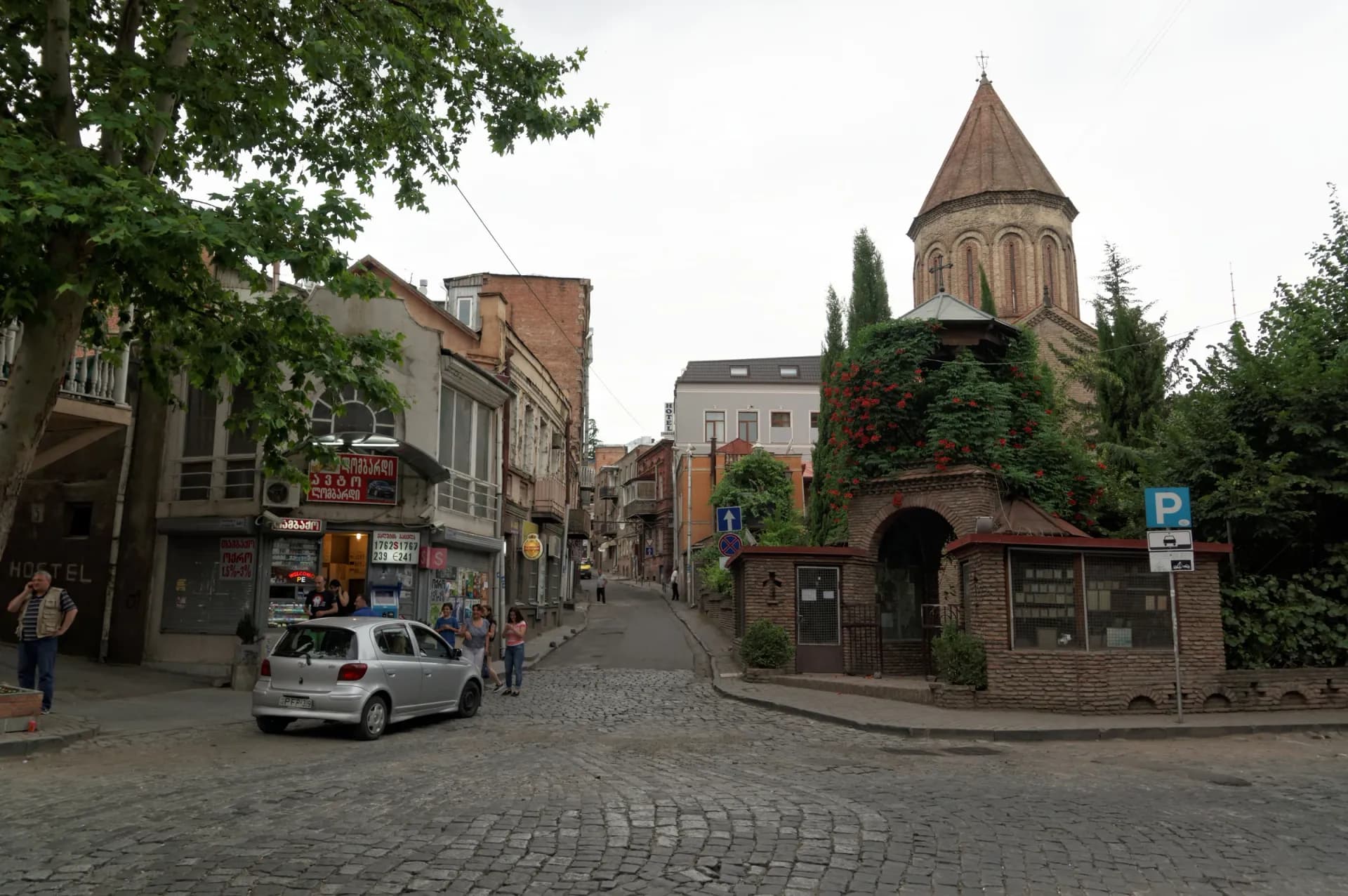
Georgian winemakers have fermented wine in buried clay vessels called qvevri for roughly 8,000 years, a method UNESCO recognizes as the world's oldest continuous winemaking tradition, and Tbilisi sits at the center of a country that considers itself the actual birthplace of wine — alongside sulfur bathhouses that gave the city its name and a balcony-lined old town clinging to a river gorge.
See full guide →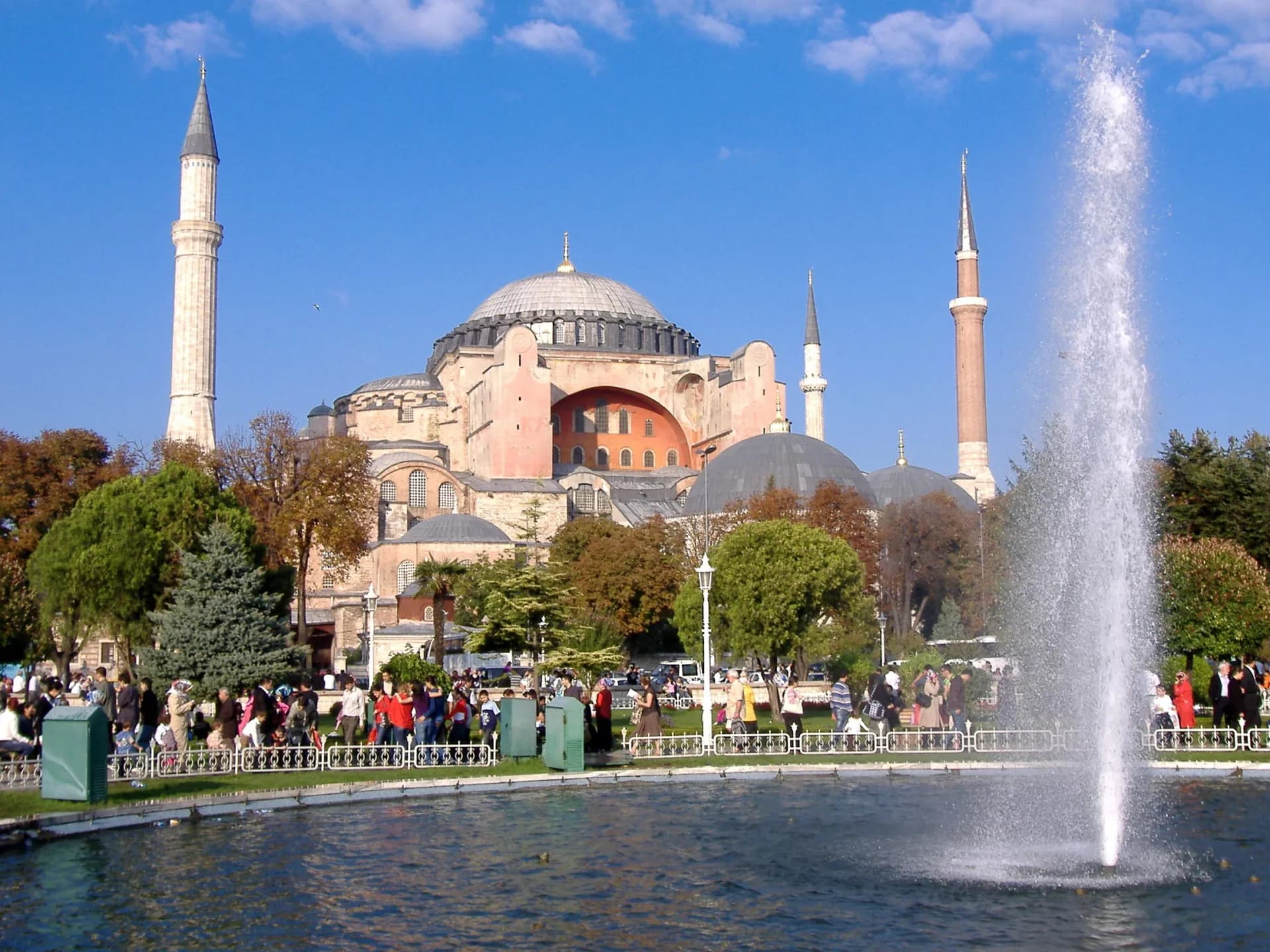 Istanbul
Istanbul
Turkey
Istanbul is the only city in the world built across two continents, split down the middle by the Bosphorus Strait between Europe and Asia, and it's been the capital of two empires under two different names, Constantinople under the Byzantines and later the Ottomans, leaving behind a skyline where a 6th-century cathedral-turned-mosque still dominates the view.
See full guide →Comparing more than one route? See the full transport comparison guide.