Georgia · Asia
Tbilisi
Georgian winemakers have fermented wine in buried clay vessels called qvevri for roughly 8,000 years, a method UNESCO recognizes as the world's oldest continuous winemaking tradition, and Tbilisi sits at the center of a country that considers itself the actual birthplace of wine — alongside sulfur bathhouses that gave the city its name and a balcony-lined old town clinging to a river gorge.
Georgian winemakers have fermented wine in qvevri, large egg-shaped clay vessels buried underground, for roughly 8,000 years, a method UNESCO recognizes as an Intangible Cultural Heritage and widely considered the oldest continuous winemaking tradition in the world. Georgia's own claim to being wine's birthplace is backed by archaeological evidence of grape cultivation and fermentation dating back millennia, and that history remains a source of genuine national pride rather than just a tourism talking point.
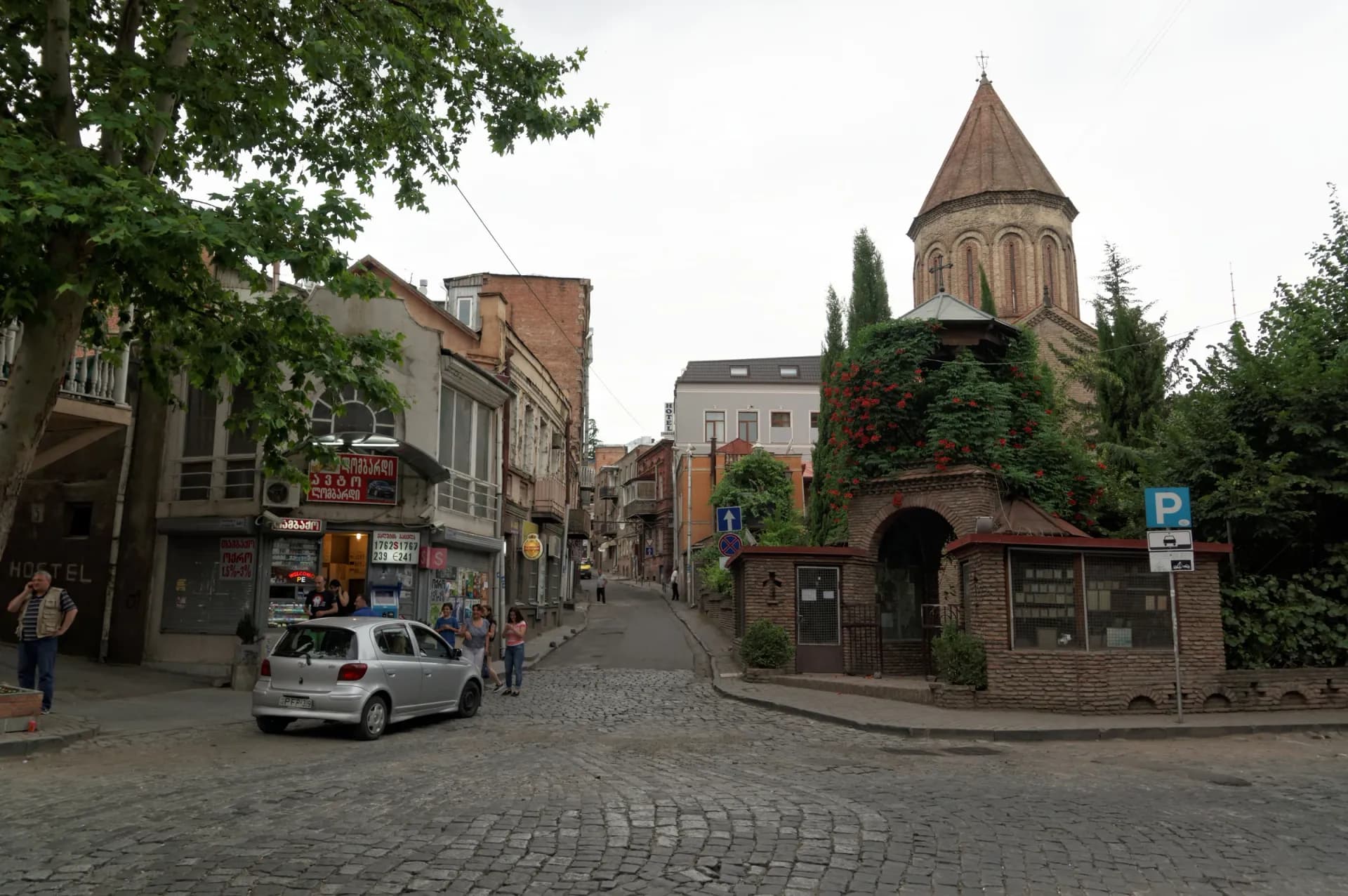
Tbilisi's old town, a dense tangle of balcony-lined houses clinging to the steep banks of the Kura River gorge, reflects centuries of shifting influence, Persian, Ottoman, and Russian rule all left visible marks on the city's architecture. Narikala Fortress, overlooking the old town from a hilltop, dates back to the 4th century in some form and offers the clearest single vantage point over the gorge, the river, and the patchwork of rooftops below.
Abanotubani, the district that gave Tbilisi its name, derived from the Old Georgian word for "warm," sits atop natural sulfur hot springs that have supplied domed bathhouses for centuries. Visitors today can still book private rooms or communal sessions at several of these bathhouses, soaking in naturally heated sulfur water and, for those who want it, a traditional vigorous scrub treatment that's become something of a local rite of passage for first-time visitors.
Kakheti, Georgia's main wine region, sits close enough to Tbilisi for a straightforward day trip, its vineyards and family-run wineries offering direct access to qvevri winemaking still practiced much as it has been for millennia. Tastings here often include Georgia's distinctive amber wines, made from white grapes fermented with their skins in a method that predates and differs meaningfully from most Western winemaking traditions.
Georgia's location at the crossroads of Europe and Asia, in the Caucasus region bridging both continents, gives Tbilisi a genuinely layered identity, neither fully European nor fully Asian in feel, but shaped distinctly by both over centuries of trade and conquest passing through. That in-between quality, along with prices notably lower than most European capitals, has helped make Tbilisi one of the region's fastest-growing destinations for travelers looking for something outside the more established circuits.
What a trip here actually costs
$30 / day avg.
- Guesthouse in the old town
- Local metro and marshrutka minibus rides
- Georgian restaurant meals, including khachapuri and khinkali
- Old town walking, free
What to do at this tier
- • Old Tbilisi walking tour, including Narikala Fortress views, free
- • Abanotubani sulfur bath district, public bath low cost
- • Dry Bridge flea market, free to browse
$75 / day avg.
- 3-star boutique hotel
- Sulfur bathhouse private room
- Kakheti wine region day tour
- Sit-down Georgian restaurant dinners
What to do at this tier
- • Private sulfur bathhouse room with traditional scrub treatment
- • Kakheti wine region day trip with qvevri winery visits
- • Narikala Fortress and Mtatsminda Park via cable car
These are average estimates for planning purposes, not real-time prices — actual costs vary by season, availability, and how far ahead you book.
How to get there
Click anywhere on the world map — any airport works, not just our main hubs.
Click anywhere on the map above — any airport in the world works — to see estimated travel time and cost from there.
Times and prices are planning estimates, not live fares — always check a booking site before you commit. See the full Transport Comparison guide for the general tradeoffs of each mode.
Best time to visit
April-June and September-October bring the mildest weather; summer runs warm and dry, and winters are cool but generally mild by regional standards.
Safety notes
Very safe with low crime; the old town's steep, cobbled streets require sturdy footwear.
Visa & currency
Georgian lari (GEL). Many nationalities can enter visa-free for extended stays, one of the more open visa policies in the region.
Questions people ask before visiting
Is Tbilisi worth visiting?
Yes — Tbilisi combines a balcony-lined old town clinging to the Kura River gorge, natural sulfur bathhouses that gave the city its name, and access to Georgian wine country's roughly 8,000-year-old qvevri winemaking tradition, all at prices notably lower than most European capitals.
What is qvevri winemaking?
A traditional Georgian method of fermenting and aging wine in large egg-shaped clay vessels buried underground, a practice UNESCO recognizes as an Intangible Cultural Heritage and considers the oldest continuous winemaking tradition in the world, dating back roughly 8,000 years.
Why is Tbilisi known for sulfur baths?
Natural sulfur hot springs in the Abanotubani district gave Tbilisi its name, derived from the Old Georgian word for "warm." Domed bathhouses built over these springs remain in daily use today, offering traditional soaking and scrubbing treatments much as they have for centuries.
How many days do you need in Tbilisi?
Three to four days covers the old town, Narikala Fortress, and the sulfur baths at a relaxed pace, with many visitors adding a day trip into the nearby Kakheti wine region for vineyard visits.
Nearby destinations
 Baku
BakuBaku
Azerbaijan
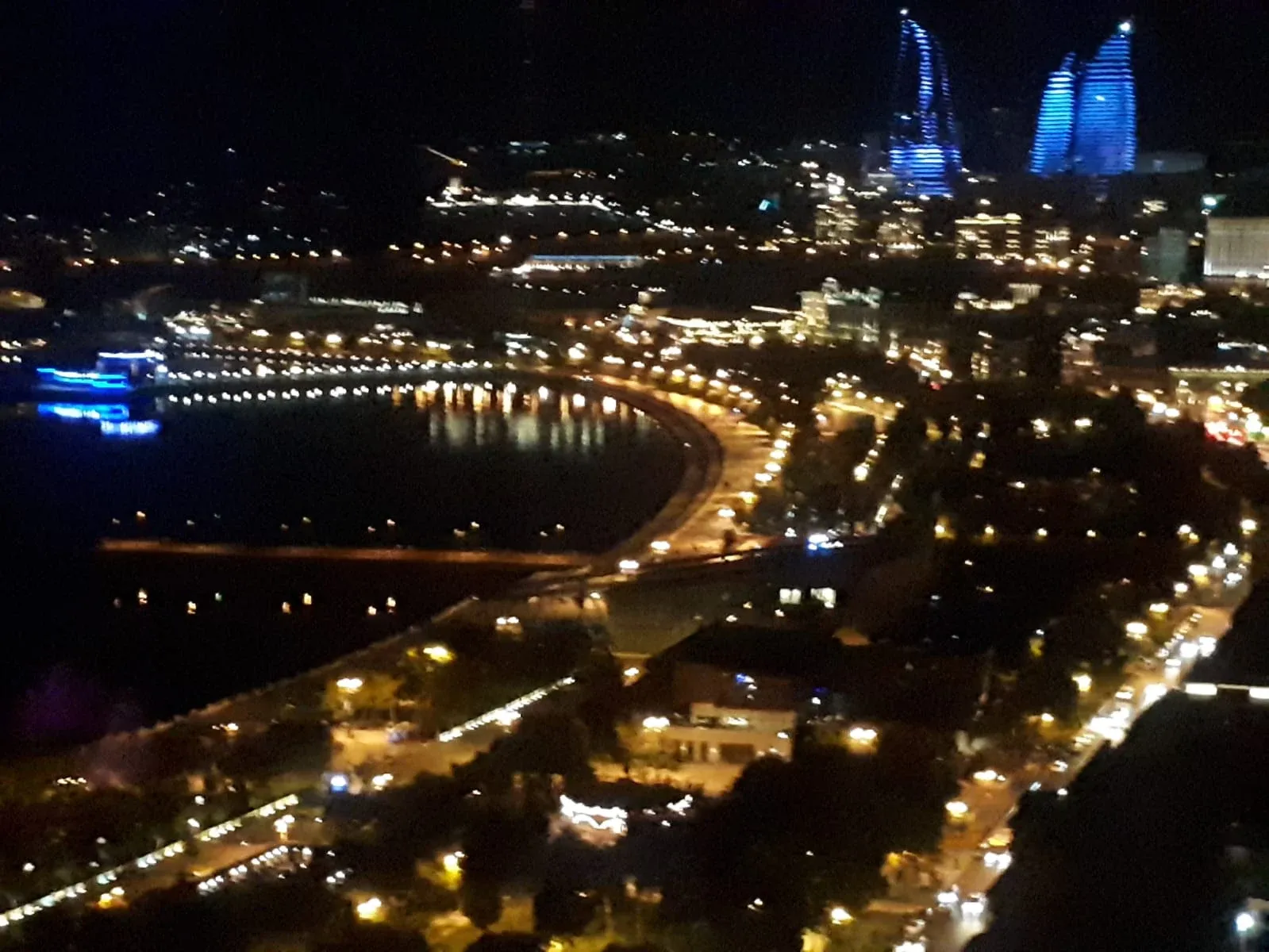
Baku's three Flame Towers, completed in 2012 and covered in LED screens that flicker like actual fire after dark, sit directly above a walled Old City old enough to hold a 12th-century palace and a mysterious stone tower that predates written records of its own purpose — a skyline built almost entirely on Caspian Sea oil wealth, stacked on top of a Silk Road trading post.
See full guide →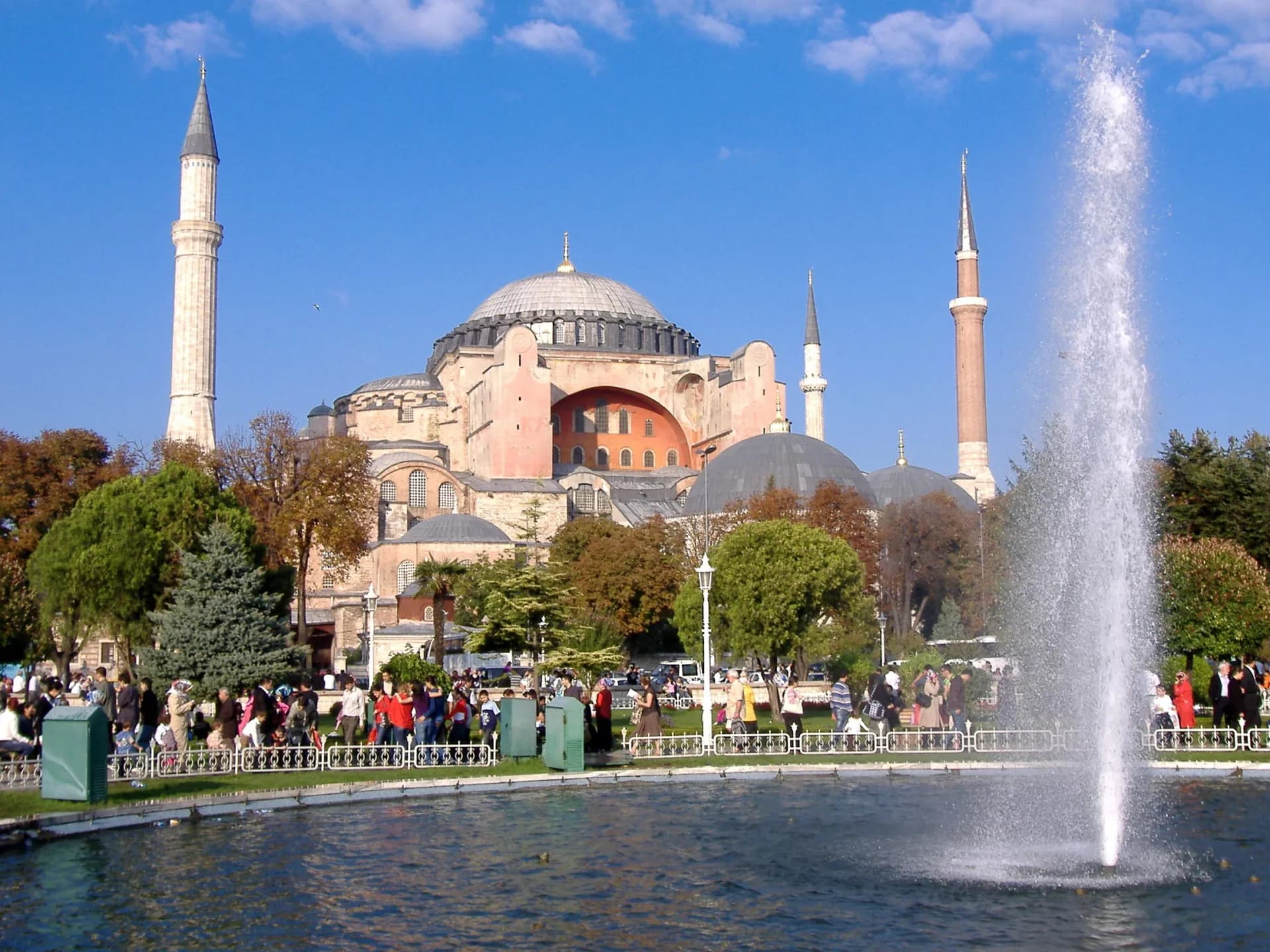 Istanbul
Istanbul
Turkey
Istanbul is the only city in the world built across two continents, split down the middle by the Bosphorus Strait between Europe and Asia, and it's been the capital of two empires under two different names, Constantinople under the Byzantines and later the Ottomans, leaving behind a skyline where a 6th-century cathedral-turned-mosque still dominates the view.
See full guide →Comparing more than one route? See the full transport comparison guide.