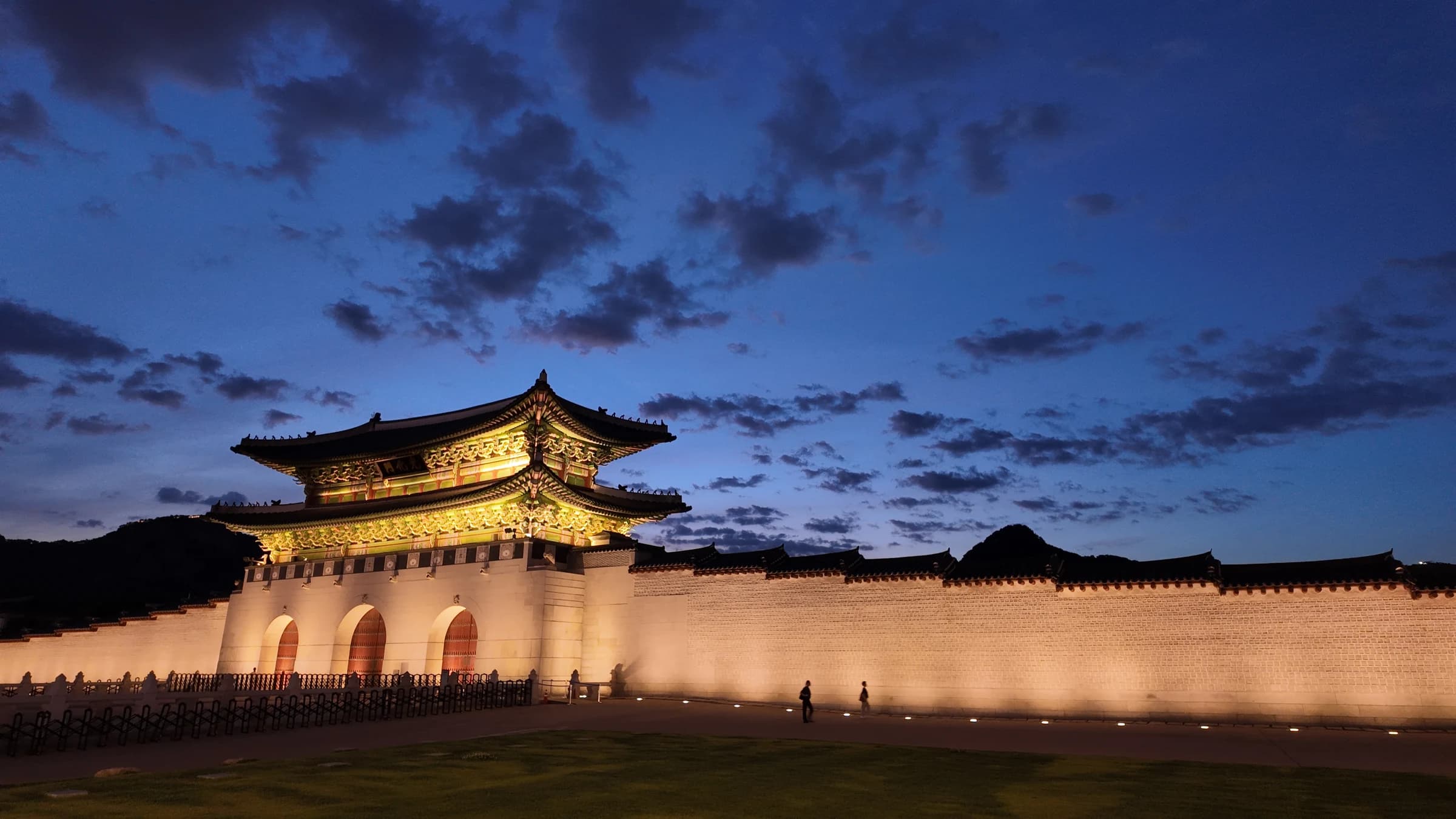
South Korea · Asia
Seoul
Seoul runs a daily royal guard changing ceremony outside a 600-year-old palace a short walk from the neighborhoods that produce most of the world's K-pop and K-drama exports — a capital where the Joseon Dynasty and one of the planet's most influential modern cultural exports sit within the same few city blocks.
Gyeongbokgung Palace, the main royal palace of the Joseon Dynasty, was originally built in 1395 and later reconstructed after extensive damage during Japanese colonial rule in the early 20th century. A changing-of-the-guard ceremony still runs several times a day at its main gate, performed in period costume, and visitors who rent a hanbok, traditional Korean dress, from one of the many shops nearby get free entry to the palace grounds.
Bukchon Hanok Village, a neighborhood of traditional hanok houses sitting between two of Seoul's grand palaces, preserves a residential style of architecture that mostly disappeared elsewhere in the city during decades of rapid postwar development. Many of the houses remain private homes today, which means visitors are asked to keep noise down and stay on public paths, a small courtesy that keeps the neighborhood functioning as an actual community rather than a museum piece.
Seoul sits at the center of Hallyu, the Korean Wave, the global spread of K-pop, Korean drama, and Korean cinema that's turned the city into something close to a cultural capital far beyond its own borders. That influence shows up concretely in neighborhoods like Myeongdong and Hongdae, dense with entertainment agency buildings, fan cafes, and shopping built around the industry's global reach.
Day trips to the Demilitarized Zone, the heavily fortified buffer separating North and South Korea since the 1953 armistice, run regularly from Seoul, typically including the Joint Security Area or observation posts looking directly into North Korean territory. It remains one of the most heavily militarized borders anywhere in the world, and visiting it as a day trip from a fast, modern capital city is a genuinely strange, sobering juxtaposition that most visitors find hard to fully process in a single afternoon.
Seoul's subway system ranks among the most extensive and efficient in the world, covering the sprawling city with English signage and announcements throughout, making it straightforward to move between the historic palace district, the Han River, and neighborhoods like Myeongdong within the same day. That ease of movement is part of what lets a single trip cover Joseon-era history, K-pop culture, and a border zone frozen in Cold War tension without feeling disjointed.
What a trip here actually costs
$55 / day avg.
- Hostel dorm or guesthouse
- T-money subway card
- Street food and casual Korean restaurant meals
- Gyeongbokgung Palace, low entry fee
What to do at this tier
- • Gyeongbokgung Palace and its changing-of-the-guard ceremony, low entry fee
- • Bukchon Hanok Village, free to walk
- • Myeongdong street food and shopping, free to browse
$130 / day avg.
- 3-star hotel in central Seoul
- Hanbok rental and palace visit
- DMZ guided day tour
- Korean BBQ dinners
What to do at this tier
- • Hanbok rental for free palace entry and photos
- • DMZ guided day tour with Joint Security Area access
- • Han River evening walk and Korean BBQ dinner
$350 / day avg.
- 4-5 star hotel
- Private guided palace and Bukchon Hanok Village tour
- Private DMZ tour
- Fine dining Korean tasting menu
What to do at this tier
- • Private guided tour of Gyeongbokgung and Bukchon Hanok Village
- • Private DMZ tour with a dedicated guide
- • Fine dining tasting menu at a top Seoul restaurant
These are average estimates for planning purposes, not real-time prices — actual costs vary by season, availability, and how far ahead you book.
How to get there
Click anywhere on the world map — any airport works, not just our main hubs.
Click anywhere on the map above — any airport in the world works — to see estimated travel time and cost from there.
Times and prices are planning estimates, not live fares — always check a booking site before you commit. See the full Transport Comparison guide for the general tradeoffs of each mode.
Best time to visit
April-June and September-November bring mild temperatures and, in spring, cherry blossoms; winters run genuinely cold, closer to Central European temperatures than most of tropical Southeast Asia.
Safety notes
Very safe with low crime; the DMZ is a heavily controlled tourist zone accessed only through official guided tours, not a risk area for casual visitors.
Visa & currency
South Korean won (KRW). Many nationalities need a K-ETA (Korea Electronic Travel Authorization) arranged in advance for visa-free entry, worth confirming before booking.
Questions people ask before visiting
Is Seoul worth visiting?
Yes — Seoul combines Gyeongbokgung Palace's daily changing-of-the-guard ceremony and the traditional Bukchon Hanok Village with the global cultural force of K-pop and Korean cinema, extremely fast public transit, and DMZ day trips to one of the world's most heavily militarized borders.
What is Gyeongbokgung Palace?
The main royal palace of the Joseon Dynasty, originally built in 1395 and reconstructed after damage during Japanese colonial rule. It hosts a changing-of-the-guard ceremony several times daily, and visitors can rent traditional hanbok clothing for free palace entry.
Can you visit the DMZ from Seoul?
Yes, guided day tours run from Seoul to the Demilitarized Zone separating North and South Korea, typically including the Joint Security Area or observation points looking into North Korean territory. Advance booking and passport details are required for most tour operators.
How many days do you need in Seoul?
Four to five days covers the main palaces, Bukchon Hanok Village, Myeongdong shopping, and a DMZ day trip at a comfortable pace. The city's extensive subway system makes it easy to cover a lot of ground even in a shorter visit.
Nearby destinations
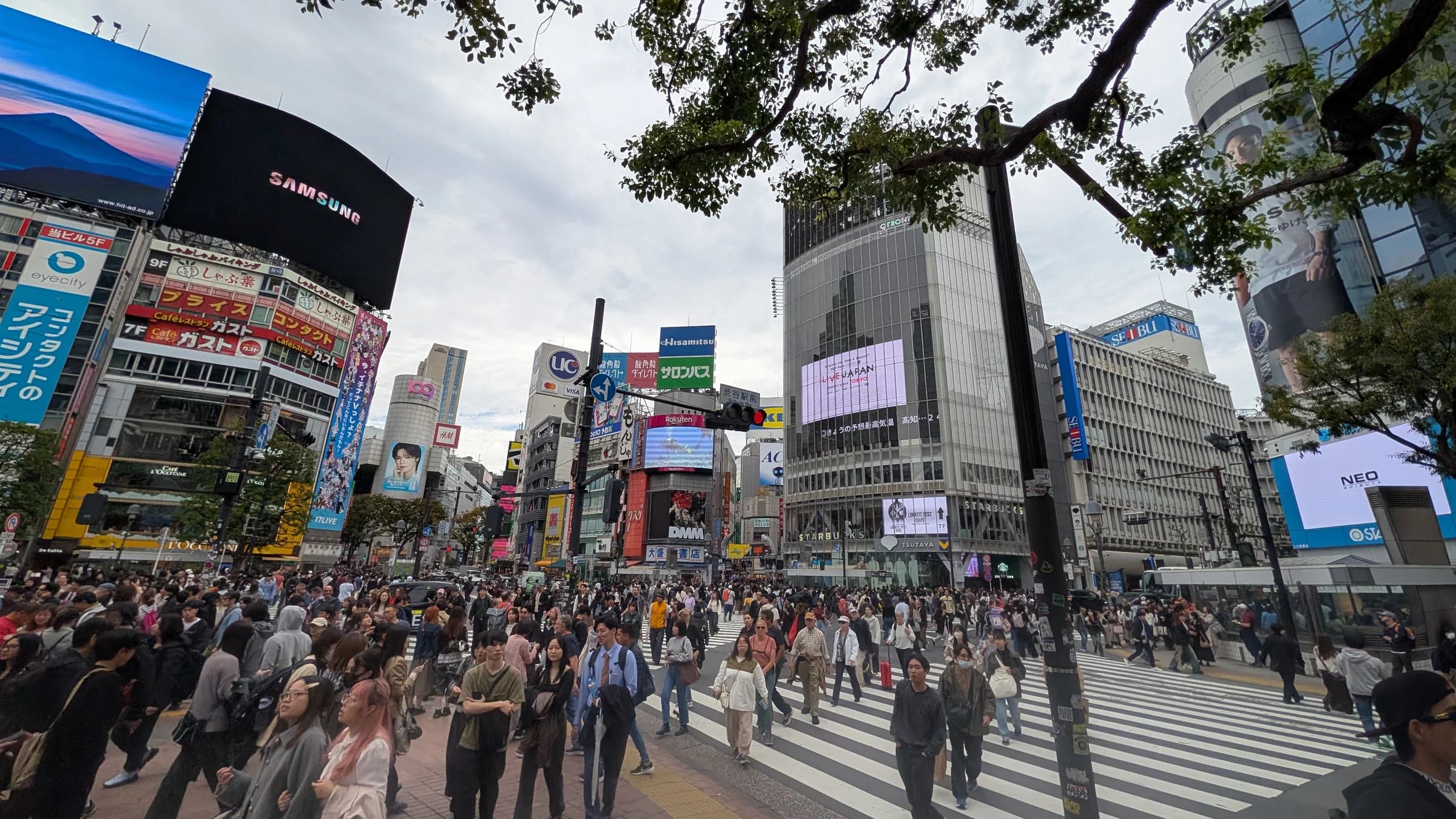 Tokyo
TokyoTokyo
Japan
Shibuya Crossing moves up to 3,000 pedestrians through a single intersection every time the light changes, and somehow nobody collides — a genuinely orderly kind of chaos that sums up Tokyo itself, a city of 37 million people that runs on a level of precision most places its size can't manage.
See full guide →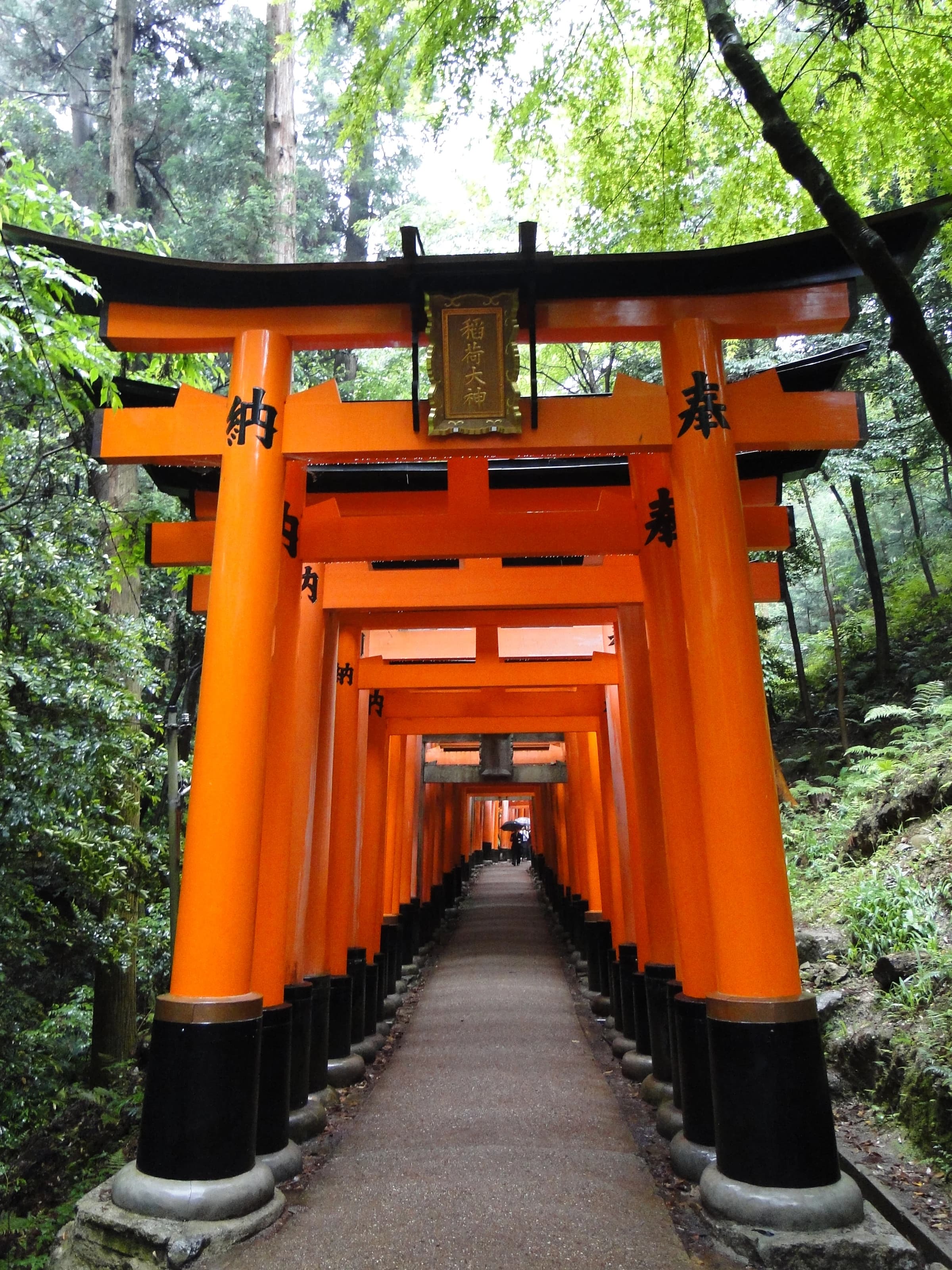 Kyoto
KyotoKyoto
Japan
Kyoto served as Japan's imperial capital for over a thousand years, and unlike most of the country's other historic cities, it was deliberately left off the World War II bombing target list — which is why it still holds thousands of original temples, shrines, and wooden machiya houses that elsewhere in Japan simply didn't survive.
See full guide →Comparing more than one route? See the full transport comparison guide.