Bhutan · Asia
Paro
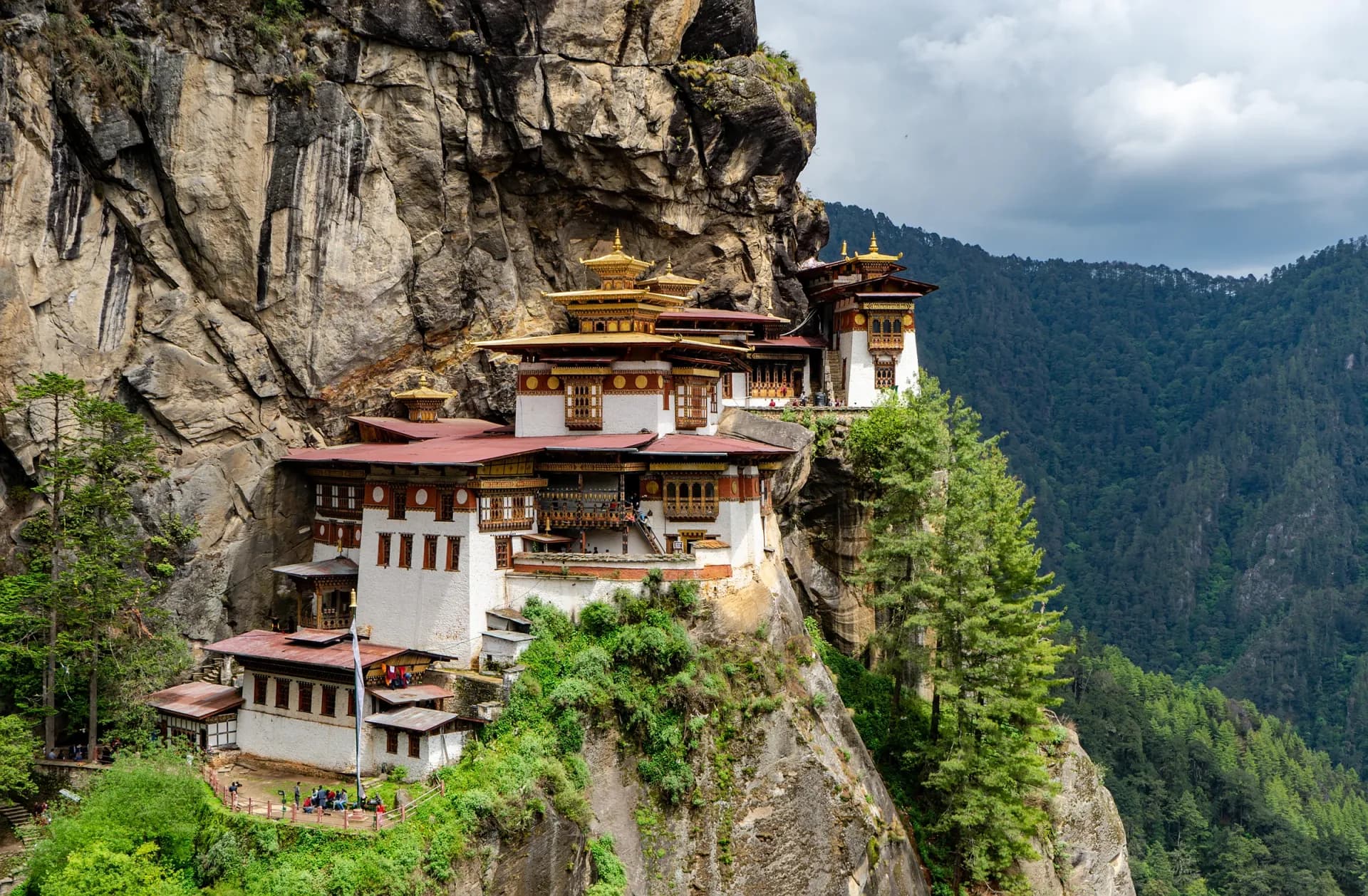
Bhutan is the only country in the world that governs by measuring Gross National Happiness instead of GDP, and it charges visitors a nightly Sustainable Development Fee rather than opening the gates wide — a deliberate high-value, low-impact approach that's kept the trail to the cliffside Tiger's Nest monastery from ever feeling overrun.
Bhutan governs itself around a policy of Gross National Happiness rather than GDP, a framework adopted decades ago that treats environmental preservation, cultural continuity, and wellbeing as legitimate measures of national success alongside economic growth. It's the only country in the world to formalize that approach at a governing level, and it shows up directly in how carefully the country manages tourism, rather than simply maximizing visitor numbers.
That policy takes practical form in a nightly Sustainable Development Fee charged to international visitors, funding healthcare, education, and conservation, as part of what Bhutan describes as a "high-value, low-impact" tourism model. Independent travelers from most countries also book through a licensed Bhutanese tour operator, who arranges a guide, driver, and itinerary, a structure that keeps visitor flow controlled rather than open to unmanaged backpacking.
The Tiger's Nest monastery, or Paro Taktsang, sits built directly into a cliff face roughly 900 meters above the floor of the Paro valley, a site legend holds was chosen because Guru Rinpoche, the figure credited with bringing Buddhism to Bhutan, flew there on the back of a tigress. Reaching it requires a hike of 4 to 5 hours round trip on a well-maintained trail, steep enough to test reasonable fitness but not requiring technical climbing.
Bhutan holds the distinction of being the world's only carbon-negative country, its dense forest cover absorbing more carbon than the country emits, a status protected by a constitutional requirement that at least 60 percent of the country remain forested. That commitment predates most global climate policy discussions by years and reflects the same long-term, deliberate governing philosophy behind its tourism approach.
The country stayed largely closed to outside influence for much of the 20th century, only opening to television and internet access in 1999, one of the last nations in the world to do so. That late, careful opening, paired with the ongoing tourism fee structure, has kept Bhutan's monasteries, dzongs, and mountain valleys from the kind of overtourism that's reshaped other Himalayan destinations, though it also means a Bhutan trip runs at a noticeably higher cost than most neighboring countries.
What a trip here actually costs
$250 / day avg.
- Guesthouse or 3-star hotel, arranged through a licensed operator
- Licensed guide and driver
- Sustainable Development Fee
- Local Bhutanese restaurant meals
What to do at this tier
- • Tiger's Nest (Paro Taktsang) monastery hike
- • Rinpung Dzong, a fortress-monastery overlooking Paro
- • National Museum of Bhutan
$600 / day avg.
- Boutique luxury lodge
- Private guide and driver
- Sustainable Development Fee
- Multi-day custom itinerary including Thimphu and Paro
What to do at this tier
- • Private multi-day itinerary combining Paro and Thimphu
- • Traditional hot stone bath experience
- • Private guided cultural and monastery tour with a dedicated vehicle
These are average estimates for planning purposes, not real-time prices — actual costs vary by season, availability, and how far ahead you book.
How to get there
Click anywhere on the world map — any airport works, not just our main hubs.
Click anywhere on the map above — any airport in the world works — to see estimated travel time and cost from there.
Times and prices are planning estimates, not live fares — always check a booking site before you commit. See the full Transport Comparison guide for the general tradeoffs of each mode.
Best time to visit
March-May and September-November bring the clearest mountain views and most comfortable trekking conditions; winter brings cold temperatures at this elevation.
Safety notes
Very safe with low crime; altitude and the Tiger's Nest climb are the main physical considerations, so reasonable fitness helps.
Visa & currency
Bhutanese ngultrum (BTN), pegged to the Indian rupee. Visas are arranged through a licensed Bhutanese tour operator alongside the Sustainable Development Fee, not obtained independently.
Questions people ask before visiting
Is Bhutan worth visiting?
Yes — Bhutan holds the Tiger's Nest monastery, built into a cliff face 900 meters above the Paro valley, alongside a national policy of Gross National Happiness, carbon-negative status, and a tourism model designed specifically to keep visitor numbers low and impact minimal.
What is Bhutan's Sustainable Development Fee?
A nightly fee charged to international visitors, funding healthcare, education, and environmental conservation, as part of Bhutan's "high-value, low-impact" tourism policy. The fee has varied over time, so checking the current rate before booking is essential.
How hard is the hike to Tiger's Nest?
Moderately challenging, climbing roughly 900 meters in elevation over 4-5 hours round trip on a well-maintained trail, with a teahouse partway up for a rest. It's steep enough to require reasonable fitness but doesn't require technical climbing experience.
Do you need a guide to visit Bhutan?
Independent travelers from most countries need to book through a licensed Bhutanese tour operator, who typically arranges a guide, driver, and itinerary as part of the visa and Sustainable Development Fee process, rather than allowing fully independent backpacking.
Nearby destinations
 Kathmandu
Kathmandu
Nepal
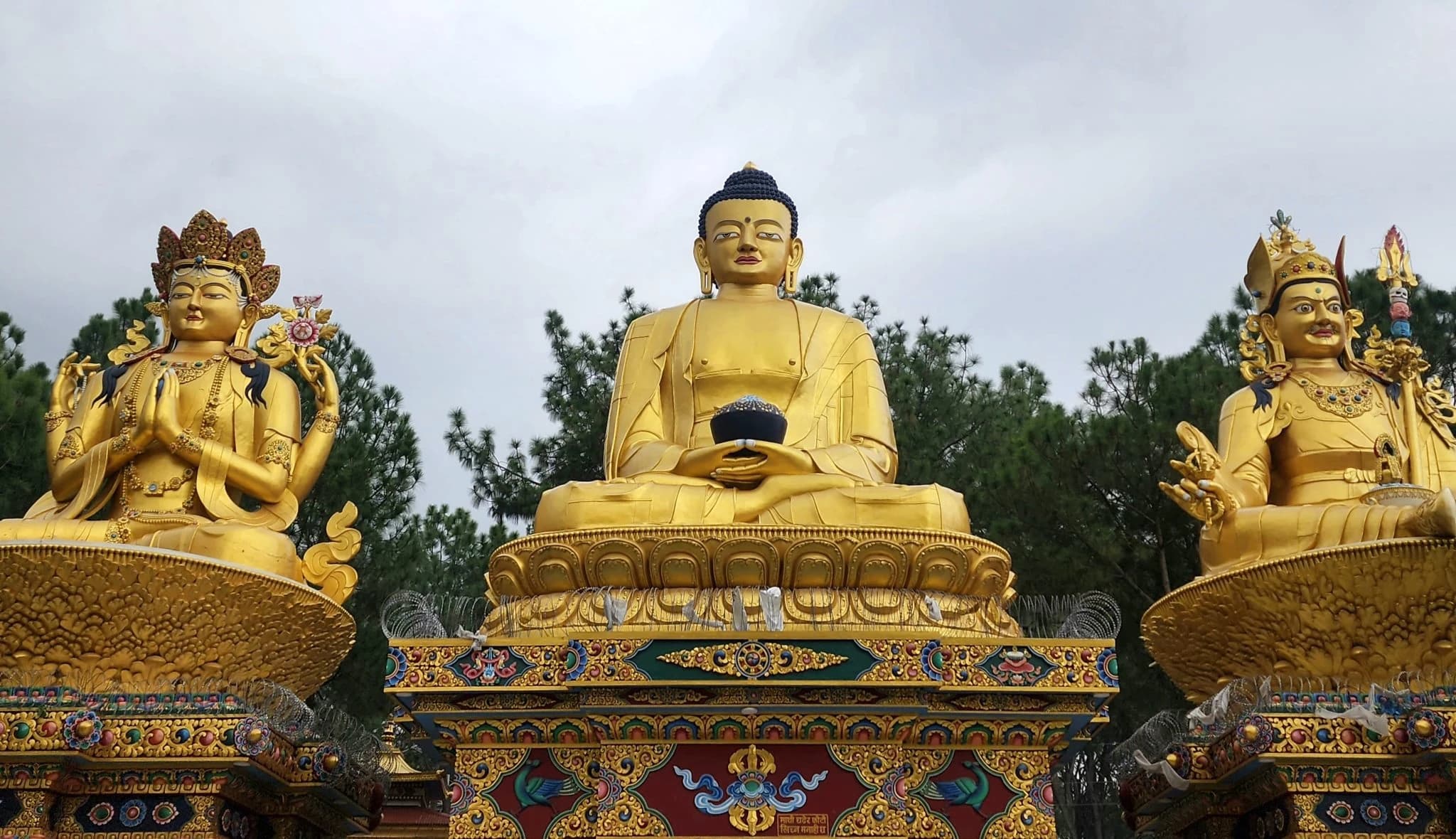
Kathmandu Valley packs seven separate UNESCO-listed monument zones into a single basin — Durbar Squares, the all-seeing eyes of Swayambhunath, one of the largest stupas in the world at Boudhanath — and still serves as the starting point for nearly everyone attempting to reach the world's highest mountains.
See full guide →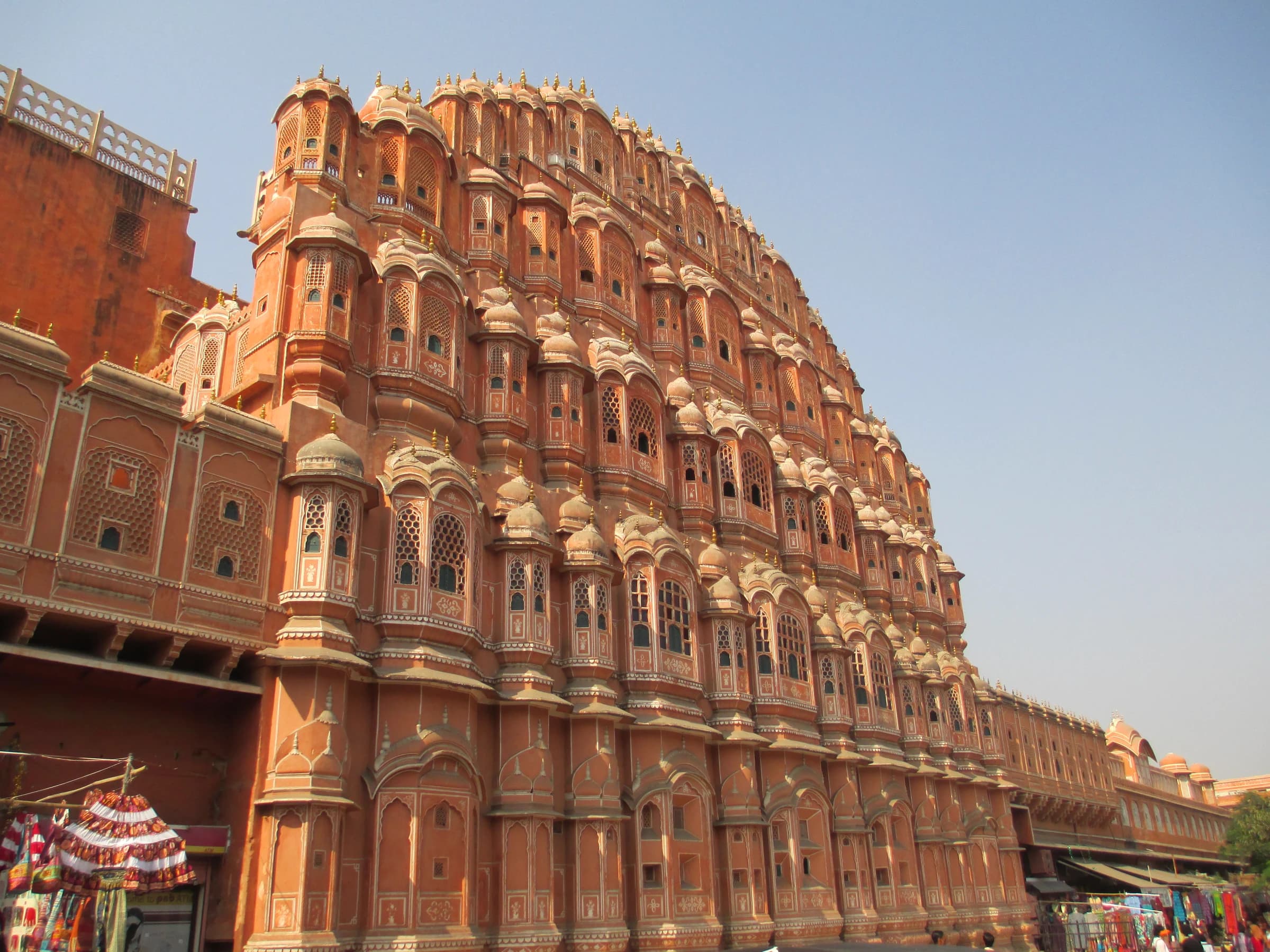 Jaipur
Jaipur
India
Jaipur's old city was painted terracotta pink in 1876 for a single royal visit from the Prince of Wales, and the tradition stuck so firmly that it's now protected by law — giving India's "Pink City" a genuinely unified look across the Hawa Mahal's 953 honeycomb windows, the hilltop Amber Fort, and the rest of its historic center.
See full guide →Comparing more than one route? See the full transport comparison guide.