India · Asia
Jaipur
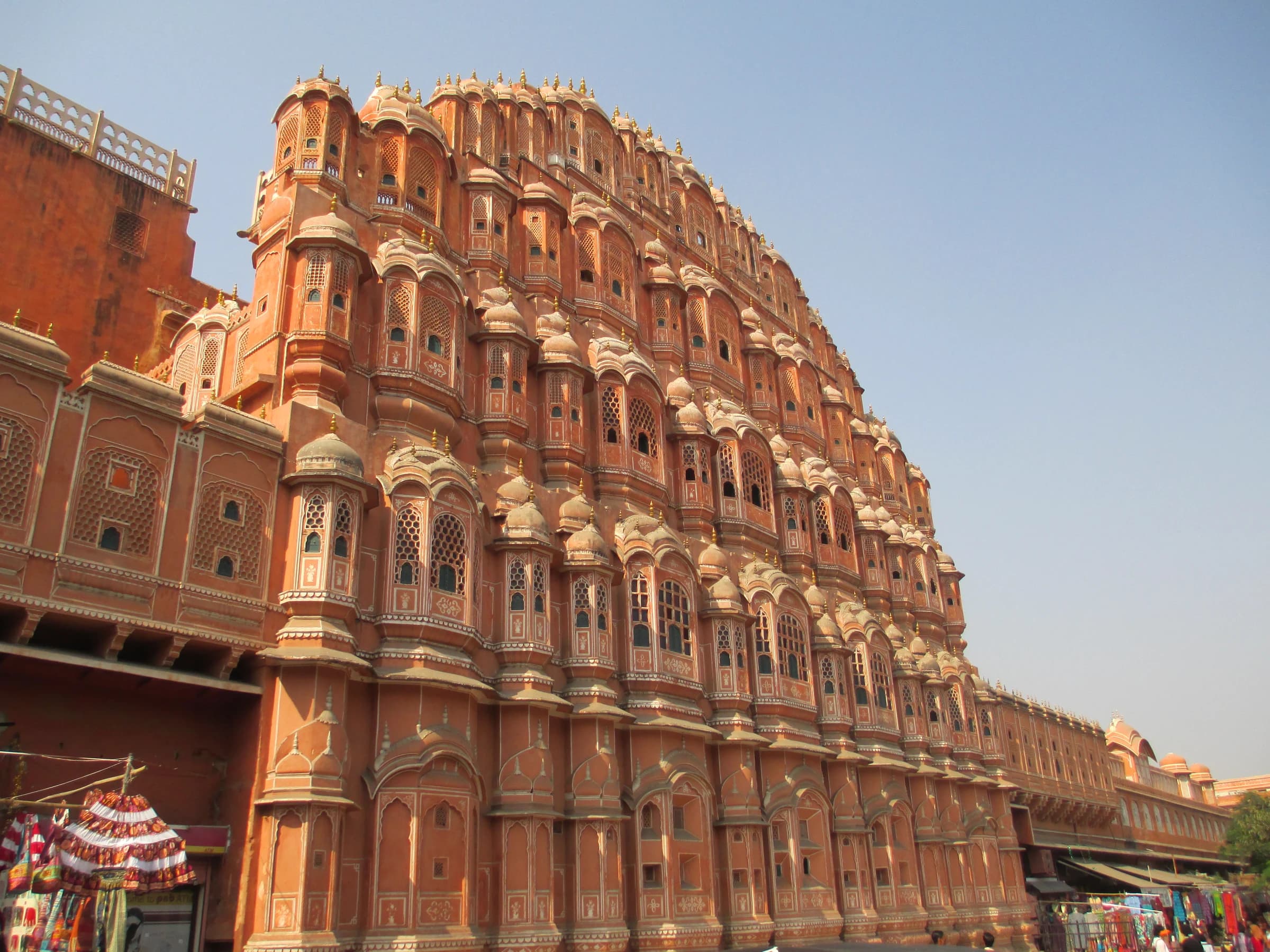
Jaipur's old city was painted terracotta pink in 1876 for a single royal visit from the Prince of Wales, and the tradition stuck so firmly that it's now protected by law — giving India's "Pink City" a genuinely unified look across the Hawa Mahal's 953 honeycomb windows, the hilltop Amber Fort, and the rest of its historic center.
Jaipur's old city was painted terracotta pink in 1876, a decision made to welcome the Prince of Wales, later King Edward VII, during a state visit, since pink was traditionally associated with hospitality in the region. The color choice, meant for a single occasion, became a point of civic identity that outlasted the visit by well over a century, and Jaipur's historic center still maintains it today under legal protection, giving the "Pink City" its name and its unmistakably uniform look.
The Hawa Mahal, or "Palace of Winds," built in 1799, is the most photographed result of that pink tradition, its facade punctured by 953 small honeycomb windows called jharokhas. The design let royal women observe street processions and daily life below without being seen themselves, in keeping with the purdah customs of the era, turning what could have been a plain wall into one of India's most distinctive pieces of architecture.
Amber Fort, sometimes spelled Amer Fort, sits on a hilltop just outside the city and holds UNESCO World Heritage status as part of a group of Rajasthan's hill forts. Its Sheesh Mahal, or Mirror Palace, covers ceilings and walls in thousands of small mirrored tiles designed to reflect even a single candle flame into a room full of light, a piece of 17th-century engineering built purely for atmosphere.
Jaipur forms one point of India's Golden Triangle, the popular tourist circuit connecting it with Delhi and Agra, home to the Taj Mahal, roughly 240 kilometers away. Most first-time visitors to India combine all three cities into a single trip, moving by train or car between them, which makes Jaipur less a standalone destination for many travelers than the third, often quieter stop on a longer route.
Jantar Mantar, an 18th-century astronomical observatory built by Jaipur's founder, Maharaja Jai Singh II, holds a collection of massive stone and marble instruments designed to track celestial positions with remarkable precision for their time, including the world's largest stone sundial. It sits within walking distance of the City Palace complex, the maharaja's former residence, still partly occupied by the royal family and partly open as a museum.
What a trip here actually costs
$22 / day avg.
- Budget guesthouse in the old city
- Auto-rickshaw rides
- Local thali and street food meals
- Hawa Mahal exterior viewing, free
What to do at this tier
- • Hawa Mahal exterior and old city walk, low or no cost
- • Johari Bazaar and local markets, free to browse
- • Nahargarh Fort viewpoint at sunset, low entry fee
$60 / day avg.
- 3-star heritage hotel
- Amber Fort guided tour
- City Palace and Jantar Mantar entry
- Sit-down Rajasthani restaurant dinners
What to do at this tier
- • Amber Fort guided tour, including its mirrored Sheesh Mahal hall
- • City Palace complex and Jantar Mantar observatory
- • Rajasthani thali dinner with folk music
$180 / day avg.
- Heritage palace hotel stay
- Private guided tour of Amber Fort and the old city
- Elephant Village visit with an ethical operator
- Fine dining Rajasthani tasting menu
What to do at this tier
- • Private guided tour combining Amber Fort, City Palace, and the old city
- • Heritage palace hotel stay with a private courtyard
- • Fine dining Rajasthani tasting menu at a top Jaipur restaurant
These are average estimates for planning purposes, not real-time prices — actual costs vary by season, availability, and how far ahead you book.
How to get there
Click anywhere on the world map — any airport works, not just our main hubs.
Click anywhere on the map above — any airport in the world works — to see estimated travel time and cost from there.
Times and prices are planning estimates, not live fares — always check a booking site before you commit. See the full Transport Comparison guide for the general tradeoffs of each mode.
Best time to visit
October-March brings the coolest, most comfortable temperatures; April-June runs extremely hot, often exceeding 40°C (104°F).
Safety notes
Generally safe with standard precautions; solo travelers, especially women, should take the usual care around persistent touting near major tourist sites.
Visa & currency
Indian rupee (INR). Most nationalities need an e-visa arranged in advance rather than visa-free entry, so apply before booking flights.
Questions people ask before visiting
Is Jaipur worth visiting?
Yes — Jaipur holds the honeycomb-facaded Hawa Mahal, the hilltop UNESCO-listed Amber Fort, and the astronomical instruments of Jantar Mantar, all within a uniformly pink-painted old city that's protected by law and forms part of India's Golden Triangle tourist circuit.
Why is Jaipur called the Pink City?
The old city was painted terracotta pink in 1876 to welcome the Prince of Wales, later King Edward VII, on a state visit. The color stuck as a point of civic pride and is now maintained by law in the historic center, decades after the visit that prompted it.
What is the Golden Triangle?
A popular Indian tourist circuit connecting Delhi, Agra (home to the Taj Mahal), and Jaipur, the three points forming a rough triangle on the map. Many first-time visitors to India combine all three cities into a single trip by train or car.
What is the Hawa Mahal?
The "Palace of Winds," built in 1799 with a honeycomb facade of 953 small windows called jharokhas, originally designed to let royal women observe street life and processions below without being seen themselves, in keeping with the era's purdah customs.
Nearby destinations
 Kathmandu
Kathmandu
Nepal
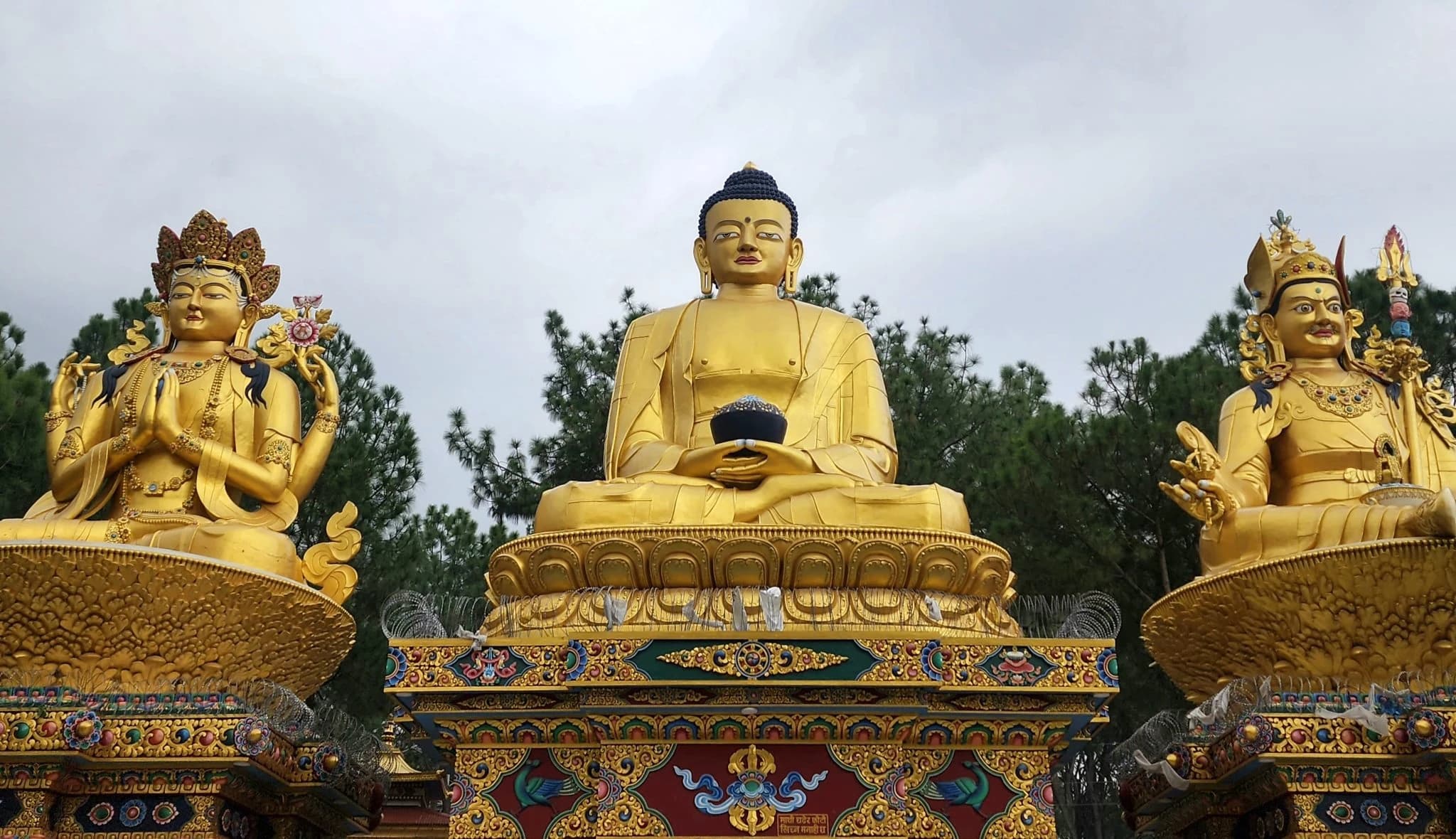
Kathmandu Valley packs seven separate UNESCO-listed monument zones into a single basin — Durbar Squares, the all-seeing eyes of Swayambhunath, one of the largest stupas in the world at Boudhanath — and still serves as the starting point for nearly everyone attempting to reach the world's highest mountains.
See full guide →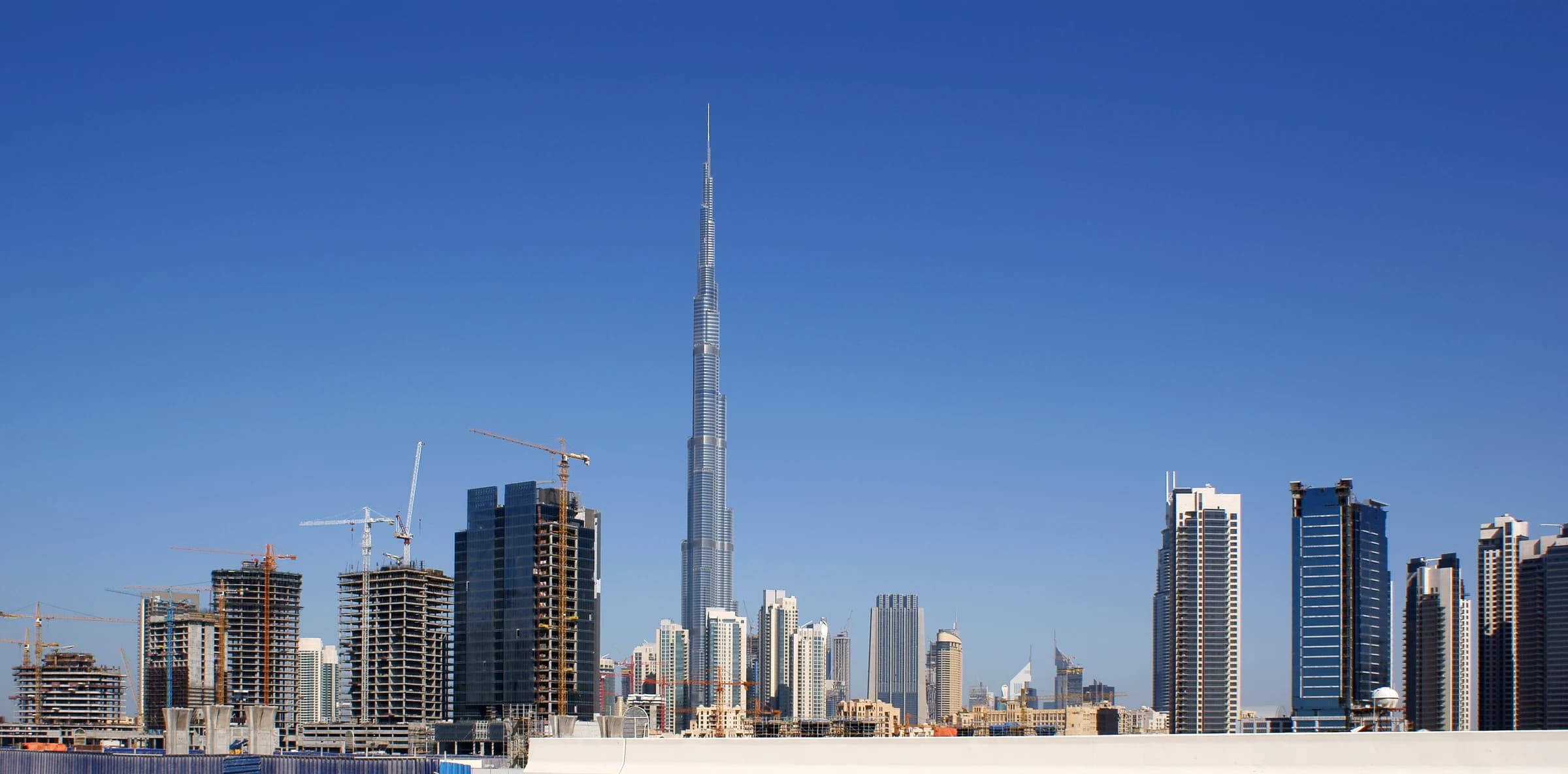 Dubai
DubaiDubai
United Arab Emirates
Less than sixty years ago Dubai was a small fishing and pearling village on the Persian Gulf; today it holds the Burj Khalifa, the tallest building on Earth, and an artificial palm-shaped archipelago visible from space — a transformation compressed into roughly a single working lifetime rather than the centuries most major cities took to build themselves.
See full guide →Comparing more than one route? See the full transport comparison guide.