Japan · Asia
Osaka
Osakans have a saying, kuidaore, roughly "eat until you drop," and the city built its entire identity around living up to it — a place where Tokyo's reserve gives way to loud neon signage shaped like crabs and blowfish, and a 16th-century castle sits a short walk from some of the densest, most competitive street food alleys in Japan.
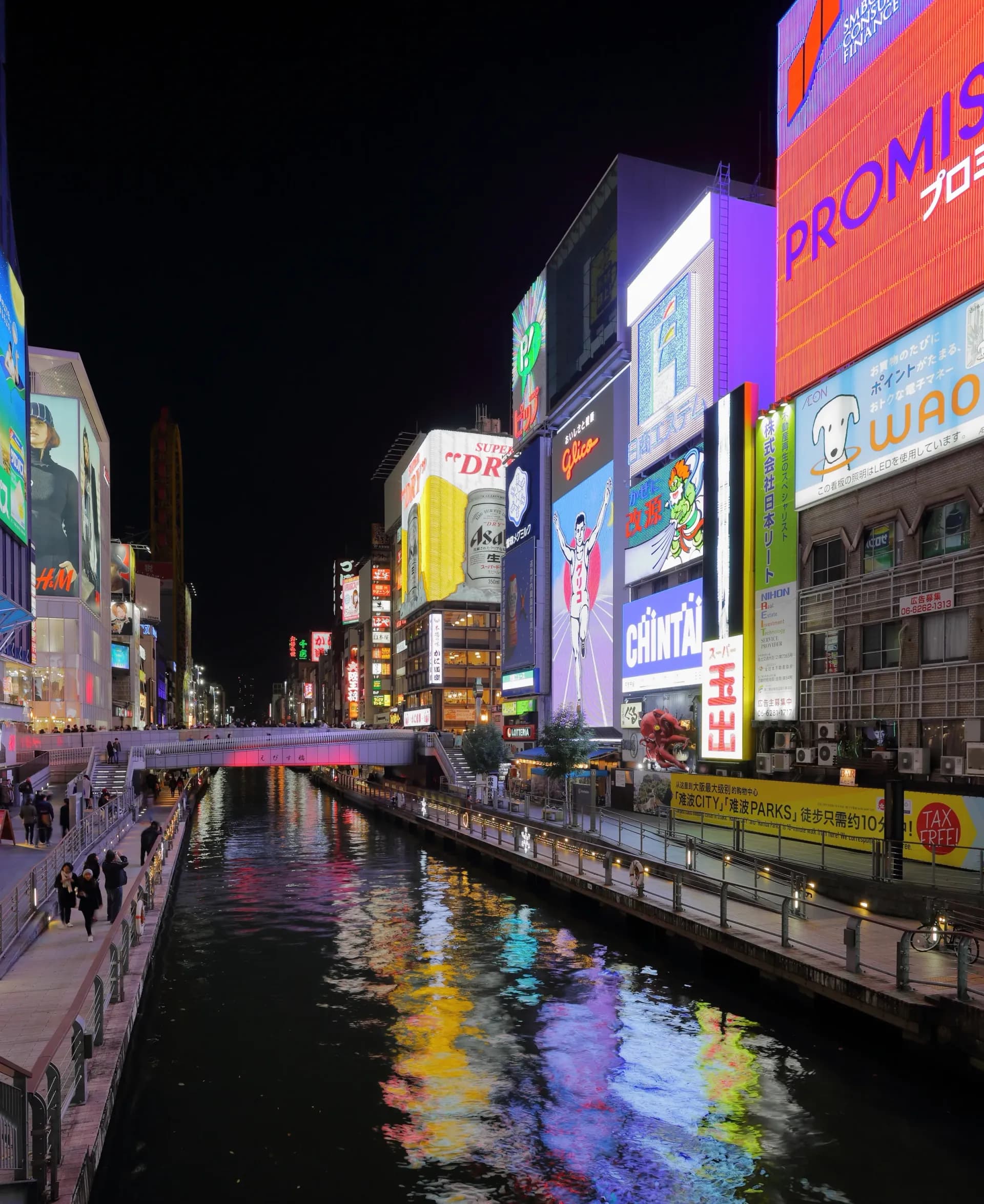
Osakans have a local expression, kuidaore, roughly translating to "eat until you drop," and the city has built much of its identity, and its tourism reputation, around genuinely living up to it. Dotonbori, the neon-lit canal district at the city's center, packs competing street food stalls beneath elaborate mechanical signage, a giant mechanical crab, a running man logo, a blowfish lantern, each one louder than the last, advertising takoyaki, okonomiyaki, and kushikatsu to the crowds moving along the canal.
Osaka Castle, originally built in the 1580s by Toyotomi Hideyoshi, one of the key unifiers of feudal Japan, has been destroyed and rebuilt multiple times since, most recently as a 1931 reconstruction that now houses a museum inside its concrete replica exterior. The surrounding park, particularly during cherry blossom season, remains one of the most popular gathering spots in the city, and the castle's elevated position offers sweeping views back over Osaka's skyline.
Osaka's character reads noticeably different from Tokyo's, louder, more food-focused, and generally regarded by locals and visitors alike as more relaxed and approachable. That reputation shows up in small ways, from Osaka's distinct dialect to a local sense of humor that's produced a disproportionate share of Japan's stand-up comedians, and it gives the city a genuinely different personality from the capital a couple hours away by bullet train.
Kuromon Ichiba Market, a covered market running for centuries in some form, gives a more everyday counterpart to Dotonbori's tourist-facing food scene, selling fresh seafood, produce, and prepared food to both locals and visitors browsing the narrow aisles. It's become known as "Osaka's Kitchen," and a walk through it grazing on fresh sushi and grilled skewers pairs well with the more polished restaurant scene found elsewhere in the city.
Osaka's central location in the Kansai region makes it a practical base for day trips to Kyoto and Nara, both under an hour away by train, letting visitors combine Osaka's food and modern energy with the historic temples and deer park that define those neighboring cities, all without changing hotels.
What a trip here actually costs
$55 / day avg.
- Capsule hotel or hostel dorm
- Osaka Metro day pass
- Street food in Dotonbori, including takoyaki and okonomiyaki
- Osaka Castle grounds, free
What to do at this tier
- • Dotonbori canal walk and street food, low cost per item
- • Osaka Castle grounds and park, free
- • Kuromon Ichiba Market, free to browse
$140 / day avg.
- 3-star hotel near Namba or Umeda
- Osaka Castle museum entry
- Umeda Sky Building observation deck
- Sit-down izakaya dinners
What to do at this tier
- • Osaka Castle museum and observation deck
- • Umeda Sky Building's Floating Garden Observatory
- • Universal Studios Japan, a full-day theme park visit
$380 / day avg.
- 4-5 star hotel with city views
- Private guided food tour through Dotonbori and Kuromon Market
- Multi-course kaiseki dinner
- Day trip to Nara with a private guide
What to do at this tier
- • Private guided food tour through Dotonbori and Kuromon Market
- • Multi-course kaiseki dinner at a top Osaka restaurant
- • Private day trip to Nara's deer park and temples
These are average estimates for planning purposes, not real-time prices — actual costs vary by season, availability, and how far ahead you book.
How to get there
Click anywhere on the world map — any airport works, not just our main hubs.
Click anywhere on the map above — any airport in the world works — to see estimated travel time and cost from there.
Times and prices are planning estimates, not live fares — always check a booking site before you commit. See the full Transport Comparison guide for the general tradeoffs of each mode.
Best time to visit
March-May brings cherry blossom season, and October-November brings autumn foliage; both are peak seasons, so book accommodations ahead.
Safety notes
Very safe with low crime, consistent with most of Japan; Dotonbori gets genuinely crowded on weekend evenings.
Visa & currency
Japanese yen (JPY), still largely cash-preferred outside major hotels and chains. Many Western passport holders can enter visa-free for short stays.
Questions people ask before visiting
Is Osaka worth visiting?
Yes — Osaka holds a 16th-century castle, the neon-lit Dotonbori canal district built around street food, and a local culture noticeably more boisterous and food-obsessed than Tokyo's, making it a strong complement to a Japan itinerary rather than a smaller version of the capital.
What does kuidaore mean?
A local Osaka expression roughly translating to "eat until you drop," reflecting the city's long-standing reputation as Japan's food capital. It shows up everywhere from Dotonbori's competitive street food stalls to the elaborate mechanical signage advertising them.
Is Osaka or Tokyo better for a first trip to Japan?
They complement rather than compete — Tokyo delivers scale and modern culture, while Osaka offers a louder, more food-focused, and generally more affordable alternative a couple hours away by bullet train. Most first-time visitors combine both rather than choosing just one.
How many days do you need in Osaka?
Two to three days covers Osaka Castle, Dotonbori, and the Umeda Sky Building at a comfortable pace, with easy day trips to Kyoto or Nara possible given Osaka's central location in the Kansai region.
Nearby destinations
 Kyoto
KyotoKyoto
Japan
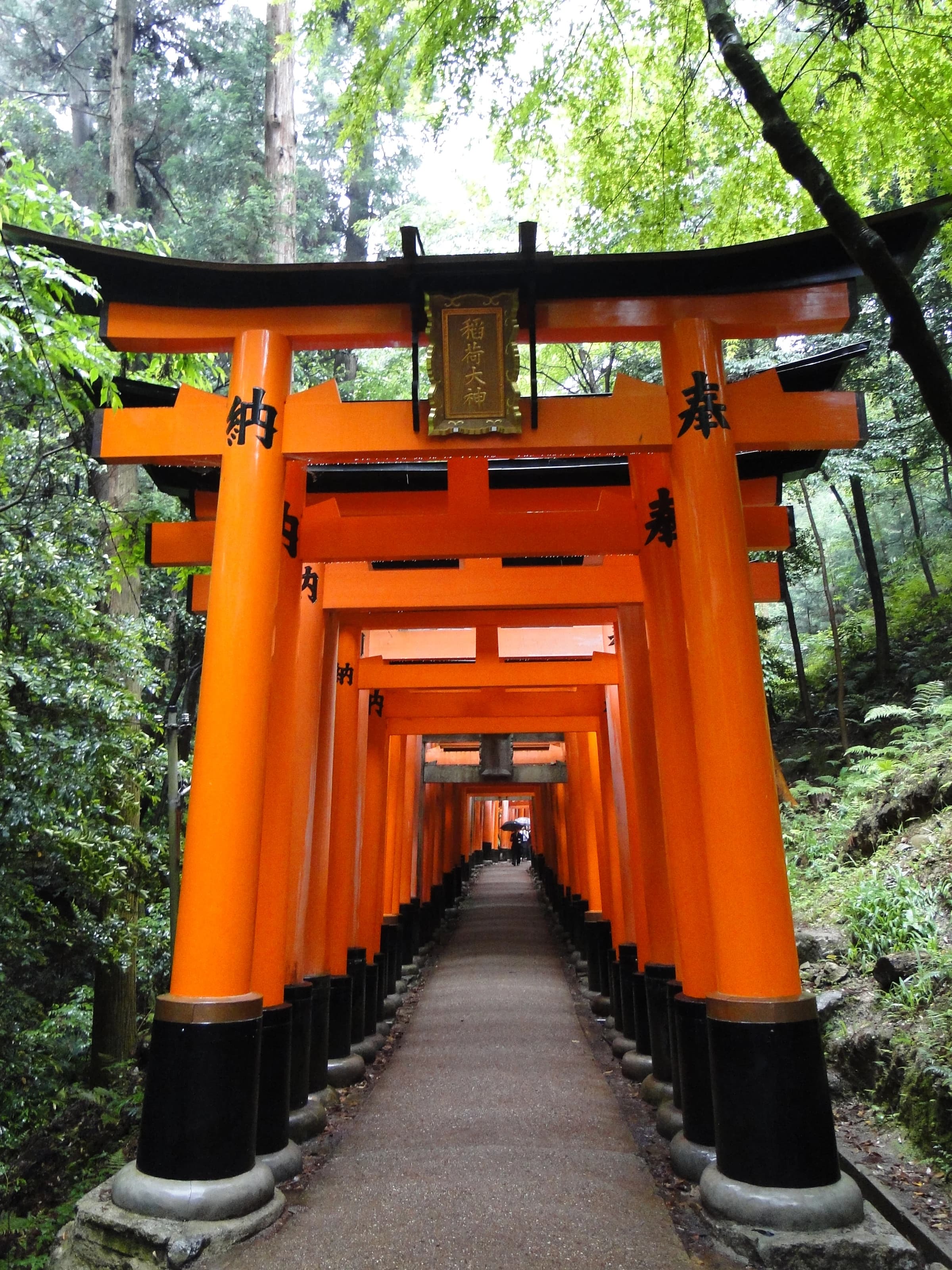
Kyoto served as Japan's imperial capital for over a thousand years, and unlike most of the country's other historic cities, it was deliberately left off the World War II bombing target list — which is why it still holds thousands of original temples, shrines, and wooden machiya houses that elsewhere in Japan simply didn't survive.
See full guide →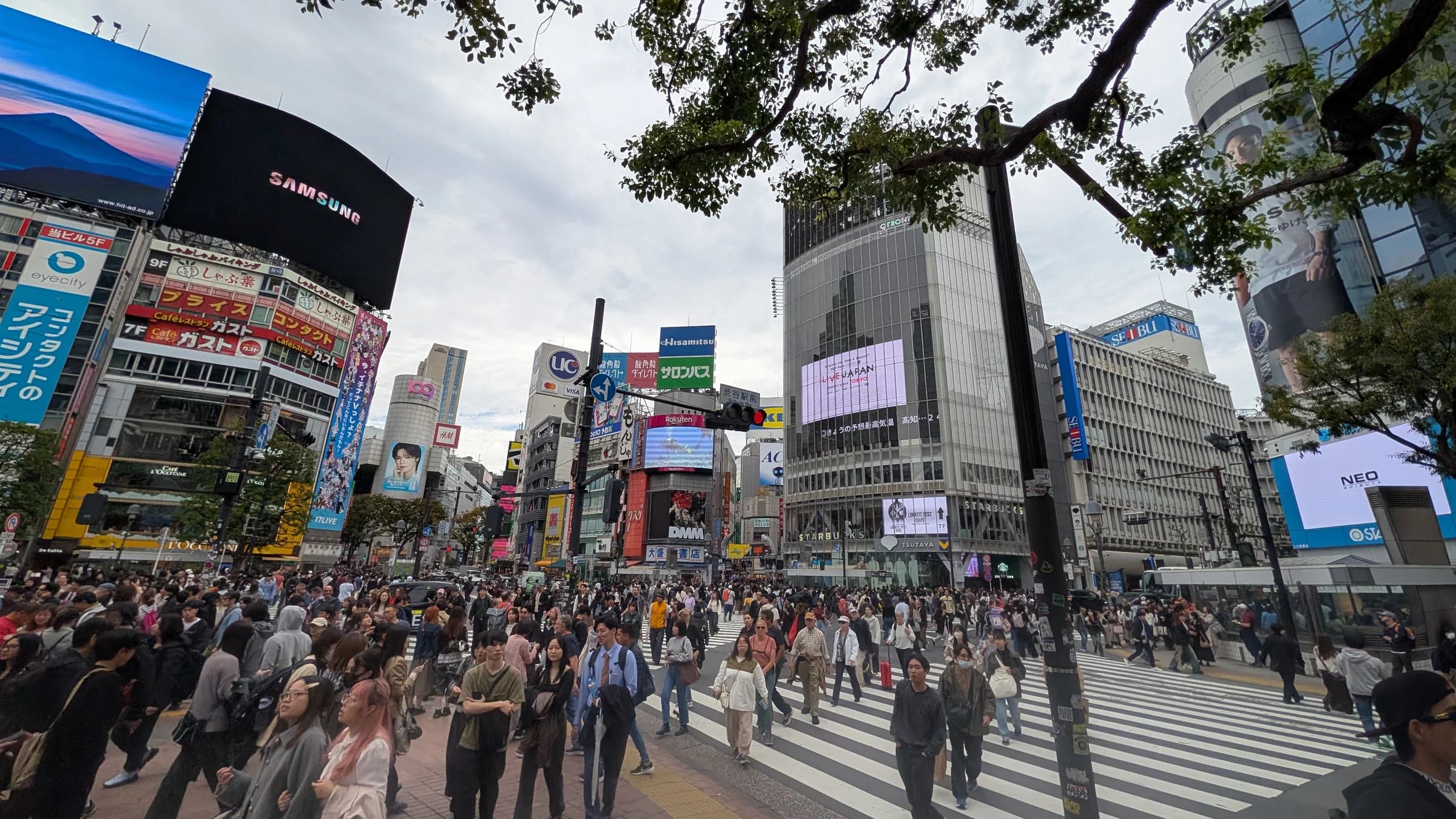 Tokyo
TokyoTokyo
Japan
Shibuya Crossing moves up to 3,000 pedestrians through a single intersection every time the light changes, and somehow nobody collides — a genuinely orderly kind of chaos that sums up Tokyo itself, a city of 37 million people that runs on a level of precision most places its size can't manage.
See full guide →Comparing more than one route? See the full transport comparison guide.