Laos · Asia
Luang Prabang
Every morning before sunrise, saffron-robed monks still file silently through the streets of Laos's former royal capital collecting rice from kneeling townspeople, a centuries-old alms ceremony that continues daily in a UNESCO-listed town shaped by both traditional Laotian and French colonial architecture.
Luang Prabang served as the royal capital of Laos until the monarchy's end in 1975, and the town's UNESCO World Heritage status, granted in 1995, recognizes the distinctive way its architecture blends traditional wooden Laotian temple design with the brick and stucco buildings left by French colonial administration in the early 20th century. That combination gives the old town a genuinely specific character, unlike either a purely traditional Southeast Asian town or a straightforward colonial relic.
Every morning before sunrise, hundreds of saffron-robed monks from the town's many temples walk in a long, silent procession through the streets, collecting rice and food offerings from residents and visitors kneeling along the route. Known as Tak Bat, the ceremony remains an active daily religious practice rather than a staged tourist event, and it asks for a specific kind of respectful distance, no flash photography, no touching the monks, that not every visitor arrives prepared for.
Kuang Si Falls, a multi-tiered waterfall roughly 30 minutes outside town, has become one of the most photographed natural sites in Laos, its pools taking on a striking turquoise color from natural limestone mineral deposits in the water. Several of the lower pools are open for swimming, and a rescue center for moon bears, animals saved from the illegal wildlife trade, sits near the falls' entrance.
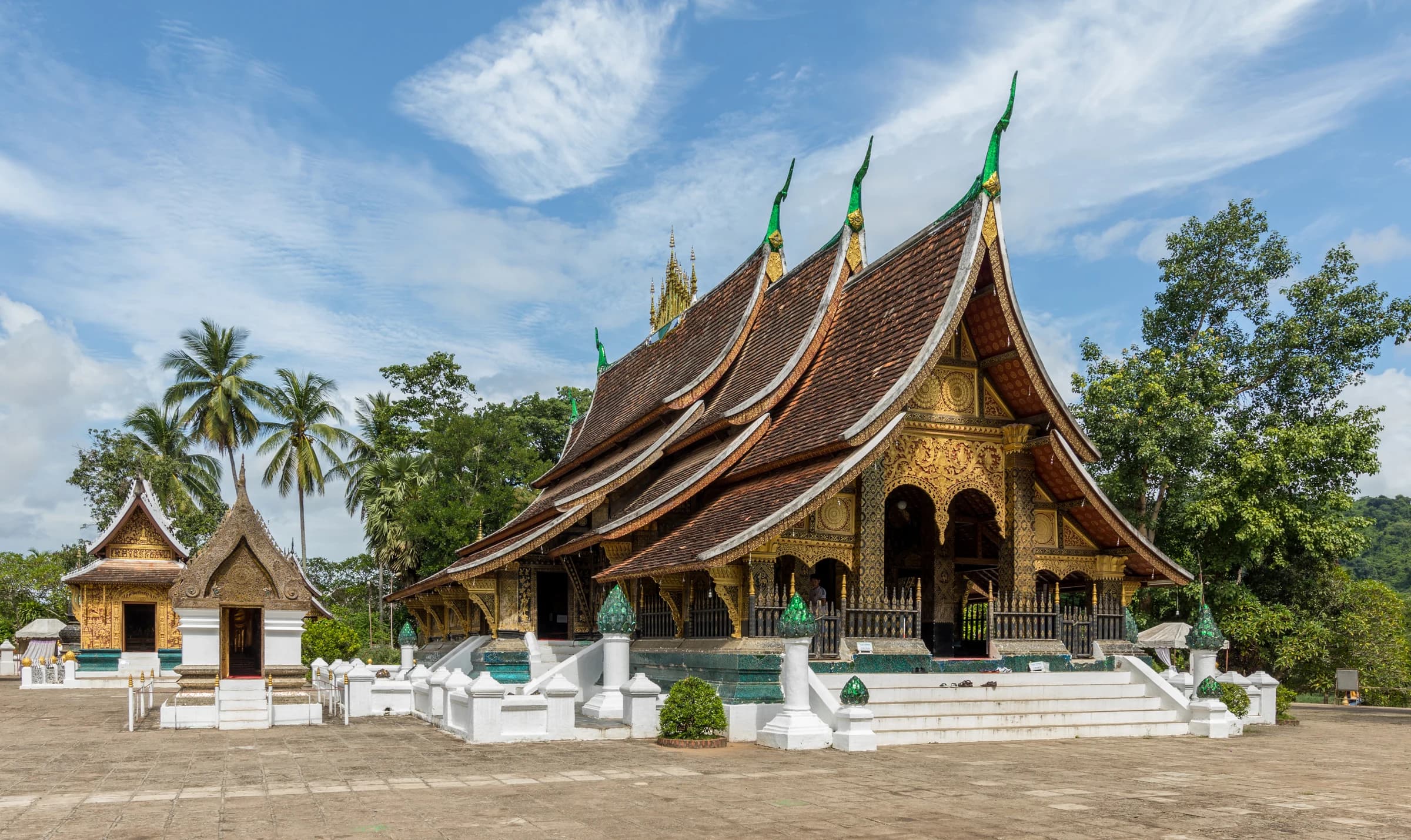
Wat Xieng Thong, considered the finest of Luang Prabang's many temples, was built in 1560 under royal patronage and features a sweeping, low roofline distinctive to Luang Prabang's temple architecture, along with elaborate mosaic work depicting scenes from Lao mythology. It sits near the confluence of the Mekong and Nam Khan rivers, a location that shaped the town's original layout as a trading post centuries before tourism arrived.
Luang Prabang's pace, genuinely slower than Southeast Asia's larger, more chaotic cities, is often cited as part of its appeal, and the town has managed that pace deliberately, limiting building heights and development within the historic core to protect the same character that earned its UNESCO listing in the first place.
What a trip here actually costs
$30 / day avg.
- Guesthouse in the old town
- Tuk-tuk and shared minivan rides
- Local Lao restaurant meals
- Temple visits, low or no entry fee
What to do at this tier
- • Dawn alms-giving ceremony (Tak Bat), free, observe respectfully
- • Wat Xieng Thong and other old town temples, low or no entry fee
- • Night market along the main street, free to browse
$70 / day avg.
- 3-star boutique hotel
- Kuang Si Falls guided day trip
- Mekong River sunset cruise
- Cooking class with a local market visit
What to do at this tier
- • Kuang Si Falls day trip, including the moon bear rescue center
- • Mekong River sunset cruise
- • Lao cooking class with a morning market visit
$180 / day avg.
- Riverside boutique hotel or resort
- Private guided old town and temple tour
- Private Kuang Si Falls trip with a dedicated driver
- Fine dining Lao tasting menu
What to do at this tier
- • Private guided tour of the old town's temples and colonial architecture
- • Private day trip to Kuang Si Falls with a dedicated driver
- • Fine dining Lao tasting menu at a riverside restaurant
These are average estimates for planning purposes, not real-time prices — actual costs vary by season, availability, and how far ahead you book.
How to get there
Click anywhere on the world map — any airport works, not just our main hubs.
Click anywhere on the map above — any airport in the world works — to see estimated travel time and cost from there.
Times and prices are planning estimates, not live fares — always check a booking site before you commit. See the full Transport Comparison guide for the general tradeoffs of each mode.
Best time to visit
November-February is cool and dry, the most comfortable season; March-May runs hot, and the monsoon (June-October) brings heavy rain.
Safety notes
Very safe and relaxed; the main practical note is respecting the alms-giving ceremony's religious significance rather than treating it purely as a photo opportunity.
Visa & currency
Lao kip (LAK). Most nationalities can get a visa on arrival at the airport or land borders.
Questions people ask before visiting
Is Luang Prabang worth visiting?
Yes — this former royal capital of Laos holds UNESCO World Heritage status for its blend of traditional Laotian and French colonial architecture, hosts a daily dawn alms-giving ceremony still practiced by hundreds of monks, and sits near Kuang Si Falls, one of the most photographed waterfalls in Southeast Asia.
What is the alms-giving ceremony in Luang Prabang?
Known as Tak Bat, it's a daily dawn ritual where Buddhist monks walk in single file through town collecting rice and food offerings from kneeling residents and visitors. It remains an active religious practice, and visitors are asked to observe respectfully rather than use flash photography or get too close.
What are Kuang Si Falls?
A multi-tiered waterfall roughly 30 minutes outside Luang Prabang, known for its striking turquoise pools created by natural limestone deposits. Several pools are open for swimming, and a rescue center for moon bears sits near the entrance.
How many days do you need in Luang Prabang?
Three to four days covers the old town's temples, the alms-giving ceremony, and a day trip to Kuang Si Falls at a relaxed pace, which suits the town's generally slow-paced character well.
Nearby destinations
 Hanoi
HanoiHanoi
Vietnam
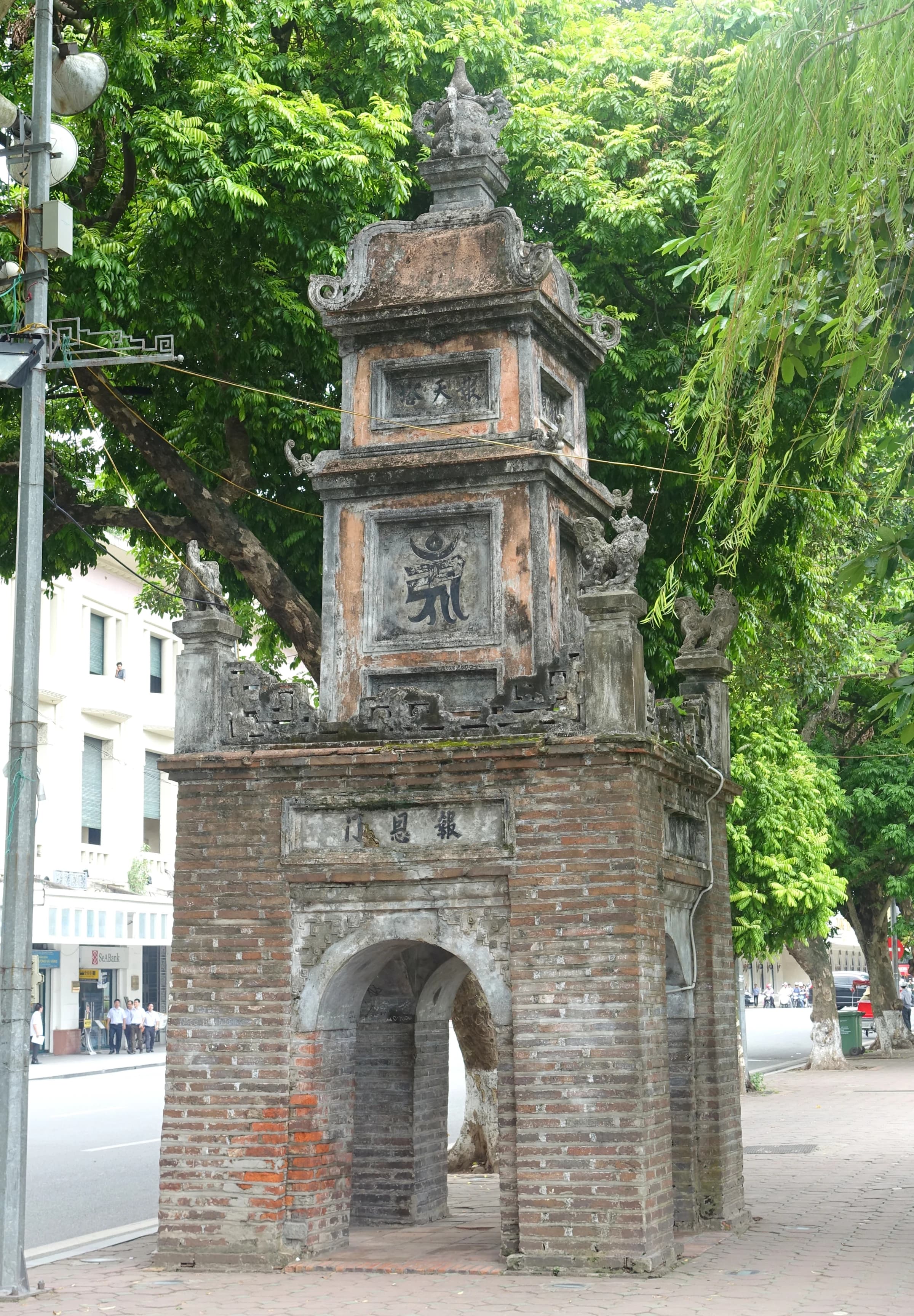
Vietnam's capital has been continuously inhabited since 1010, and a stretch of its Old Quarter still runs literal train tracks through a residential street lined with cafes close enough to touch the passing carriages — one of the more unusual ways a thousand-year-old city and modern viral tourism have collided.
See full guide →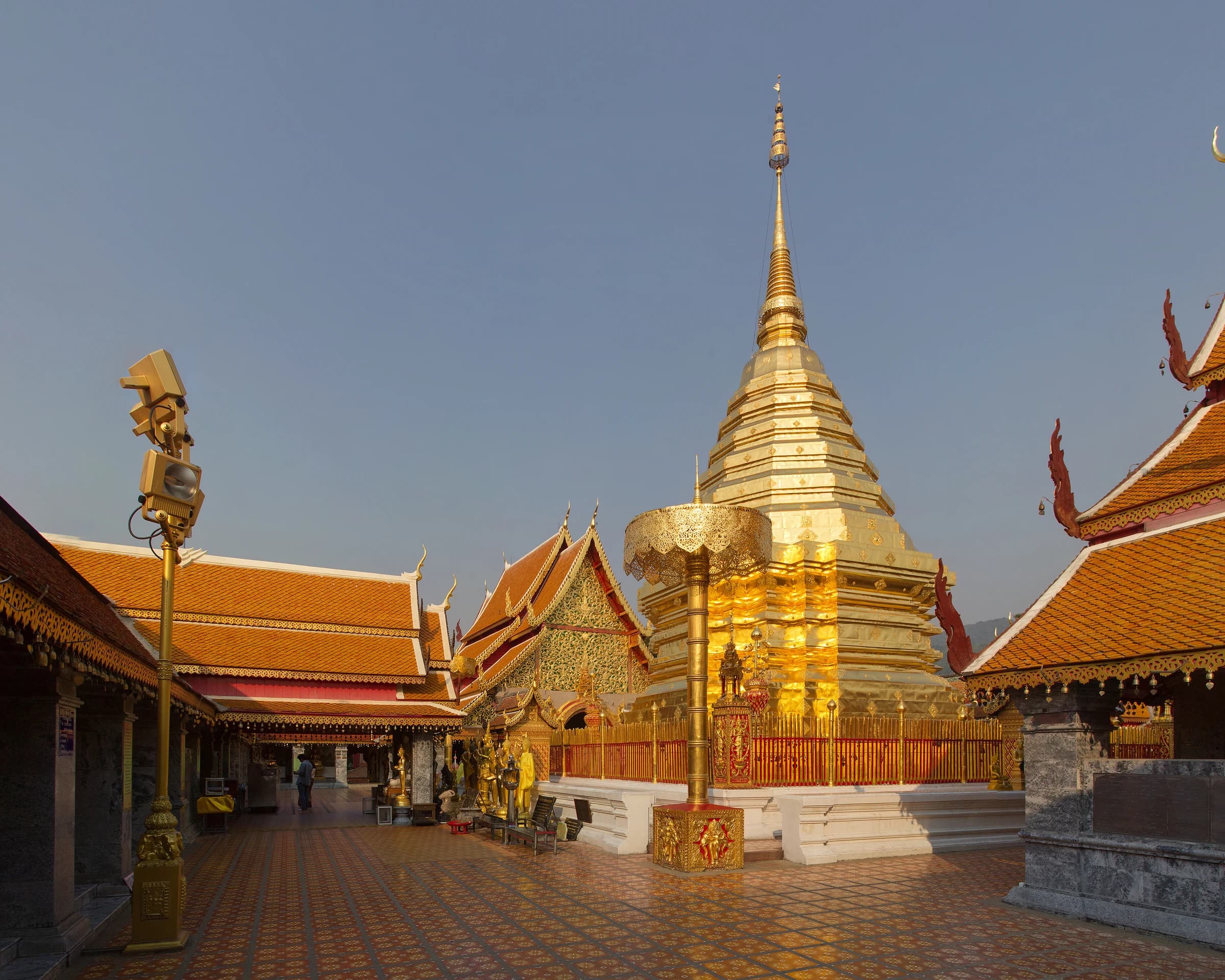 Chiang Mai
Chiang Mai
Thailand
Chiang Mai was founded in 1296 as the capital of the Lanna Kingdom, and its Old City still sits inside a nearly-complete square moat and the remnants of its original brick walls — a slower, mountain-ringed counterpoint to Bangkok that's become one of the world's most popular bases for long-term digital nomads.
See full guide →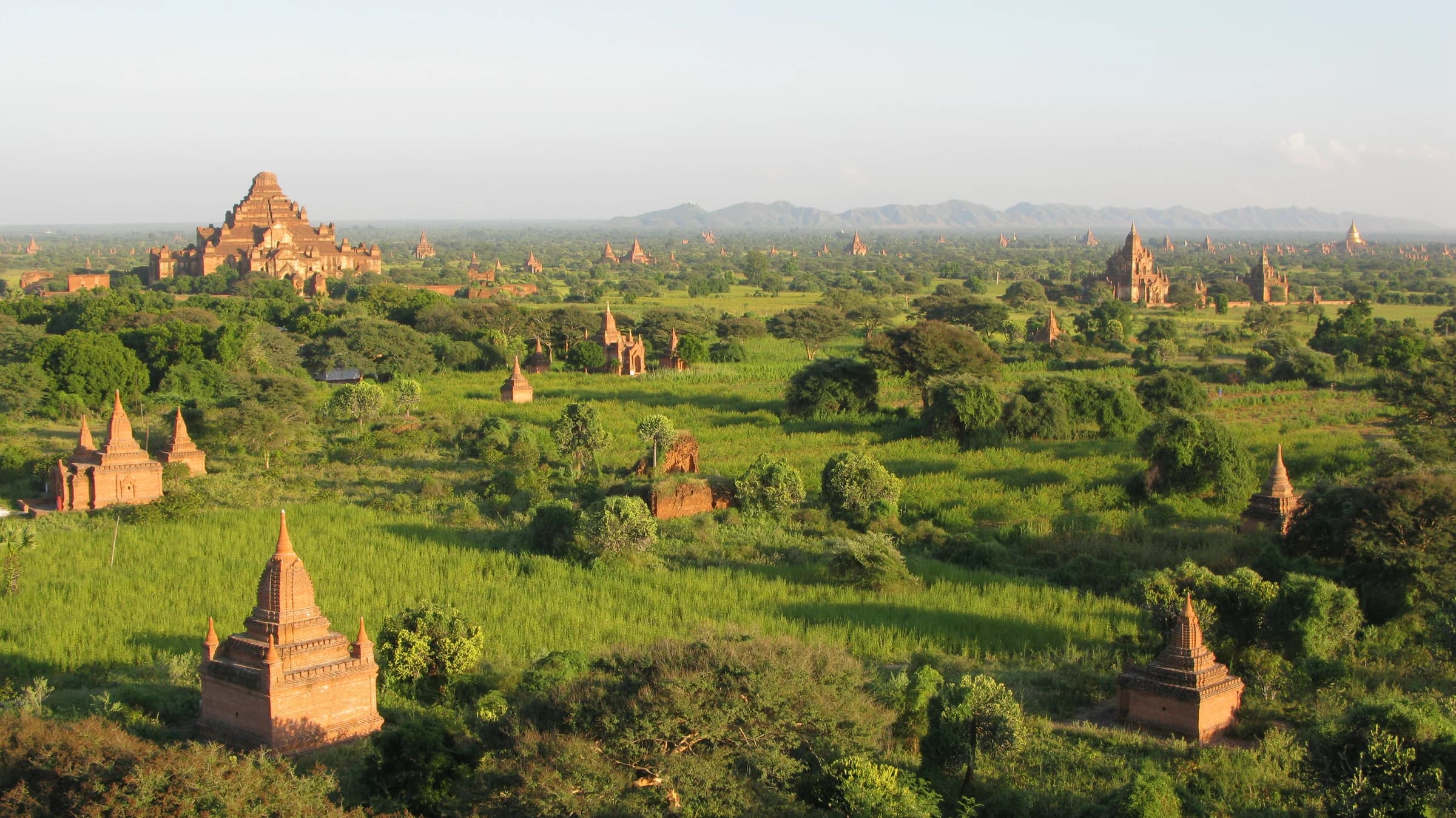 Bagan
BaganBagan
Myanmar
Between the 9th and 13th centuries, the kings of the Pagan Empire built more than 10,000 Buddhist temples and pagodas across a single plain in central Myanmar, and over 2,000 of them still stand today, scattered across the landscape in a scene most visitors only ever see in photos of hot air balloons drifting over the ruins at dawn.
See full guide →Comparing more than one route? See the full transport comparison guide.