Sri Lanka · Asia
Kandy
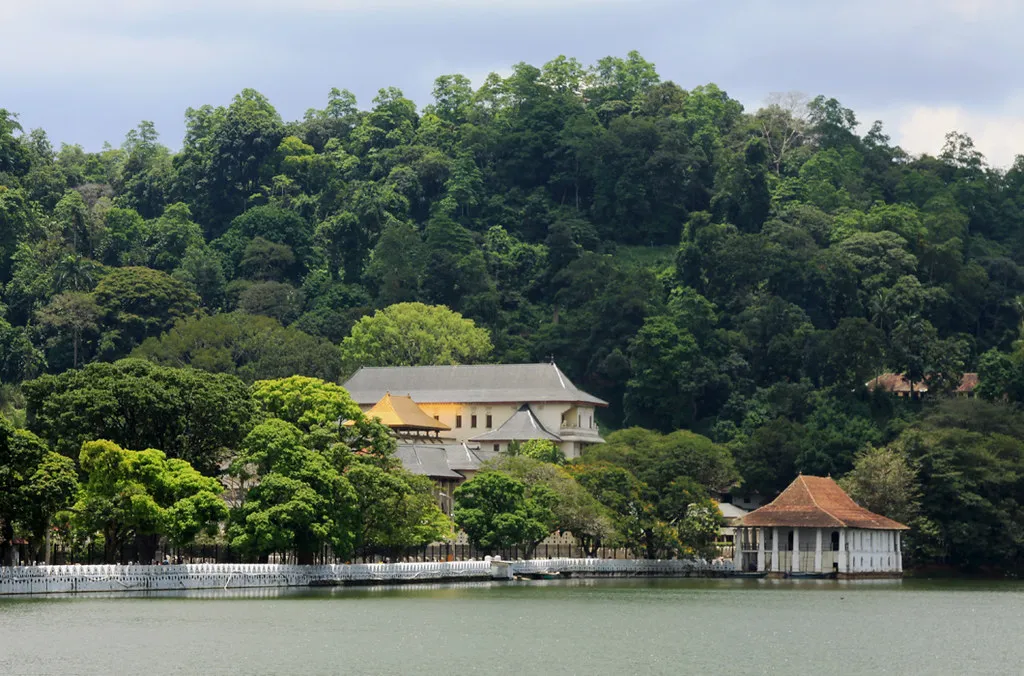
The Temple of the Sacred Tooth Relic in Kandy holds what's believed to be one of the Buddha's own teeth, one of the most venerated objects in the Buddhist world, and the relic's arrival here centuries ago helped make Kandy the last capital of Sri Lanka's independent Sinhalese kings before the British finally took full control of the island in 1815.
The Temple of the Sacred Tooth Relic holds what's believed to be one of the Buddha's own teeth, brought to Sri Lanka in the 4th century and considered one of the most venerated objects anywhere in the Buddhist world. The relic itself is rarely displayed publicly, kept within a series of nested golden caskets inside an inner sanctum, but the temple draws a steady stream of pilgrims and visitors regardless, its daily rituals of drumming and offerings continuing much as they have for centuries.
That relic's presence helped establish Kandy as the last capital of Sri Lanka's independent Sinhalese kings, a status it held until the British finally brought the entire island under colonial control in 1815, ending centuries of local resistance that had kept Kandy independent even after coastal regions fell to Portuguese and then Dutch, then British power.
The Esala Perahera, held annually in Kandy typically each July or August, ranks among the grandest religious processions in Asia, featuring dozens of elaborately decorated elephants, traditional Kandyan dancers, drummers, and fire performers moving through the city's streets over consecutive nights to honor the Sacred Tooth Relic. Visitors who time a trip around the festival witness a display of ceremonial tradition rarely seen at this scale anywhere else in South Asia.
The Royal Botanical Gardens at Peradeniya, a short distance from central Kandy, cover roughly 60 hectares along the Mahaweli River and hold one of the most significant collections of tropical plant species in South Asia, including an orchid house and avenues of towering palms planted during the British colonial period. It remains one of the most popular half-day outings from the city.
Kandy sits at a notably cooler elevation than Sri Lanka's coastal cities, a welcome relief for visitors arriving from the heat of Colombo or the beaches further south, and its position at the edge of the island's central hill country makes it a natural gateway to the tea estates and scenic train routes that define much of the region beyond the city itself.
What a trip here actually costs
$28 / day avg.
- Guesthouse near the lake
- Local bus or tuk-tuk transport
- Local Sri Lankan restaurant meals
- Temple of the Tooth, low entry fee
What to do at this tier
- • Temple of the Sacred Tooth Relic, low entry fee
- • Kandy Lake walk, free
- • Kandy Central Market, free to browse
$70 / day avg.
- 3-star hotel with lake or hill views
- Royal Botanical Gardens entry
- Traditional Kandyan dance performance ticket
- Sit-down restaurant dinners
What to do at this tier
- • Royal Botanical Gardens, Peradeniya
- • Traditional Kandyan dance and fire-walking performance
- • Day trip into the surrounding tea country by train
These are average estimates for planning purposes, not real-time prices — actual costs vary by season, availability, and how far ahead you book.
How to get there
Click anywhere on the world map — any airport works, not just our main hubs.
Click anywhere on the map above — any airport in the world works — to see estimated travel time and cost from there.
Times and prices are planning estimates, not live fares — always check a booking site before you commit. See the full Transport Comparison guide for the general tradeoffs of each mode.
Best time to visit
January-April brings the driest, most comfortable conditions; Sri Lanka's monsoon patterns vary regionally, so checking current conditions before booking is worth it.
Safety notes
Very safe with low crime; modest dress is required when visiting the Temple of the Tooth and other religious sites.
Visa & currency
Sri Lankan rupee (LKR). Most nationalities need an Electronic Travel Authorization (ETA) arranged in advance, a straightforward online process.
Questions people ask before visiting
Is Kandy worth visiting?
Yes — Kandy holds the Temple of the Sacred Tooth Relic, one of the most venerated sites in the Buddhist world, along with the Royal Botanical Gardens at Peradeniya, a scenic lake, and, timing permitting, the elaborate annual Esala Perahera procession.
What is the Temple of the Sacred Tooth Relic?
A temple complex housing what's believed to be one of the Buddha's teeth, brought to Sri Lanka in the 4th century and considered one of the most sacred objects in Buddhism. The relic itself is rarely displayed publicly, but the temple remains a major pilgrimage site year-round.
What is the Esala Perahera festival?
A major annual Buddhist festival held in Kandy, typically in July or August, featuring an elaborate nighttime procession of decorated elephants, dancers, drummers, and fire performers honoring the Sacred Tooth Relic. It's considered one of the grandest religious processions in Asia.
How many days do you need in Kandy?
Two to three days covers the Temple of the Tooth, the Royal Botanical Gardens, and a walk around Kandy Lake at a relaxed pace, with the hill country's tea estates and train routes nearby for those extending further.
Nearby destinations
 Sigiriya
Sigiriya
Sri Lanka
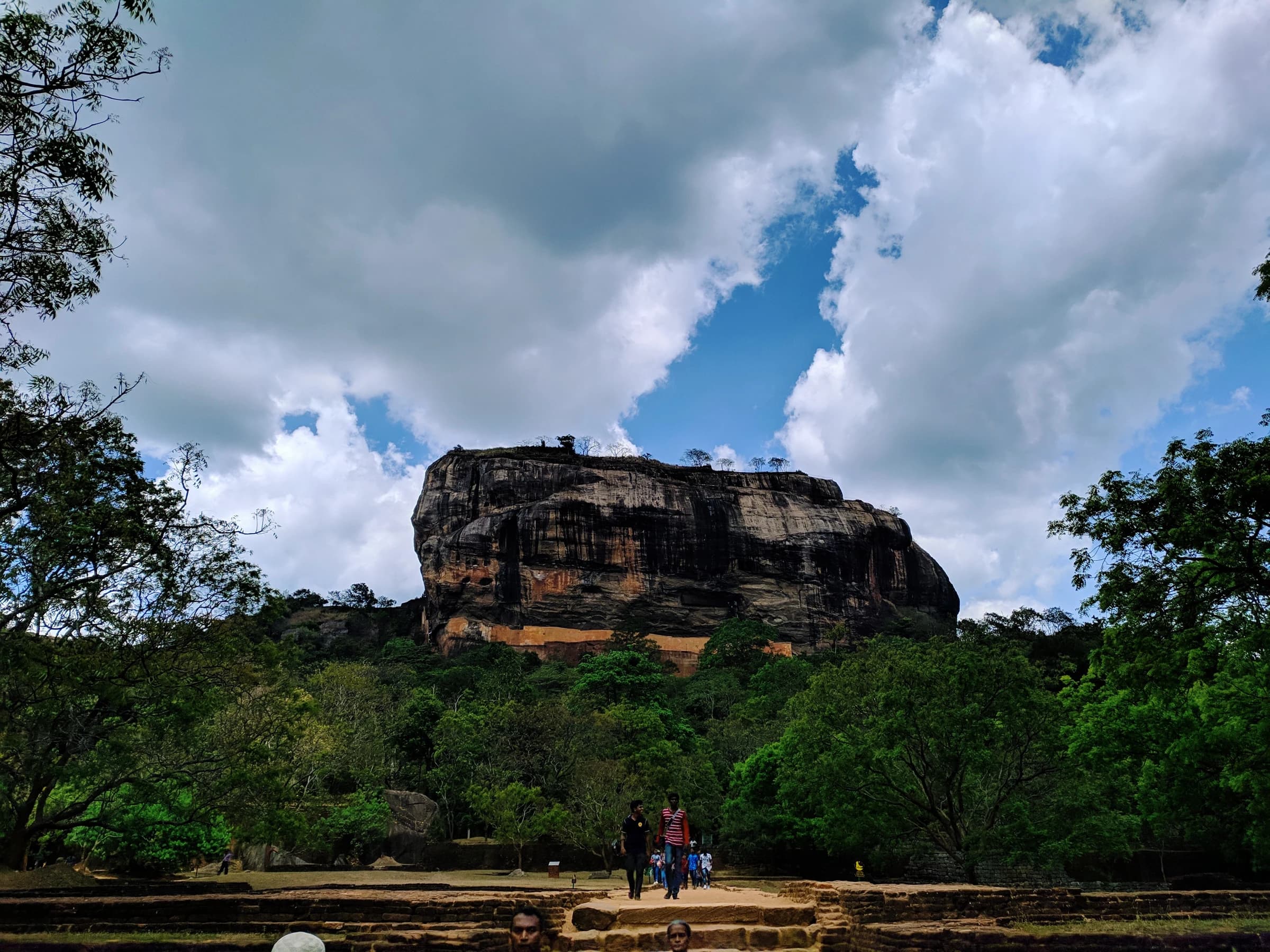
A 5th-century king built a palace on top of a 200-meter rock column rising straight out of the Sri Lankan jungle, and the frescoes his artists painted on its sheer rock face have survived exposed to the weather for over 1,500 years, making Sigiriya one of Asia's more genuinely improbable ruins.
See full guide →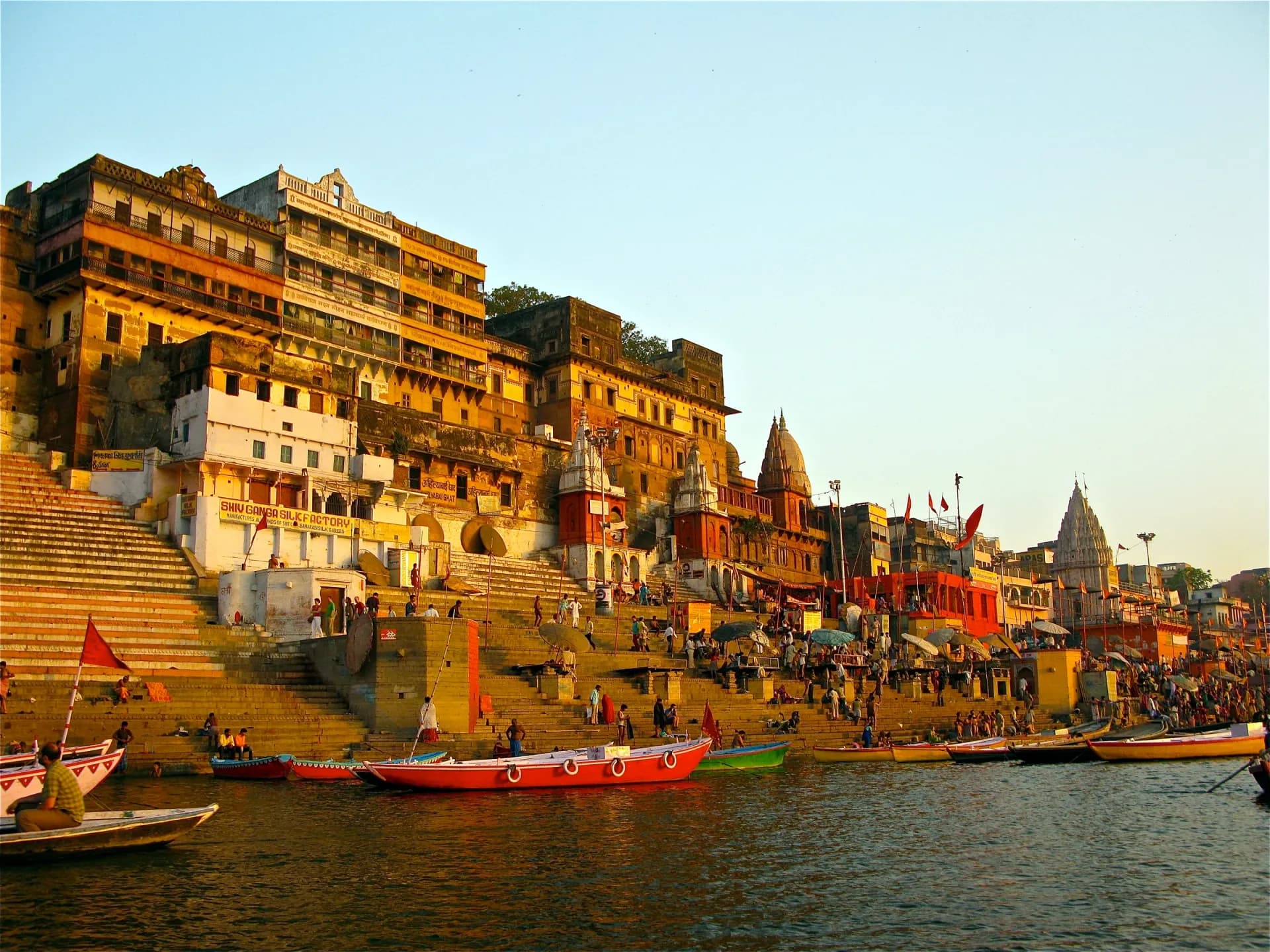 Varanasi
Varanasi
India
Varanasi is one of the oldest continuously inhabited cities in the world, and its ghats along the Ganges River host both cremation ceremonies and sunrise prayers within sight of each other, a directness about mortality that Hindu pilgrims travel here specifically to witness, since dying or being cremated in Varanasi is believed to offer liberation from the cycle of rebirth.
See full guide →Comparing more than one route? See the full transport comparison guide.