China · Asia
Guilin
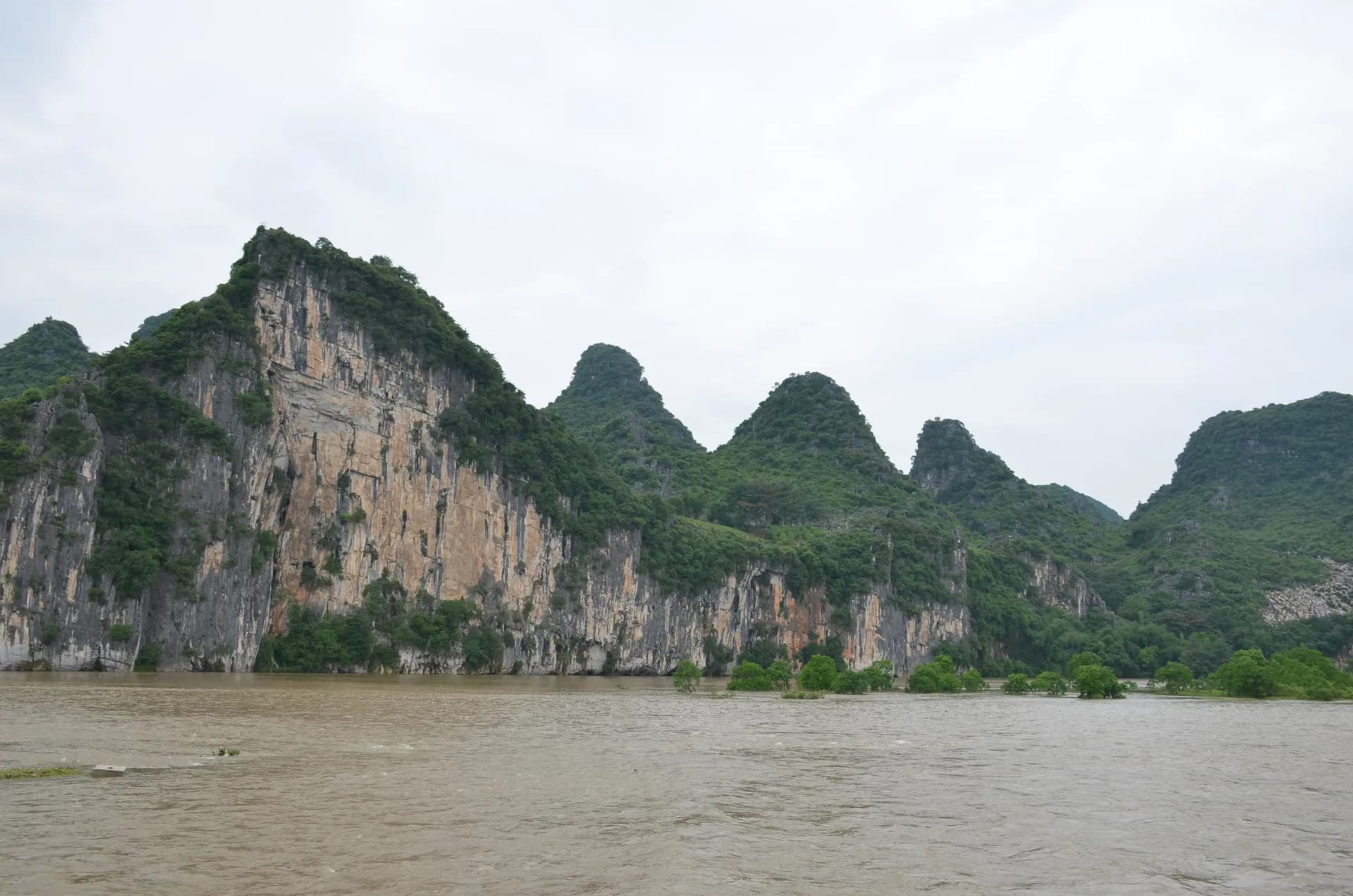
Guilin's karst mountain landscape has appeared on China's 20-yuan banknote and in centuries of traditional Chinese ink painting, and a cruise down the Li River between Guilin and the town of Yangshuo remains the most direct way to see why this particular stretch of limestone peaks became a fixed reference point in Chinese art long before photography existed.
Guilin's karst mountain landscape, hundreds of limestone peaks rising abruptly from flat farmland and river plains, has served as a reference point in Chinese ink painting for centuries, its specific silhouette recognizable enough that it appears today on the back of China's 20-yuan banknote. The formations result from millions of years of water erosion acting on soluble limestone bedrock, producing the steep, isolated peaks that distinguish karst terrain from more gradual mountain ranges.
A cruise along the Li River between Guilin and the smaller town of Yangshuo remains the classic way to experience that landscape, drifting past peaks with names drawn from their perceived shapes, reflected in water calm enough on most days to nearly double the visual effect. The journey takes several hours and covers roughly 80 kilometers of river, widely considered one of the essential scenic boat trips in China.
Yangshuo itself, smaller and more relaxed than Guilin, has developed into a popular base for exploring the surrounding countryside by bicycle, its rural roads winding between rice paddies and karst peaks at a pace considerably slower than most Chinese tourist circuits. Rock climbing has also grown popular on the area's limestone cliffs, drawing a different kind of visitor than the river cruise crowds.
The Longji rice terraces, also known as the Dragon's Backbone for their curving, layered shape climbing the surrounding hillsides, sit a few hours northwest of Guilin and have been cultivated by local Zhuang and Yao ethnic communities for centuries. Visiting during planting season in late spring, when the terraces fill with reflective water, or during the harvest in September and October, when they turn golden, offers two very different but equally striking versions of the same landscape.
Reed Flute Cave, a limestone cave near central Guilin, has been illuminated with colored lighting to highlight its stalactites and stalagmites, some formations recorded in ink inscriptions left by visitors dating back over a thousand years, evidence that this particular cave has drawn curious travelers for a genuinely long time before modern tourism ever existed.
What a trip here actually costs
$30 / day avg.
- Guesthouse in Guilin or Yangshuo
- Local bus transport
- Local Guangxi restaurant meals
- Reed Flute Cave, low entry fee
What to do at this tier
- • Reed Flute Cave, low entry fee
- • Elephant Trunk Hill park, low entry fee
- • Yangshuo bicycle ride through the countryside, low rental cost
$75 / day avg.
- 3-star hotel
- Li River cruise to Yangshuo
- Longji rice terraces guided day trip
- Sit-down restaurant dinners
What to do at this tier
- • Li River cruise from Guilin to Yangshuo
- • Longji (Dragon's Backbone) rice terraces guided day trip
- • Cormorant fishing demonstration on the Li River
These are average estimates for planning purposes, not real-time prices — actual costs vary by season, availability, and how far ahead you book.
How to get there
Click anywhere on the world map — any airport works, not just our main hubs.
Click anywhere on the map above — any airport in the world works — to see estimated travel time and cost from there.
Times and prices are planning estimates, not live fares — always check a booking site before you commit. See the full Transport Comparison guide for the general tradeoffs of each mode.
Best time to visit
April-October brings the most reliable green scenery and comfortable temperatures; the wetter spring months can bring higher river levels but also mist that adds atmosphere to the karst views.
Safety notes
Very safe with low crime; standard precautions apply for rice terrace hiking, which involves uneven, sometimes steep paths.
Visa & currency
Chinese yuan (CNY/RMB). Most nationalities need a visa arranged in advance, though visa-free transit policies apply in some cases.
Questions people ask before visiting
Is Guilin worth visiting?
Yes — Guilin holds some of the most iconic karst mountain scenery in China, featured on the 20-yuan banknote and in centuries of traditional painting, best experienced via a Li River cruise to Yangshuo, along with the dramatic Longji rice terraces and the illuminated Reed Flute Cave.
What is the Li River cruise?
A boat trip along the Li River between Guilin and the smaller town of Yangshuo, passing dramatic limestone karst peaks reflected in the water, widely considered one of the classic scenic river journeys in China and the inspiration for centuries of traditional landscape painting.
What are the Longji rice terraces?
Also known as the Dragon's Backbone rice terraces, a series of dramatically curved terraced fields carved into the hillsides northwest of Guilin, cultivated by local Zhuang and Yao ethnic communities for centuries and considered one of the most striking terraced landscapes in China.
How many days do you need in Guilin?
Three to four days covers a Li River cruise to Yangshuo, the Reed Flute Cave, and a day trip to the Longji rice terraces at a comfortable pace, with many visitors basing part of their stay in the smaller, more relaxed town of Yangshuo.
Nearby destinations
 Xi'an
Xi'anXi'an
China
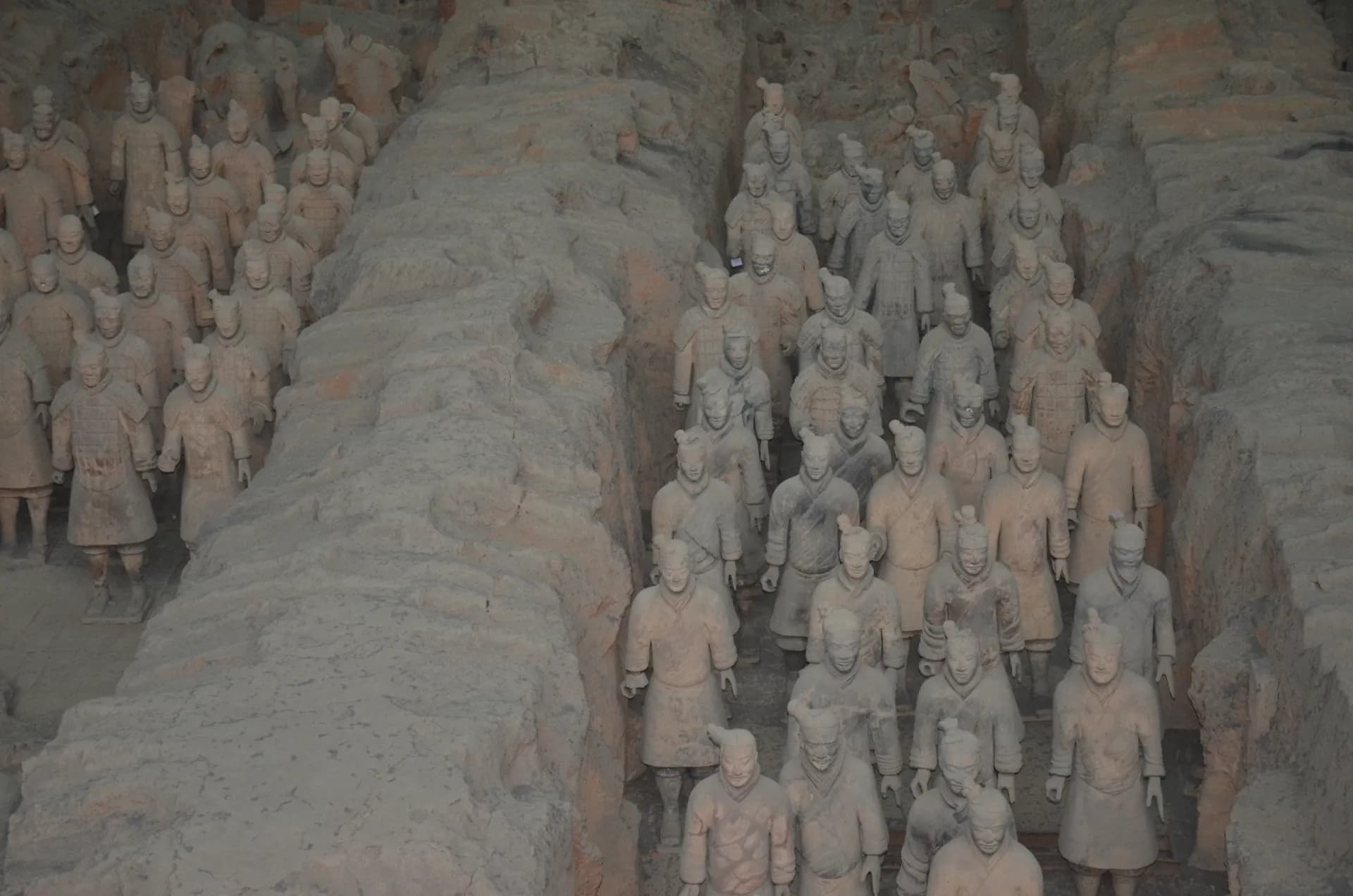
Farmers digging a well in 1974 outside Xi'an accidentally uncovered an army of roughly 8,000 life-sized terracotta soldiers, each with individually sculpted facial features, buried for over 2,000 years to guard the tomb of China's first emperor — one of the largest archaeological discoveries of the 20th century, and still only partially excavated.
See full guide → Chengdu
Chengdu
China
Chengdu Research Base has bred giant pandas successfully enough that the species' wild population has climbed from endangered toward vulnerable, and visitors who show up before 9am get to watch the pandas at their most active, before the midday heat sends them into the naps they spend most of the day taking anyway.
See full guide →Comparing more than one route? See the full transport comparison guide.