China · Asia
Xi'an
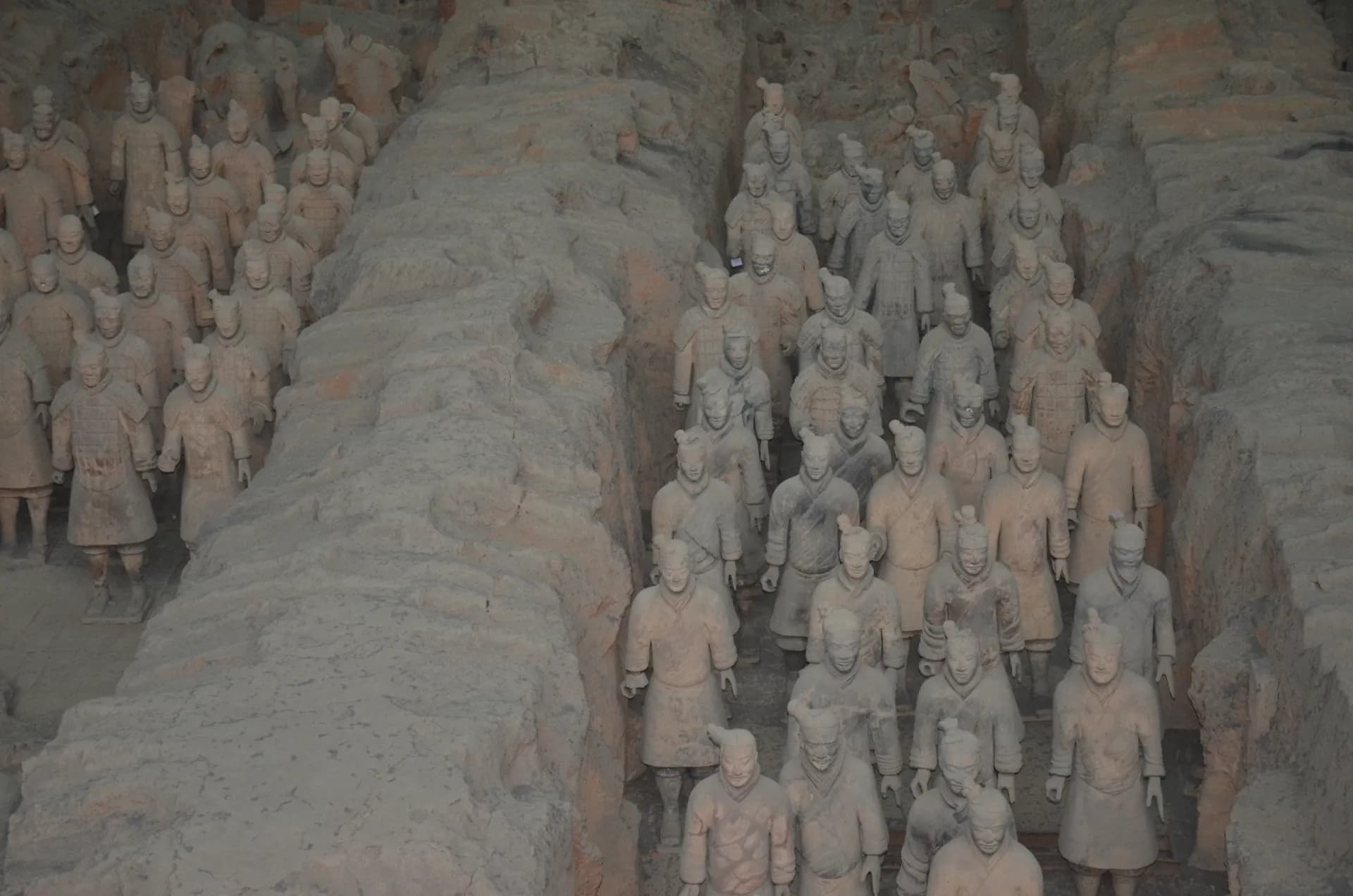
Farmers digging a well in 1974 outside Xi'an accidentally uncovered an army of roughly 8,000 life-sized terracotta soldiers, each with individually sculpted facial features, buried for over 2,000 years to guard the tomb of China's first emperor — one of the largest archaeological discoveries of the 20th century, and still only partially excavated.
Farmers digging a well in 1974 outside Xi'an struck fragments of terracotta figures buried in the earth, a discovery that led to the excavation of an army of roughly 8,000 life-sized soldiers, along with horses and chariots, created around 210 BC to guard the tomb of Qin Shi Huang, China's first emperor. It remains one of the most significant archaeological discoveries of the 20th century, and excavation of the wider mausoleum complex, believed to hold the emperor's still-unopened tomb, continues to this day.
What makes the Terracotta Army genuinely remarkable beyond its scale is the individuality of each figure, no two soldiers share identical facial features, achieved through a modular construction system that combined standardized bodies with uniquely sculpted heads and expressions. That level of craftsmanship, applied across thousands of figures rather than a handful of showpieces, reflects the resources an emperor obsessed with immortality was willing to commit to his own afterlife.
Xi'an's city wall, first built in the 14th century during the Ming Dynasty and remaining one of the most completely preserved ancient city walls in China, stretches roughly 14 kilometers in a rectangular loop around the old city center. Visitors can walk or cycle the full circuit, and doing so by bike has become one of the most popular ways to see the old city from an elevated, unhurried vantage point.
The Muslim Quarter, home to Xi'an's Hui Muslim community for centuries, holds some of the most highly regarded street food in China, its narrow lanes filled with vendors selling yangrou paomo, a lamb and bread soup, alongside skewered meats and hand-pulled noodles reflecting a distinct blend of Chinese and Central Asian culinary influence built up through Xi'an's historic role as the eastern terminus of the Silk Road.
Xi'an served as the capital of China during multiple dynasties, including the Tang Dynasty, one of the country's most culturally significant periods, and that legacy as a former imperial capital and Silk Road hub gives the city a historical density that extends well beyond the Terracotta Army alone, even though the army remains, understandably, the reason most visitors come.
What a trip here actually costs
$35 / day avg.
- Hostel dorm or budget hotel
- Local bus to the Terracotta Army site
- Muslim Quarter street food meals
- City wall entry, low cost
What to do at this tier
- • Terracotta Army museum, entry fee
- • Muslim Quarter street food crawl, low cost per item
- • City wall walk, low entry fee
$90 / day avg.
- 3-star hotel near the city wall
- Terracotta Army guided tour
- City wall bike rental
- Sit-down Shaanxi restaurant meals
What to do at this tier
- • Terracotta Army guided tour with historical context
- • City wall bike rental, circling the full 14-kilometer loop
- • Big Wild Goose Pagoda and surrounding square
$250 / day avg.
- 4-5 star hotel
- Private guided Terracotta Army and mausoleum tour
- Private city wall and Muslim Quarter tour
- Fine dining Shaanxi tasting menu
What to do at this tier
- • Private guided Terracotta Army and Qin Shi Huang Mausoleum tour
- • Private Muslim Quarter food tour
- • Fine dining Shaanxi tasting menu at a top Xi'an restaurant
These are average estimates for planning purposes, not real-time prices — actual costs vary by season, availability, and how far ahead you book.
How to get there
Click anywhere on the world map — any airport works, not just our main hubs.
Click anywhere on the map above — any airport in the world works — to see estimated travel time and cost from there.
Times and prices are planning estimates, not live fares — always check a booking site before you commit. See the full Transport Comparison guide for the general tradeoffs of each mode.
Best time to visit
March-May and September-November bring the mildest weather; summer runs hot, and winter is cold and occasionally smoggy.
Safety notes
Very safe with low crime; the Terracotta Army site draws large crowds, so an early arrival helps avoid the busiest periods.
Visa & currency
Chinese yuan (CNY/RMB). Most nationalities need a visa arranged in advance, though visa-free transit policies apply in some cases.
Questions people ask before visiting
Is Xi'an worth visiting?
Yes — Xi'an holds the Terracotta Army, one of the most significant archaeological discoveries in the world, alongside a fully intact 14th-century city wall visitors can cycle around and a Muslim Quarter with some of the best street food in China.
How was the Terracotta Army discovered?
Farmers digging a well in 1974 near Xi'an accidentally struck fragments of terracotta figures, leading to the excavation of an army of roughly 8,000 life-sized soldiers, along with horses and chariots, buried around 210 BC to guard the tomb of Qin Shi Huang, China's first emperor.
Is every Terracotta Army soldier's face different?
Yes, remarkably, no two soldiers share identical facial features, a level of individualized craftsmanship achieved through a modular construction system that let artisans combine standardized body parts with unique heads and expressions.
How many days do you need in Xi'an?
Two to three days covers the Terracotta Army, the city wall, and the Muslim Quarter at a comfortable pace, with the Terracotta Army site itself easily taking half a day given its scale.
Nearby destinations
 Beijing
Beijing
China
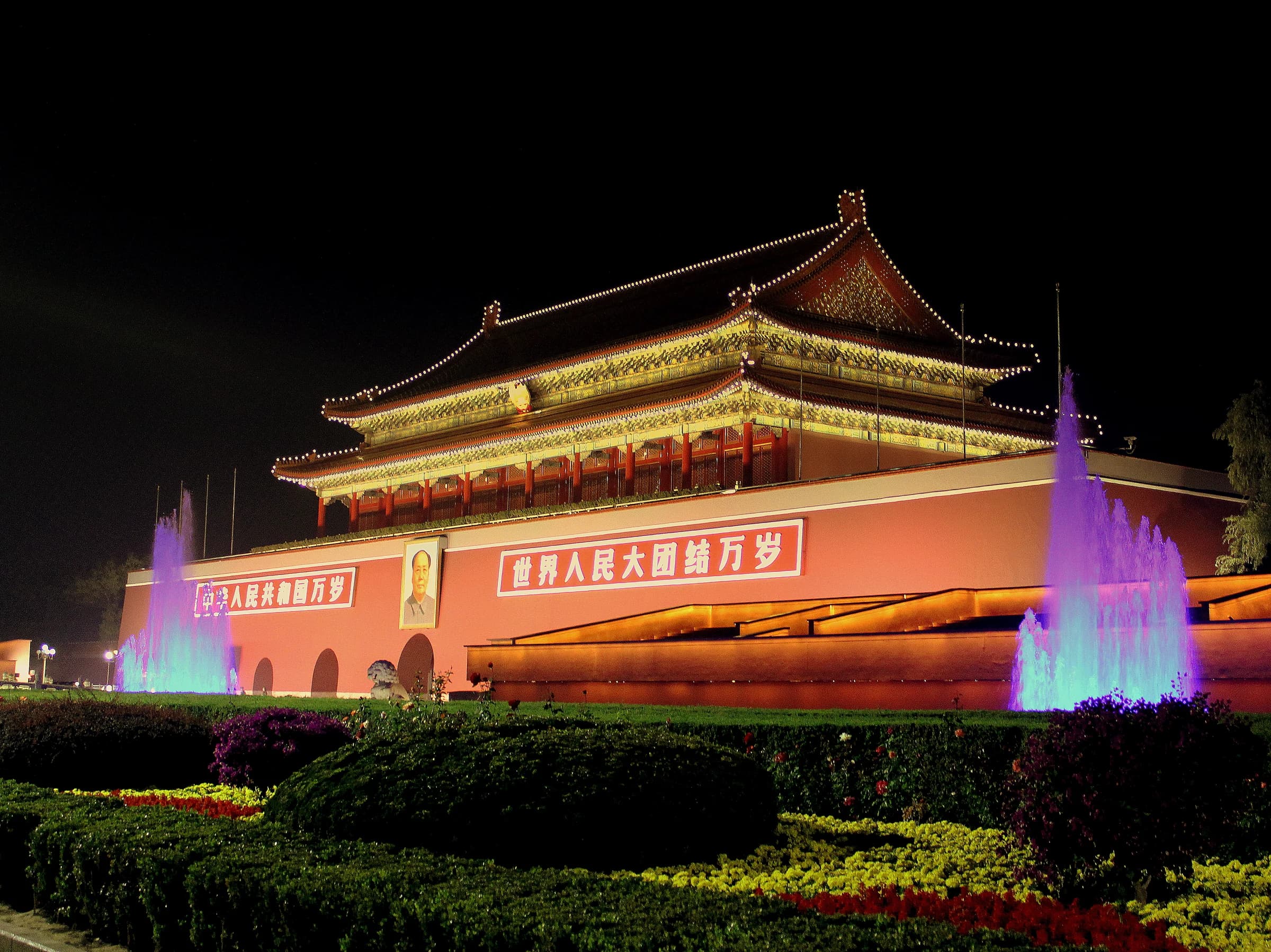
The Forbidden City housed 24 emperors across nearly 500 years inside a walled complex of 980 buildings, and it's just one stop in a capital that also holds the most-visited sections of the Great Wall and one of the largest public squares on Earth.
See full guide → Chengdu
Chengdu
China
Chengdu Research Base has bred giant pandas successfully enough that the species' wild population has climbed from endangered toward vulnerable, and visitors who show up before 9am get to watch the pandas at their most active, before the midday heat sends them into the naps they spend most of the day taking anyway.
See full guide →Comparing more than one route? See the full transport comparison guide.