India · Asia
Delhi
Delhi has served as a seat of power for roughly a thousand years across multiple empires, and the result is a capital where the Mughal-era Red Fort and the medieval Qutub Minar, at 73 meters the tallest brick minaret in the world, sit within the same metro system as the colonial-built government quarter New Delhi and a population pushing past 30 million.
Delhi has functioned as a seat of political power for roughly a thousand years, passing through the hands of Delhi Sultanate rulers, the Mughal Empire, and British colonial administration before becoming independent India's capital. That succession left behind a city where structures from wildly different eras sit within a short drive of each other, a genuinely rare density of layered history for a capital of this scale.
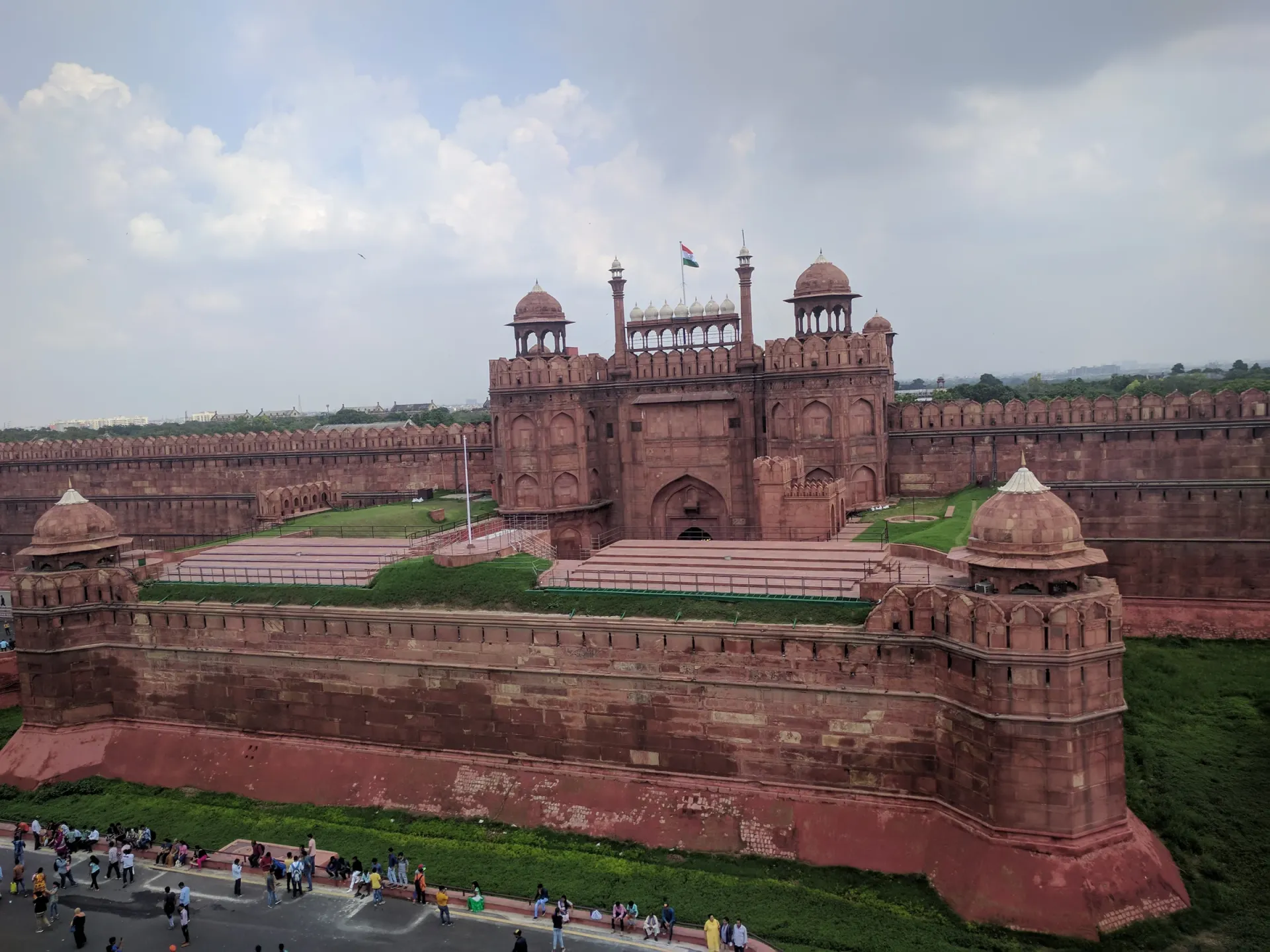
The Red Fort, built in the 17th century as the main residence of Mughal emperors, takes its name from the red sandstone walls enclosing its palaces and audience halls, and it remains the site of India's Prime Minister delivering the Independence Day address each August 15th, an unbroken tradition tying the fort directly to modern national identity. UNESCO listed it as a World Heritage Site in 2007.
The Qutub Minar, begun in 1193 and completed by successive rulers over the following century, stands 73 meters tall as the tallest brick minaret in the world, its tapering tower covered in intricate carved verses from the Quran. It anchors a wider archaeological complex holding some of the earliest Islamic architecture in India, itself built partly from materials taken from earlier Hindu and Jain temples on the site.
Old Delhi's Chandni Chowk, one of India's oldest and busiest markets, dates to the 17th century and still functions as a dense, chaotic hub of spice traders, jewelry shops, and street food stalls, best explored on foot or by cycle rickshaw given how narrow and crowded its lanes become. It offers a direct, sensory counterpoint to the more spread-out, formally planned streets of colonial-era New Delhi just a short distance away.
Delhi anchors the Golden Triangle, India's most popular tourist circuit connecting it with Agra, home to the Taj Mahal, and Jaipur, roughly 240 kilometers further southwest. Most first-time visitors to India combine all three cities into one trip, and Delhi's international airport and central rail connections make it the natural starting and ending point for that wider itinerary.
What a trip here actually costs
$25 / day avg.
- Budget guesthouse
- Delhi Metro day pass
- Street food and local dhaba meals
- Red Fort and Humayun's Tomb, low entry fee
What to do at this tier
- • Red Fort, low entry fee
- • Old Delhi's Chandni Chowk bazaar, free to browse
- • Humayun's Tomb, low entry fee
$65 / day avg.
- 3-star hotel
- Old Delhi guided food and history tour
- Qutub Minar and Lotus Temple entry
- Sit-down restaurant dinners
What to do at this tier
- • Guided Old Delhi food and rickshaw tour
- • Qutub Minar complex
- • Lotus Temple and India Gate
$200 / day avg.
- 5-star hotel
- Private guided city tour with driver
- Fine dining Indian tasting menu
- Private day trip to Agra for the Taj Mahal
What to do at this tier
- • Private guided city tour covering all major Delhi sites
- • Fine dining tasting menu at a top Delhi restaurant
- • Private day trip to Agra for the Taj Mahal
These are average estimates for planning purposes, not real-time prices — actual costs vary by season, availability, and how far ahead you book.
How to get there
Click anywhere on the world map — any airport works, not just our main hubs.
Click anywhere on the map above — any airport in the world works — to see estimated travel time and cost from there.
Times and prices are planning estimates, not live fares — always check a booking site before you commit. See the full Transport Comparison guide for the general tradeoffs of each mode.
Best time to visit
October-March brings cooler, more comfortable temperatures; April-June runs extremely hot, often exceeding 40°C (104°F), and can bring heavy air pollution in winter months.
Safety notes
Generally safe in tourist areas with standard precautions; arranged transport is worth the small extra cost over hailing unmarked vehicles.
Visa & currency
Indian rupee (INR). Most nationalities need an e-visa arranged in advance rather than visa-free entry, so apply before booking flights.
Questions people ask before visiting
Is Delhi worth visiting?
Yes — Delhi holds the Mughal-era Red Fort, a UNESCO World Heritage Site, the 73-meter Qutub Minar, the tallest brick minaret in the world, and Old Delhi's dense bazaar streets, all within one of the largest and most historically layered cities in South Asia.
What is the Golden Triangle?
A popular Indian tourist circuit connecting Delhi, Agra, home to the Taj Mahal, and Jaipur, the three points forming a rough triangle on the map. Most first-time visitors to India combine all three cities into a single trip by train or car.
How many days do you need in Delhi?
Three to four days covers the Red Fort, Qutub Minar, Humayun's Tomb, and Old Delhi's bazaars at a reasonable pace, with time built in for the city's notoriously heavy traffic.
Is Delhi safe for tourists?
Generally safe in tourist areas with standard precautions; solo travelers, especially women, benefit from arranged transport rather than hailing unmarked vehicles, and Old Delhi's crowded lanes require normal vigilance against pickpocketing.
Nearby destinations
 Agra
AgraAgra
India
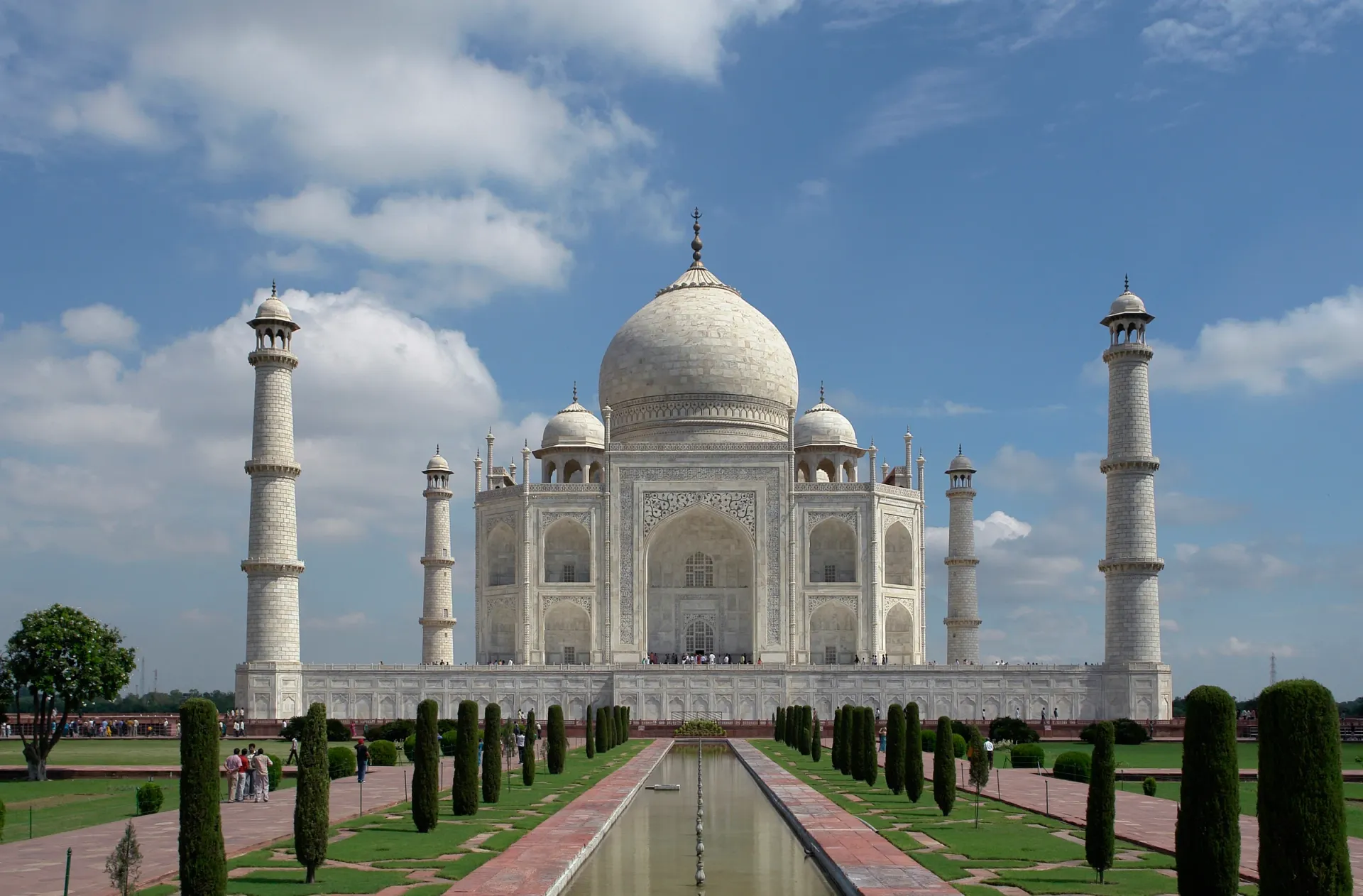
Shah Jahan built the Taj Mahal as a mausoleum for his favorite wife, who died giving birth to their fourteenth child, and construction of the white marble monument took roughly 20,000 artisans over two decades to complete — a scale of grief made permanent that still draws visitors to Agra specifically to watch its marble shift color with the light.
See full guide →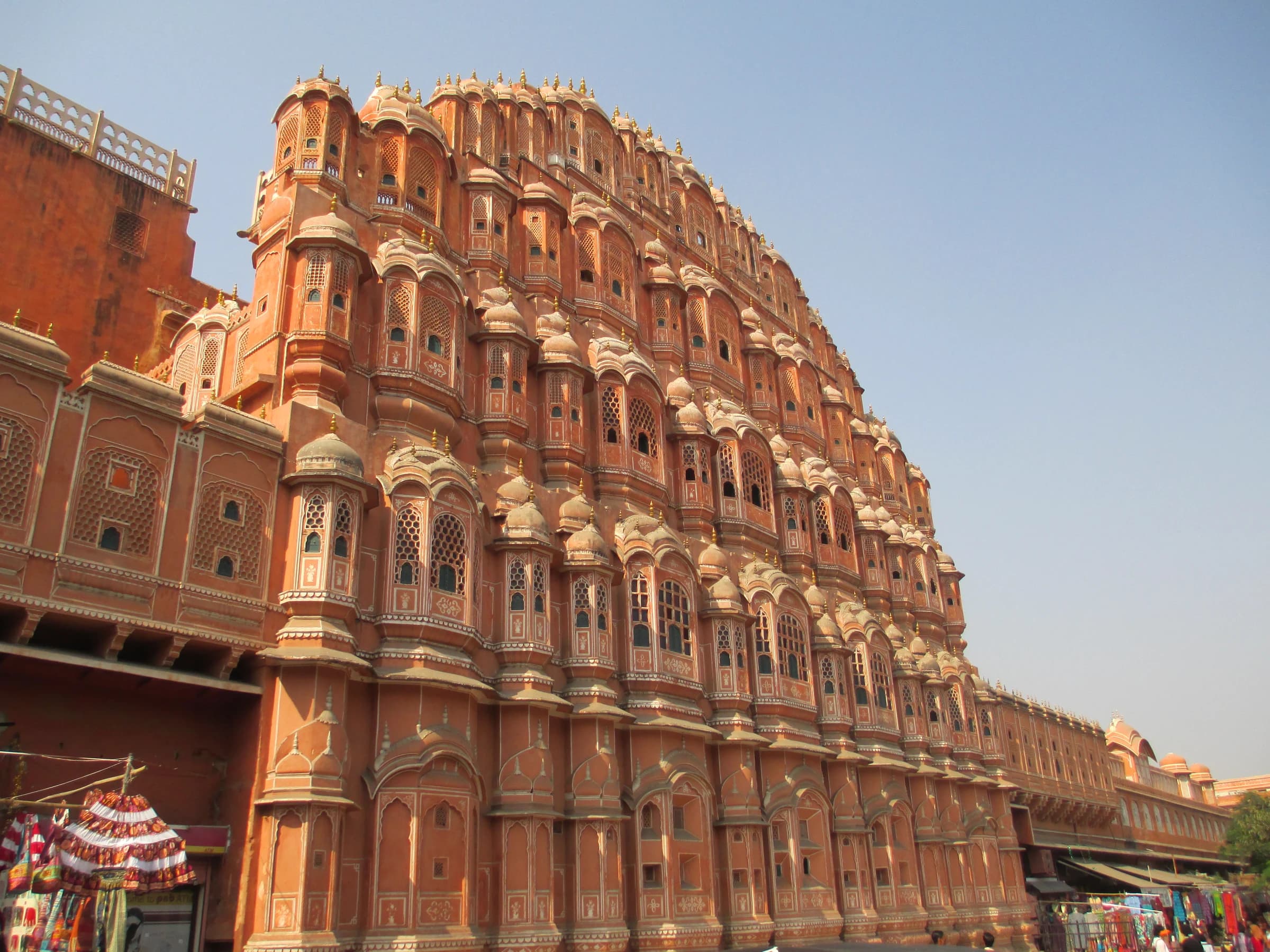 Jaipur
Jaipur
India
Jaipur's old city was painted terracotta pink in 1876 for a single royal visit from the Prince of Wales, and the tradition stuck so firmly that it's now protected by law — giving India's "Pink City" a genuinely unified look across the Hawa Mahal's 953 honeycomb windows, the hilltop Amber Fort, and the rest of its historic center.
See full guide →Comparing more than one route? See the full transport comparison guide.