India · Asia
Agra
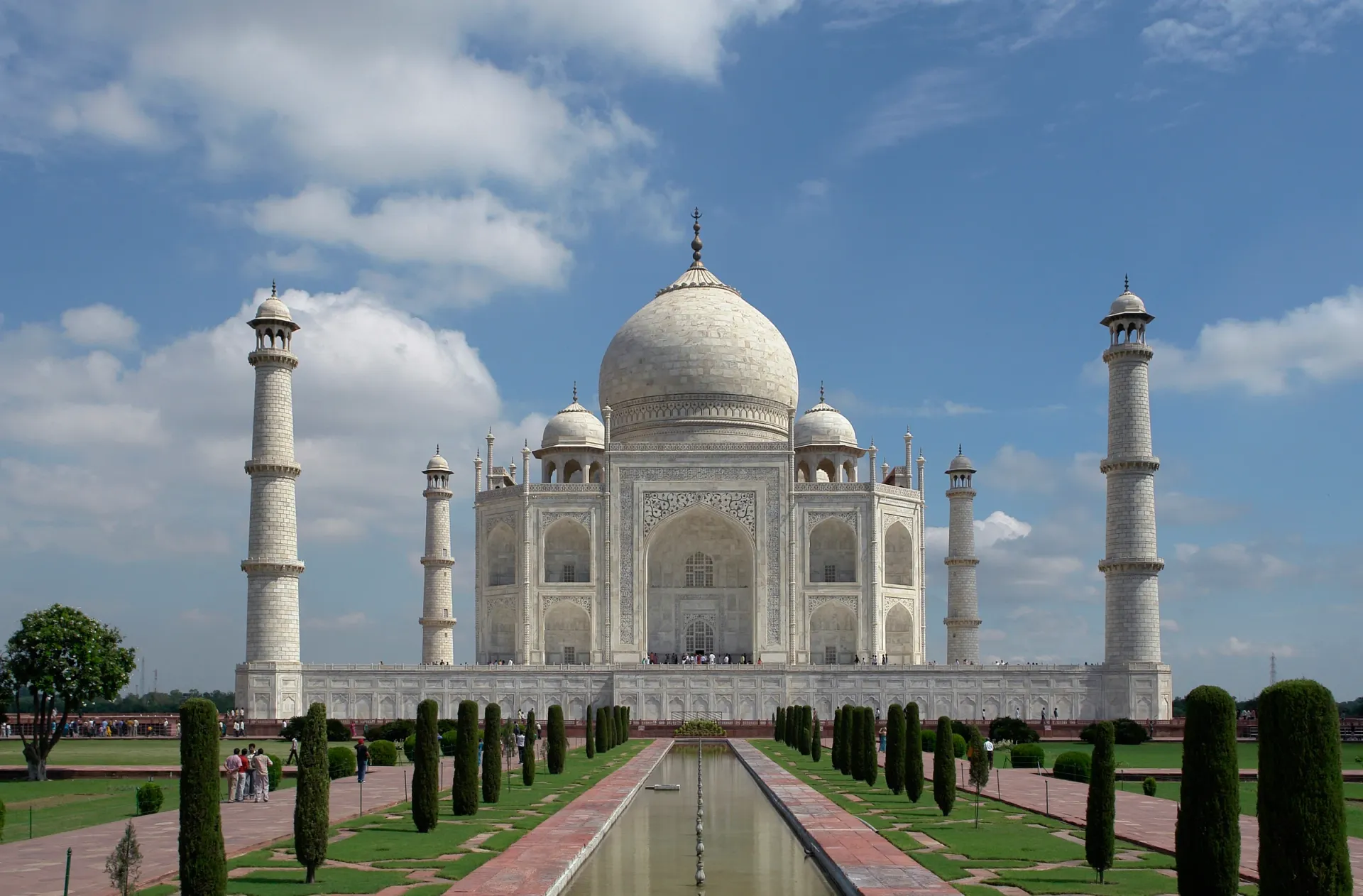
Shah Jahan built the Taj Mahal as a mausoleum for his favorite wife, who died giving birth to their fourteenth child, and construction of the white marble monument took roughly 20,000 artisans over two decades to complete — a scale of grief made permanent that still draws visitors to Agra specifically to watch its marble shift color with the light.
Mughal Emperor Shah Jahan commissioned the Taj Mahal as a mausoleum for his wife Mumtaz Mahal, who died in 1631 giving birth to their fourteenth child, and construction of the white marble monument took roughly two decades and an estimated 20,000 artisans, completing around 1653. That scale of labor, sustained grief translated into architecture over twenty years, is part of what gives the Taj Mahal its weight beyond simple visual beauty.
The building's white marble genuinely shifts in appearance through the day, appearing pale pink at dawn, brilliant white at midday, and golden under moonlight, an effect achieved partly through the marble's natural translucency and partly through deliberate architectural choices in how light was meant to interact with the surface. Early morning visits, when the monument opens shortly before sunrise specifically to accommodate this, remain the most popular time to see that shift begin, alongside smaller crowds than the midday rush.
Agra Fort, a UNESCO World Heritage Site in its own right and predating the Taj Mahal by nearly a century, served as the main residence of Mughal emperors before the capital shifted to Delhi. Shah Jahan himself spent his final years imprisoned here by his son Aurangzeb, reportedly able to see the Taj Mahal, his wife's tomb, from a window in his confinement, a detail that adds a genuinely tragic postscript to the monument's origin story.
Fatehpur Sikri, roughly 40 kilometers from Agra, was built as a new Mughal capital by Emperor Akbar in the 1570s and abandoned within about fifteen years, likely due to water supply problems. The result is a remarkably well-preserved red sandstone city frozen at the point of its abandonment, offering a very different, quieter kind of Mughal architecture than the polished marble of the Taj.
Agra sits as the middle point of India's Golden Triangle circuit, connecting Delhi and Jaipur, and while many visitors treat it as a rushed day trip from Delhi, staying overnight allows for both a sunrise and sunset viewing of the Taj Mahal, two genuinely different experiences of the same building depending on the light.
What a trip here actually costs
$25 / day avg.
- Budget guesthouse
- Auto-rickshaw transport
- Local restaurant meals
- Taj Mahal entry, moderate fee for foreign visitors
What to do at this tier
- • Taj Mahal at sunrise, moderate entry fee for foreign visitors
- • Agra Fort, low entry fee
- • Mehtab Bagh garden for a Taj Mahal river view
$65 / day avg.
- 3-star hotel with Taj views
- Guided Taj Mahal and Agra Fort tour
- Fatehpur Sikri half-day trip
- Sit-down restaurant meals
What to do at this tier
- • Guided tour combining the Taj Mahal and Agra Fort
- • Fatehpur Sikri, an abandoned 16th-century Mughal capital
- • Agra's marble inlay workshops
$220 / day avg.
- 5-star hotel with Taj Mahal views
- Private sunrise Taj Mahal tour with a guide
- Private day trip to Fatehpur Sikri
- Fine dining Mughlai tasting menu
What to do at this tier
- • Private sunrise Taj Mahal tour with a dedicated guide
- • Private day trip to Fatehpur Sikri
- • Fine dining Mughlai tasting menu at a top Agra restaurant
These are average estimates for planning purposes, not real-time prices — actual costs vary by season, availability, and how far ahead you book.
How to get there
Click anywhere on the world map — any airport works, not just our main hubs.
Click anywhere on the map above — any airport in the world works — to see estimated travel time and cost from there.
Times and prices are planning estimates, not live fares — always check a booking site before you commit. See the full Transport Comparison guide for the general tradeoffs of each mode.
Best time to visit
October-March brings the coolest, most comfortable temperatures; April-June runs extremely hot, often exceeding 40°C (104°F). The Taj Mahal is closed on Fridays.
Safety notes
Generally safe in tourist areas with standard precautions; arranged transport and official ticket counters help avoid common tourist-targeted scams near the monument.
Visa & currency
Indian rupee (INR). Most nationalities need an e-visa arranged in advance rather than visa-free entry, so apply before booking flights.
Questions people ask before visiting
Is the Taj Mahal worth visiting?
Yes — the Taj Mahal is widely considered one of the finest examples of Mughal architecture in the world, its white marble genuinely shifting in tone through the day, and Agra also holds Agra Fort, a UNESCO World Heritage Site in its own right, and Fatehpur Sikri, a nearby abandoned Mughal capital.
Why was the Taj Mahal built?
Mughal Emperor Shah Jahan commissioned it as a mausoleum for his wife Mumtaz Mahal, who died in 1631 giving birth to their fourteenth child. Construction took roughly two decades and an estimated 20,000 artisans, completing around 1653.
Is Taj Mahal sunrise worth the early wake-up?
Most visitors consider it worthwhile — early morning light brings smaller crowds and a softer glow on the white marble, and the monument opens shortly before sunrise specifically to accommodate this. Midday visits face significantly larger crowds and harsher light.
How many days do you need in Agra?
One full day covers the Taj Mahal, Agra Fort, and Fatehpur Sikri at a reasonable pace, and many visitors do it as a day trip from Delhi, though staying overnight allows for both a sunrise and sunset viewing of the Taj.
Nearby destinations
 Delhi
DelhiDelhi
India
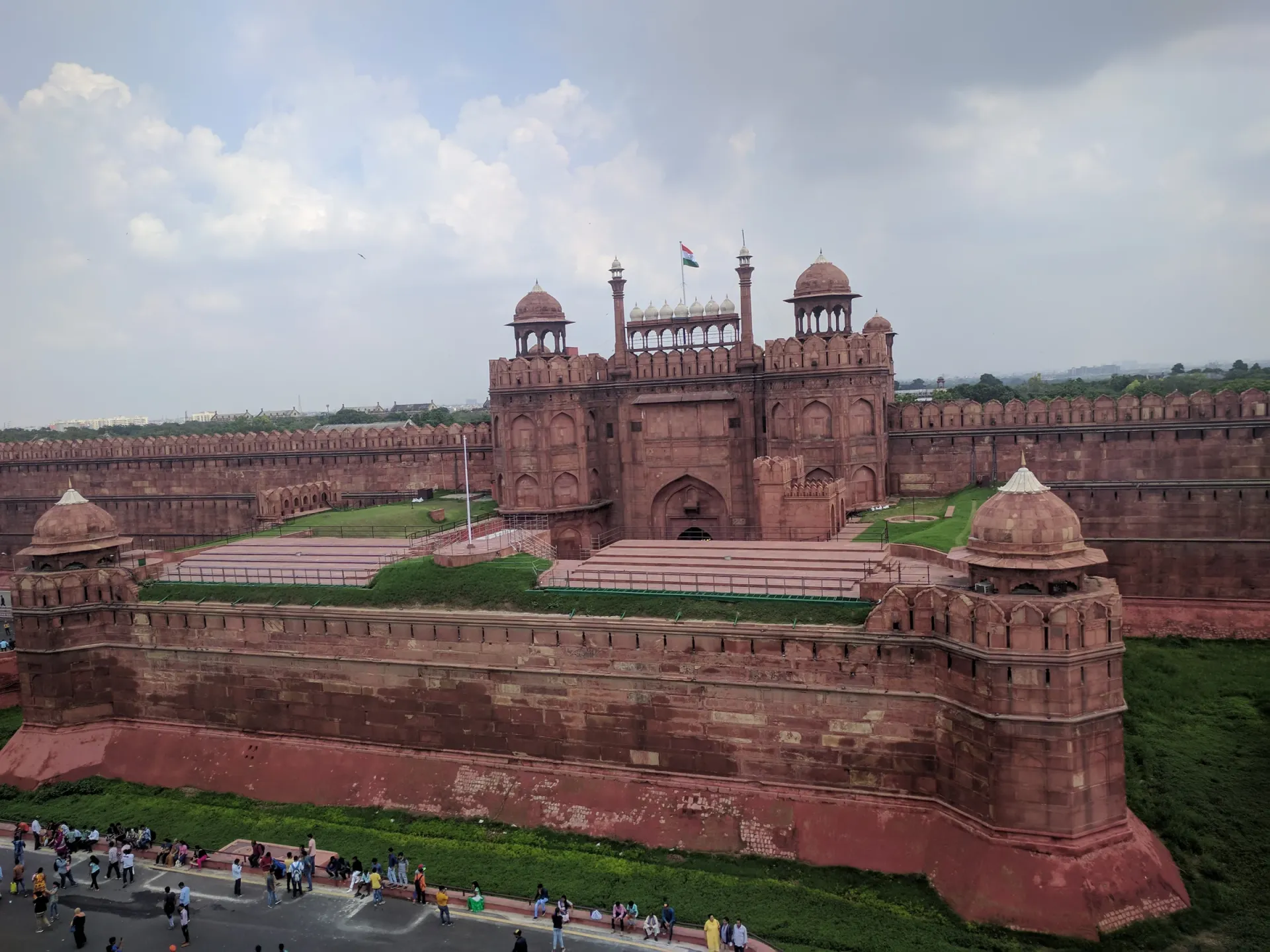
Delhi has served as a seat of power for roughly a thousand years across multiple empires, and the result is a capital where the Mughal-era Red Fort and the medieval Qutub Minar, at 73 meters the tallest brick minaret in the world, sit within the same metro system as the colonial-built government quarter New Delhi and a population pushing past 30 million.
See full guide →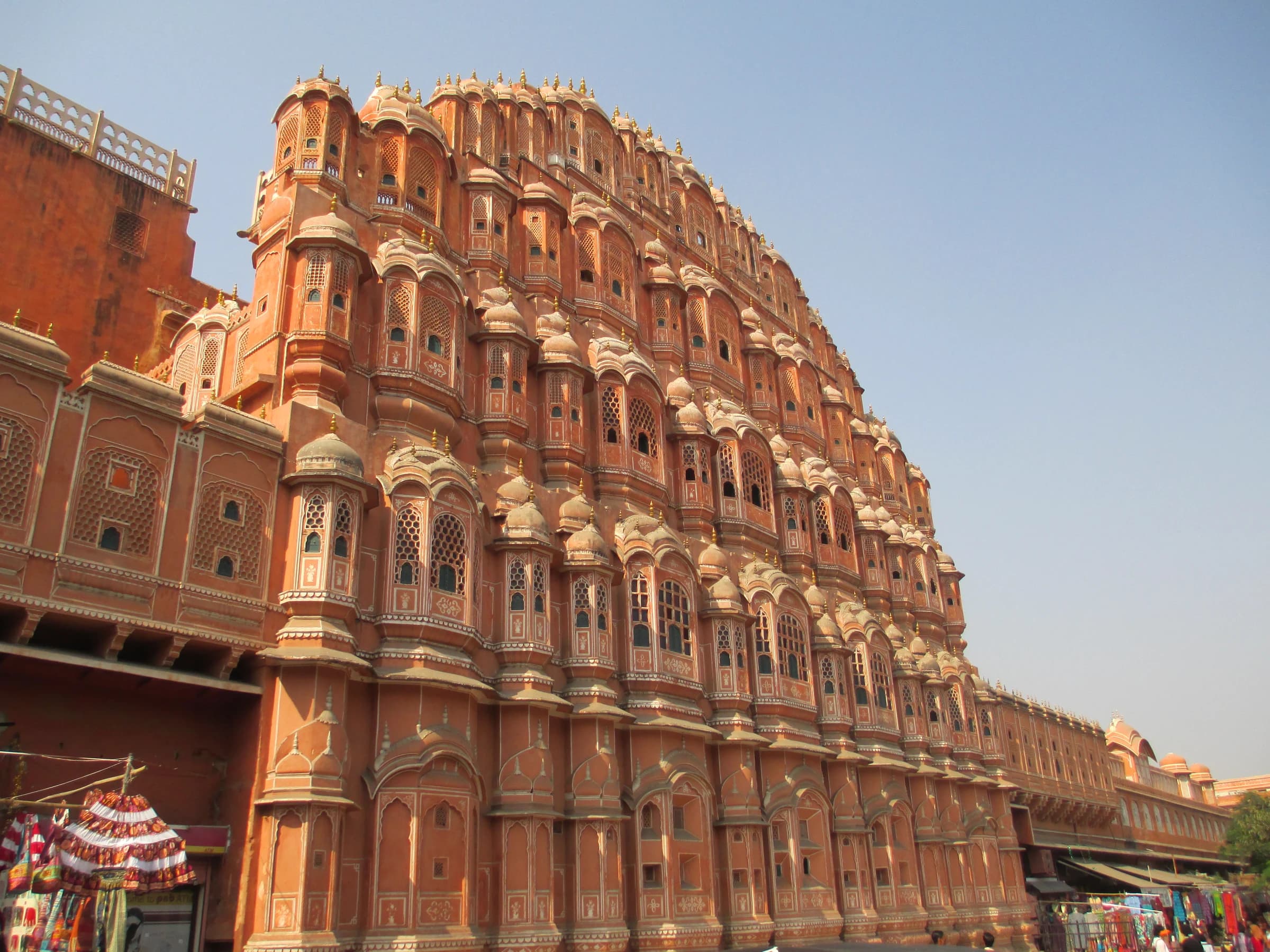 Jaipur
Jaipur
India
Jaipur's old city was painted terracotta pink in 1876 for a single royal visit from the Prince of Wales, and the tradition stuck so firmly that it's now protected by law — giving India's "Pink City" a genuinely unified look across the Hawa Mahal's 953 honeycomb windows, the hilltop Amber Fort, and the rest of its historic center.
See full guide →Comparing more than one route? See the full transport comparison guide.