Kyrgyzstan · Asia
Bishkek
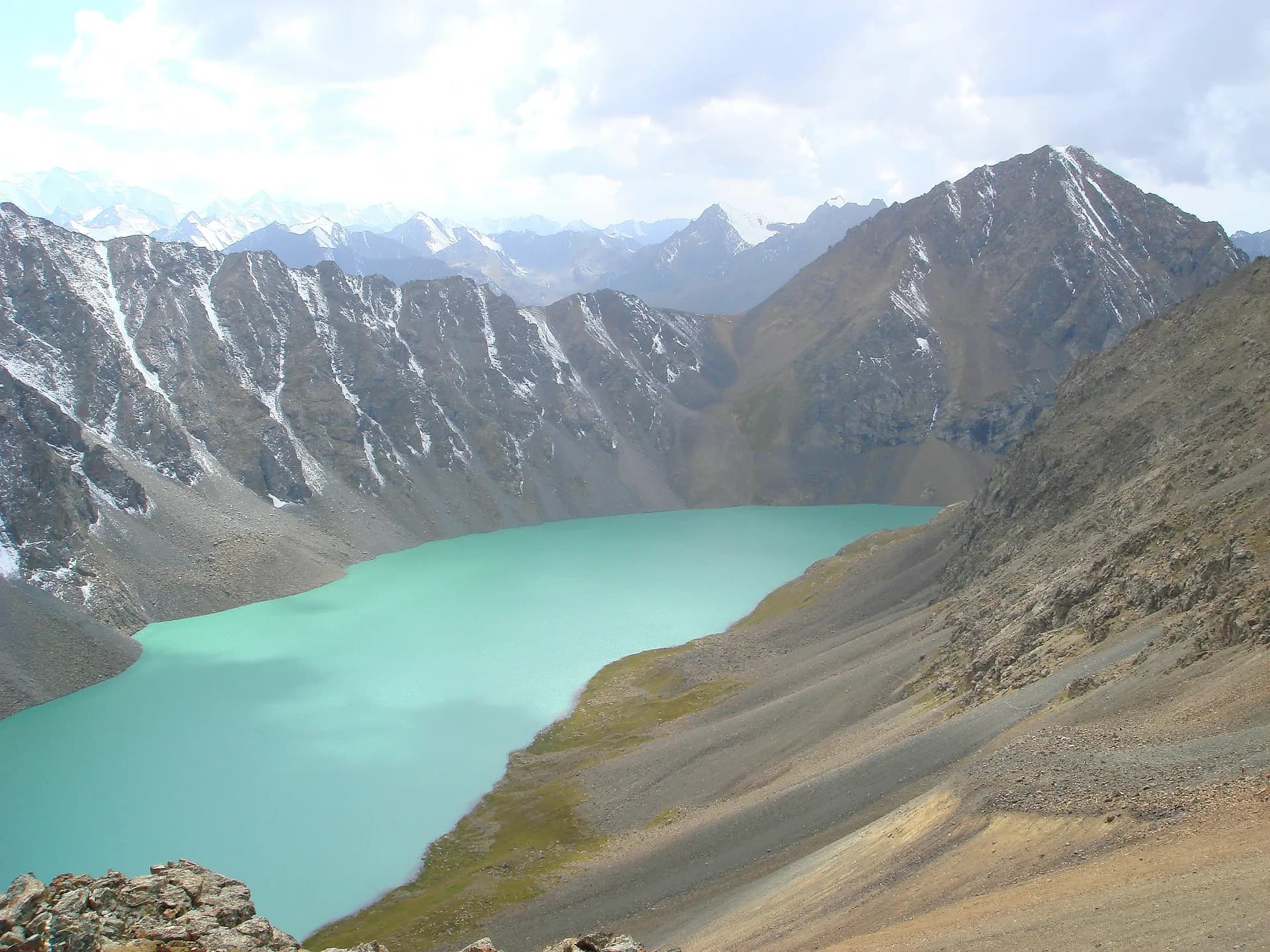
Issyk-Kul, the alpine lake Bishkek serves as the main gateway to, ranks as the second-largest mountain lake in the world by volume after Lake Titicaca, and it never fully freezes despite sitting at over 1,600 meters elevation, a fact that gave the lake its name, meaning "warm lake" in Kyrgyz.
Issyk-Kul, the alpine lake that Bishkek serves as the main gateway to, ranks as the second-largest mountain lake in the world by volume, behind only Lake Titicaca in South America. Its name, meaning "warm lake" in Kyrgyz, reflects a genuine peculiarity: despite sitting above 1,600 meters elevation in a climate cold enough to freeze most bodies of water at that altitude, Issyk-Kul's depth, mineral content, and mild geothermal activity keep it from freezing over even through winter.
Bishkek itself carries a strong Soviet-era architectural identity, wide tree-lined boulevards and monumental government buildings reflecting decades as a Soviet republic capital before Kyrgyzstan's 1991 independence. Ala-Too Square, the city's central plaza, still holds Soviet-influenced civic architecture alongside newer national symbols, a layering that gives the city center a genuinely distinct look among former Soviet capitals.
Ala Archa National Park, roughly 40 kilometers from Bishkek in the Tian Shan mountain range, offers hiking trails through alpine terrain, glaciers, and dramatic peaks reachable as a straightforward day trip from the capital, making it one of the more accessible pieces of serious mountain scenery found this close to any Central Asian city.
Kyrgyzstan has positioned itself deliberately as one of the more open and accessible countries in Central Asia for travelers, maintaining a visa policy that allows many nationalities to enter without prior arrangement, a notable contrast to some neighboring countries' more restrictive entry requirements. That openness, combined with a growing network of yurt stays and homestays in rural areas, has made the country an increasingly popular stop for travelers focused on mountain trekking and nomadic culture.
Osh Bazaar, Bishkek's largest traditional market, gives a direct look at everyday commerce in the city, spices, dried fruits, textiles, and fresh produce sold across a dense maze of stalls that's operated in some form since the Soviet era, offering a practical counterpart to the more scenic mountain and lake destinations just outside the city.
What a trip here actually costs
$28 / day avg.
- Guesthouse in Bishkek
- Local marshrutka minibus transport
- Local Kyrgyz restaurant meals
- Osh Bazaar, free to browse
What to do at this tier
- • Osh Bazaar, free to browse
- • Ala-Too Square and Soviet-era monuments, free
- • Panfilov Park, free
$70 / day avg.
- 3-star hotel
- Ala Archa National Park day trip with a driver
- Issyk-Kul overnight excursion
- Sit-down restaurant dinners
What to do at this tier
- • Ala Archa National Park day hike
- • Issyk-Kul overnight trip with lakeside accommodation
- • Traditional Kyrgyz yurt stay in the surrounding countryside
These are average estimates for planning purposes, not real-time prices — actual costs vary by season, availability, and how far ahead you book.
How to get there
Click anywhere on the world map — any airport works, not just our main hubs.
Click anywhere on the map above — any airport in the world works — to see estimated travel time and cost from there.
Times and prices are planning estimates, not live fares — always check a booking site before you commit. See the full Transport Comparison guide for the general tradeoffs of each mode.
Best time to visit
May-September brings the most accessible conditions for the surrounding mountains and lake; winters are cold, with Bishkek itself experiencing genuinely harsh temperatures.
Safety notes
Very safe with low crime; mountain weather changes quickly, so proper gear matters for any hiking beyond short, well-marked trails.
Visa & currency
Kyrgyzstani som (KGS). Many nationalities can enter visa-free for tourism, one of the more open visa policies in Central Asia.
Questions people ask before visiting
Is Bishkek worth visiting?
Yes as a base and gateway — Bishkek itself holds Soviet-era architecture and a walkable, tree-lined city center, but its real value is proximity to Issyk-Kul, the world's second-largest alpine lake by volume, and Ala Archa National Park's dramatic Tian Shan mountain scenery, both within a few hours' drive.
Why doesn't Issyk-Kul freeze?
Issyk-Kul means "warm lake" in Kyrgyz, and despite sitting above 1,600 meters elevation in a genuinely cold climate, its combination of great depth, mineral content, and mild geothermal activity keeps it from freezing over even in winter, unusual for a lake at that altitude.
What is Ala Archa National Park?
A national park in the Tian Shan mountains roughly 40 kilometers from Bishkek, offering hiking trails through alpine scenery, glaciers, and dramatic peaks, easily reachable as a day trip from the capital.
Is Kyrgyzstan easy to visit?
Yes, relatively — Kyrgyzstan maintains one of the most open visa policies in Central Asia, with many nationalities able to enter visa-free, part of a broader push to position the country as an accessible adventure travel destination.
Nearby destinations
 Almaty
Almaty
Kazakhstan
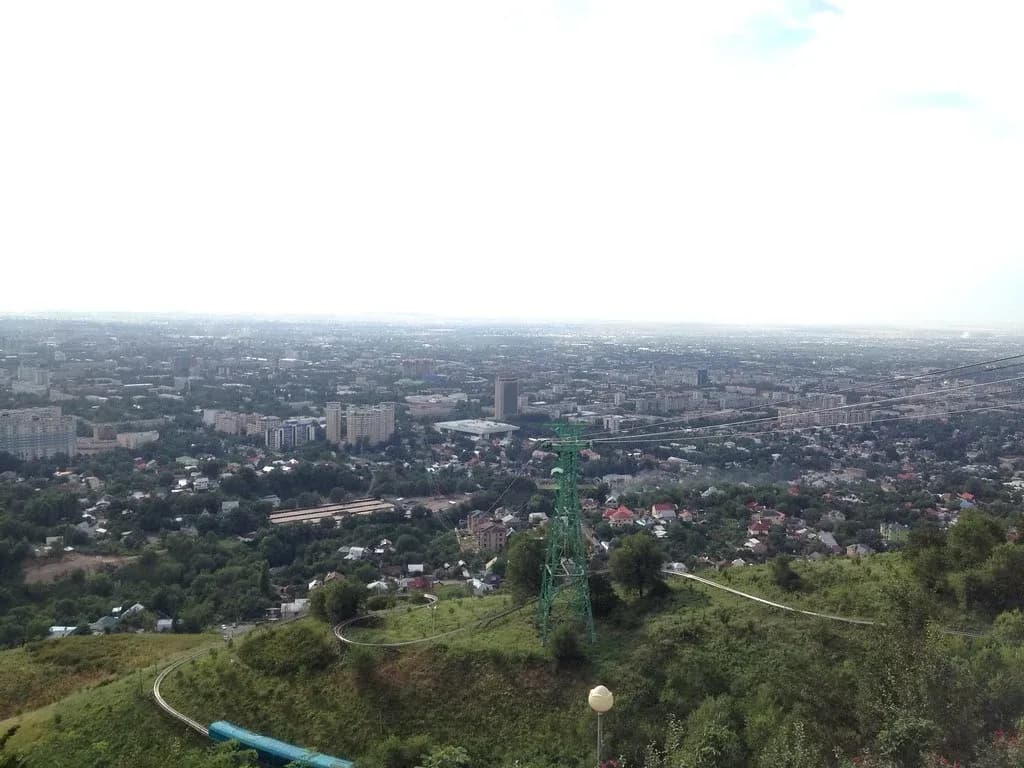
Almaty's name derives from the Kazakh word for "apple," and the wild apple forests still growing in the mountains above the city are genetically confirmed as the ancestral origin of nearly every cultivated apple eaten anywhere in the world today — a fitting starting fact for a former capital wedged dramatically between Central Asian steppe and the snow-capped Tian Shan range.
See full guide →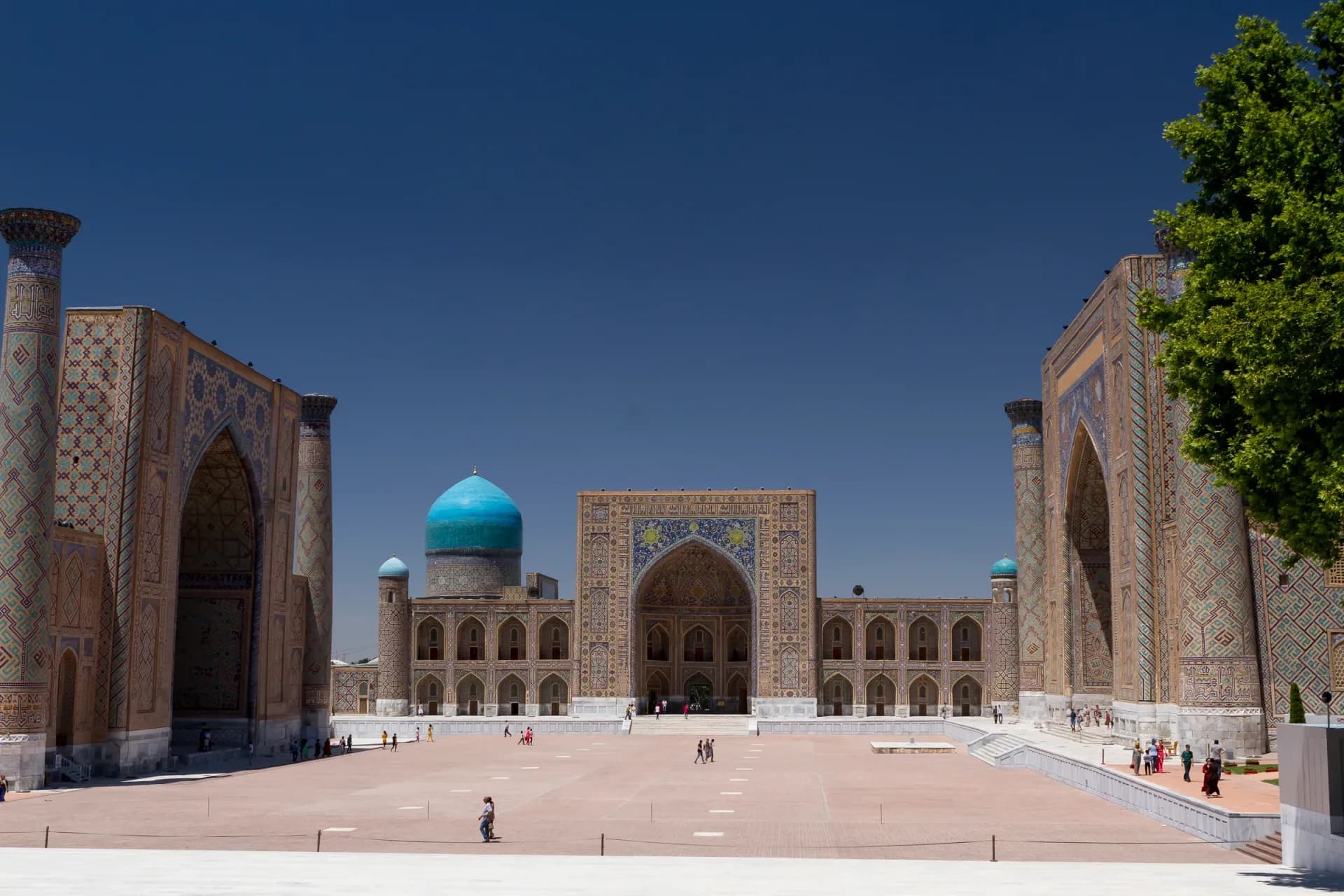 Samarkand
Samarkand
Uzbekistan
Samarkand has stood at the crossroads of the Silk Road for roughly 2,750 years, long enough to have served as the capital of Tamerlane's 14th-century empire, and its Registan Square still holds three towering madrasahs covered in turquoise tilework that traders and travelers have been stopping to look at for centuries.
See full guide →Comparing more than one route? See the full transport comparison guide.