Brunei · Asia
Bandar Seri Begawan
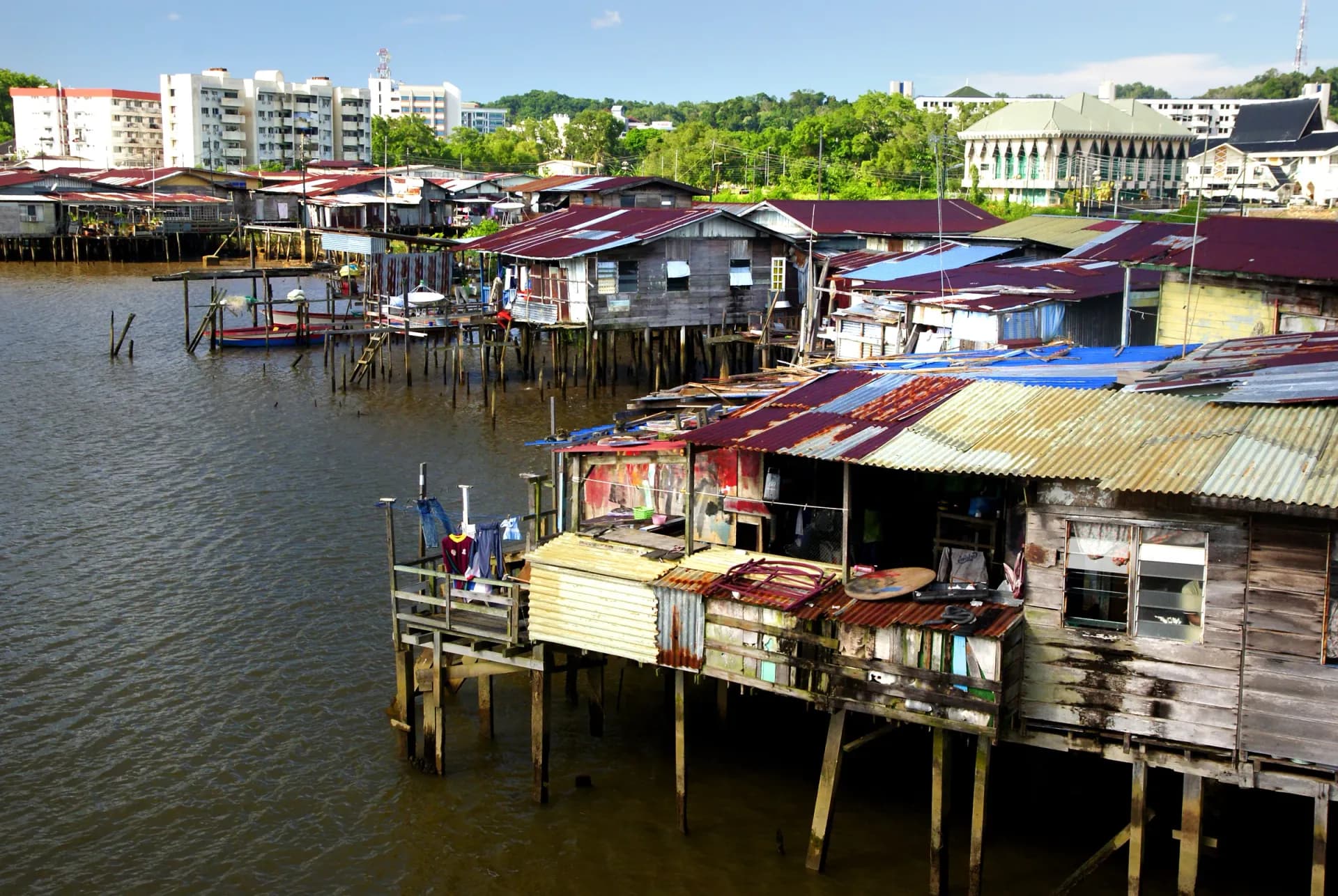
Kampong Ayer, a stilt village built entirely over the Brunei River, has housed tens of thousands of residents for generations and is often called the "Venice of the East," one of the largest settlements of its kind still standing anywhere — a striking contrast to the golden-domed mosque and oil wealth that define the rest of Brunei's tiny capital.
Kampong Ayer, a settlement built entirely on stilts over the Brunei River, has housed residents for generations, and it remains home to tens of thousands of people today, complete with its own schools, mosques, clinics, and fire stations built on the same water-based infrastructure. Often called the "Venice of the East," it ranks among the largest stilt villages still actively inhabited anywhere in the world, a genuinely lived-in community rather than a preserved museum piece, best explored by water taxi weaving between the wooden walkways.
The Sultan Omar Ali Saifuddien Mosque, completed in 1958 and named for the 28th Sultan of Brunei, rises with a gold-leafed dome over a lagoon built specifically to reflect the building, its marble imported from Italy and its chandeliers from England. It remains one of the most recognizable landmarks in Southeast Asia's Islamic architecture and sits within easy walking distance of Kampong Ayer.
Brunei's wealth, built on oil and natural gas reserves, has made it one of the smallest but most affluent nations in Asia, ruled as an absolute monarchy by a Sultan regularly counted among the world's wealthiest individuals. That wealth funds a level of public infrastructure and social services that stands out clearly against the country's modest population and geographic size.
Brunei enforces a nationwide ban on alcohol under Sharia law, a restriction that applies to visitors as well as residents, with only a small personal import allowance permitted for private, non-public consumption. It's a genuinely different travel consideration from most of Southeast Asia, and one worth knowing before planning meals or evenings out in the capital.
Beyond the city, Ulu Temburong National Park protects one of the most pristine stretches of primary rainforest left in Borneo, reached by a longboat journey followed by a walk to a canopy walkway that rises above the forest floor. Combined with Kampong Ayer's water-bound community, it gives Brunei a range, ancient stilt village, modern oil wealth, and untouched rainforest, that few destinations of its size can match.
What a trip here actually costs
$110 / day avg.
- 3-star hotel
- Water taxi rides around Kampong Ayer
- Local and Malay restaurant meals
- Sultan Omar Ali Saifuddien Mosque, free entry
What to do at this tier
- • Kampong Ayer water taxi tour
- • Sultan Omar Ali Saifuddien Mosque, free entry, modest dress required
- • Royal Regalia Museum, free entry
$280 / day avg.
- 4-5 star hotel
- Private guided Kampong Ayer and mosque tour
- Ulu Temburong National Park day trip with canopy walkway
- Fine dining at a top Bandar Seri Begawan restaurant
What to do at this tier
- • Private guided tour of Kampong Ayer and the mosque
- • Ulu Temburong National Park day trip with rainforest canopy walkway
- • Fine dining at a top hotel restaurant
These are average estimates for planning purposes, not real-time prices — actual costs vary by season, availability, and how far ahead you book.
How to get there
Click anywhere on the world map — any airport works, not just our main hubs.
Click anywhere on the map above — any airport in the world works — to see estimated travel time and cost from there.
Times and prices are planning estimates, not live fares — always check a booking site before you commit. See the full Transport Comparison guide for the general tradeoffs of each mode.
Best time to visit
February-April brings the driest stretch, though Brunei sees rain year-round as a tropical country; showers are typically short.
Safety notes
Very safe with very low crime; alcohol is banned nationwide, and modest dress is expected, particularly at religious sites.
Visa & currency
Brunei dollar (BND), pegged to and interchangeable with the Singapore dollar. Many nationalities can enter visa-free for tourism, worth confirming based on passport before booking.
Questions people ask before visiting
Is Brunei worth visiting?
Yes for travelers interested in something genuinely different from its neighbors — Brunei combines Kampong Ayer, one of the largest stilt villages in the world, the golden-domed Sultan Omar Ali Saifuddien Mosque, and Ulu Temburong National Park's pristine rainforest, all within a small, easy-to-navigate country.
What is Kampong Ayer?
A settlement of traditional houses built entirely on stilts over the Brunei River, home to tens of thousands of residents with its own schools, mosques, and fire stations. It's one of the largest stilt villages still inhabited anywhere in the world, often called the "Venice of the East."
Is alcohol allowed in Brunei?
No, Brunei enforces a nationwide alcohol ban under Sharia law, including for tourists. Non-Muslim visitors can technically bring a small personal allowance into the country for private consumption, but alcohol isn't sold or served publicly anywhere in Brunei.
How many days do you need in Brunei?
Two to three days covers Kampong Ayer, the Sultan Omar Ali Saifuddien Mosque, and a day trip into Ulu Temburong National Park's rainforest, which suits Brunei's small, compact geography well.
Nearby destinations
 Kuala Lumpur
Kuala Lumpur
Malaysia
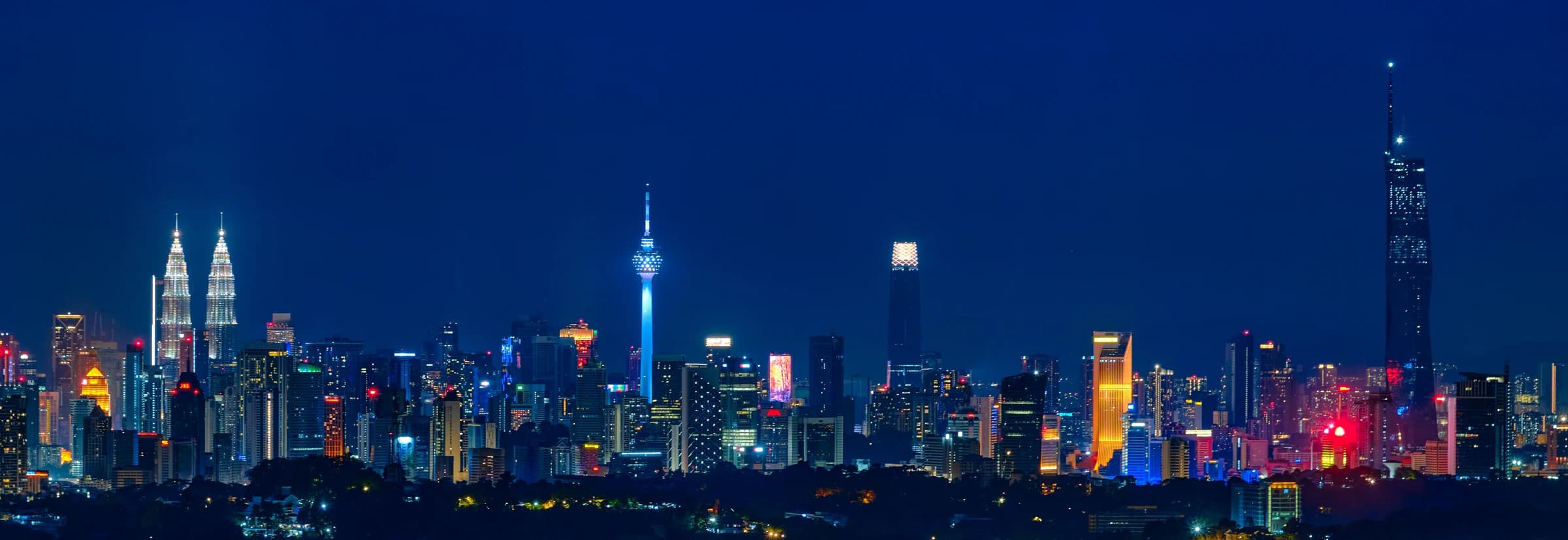
The Petronas Twin Towers held the title of world's tallest building until 2004 and remain the tallest twin towers on Earth today, rising over a city where Malay, Chinese, and Indian communities have shaped the same streets for generations — visible in Batu Caves' 42.7-meter golden statue, Chinatown's temples, and Little India's markets, all a short ride apart.
See full guide →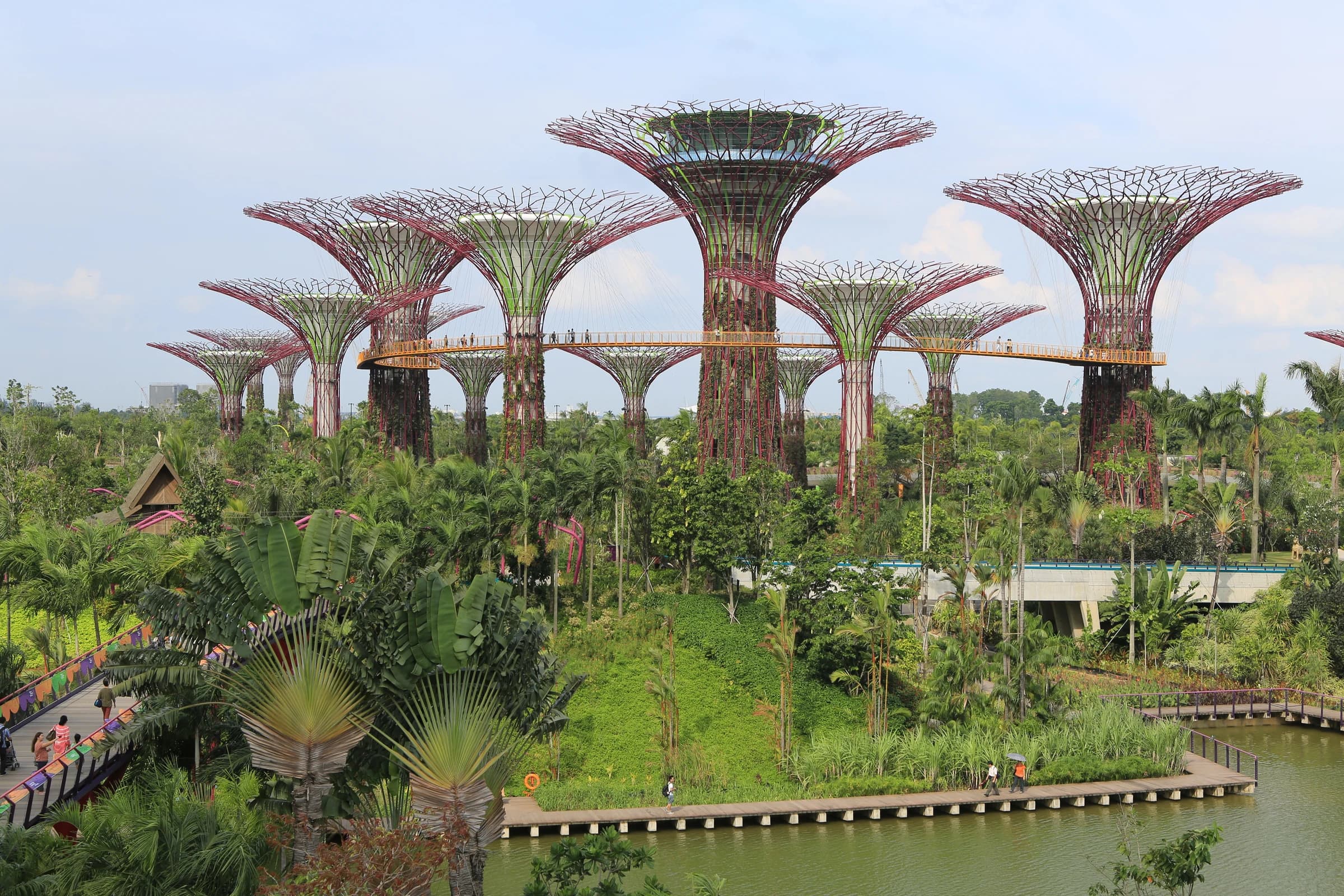 Singapore
Singapore
Singapore
Singapore is one of only three sovereign city-states left in the world, alongside Monaco and Vatican City, and it runs on rules strict enough to earn the nickname "fine city" — while its hawker centers, affordable multicultural food courts serving Malay, Chinese, and Indian cuisine side by side, hold UNESCO cultural heritage status.
See full guide →Comparing more than one route? See the full transport comparison guide.