Turkmenistan · Asia
Ashgabat
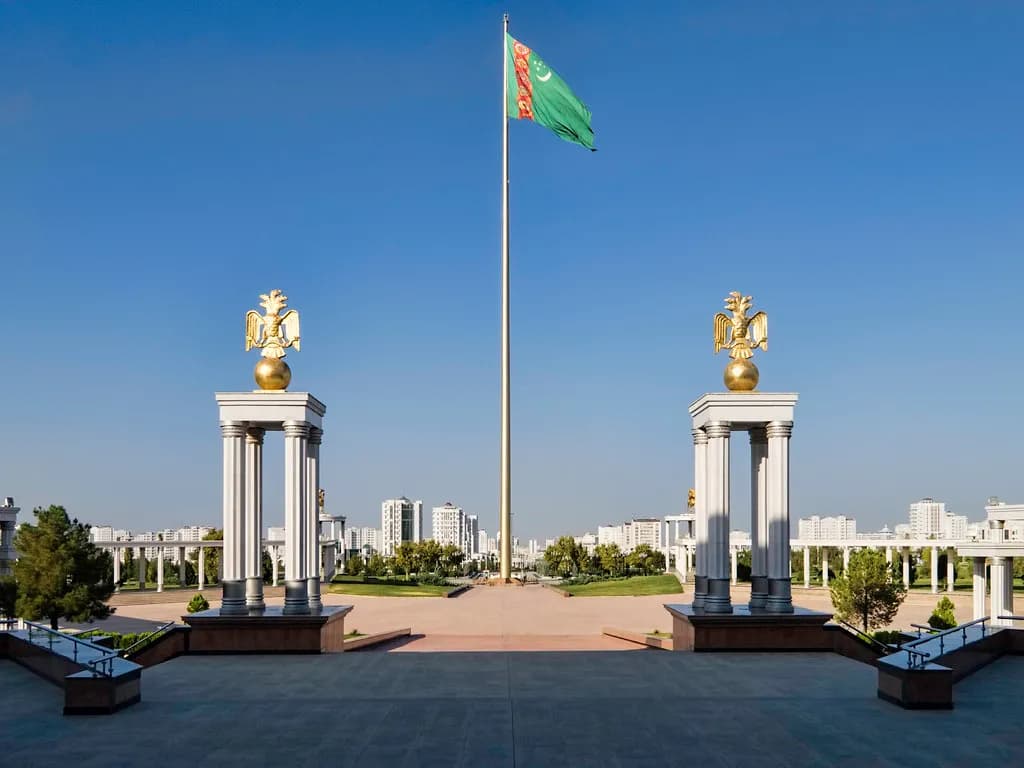
Ashgabat holds the Guinness World Record for the highest concentration of white marble buildings anywhere on Earth, an entire capital rebuilt in gleaming marble and gold-domed monuments after a 1948 earthquake leveled most of the original city, funded by one of the world's largest natural gas reserves and largely empty of the crowds a city this polished would suggest.
Ashgabat holds a Guinness World Record for the highest concentration of white marble-clad buildings anywhere on Earth, an entire capital rebuilt largely from scratch after a catastrophic 1948 earthquake destroyed most of the original city, and especially accelerated following Turkmenistan's independence from the Soviet Union in 1991. Government mandates requiring white marble facades across new construction produced a cityscape of gleaming government buildings, gold-domed monuments, and wide, deliberately grand boulevards, funded substantially by the country's massive natural gas reserves, among the largest in the world.
That polish sits alongside a genuinely striking absence of crowds, wide streets and elaborate monuments that see remarkably little foot traffic relative to their scale, giving Ashgabat an atmosphere unlike almost any other national capital, meticulously constructed but noticeably underused by the population it was built for.
A short drive outside the city, the Darvaza Gas Crater has burned continuously since it was reportedly set alight in the 1970s, either as a deliberate measure to prevent dangerous gas leakage or, by some accounts, following an accidental drilling collapse, accounts of the exact origin vary. Locally nicknamed the "Door to Hell," the crater remains one of Turkmenistan's most recognizable sights, particularly dramatic after dark when the flames are most visible against the surrounding desert darkness.
Turkmenistan maintains one of the most restrictive visa and travel processes anywhere in the world, typically requiring a formal invitation letter and, for most visitor itineraries, a government-approved guide accompanying travelers throughout their stay, a level of control that makes independent, spontaneous travel here genuinely difficult compared to almost anywhere else covered on this site.
For travelers willing to navigate that bureaucracy, Ashgabat offers a genuinely singular experience, a capital city built at a scale and level of architectural uniformity that has few real comparisons anywhere else in the world, a direct physical expression of how the country's gas wealth has been deliberately, visibly spent.
What a trip here actually costs
$150 / day avg.
- 3-star hotel
- Licensed guide and driver, often required
- Local restaurant meals
- City monument tour, guide fee included
What to do at this tier
- • Independence Monument and surrounding marble government district
- • Guided city tour covering Ashgabat's monuments and gold-domed buildings
- • Darvaza Gas Crater overnight excursion
These are average estimates for planning purposes, not real-time prices — actual costs vary by season, availability, and how far ahead you book.
How to get there
Click anywhere on the world map — any airport works, not just our main hubs.
Click anywhere on the map above — any airport in the world works — to see estimated travel time and cost from there.
Times and prices are planning estimates, not live fares — always check a booking site before you commit. See the full Transport Comparison guide for the general tradeoffs of each mode.
Best time to visit
April-May and September-October bring the most comfortable desert temperatures; summers run extremely hot.
Safety notes
Very safe with very low visible crime, though the country's political environment is tightly controlled; independent travel is genuinely restricted, so most itineraries run through a licensed local guide.
Visa & currency
Turkmenistani manat (TMT). Most nationalities need a visa with a formal invitation letter arranged well in advance, one of the more restrictive visa processes in the world.
Questions people ask before visiting
Is Ashgabat worth visiting?
Yes for travelers drawn to genuinely unusual, off-the-beaten-path destinations — Ashgabat holds the world's highest concentration of white marble buildings, gold-domed monuments, and wide, largely empty boulevards, alongside access to the nearby Darvaza Gas Crater, a burning natural gas field known as the "Door to Hell."
Why does Ashgabat have so many marble buildings?
After a devastating 1948 earthquake destroyed most of the original city, and especially following Turkmenistan's independence in 1991, the government undertook a massive rebuilding program funded by the country's large natural gas reserves, mandating white marble facades across much of the new capital, earning it a Guinness World Record for marble building density.
What is the Darvaza Gas Crater?
A large natural gas field crater outside Ashgabat that's been continuously burning since it was reportedly set alight in the 1970s to prevent gas leakage, earning it the nickname "Door to Hell." It remains one of Turkmenistan's most striking and most-photographed sights, especially after dark.
Is it difficult to get a visa for Turkmenistan?
Yes, genuinely — Turkmenistan maintains one of the most restrictive visa processes in the world, typically requiring a formal invitation letter and, for most itineraries, a government-approved guide, making independent travel considerably more complicated than in most other countries.
Nearby destinations
 Almaty
Almaty
Kazakhstan
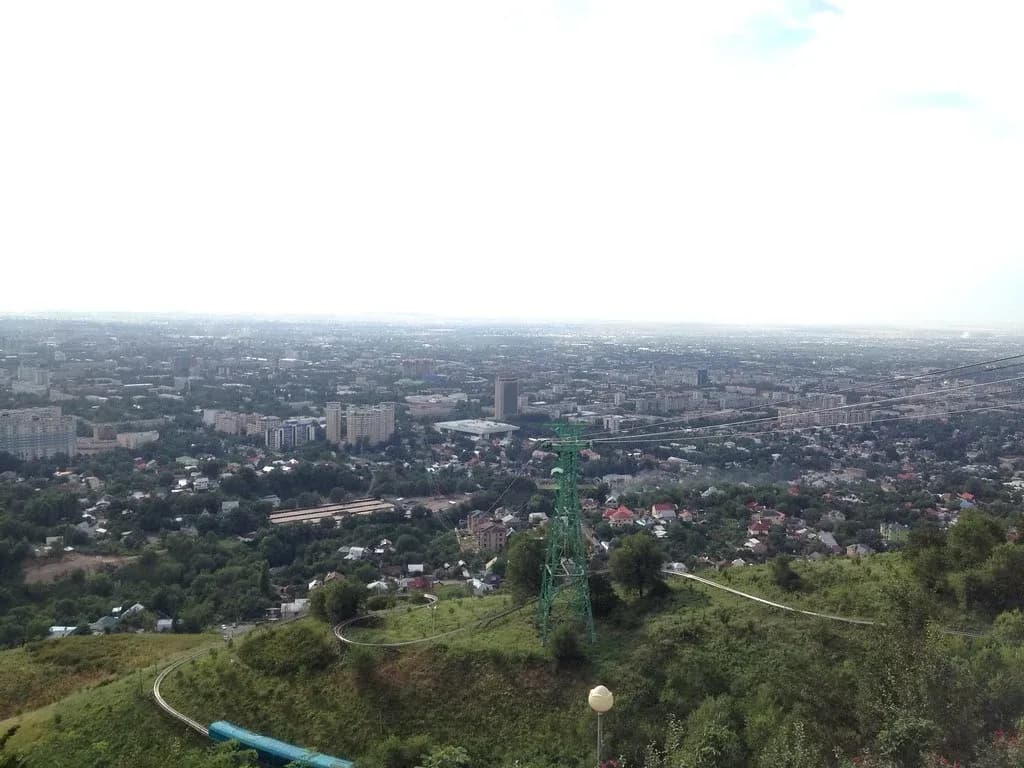
Almaty's name derives from the Kazakh word for "apple," and the wild apple forests still growing in the mountains above the city are genetically confirmed as the ancestral origin of nearly every cultivated apple eaten anywhere in the world today — a fitting starting fact for a former capital wedged dramatically between Central Asian steppe and the snow-capped Tian Shan range.
See full guide →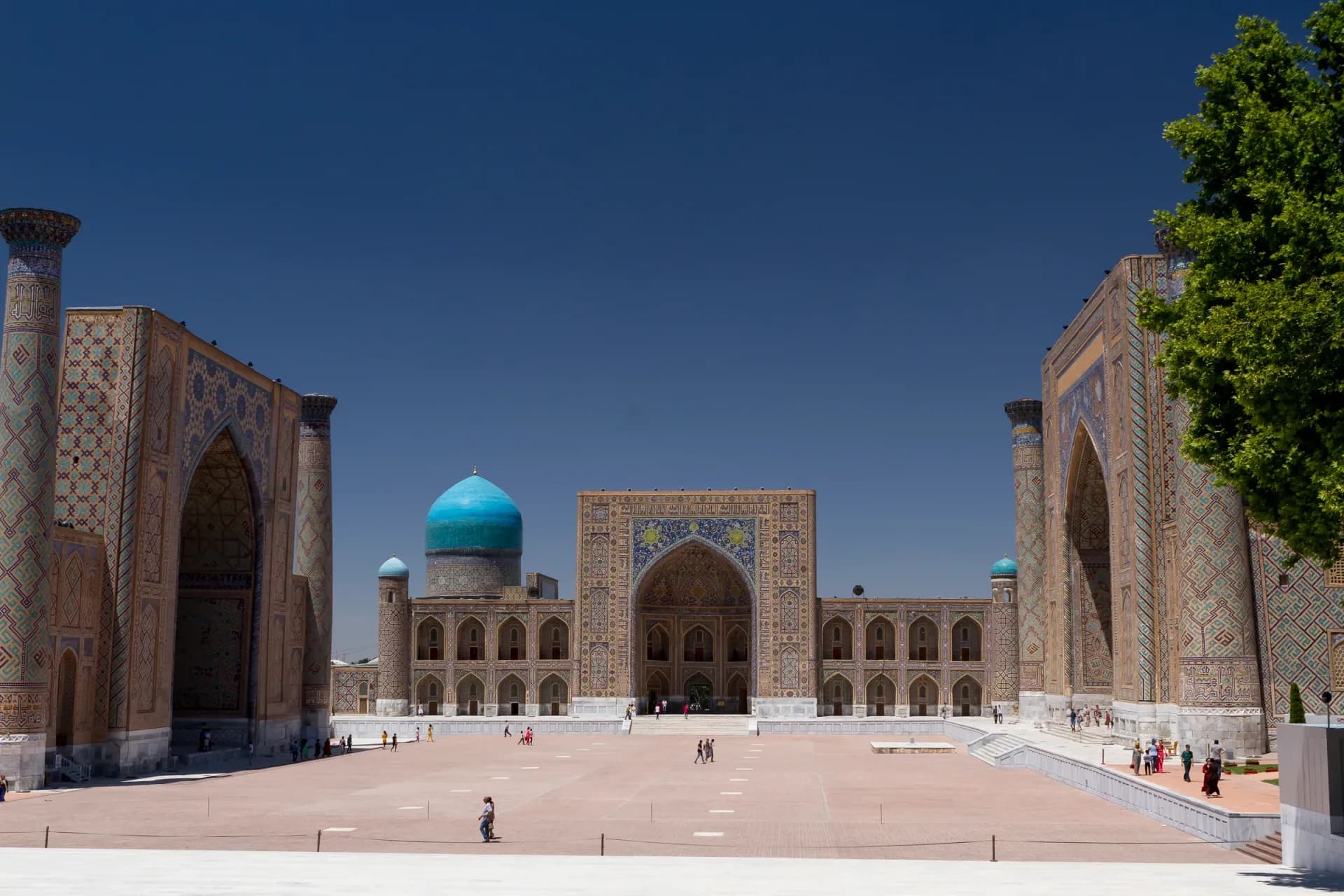 Samarkand
Samarkand
Uzbekistan
Samarkand has stood at the crossroads of the Silk Road for roughly 2,750 years, long enough to have served as the capital of Tamerlane's 14th-century empire, and its Registan Square still holds three towering madrasahs covered in turquoise tilework that traders and travelers have been stopping to look at for centuries.
See full guide →Comparing more than one route? See the full transport comparison guide.