India · Asia
Amritsar
The Golden Temple's community kitchen serves free meals to anyone who shows up, regardless of religion, caste, or background, feeding up to 100,000 people on a typical day through entirely volunteer labor — the world's largest free community kitchen, run continuously beside Sikhism's holiest site since the temple's founding centuries ago.
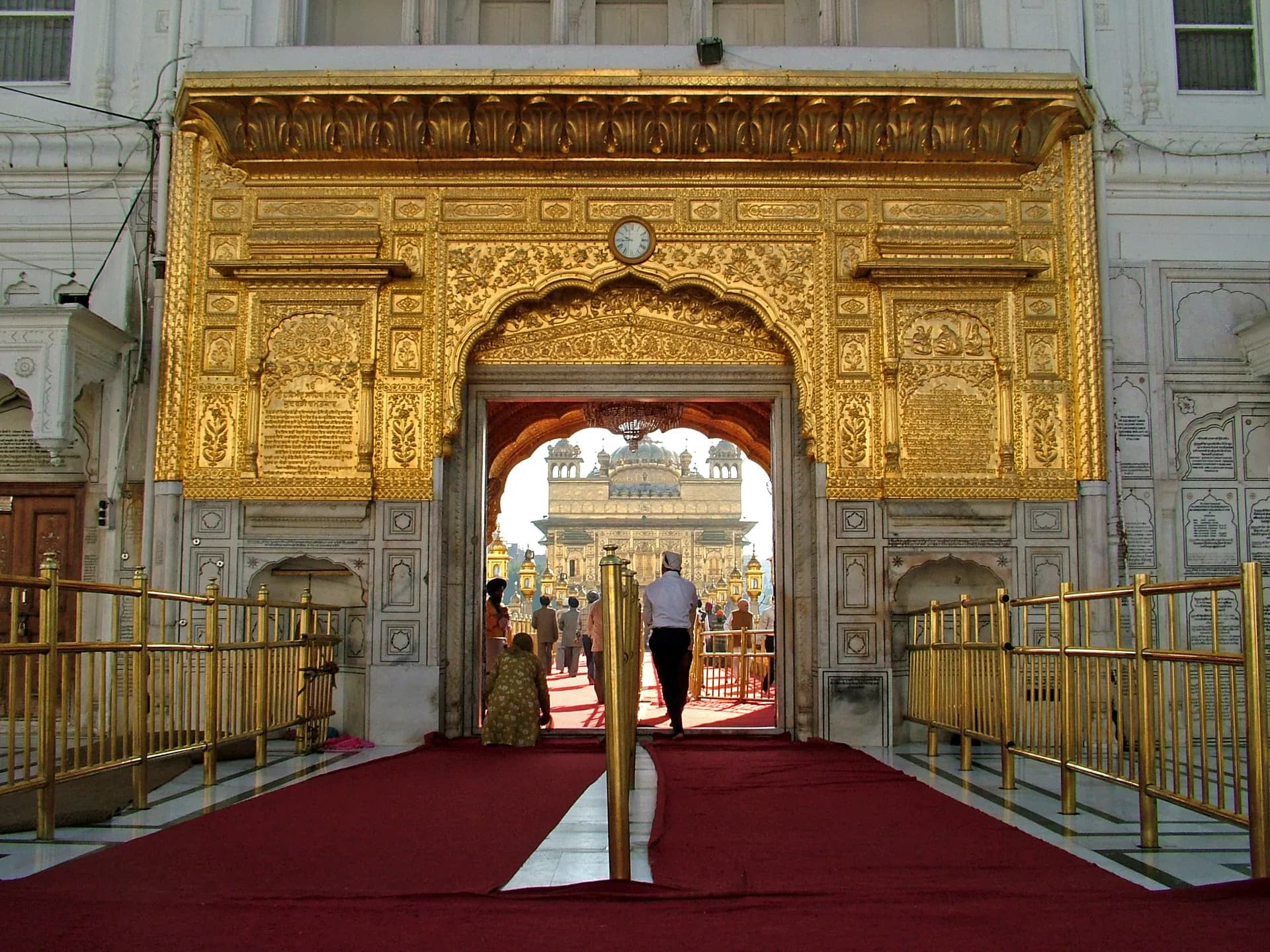
The Golden Temple, or Harmandir Sahib, stands as the holiest site in Sikhism, its upper floors genuinely covered in gold leaf and set within a large pool considered sacred, giving the temple its glowing reflection that's become one of the most recognizable religious images in India. Visitors of any background can enter, provided they cover their heads, remove their shoes, and dress modestly, a level of openness that reflects Sikhism's foundational emphasis on equality.
That openness extends directly into the temple's langar, a free community kitchen that serves meals to anyone who shows up, regardless of religion, caste, nationality, or background, feeding up to 100,000 people on an ordinary day and considerably more during major festivals. Entirely volunteer-run and funded by donations, it stands as the largest free community kitchen in the world, and pitching in to help prepare or serve food, an activity open to visitors as well, gives a direct, hands-on sense of the principle behind it.
Jallianwala Bagh, a walled garden a short walk from the Golden Temple, carries a far darker layer of history. In April 1919, British troops under General Reginald Dyer opened fire on a large crowd of unarmed civilians gathered peacefully within the garden's enclosed space, killing hundreds in an event that shocked British and Indian opinion alike and significantly accelerated India's independence movement. The site today functions as a memorial and museum, including bullet-marked walls preserved from the massacre.
The Wagah border ceremony, held daily at the India-Pakistan border a short drive from Amritsar, mirrors the same elaborately choreographed flag-lowering performance described from the Pakistani side at Lahore, with Indian and Pakistani soldiers performing in front of large, enthusiastic crowds on each side of the gate, a genuine mix of national rivalry and theatrical spectacle.
Amritsar sits at the heart of Punjab, a region known for its distinct culinary tradition, and Punjabi thalis, tandoor-cooked breads, and rich dairy-based dishes give the city a food identity as distinctive as its religious significance, best experienced at the many dhabas, roadside eateries, that operate throughout the old city.
What a trip here actually costs
$22 / day avg.
- Budget guesthouse near the Golden Temple
- Auto-rickshaw transport
- Free langar meals plus local street food
- Golden Temple and Jallianwala Bagh, free entry
What to do at this tier
- • Golden Temple complex, free entry, modest dress and head covering required
- • Free langar community meal, donation-based
- • Jallianwala Bagh memorial, free entry
$60 / day avg.
- 3-star hotel
- Guided Golden Temple and old city tour
- Wagah border ceremony transport
- Sit-down Punjabi restaurant dinners
What to do at this tier
- • Guided Golden Temple and old city heritage walk
- • Wagah border flag-lowering ceremony
- • Punjabi thali dinner with live music
These are average estimates for planning purposes, not real-time prices — actual costs vary by season, availability, and how far ahead you book.
How to get there
Click anywhere on the world map — any airport works, not just our main hubs.
Click anywhere on the map above — any airport in the world works — to see estimated travel time and cost from there.
Times and prices are planning estimates, not live fares — always check a booking site before you commit. See the full Transport Comparison guide for the general tradeoffs of each mode.
Best time to visit
October-March brings cooler, more comfortable temperatures; summer runs extremely hot, often exceeding 40°C (104°F).
Safety notes
Generally safe with standard precautions; modest dress, a head covering, and removing shoes are required to enter the Golden Temple complex.
Visa & currency
Indian rupee (INR). Most nationalities need an e-visa arranged in advance rather than visa-free entry, so apply before booking flights.
Questions people ask before visiting
Is Amritsar worth visiting?
Yes — Amritsar holds the Golden Temple, Sikhism's holiest site and home to the world's largest free community kitchen, alongside Jallianwala Bagh, a significant site in India's independence history, and the nearby Wagah border ceremony shared with Pakistan.
What is the langar at the Golden Temple?
A free community kitchen serving meals to anyone who visits, regardless of religion, caste, nationality, or background, feeding up to 100,000 people on a typical day and considerably more during major festivals, entirely through volunteer labor and donations, reflecting the Sikh principle of equality and service.
What happened at Jallianwala Bagh?
In April 1919, British troops opened fire on a large crowd of unarmed civilians gathered in this walled garden, killing hundreds in what became known as the Jallianwala Bagh massacre, a pivotal event that significantly galvanized India's independence movement. The site is now a memorial and museum.
How many days do you need in Amritsar?
Two to three days covers the Golden Temple, Jallianwala Bagh, and a day trip to the Wagah border ceremony at a comfortable pace, with an early morning or evening visit to the Golden Temple recommended to see it at its most atmospheric.
Nearby destinations
 Delhi
DelhiDelhi
India
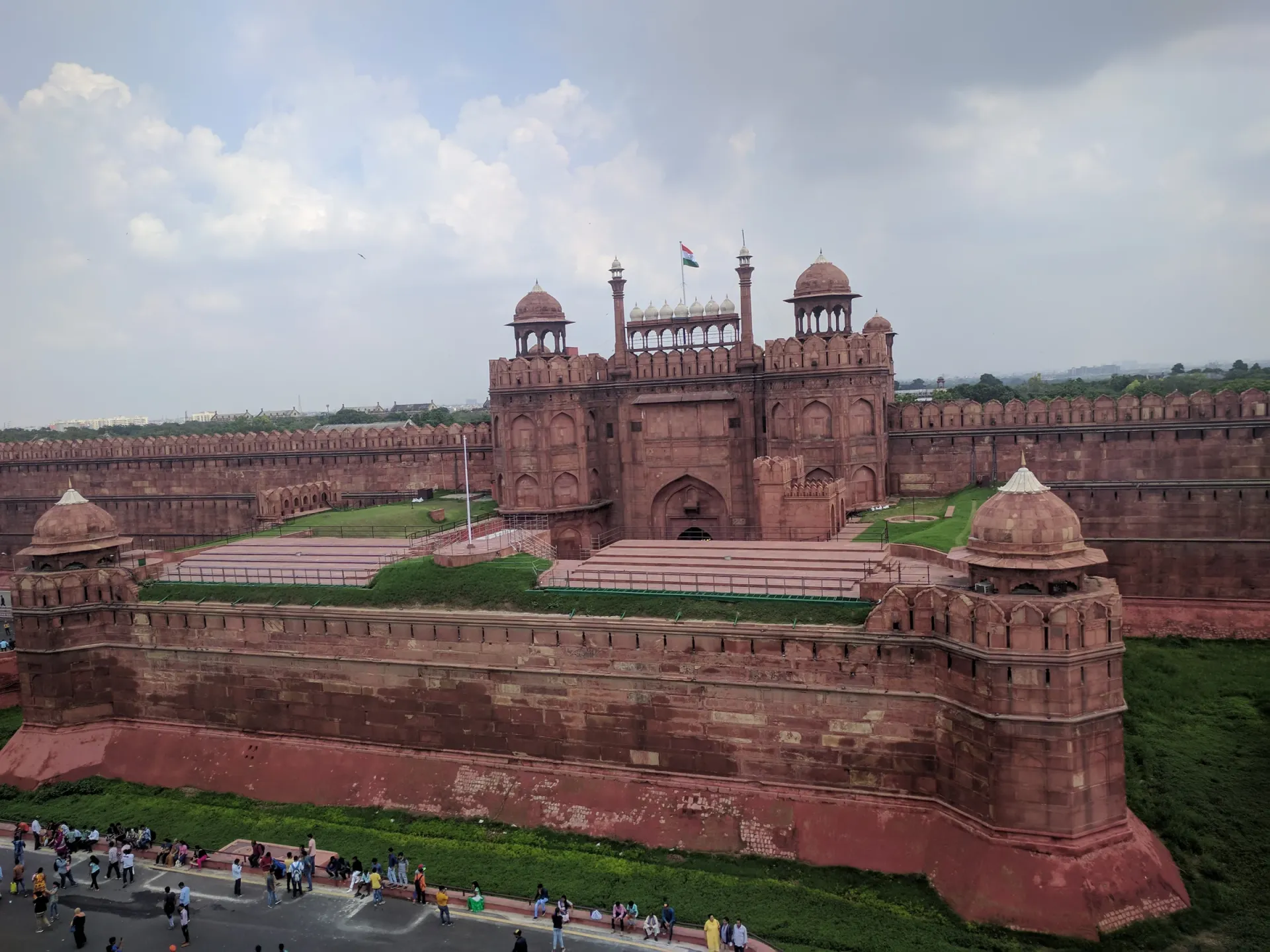
Delhi has served as a seat of power for roughly a thousand years across multiple empires, and the result is a capital where the Mughal-era Red Fort and the medieval Qutub Minar, at 73 meters the tallest brick minaret in the world, sit within the same metro system as the colonial-built government quarter New Delhi and a population pushing past 30 million.
See full guide →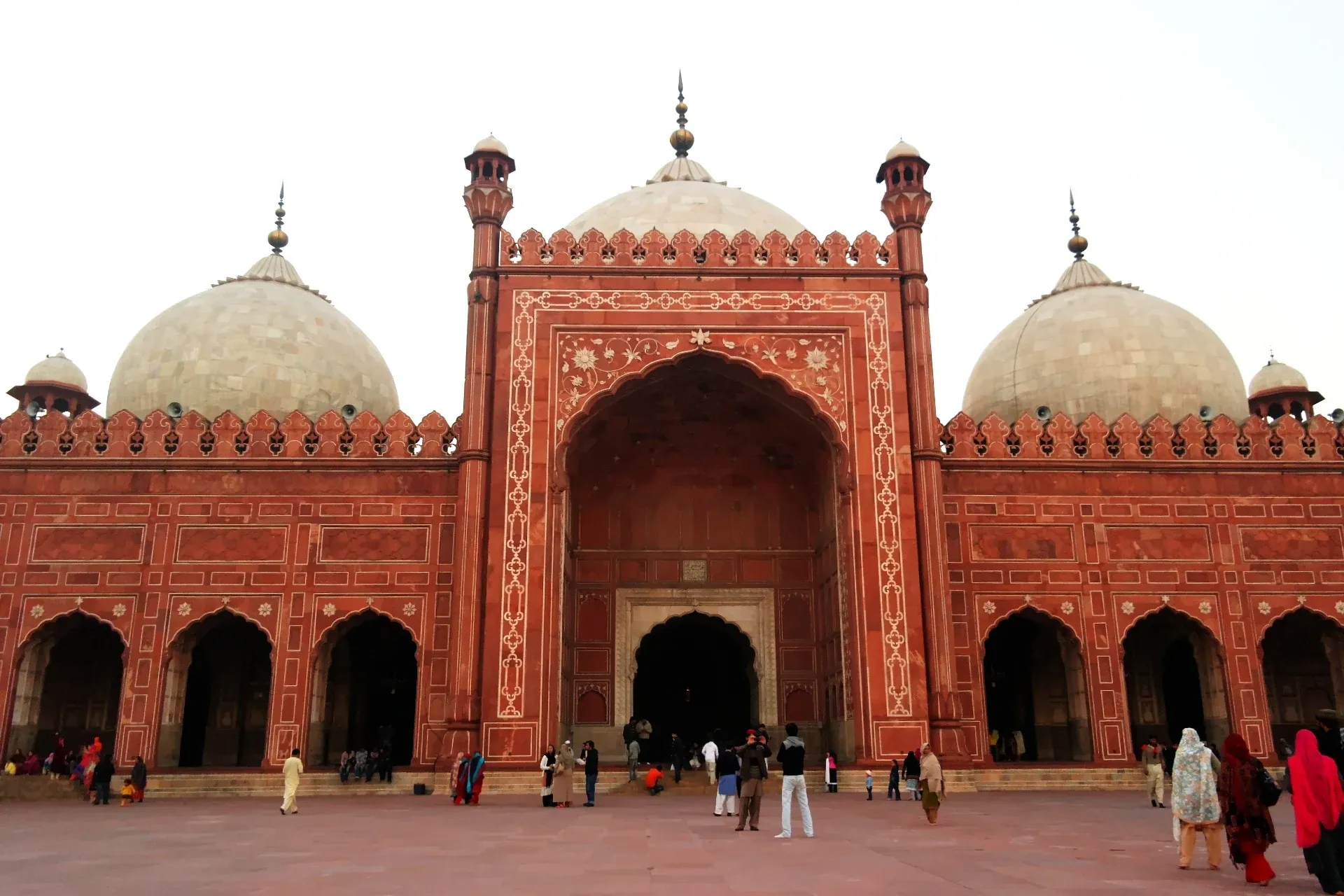 Lahore
Lahore
Pakistan
Lahore was a Mughal imperial capital before it was a Pakistani city, and its Badshahi Mosque ranked among the largest mosques in the world when it was completed in 1673 — still standing today alongside a nightly border ceremony at Wagah where soldiers on both sides of the India-Pakistan line perform an oddly theatrical, competitive flag lowering.
See full guide →Comparing more than one route? See the full transport comparison guide.