Saudi Arabia · Asia
AlUla
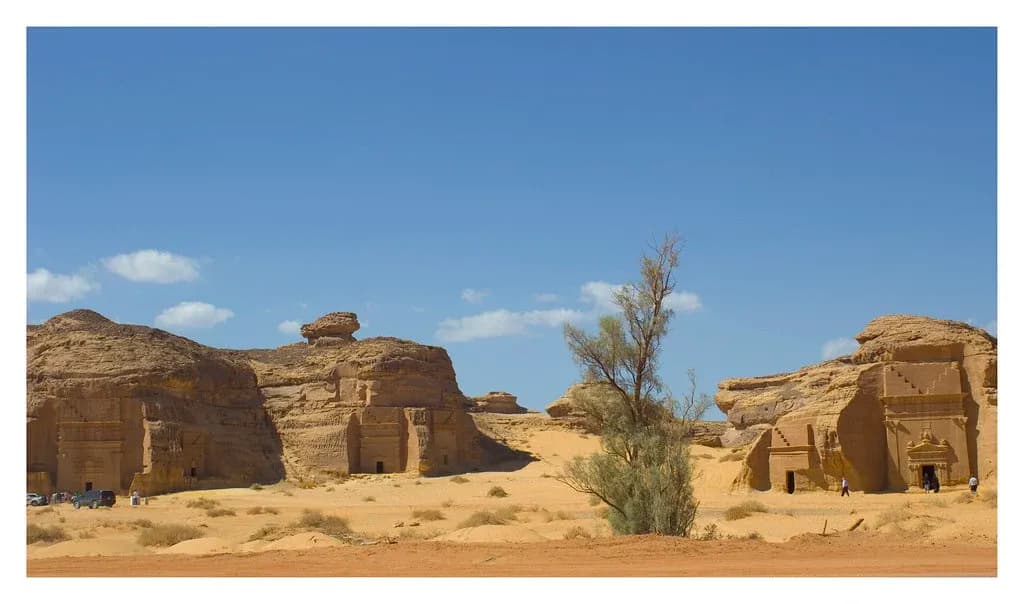
Hegra, a Nabataean city carved into sandstone cliffs by the same civilization that built Petra, sat almost entirely unvisited by international tourists for decades simply because Saudi Arabia didn't issue tourist visas — that changed only in 2019, making AlUla one of the newest major archaeological destinations anywhere in the world to actually open its doors.
Hegra, a Nabataean city carved into sandstone cliffs by the same civilization behind Jordan's Petra, sat almost entirely closed to international visitors for decades, not because it lacked significance but because Saudi Arabia simply didn't issue tourist visas. That changed only in September 2019, when the country introduced a tourist visa for the first time, opening a site holding roughly 100 monumental rock-cut tombs to general international tourism for the first time in its modern history.
That late opening has kept Hegra genuinely uncrowded compared to Petra, despite sharing similar architectural style, elaborate facades carved directly into standing sandstone outcrops, and dating to a similar period of Nabataean influence across the ancient trade routes of Arabia. Saudi Arabia designated it the country's first UNESCO World Heritage Site in 2008, well before tourism access caught up with that recognition.
Visiting Hegra requires a guided tour rather than independent access, part of a deliberate, still-developing approach to visitor management as Saudi Arabia builds out tourism infrastructure across AlUla and the wider region. That structure has, so far, kept the site's most significant tombs in excellent condition and free of the kind of unmanaged foot traffic that's affected other, longer-open ancient sites.
Old Town AlUla, a labyrinth of mudbrick buildings that housed the area's population for centuries before being gradually abandoned in favor of modern construction nearby, offers a different, more recent layer of history, its narrow lanes and crumbling walls giving a direct sense of pre-modern Arabian desert urban life distinct from Hegra's ancient tombs.
AlUla's dramatic desert landscape, including formations like Elephant Rock, a naturally sculpted sandstone outcrop resembling its namesake, has become part of a broader Saudi push to position the region as a major new cultural and tourism destination, backed by significant government investment in resorts, infrastructure, and ongoing archaeological work. For travelers, that translates into a genuinely new destination, one where the tourism experience itself is still actively being built around sites that have existed for two thousand years.
What a trip here actually costs
$180 / day avg.
- 3-star hotel or desert camp
- Hegra guided tour, required for entry
- Old Town AlUla walking tour
- Local restaurant meals
What to do at this tier
- • Hegra guided tour, required, covering the main Nabataean tombs
- • Old Town AlUla mudbrick ruins walking tour
- • Elephant Rock desert formation viewing, free
$450 / day avg.
- Luxury desert resort
- Private guided Hegra and Old Town tour
- Elephant Rock and desert landscape excursion
- Fine dining at a top AlUla resort restaurant
What to do at this tier
- • Private guided tour of Hegra's full tomb complex
- • Private desert landscape and rock formation excursion
- • Fine dining at a top AlUla resort restaurant
These are average estimates for planning purposes, not real-time prices — actual costs vary by season, availability, and how far ahead you book.
How to get there
Click anywhere on the world map — any airport works, not just our main hubs.
Click anywhere on the map above — any airport in the world works — to see estimated travel time and cost from there.
Times and prices are planning estimates, not live fares — always check a booking site before you commit. See the full Transport Comparison guide for the general tradeoffs of each mode.
Best time to visit
November-March brings mild, comfortable desert temperatures; summer regularly exceeds 40°C (104°F) and limits outdoor exploration.
Safety notes
Very safe with low crime; Hegra requires a guided tour for entry rather than independent access, part of the site's careful, still-developing visitor management.
Visa & currency
Saudi riyal (SAR). Many nationalities can now get an e-visa or visa on arrival, following the country's 2019 tourism opening.
Questions people ask before visiting
Is AlUla worth visiting?
Yes — AlUla holds Hegra, Saudi Arabia's first UNESCO World Heritage Site and a Nabataean city carved into sandstone cliffs by the same civilization behind Petra, along with dramatic desert rock formations and Old Town AlUla's mudbrick ruins, all newly accessible since the country began issuing tourist visas in 2019.
How is Hegra different from Petra?
Both were built by the Nabataean civilization and share similar rock-cut tomb facades, but Hegra draws a fraction of Petra's visitor numbers, since Saudi Arabia only opened to international tourism in 2019, giving Hegra's roughly 100 monumental tombs a genuinely uncrowded, quieter atmosphere.
When did Saudi Arabia open to tourists?
Saudi Arabia introduced a tourist visa for the first time in September 2019, ending decades during which the country was accessible mainly for business, pilgrimage to Mecca and Medina, or as an expatriate resident, rather than general international tourism.
How many days do you need in AlUla?
Two to three days covers Hegra, Old Town AlUla, and the surrounding desert rock formations at a comfortable pace, typically arranged through guided tours given the site's still-developing tourism infrastructure.
Nearby destinations
 Petra
PetraPetra
Jordan
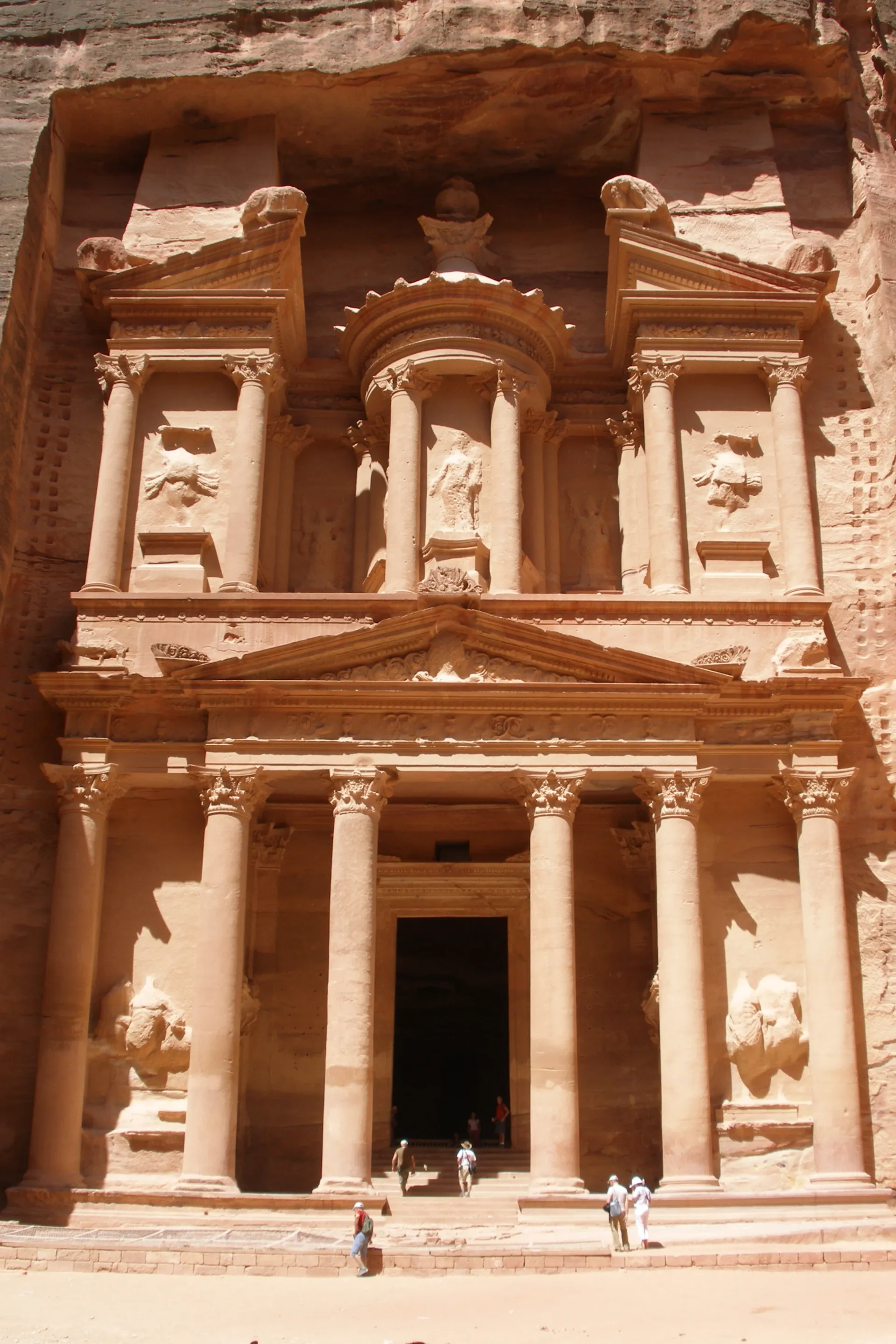
Local Bedouin communities always knew Petra was there; the wider world only rediscovered this rose-colored city carved directly into sandstone cliffs in 1812, when a Swiss explorer talked his way in disguised as a Muslim scholar, ending centuries of it being effectively lost to the West.
See full guide →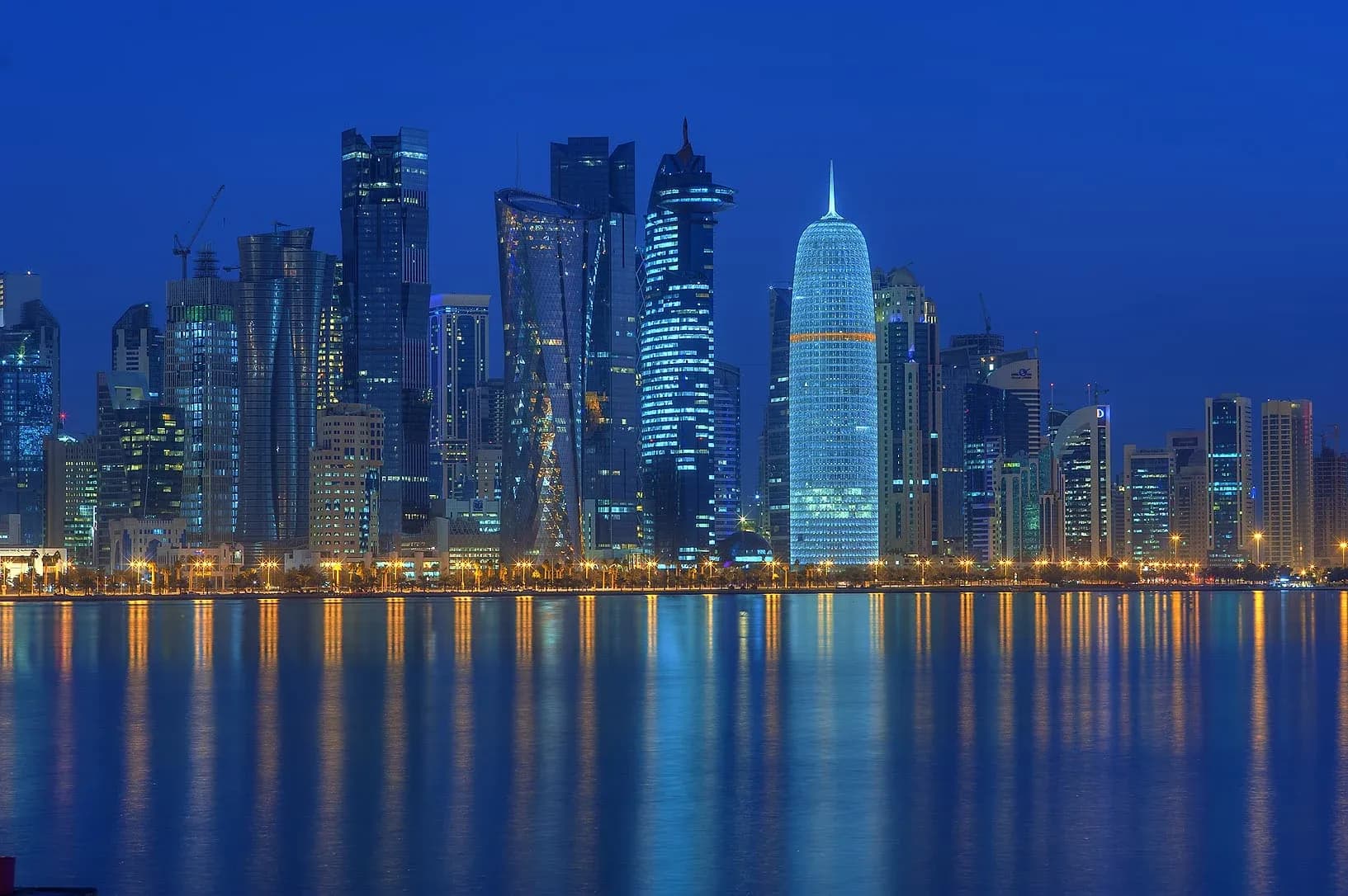 Doha
DohaDoha
Qatar
Doha went from a small pearl-diving and fishing port to hosting the 2022 FIFA World Cup, the first Middle Eastern country ever to do so, within a single lifetime — a transformation funded by natural gas reserves that turned a stretch of Gulf coastline into one of the highest GDP-per-capita economies on Earth.
See full guide →Comparing more than one route? See the full transport comparison guide.