Tanzania · Africa
Serengeti
The Serengeti takes its name from the Maasai word siringet, meaning roughly 'the place where the land moves on forever' — a fitting name for a plain that hosts the largest terrestrial mammal migration on Earth, close to two million wildebeest and zebra moving in a rough circle between Tanzania and Kenya every single year.
The name Serengeti comes from the Maasai word siringet, roughly translating to "the place where the land moves on forever," a description that undersells very little about the actual landscape: open grassland stretching to the horizon in most directions, interrupted occasionally by rocky outcrops called kopjes that rise abruptly from the plain like islands.
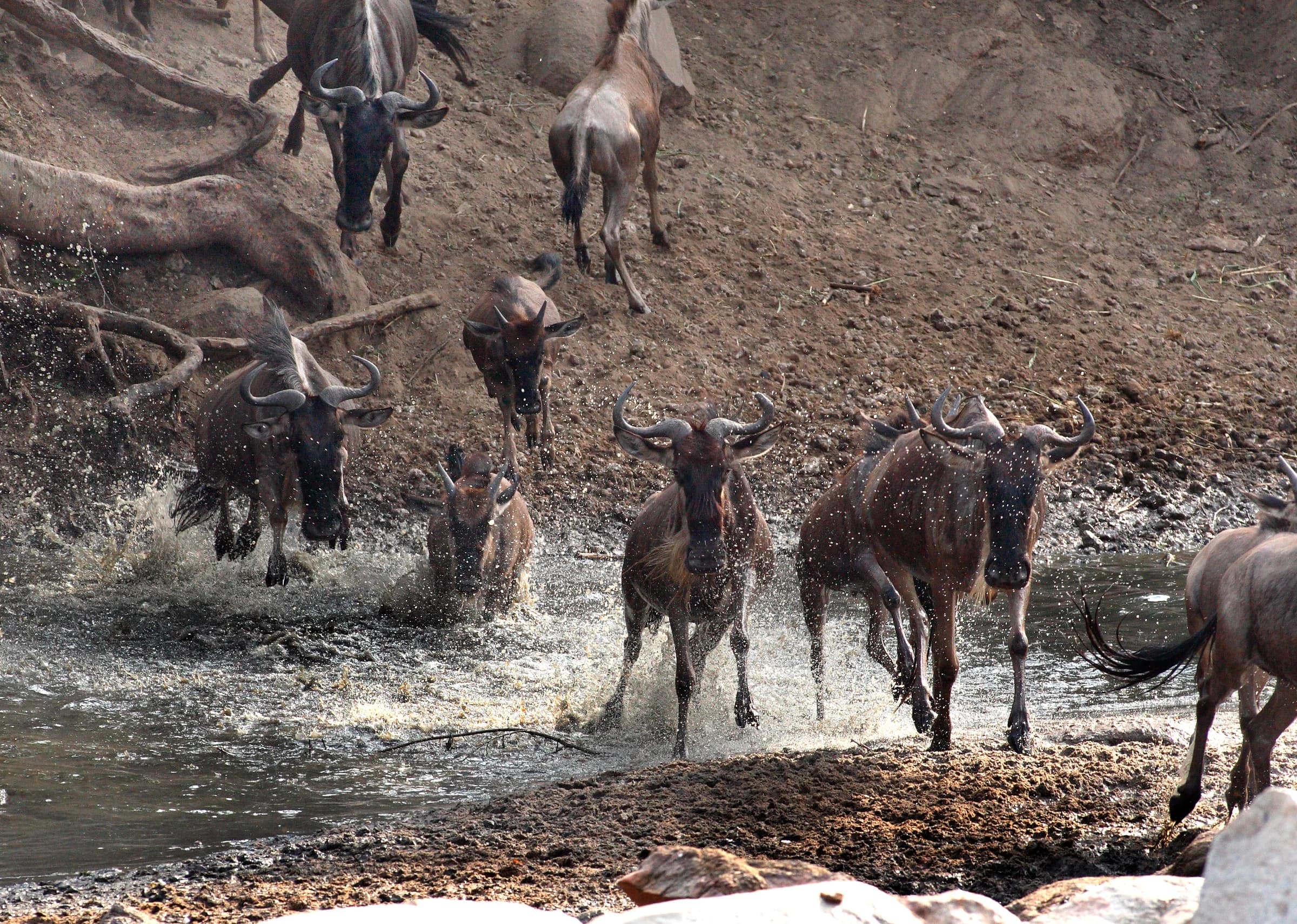
That endless plain hosts the Great Migration, generally considered the largest terrestrial mammal migration on Earth. Roughly 1.5 to 2 million wildebeest, joined by hundreds of thousands of zebra and gazelle, move in a rough clockwise circuit between the Serengeti and Kenya's neighboring Maasai Mara each year, driven entirely by the search for fresh grazing as rain patterns shift across the ecosystem. The most dramatic single moments come at river crossings, when the herds must cross crocodile-infested waters like the Mara River, and predators, particularly lions and crocodiles, concentrate around the chaos.
UNESCO listed the Serengeti as a World Heritage Site in 1981, recognizing both the scale of the migration and the ecosystem's broader significance as one of the last remaining large-scale, relatively intact grassland habitats in Africa, still functioning largely as it has for millennia despite growing pressure from surrounding development and climate shifts.
Ngorongoro Crater, a short drive from the Serengeti's southern boundary, gives a genuinely different kind of wildlife-viewing experience within the same trip. The world's largest intact, unfilled volcanic caldera, formed when a massive volcano collapsed roughly two to three million years ago, now holds a self-contained ecosystem on its crater floor, with such a dense concentration of wildlife, including one of Africa's best chances of spotting black rhino, that many visitors treat it as a single, unmissable day trip extension.
Arusha, the standard gateway town for Serengeti safaris, sits within reach of Kilimanjaro International Airport and handles most of the practical logistics, vehicle arrangements, and guide bookings for visitors heading into the park, whether by charter flight directly into one of the Serengeti's small airstrips or a longer overland drive through the Ngorongoro Conservation Area en route.
What a trip here actually costs
$350 / day avg.
- Mid-range tented safari camp, full board
- Shared guided game drives
- Park entrance and conservation fees
- Transfer from Arusha or Kilimanjaro
What to do at this tier
- • Shared guided game drives covering the Serengeti's central and western corridors
- • Visiting a Maasai village near the park boundary, arranged through most camps
- • Day trip to Ngorongoro Crater, a short drive from the Serengeti's southern edge
$800 / day avg.
- Luxury tented camp or lodge, full board
- Private guided game drives with a dedicated ranger
- Hot air balloon safari over the plains at sunrise
- Private charter flight transfers
What to do at this tier
- • Private guided game drives timed around the Great Migration's seasonal position
- • Sunrise hot air balloon safari over the plains, followed by a champagne breakfast
- • Multi-camp itinerary following the migration's movement across different regions of the park
These are average estimates for planning purposes, not real-time prices — actual costs vary by season, availability, and how far ahead you book.
How to get there
Click anywhere on the world map — any airport works, not just our main hubs.
Click anywhere on the map above — any airport in the world works — to see estimated travel time and cost from there.
Times and prices are planning estimates, not live fares — always check a booking site before you commit. See the full Transport Comparison guide for the general tradeoffs of each mode.
Best time to visit
June-October generally offers the most reliable wildlife viewing as the dry season concentrates animals near water; the Great Migration's river crossings typically happen roughly July-September, though exact timing shifts year to year with rainfall.
Safety notes
Very safe in terms of crime; safety concerns center entirely on wildlife protocol, so always stay inside vehicles except at designated camp areas and follow your guide's instructions closely.
Visa & currency
Tanzanian shilling (TZS), though safari costs, park fees, and most camp rates are quoted and paid in US dollars. Most nationalities need a visa, available as an e-visa in advance or on arrival.
Questions people ask before visiting
Is the Serengeti worth visiting?
Yes — it's home to the Great Migration, the largest terrestrial mammal migration on Earth, alongside dense, reliable predator populations, and the sheer scale of open plain gives a sense of unbroken wilderness that's genuinely rare to experience anywhere else.
What is the Great Migration?
An annual movement of roughly 1.5 to 2 million wildebeest, plus hundreds of thousands of zebra and gazelle, following the rains in a rough clockwise circuit between Tanzania's Serengeti and Kenya's Maasai Mara, driven by the search for fresh grazing. The timing shifts year to year with rainfall, but river crossings, when predators concentrate around the herds, are the most sought-after sighting.
How do you get to the Serengeti?
Most visitors fly into Kilimanjaro International Airport or Arusha, then take a smaller charter flight or a long overland drive into the park itself. Arusha functions as the standard gateway town for organizing safari logistics, vehicles, and guides.
How many days do you need in the Serengeti?
A minimum of three to four days allows real time in different regions of the park, though many visitors extend to a week or more, often combining it with the nearby Ngorongoro Crater, a single-day stop that adds a completely different, more concentrated wildlife-viewing experience.
Nearby destinations
 Zanzibar
Zanzibar
Tanzania
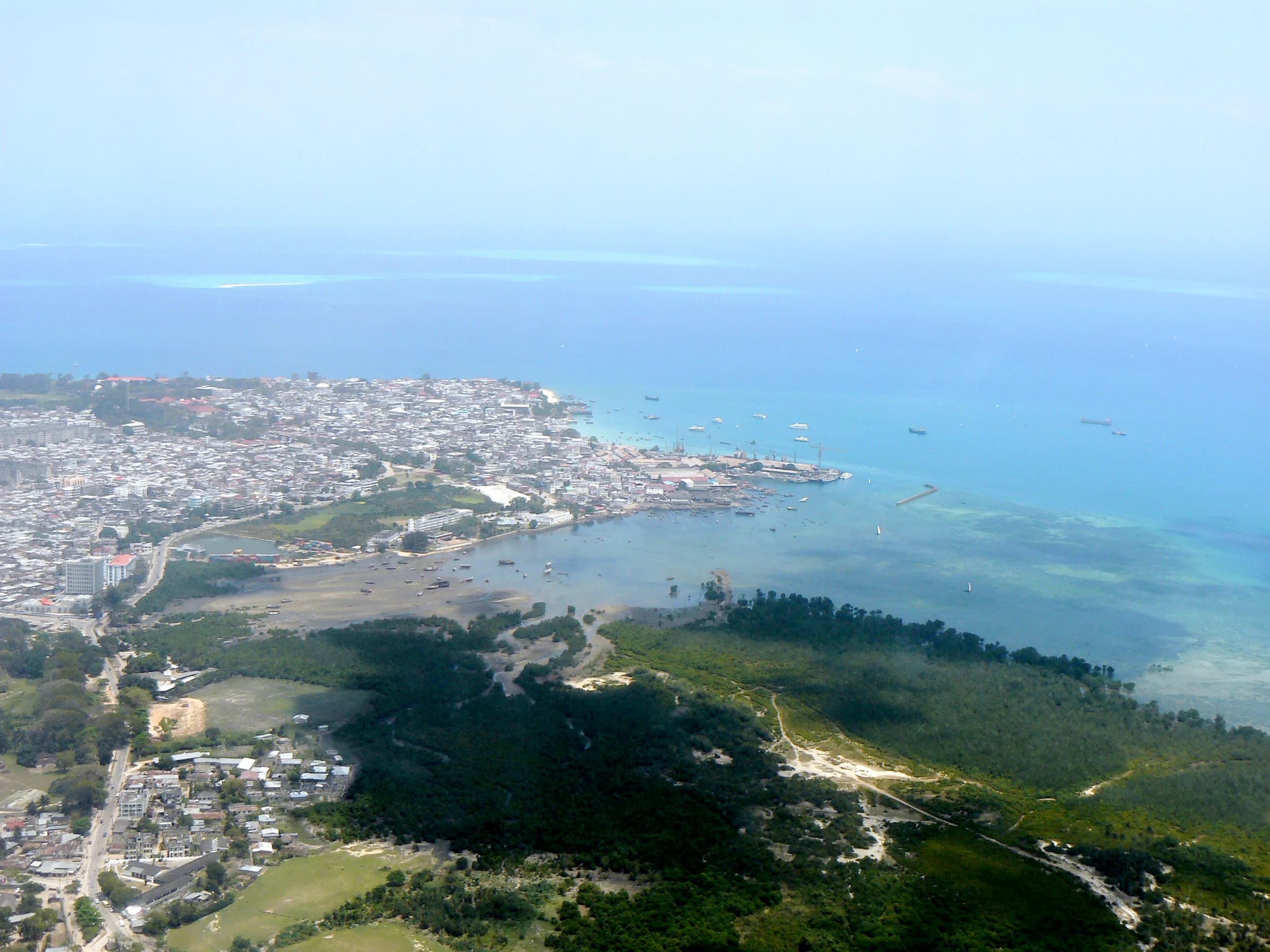
Freddie Mercury was born in Zanzibar's Stone Town in 1946, in a house still standing a short walk from the old slave market, a single block of the city holding both a global music legend's birthplace and one of the most sobering chapters of the Indian Ocean slave trade.
See full guide → Nairobi
Nairobi
Kenya
Nairobi is the only capital city in the world with a full national park inside its limits — lions, rhinos, and giraffes roam Nairobi National Park with the city's skyscrapers visible directly behind them, a juxtaposition that shows up in wildlife photography from almost nowhere else on Earth.
See full guide →Comparing more than one route? See the full transport comparison guide.