Tanzania · Africa
Zanzibar
Freddie Mercury was born in Zanzibar's Stone Town in 1946, in a house still standing a short walk from the old slave market, a single block of the city holding both a global music legend's birthplace and one of the most sobering chapters of the Indian Ocean slave trade.
Freddie Mercury, born Farrokh Bulsara, was born in Zanzibar's Stone Town in 1946, and the house where he spent his early childhood still stands a short walk from the old slave market, before his family relocated to India and later England. That single stretch of Stone Town holds both facts within a few streets of each other: the birthplace of one of the 20th century's most famous musicians, and the site of one of the Indian Ocean's largest historic slave markets.
Stone Town earned UNESCO World Heritage status in 2000 for its architecture, a genuine blend of Arab, Persian, Indian, and European influences built up over centuries as Zanzibar became a dominant hub in Indian Ocean trade. Carved wooden doors, a signature feature of the old town's houses, reflect that mixed heritage directly, with Arab geometric patterns and Indian floral carving styles often appearing on doors just streets apart.
That trading position had a brutal side. Zanzibar operated as one of the largest slave markets in East Africa through the 19th century, a trade the British pressured the ruling sultanate to abolish in 1873. The Anglican Cathedral now standing on the former market site was built deliberately as a memorial, its altar reportedly placed on the spot where the whipping post once stood, and a small museum beneath the cathedral preserves the underground holding cells.
The island's interior tells a different, related story: clove trees introduced in the early 1800s turned Zanzibar into the world's dominant clove producer for much of the 19th and 20th centuries, and spice plantation tours today walk visitors through clove, vanilla, cinnamon, and nutmeg crops, often with tastings, a direct link to the wealth that built much of Stone Town in the first place.
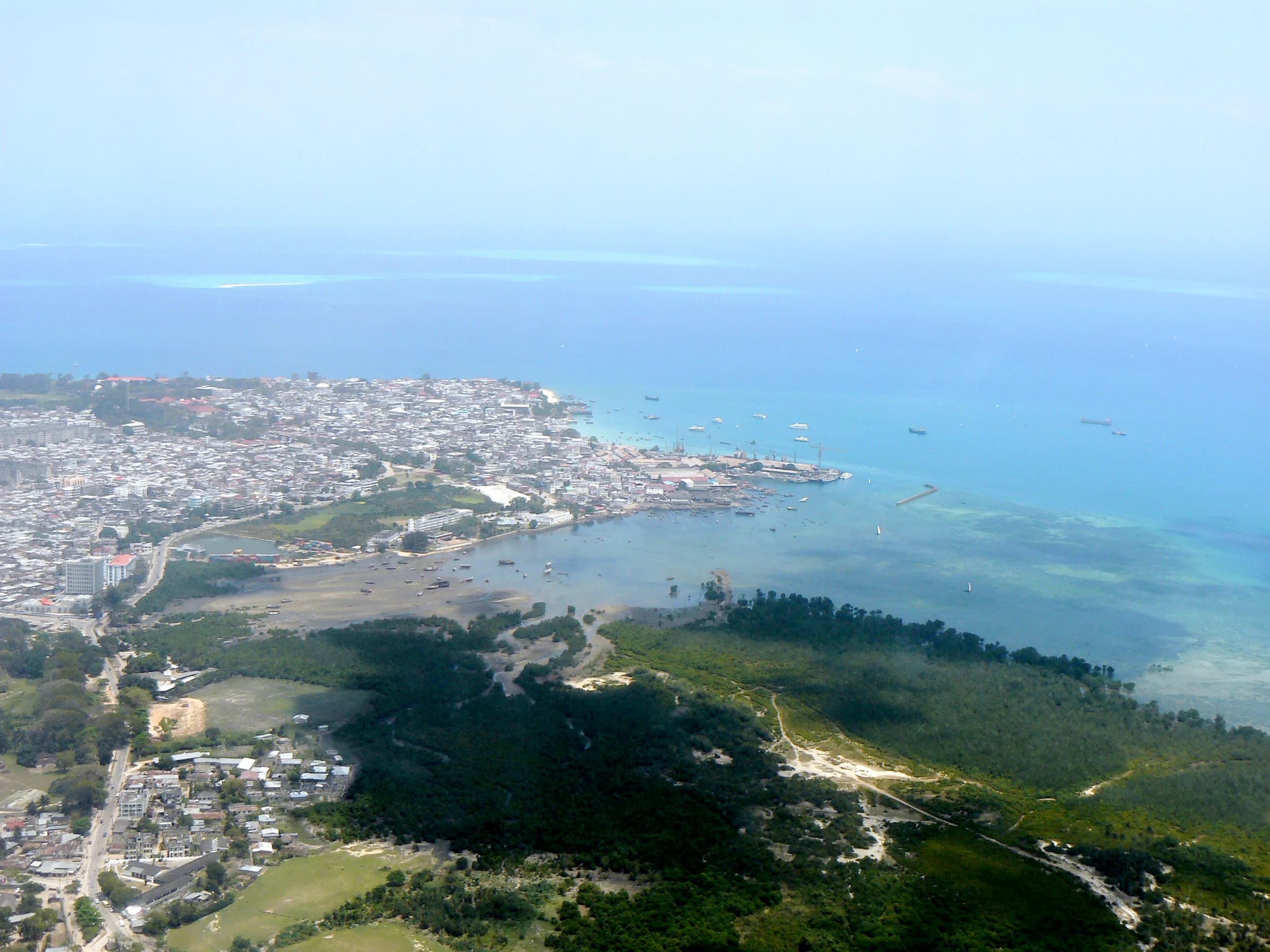
Zanzibar's north and east coast beaches, around Nungwi, Kendwa, Paje, and Jambiani, hold some of the clearest turquoise water in the Indian Ocean, and Mnemba Atoll off the northeast coast is a protected marine reserve popular for snorkeling and diving trips, giving Zanzibar a genuine beach-and-history combination rare for an island this size.
What a trip here actually costs
$35 / day avg.
- Guesthouse in Stone Town or a budget beach bungalow
- Dala-dala shared minibus fares
- Fresh seafood and Swahili meals
- Stone Town self-guided wander
What to do at this tier
- • Stone Town self-guided walk past the House of Wonders, Sultan's Palace, and old fort, free
- • Forodhani Gardens night food market along the Stone Town waterfront, low-cost street food
- • Public beach access on the east coast near Jambiani or Paje, free
$90 / day avg.
- 3-star beach hotel in Nungwi or Kendwa
- Guided Stone Town history tour
- Spice plantation tour with lunch
- Snorkeling trip to Mnemba Atoll
What to do at this tier
- • Guided Stone Town tour covering the former slave market and the Anglican Cathedral built on the site
- • Spice plantation tour, walking through clove, vanilla, and cinnamon crops with tastings
- • Snorkeling day trip to Mnemba Atoll, a protected marine reserve off the northeast coast
$260 / day avg.
- 4-5 star beachfront resort
- Private Stone Town and slave market history tour
- Private spice farm and Jozani Forest tour
- Sunset dhow cruise with dinner
What to do at this tier
- • Private historical tour combining Stone Town, the slave market memorial, and the House of Wonders museum
- • Sunset dhow cruise with a private dinner service
- • Jozani Forest tour to see the endemic red colobus monkey, found only on Zanzibar
These are average estimates for planning purposes, not real-time prices — actual costs vary by season, availability, and how far ahead you book.
How to get there
Click anywhere on the world map — any airport works, not just our main hubs.
Click anywhere on the map above — any airport in the world works — to see estimated travel time and cost from there.
Times and prices are planning estimates, not live fares — always check a booking site before you commit. See the full Transport Comparison guide for the general tradeoffs of each mode.
Best time to visit
June-October and December-February avoid Zanzibar's two rainy seasons; the long rains fall roughly March-May and are worth planning around given how heavy they can get.
Safety notes
Generally safe for tourists in Stone Town and the main beach areas with standard precautions; swimwear should be reasonably modest away from resort beaches given the island's predominantly Muslim culture.
Visa & currency
Tanzanian shilling (TZS), though US dollars are widely accepted for tourism costs including park and museum fees (bills need to be dated 2006 or later and undamaged). Most nationalities need a visa, available as an e-visa in advance or on arrival.
Questions people ask before visiting
Is Zanzibar worth visiting?
Yes — Stone Town's UNESCO-listed old city gives Zanzibar genuine historical depth, the island's clove and spice plantations reflect centuries as a dominant global spice producer, and the northern beaches around Nungwi and Kendwa hold some of the clearest water in the Indian Ocean.
Why is Zanzibar's Stone Town a UNESCO site?
UNESCO listed Stone Town in 2000 for its well-preserved Swahili coastal trading town architecture, blending Arab, Persian, Indian, and European influences built up over centuries as the island became a dominant hub in Indian Ocean trade, including, for a significant and dark stretch, the East African slave trade.
Where was Zanzibar's slave market?
The former slave market site in Stone Town, where thousands of enslaved people were sold before the trade's abolition in 1873, now sits beneath the Anglican Cathedral, built deliberately on the site as a memorial. A small museum and memorial sculpture mark the history today.
How many days do you need in Zanzibar?
A week gives a reasonable balance of Stone Town's history, a spice plantation tour, and real beach time on the north or east coast. Many visitors combine it with a mainland Tanzania safari, given direct flights connect Zanzibar to both Arusha and the Serengeti region.
Nearby destinations

Comparing more than one route? See the full transport comparison guide.