Botswana · Africa
Okavango Delta
The Okavango River flows for over a thousand kilometers out of Angola's highlands and never reaches the sea — instead it spreads out across the Kalahari Desert into a massive inland delta, and the flooding actually peaks in the dry winter months, months after the rains that caused it fell hundreds of kilometers away.
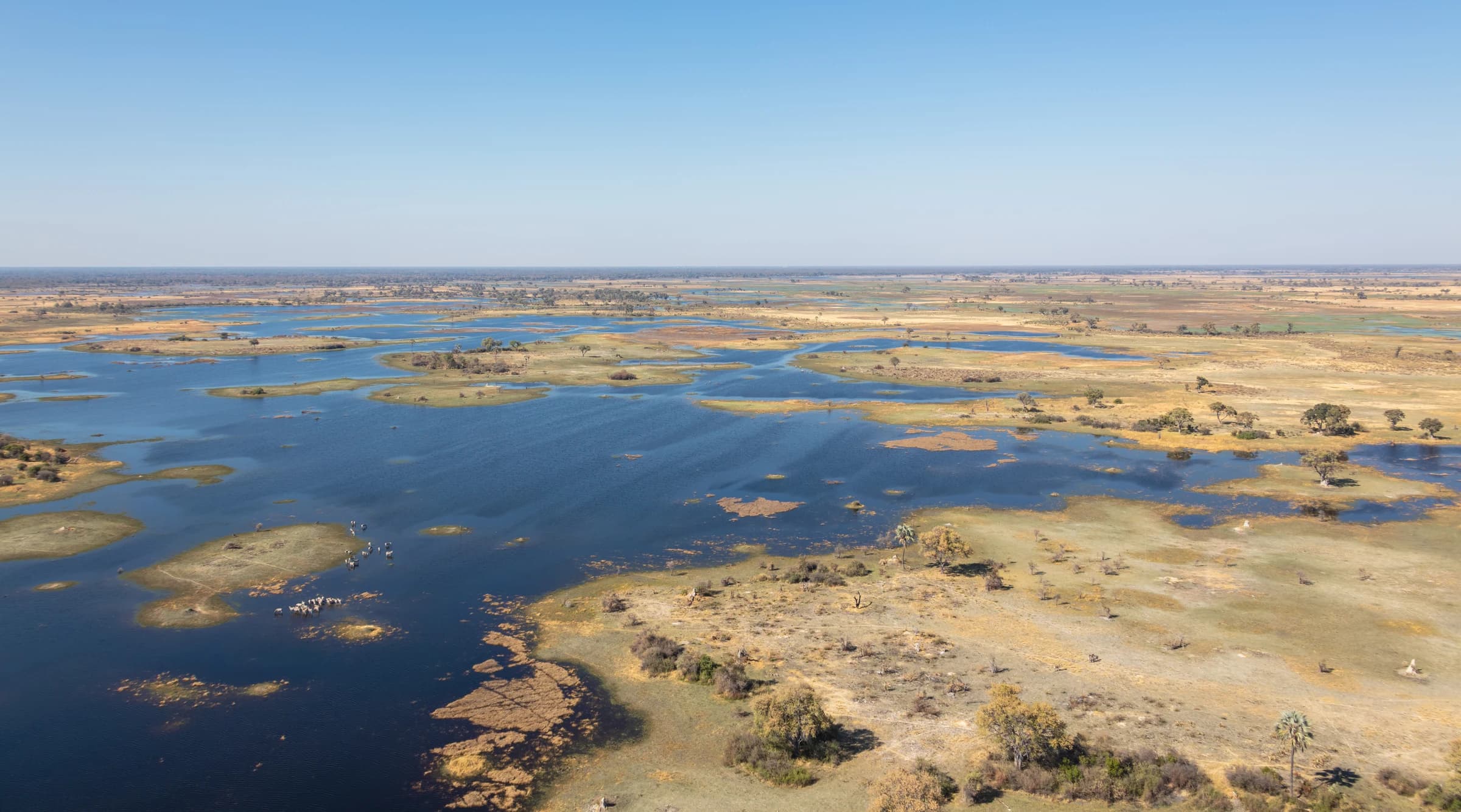
The Okavango River begins in the highlands of Angola and flows for well over a thousand kilometers before reaching Botswana, where it does something rivers rarely do: it never reaches the sea at all. Instead, the river fans out across the flat sands of the Kalahari Desert, splitting into countless channels and lagoons that form one of the world's largest inland deltas, its water eventually just evaporating or soaking into the desert rather than draining into any ocean.
That geography produces a genuinely strange seasonal pattern. Rain falling in Angola's distant highlands takes months to travel down through the river system and spread across the delta's nearly flat terrain, so the flood actually peaks during Botswana's dry winter, roughly June through August, arriving long after the rains that caused it originally fell hundreds of kilometers upstream. The result is a wetland that floods when the surrounding region is driest, drawing wildlife from across a much larger dry area toward the delta's reliable water at exactly the time they need it most.
UNESCO listed the Okavango Delta as a World Heritage Site in 2014, notably as the organization's 1,000th inscribed site, recognizing both its unique hydrology and the exceptional wildlife density its seasonal flooding supports, including large populations of elephant, buffalo, and predators drawn to the concentrated water and grazing.
Getting around the delta looks genuinely different from most African safari destinations. The mokoro, a traditional dugout canoe poled silently through shallow channels by a local guide, remains one of the delta's signature ways to move through the wetland, offering close, quiet wildlife and birdlife viewing that a motorized boat or vehicle would inevitably disturb.
Botswana has deliberately built its tourism model around low visitor volume and high per-visit cost, limiting camp sizes and total capacity across the delta's concessions specifically to protect the ecosystem, a strategy similar to Rwanda's approach to gorilla trekking. The practical result is a genuinely exclusive, expensive experience, but one that's kept the delta's wildlife populations and water quality considerably healthier than many more heavily visited African wilderness areas.
What a trip here actually costs
$450 / day avg.
- Mid-range tented safari camp, full board
- Shared guided game drives and mokoro excursions
- Charter flight transfer from Maun
- Park and concession fees
What to do at this tier
- • Shared mokoro dugout canoe excursion through the delta's shallow channels
- • Guided game drives covering the delta's drier concession areas
- • Birdwatching, with the delta hosting well over 400 recorded bird species
$900 / day avg.
- Luxury tented camp or lodge, full board
- Private guided game drives and mokoro trips
- Private charter flight transfers
- Guided walking safari
What to do at this tier
- • Private mokoro and motorboat combination excursion, covering more ground than a mokoro alone
- • Private guided walking safari with an armed tracker, a rare offering limited to specific concessions
- • Private charter flight scenic tour over the delta, showing its full scale from above
These are average estimates for planning purposes, not real-time prices — actual costs vary by season, availability, and how far ahead you book.
How to get there
Click anywhere on the world map — any airport works, not just our main hubs.
Click anywhere on the map above — any airport in the world works — to see estimated travel time and cost from there.
Times and prices are planning estimates, not live fares — always check a booking site before you commit. See the full Transport Comparison guide for the general tradeoffs of each mode.
Best time to visit
May-September, coinciding with both Botswana's dry season and the delta's seasonal flood peak, offers the best combination of concentrated wildlife and navigable water levels.
Safety notes
Very safe in terms of crime; safety protocol centers entirely on wildlife, so always follow your guide's instructions closely, particularly around hippos and crocodiles in the delta's waterways.
Visa & currency
Botswana pula (BWP). Many Western passport holders can enter visa-free for short stays, worth confirming before booking; most lodge and safari costs are quoted and paid in US dollars.
Questions people ask before visiting
Is the Okavango Delta worth visiting?
Yes — it's one of the few major inland deltas in the world, a genuinely unusual landscape where a large river spreads into a wetland rather than reaching an ocean, and its seasonal flooding supports an exceptional concentration of wildlife within a distinctly low-volume, conservation-focused tourism model.
Why does the Okavango Delta flood in the dry season?
Rain falling in Angola's highlands takes months to travel down the Okavango River system and spread across the delta's flat terrain in Botswana, so the flood peak arrives during Botswana's dry winter, roughly June through August, well after the original rains fell hundreds of kilometers upstream.
What is a mokoro safari?
A traditional dugout canoe, poled silently through the delta's shallow channels by a local guide, offering a quiet, low-impact way to spot wildlife and birdlife that motorized boats or vehicles would disturb. It's one of the delta's signature activities alongside more conventional game drives.
How do you get to the Okavango Delta?
Most visitors fly into Maun, the delta's gateway town, then take a small charter flight directly to a bush airstrip near their specific lodge or camp, since the delta's waterways make road access impractical for most of the interior.
Nearby destinations
 Victoria Falls
Victoria Falls
Zimbabwe
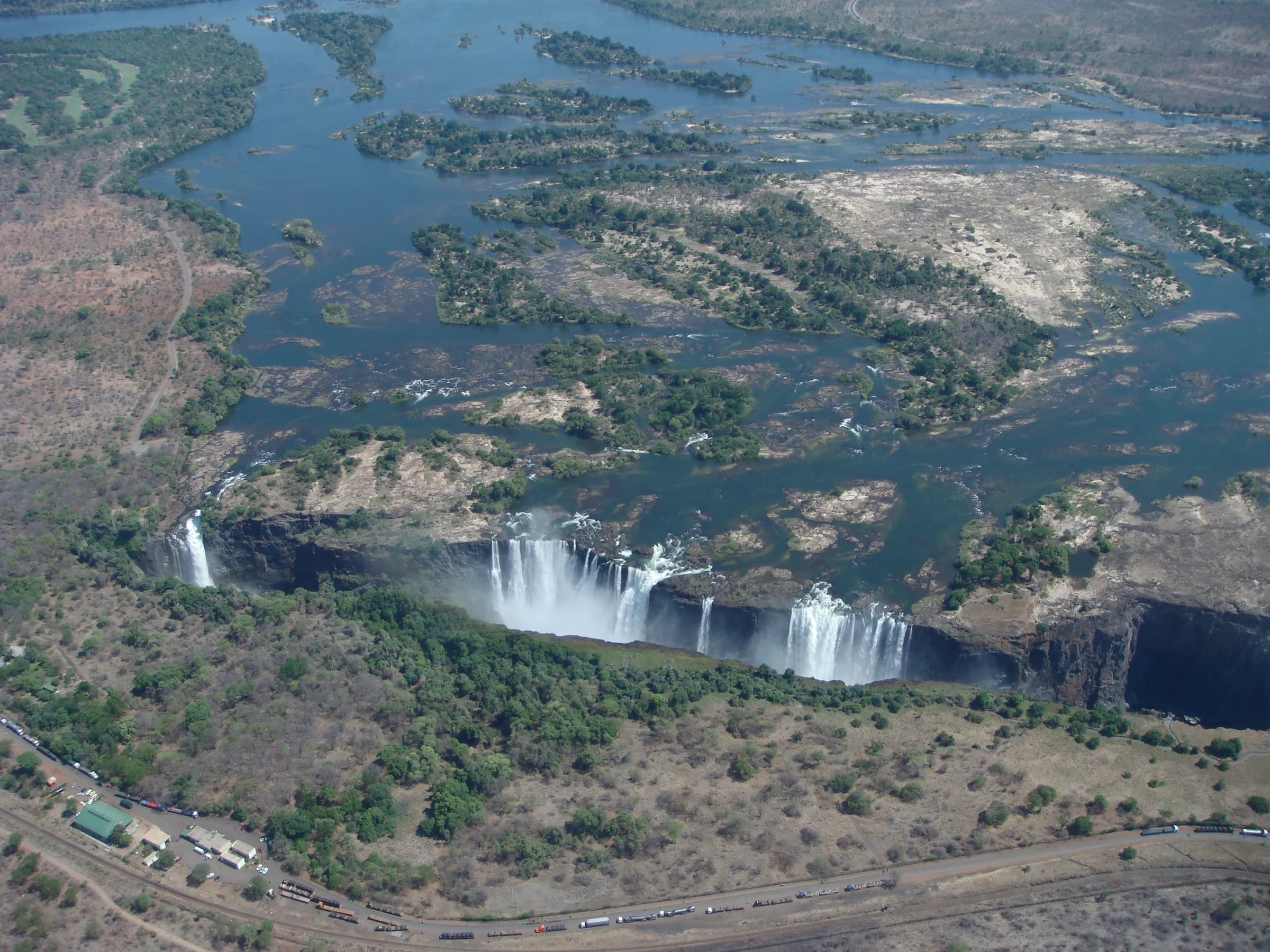
Locals called it Mosi-oa-Tunya, 'The Smoke That Thunders,' long before David Livingstone ever saw it in 1855 — the spray from the falls rises high enough to be visible from more than 20 kilometers away, which is exactly why the name stuck.
See full guide →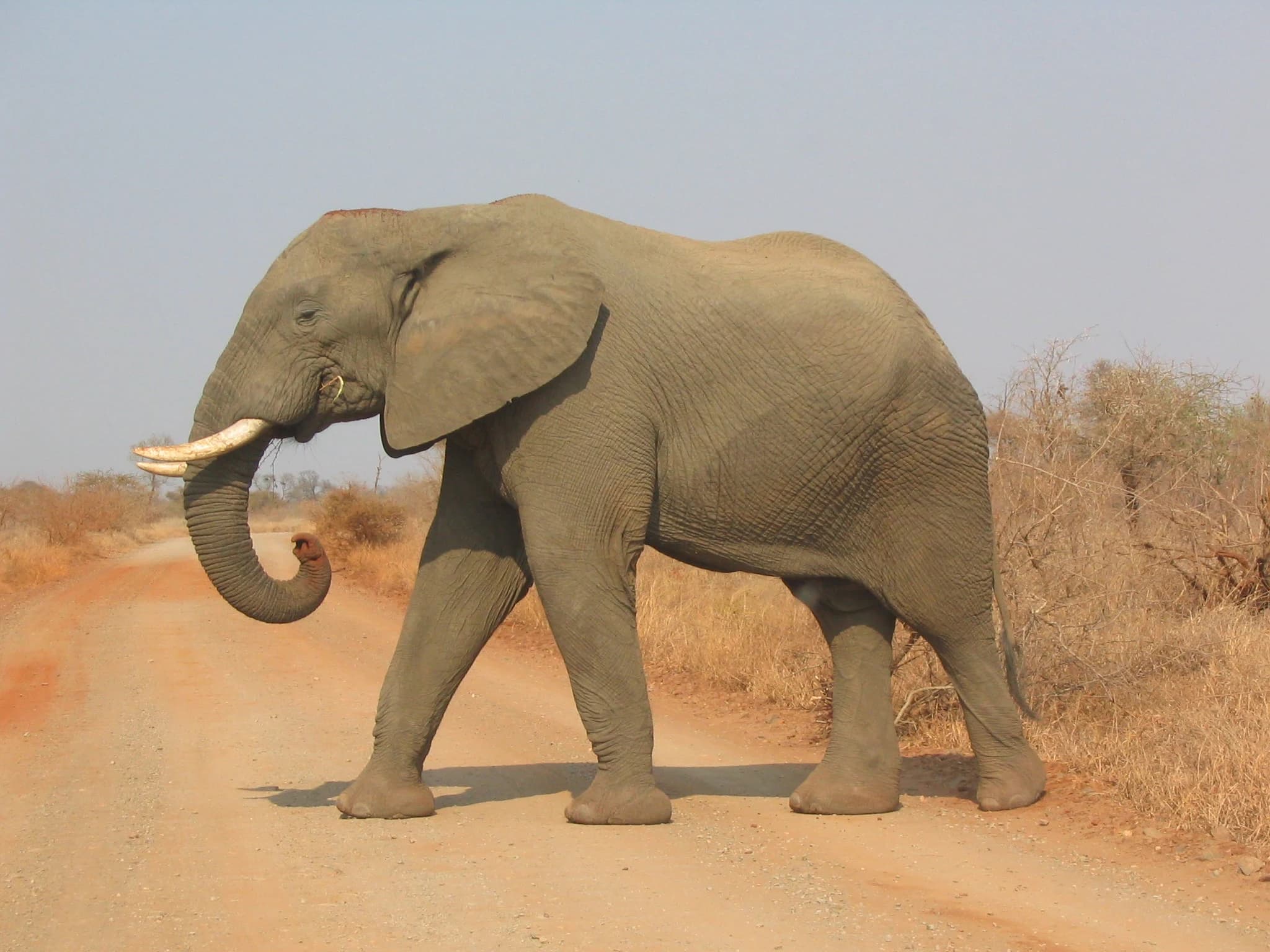 Kruger National Park
Kruger National Park
South Africa
Kruger covers roughly 19,000 square kilometers, an area larger than Wales, and unlike most of Africa's major safari destinations, it's genuinely set up for visitors to drive themselves — a paved and gravel road network lets you self-drive a real Big Five safari without ever booking a guide.
See full guide →Comparing more than one route? See the full transport comparison guide.