Tanzania · Africa
Ngorongoro Crater
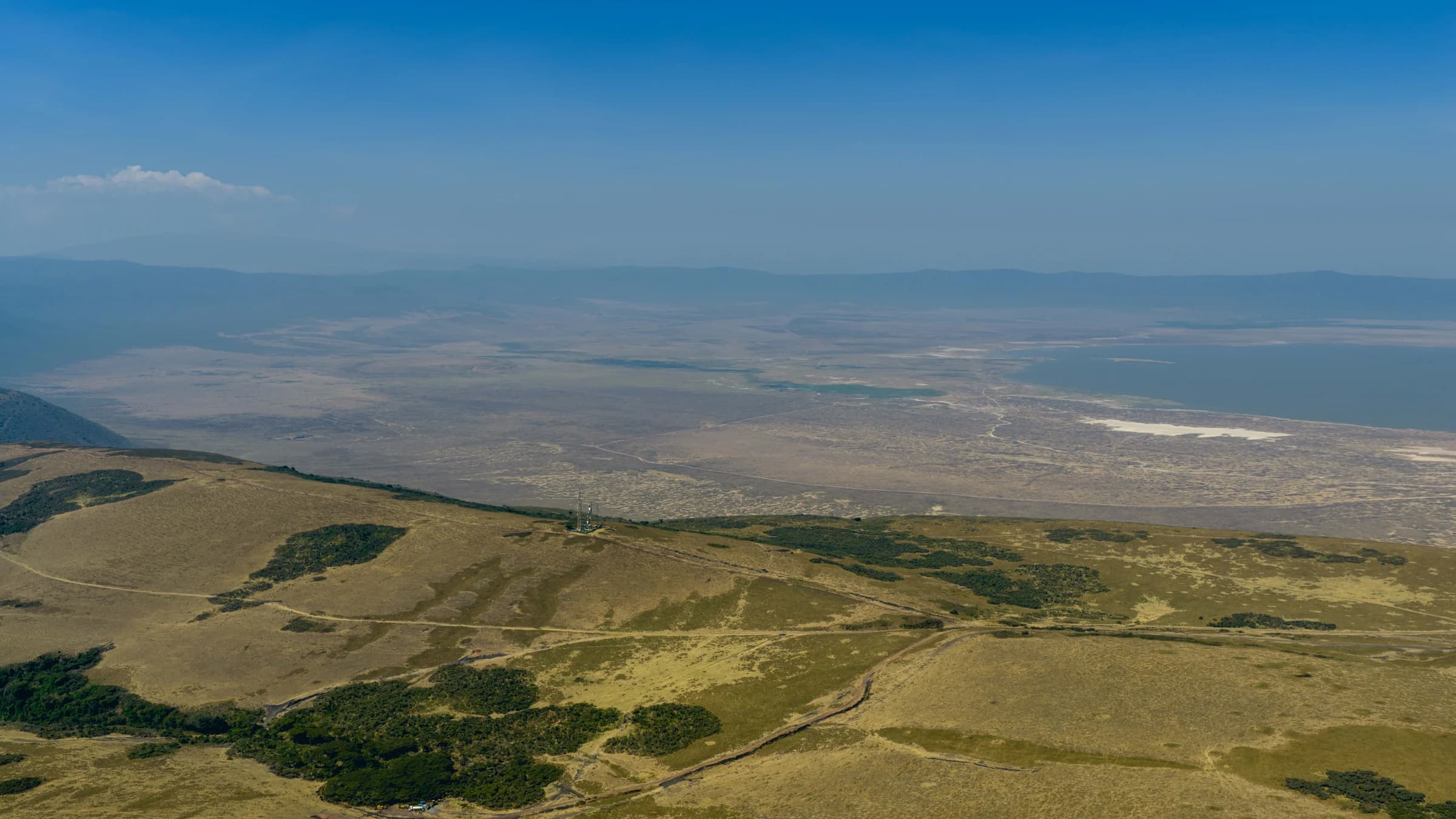
Ngorongoro is the world's largest inactive, intact, unfilled volcanic caldera — a collapsed volcano roughly 2-3 million years old whose crater floor now holds such a dense concentration of wildlife that seeing all of Africa's Big Five in a single day here is genuinely realistic, something few other places on the continent can promise.
Ngorongoro is the world's largest inactive, intact, unfilled volcanic caldera, formed roughly 2 to 3 million years ago when a volcano, likely once taller than nearby Kilimanjaro, erupted so violently it collapsed in on itself. What remained is a crater about 610 meters deep and 19 to 21 kilometers across, and unlike many calderas of similar age, it never filled with water or eroded further into a lake, leaving instead a largely self-contained grassland ecosystem sealed within its own steep walls.
That containment is exactly what makes Ngorongoro's wildlife viewing so unusually reliable. Because the crater floor holds permanent water and grazing, its resident animal populations, unlike the Serengeti's migratory herds just to the north, stay put year-round, and the relatively compact area concentrates them densely enough that spotting all of Africa's Big Five, lion, leopard, elephant, buffalo, and rhino, within a single day's game drive is a genuinely realistic goal here in a way it rarely is elsewhere.
UNESCO listed the wider Ngorongoro Conservation Area as a World Heritage Site in 1979, recognizing not just the crater's wildlife but a deliberately unusual land-use model: unlike most national parks, which exclude human settlement entirely, the conservation area was designed to let Maasai pastoralists continue grazing cattle within its boundaries alongside protected wildlife, an arrangement that remains a genuine, ongoing part of the area's character even as questions about balancing conservation and traditional land use continue to shape its management.
Nearby Olduvai Gorge, part of the same broader conservation area, holds some of the most significant early-human fossil and tool discoveries anywhere in the world, findings that have helped establish this stretch of East Africa as a central site in the story of human evolutionary origins, and many crater visits extend to include a stop there.
The drive down into the crater itself, descending steeply along the caldera wall before opening onto the flat grassland floor, gives visitors a genuine sense of entering a sealed, self-contained world, one that looks and functions distinctly from the open, connected plains of the Serengeti just beyond the crater rim.
What a trip here actually costs
$320 / day avg.
- Lodge accommodation on the crater rim, full board
- Shared guided game drive into the crater
- Conservation area and crater entrance fees
- Transfer from Arusha
What to do at this tier
- • Full-day shared guided game drive on the crater floor, covering grassland, forest, and lake habitats
- • Crater rim viewpoint, taking in the full scale of the caldera from above before descending
- • Visit to a Maasai village near the conservation area boundary
$650 / day avg.
- Luxury lodge on the crater rim with panoramic views
- Private guided full-day game drive on the crater floor
- Full-board dining
- Visit to a nearby Maasai village
What to do at this tier
- • Private guided full-day game drive with a dedicated focus on tracking rhino and other Big Five species
- • Sunrise or sunset viewing from a crater rim lodge, taking in the caldera's full scale in changing light
- • Extended private itinerary combining Ngorongoro with the nearby Olduvai Gorge, a significant early-human archaeological site
These are average estimates for planning purposes, not real-time prices — actual costs vary by season, availability, and how far ahead you book.
How to get there
Click anywhere on the world map — any airport works, not just our main hubs.
Click anywhere on the map above — any airport in the world works — to see estimated travel time and cost from there.
Times and prices are planning estimates, not live fares — always check a booking site before you commit. See the full Transport Comparison guide for the general tradeoffs of each mode.
Best time to visit
June-October and December-February bring the most comfortable weather; unlike the Serengeti, wildlife viewing in Ngorongoro stays genuinely strong year-round since the crater's resident populations don't migrate the way the Serengeti's herds do.
Safety notes
Very safe in terms of crime; safety protocol centers entirely on wildlife, so stay inside vehicles and follow your guide's instructions on the crater floor.
Visa & currency
Tanzanian shilling (TZS), though safari costs are quoted and paid in US dollars. Most nationalities need a visa, available as an e-visa in advance or on arrival.
Questions people ask before visiting
Is Ngorongoro Crater worth visiting?
Yes — it's the world's largest intact volcanic caldera, and its crater floor holds one of the densest wildlife concentrations anywhere in Africa, giving visitors a genuinely strong chance of seeing lion, leopard, elephant, buffalo, and rhino, the full Big Five, within a single day's game drive.
How was Ngorongoro Crater formed?
A large volcano, once likely taller than Kilimanjaro, erupted and collapsed in on itself roughly 2 to 3 million years ago, forming a caldera about 610 meters deep and 19-21 kilometers across. Unlike many calderas, it never filled with water or collapsed further, leaving a self-contained grassland ecosystem on the crater floor.
Do Maasai people still live in the Ngorongoro Conservation Area?
Yes — unlike most national parks, which exclude human settlement, the Ngorongoro Conservation Area was deliberately designed to allow Maasai pastoralists to continue grazing cattle within its boundaries alongside wildlife conservation, an unusual multiple-land-use model that remains a genuine, if sometimes contested, part of the area's identity.
How many days do you need at Ngorongoro Crater?
A single full-day game drive covers the crater floor thoroughly given its relatively compact size compared to the wider Serengeti. Most visitors combine it as a one- or two-day stop within a longer Northern Tanzania safari circuit alongside the Serengeti.
Nearby destinations
 Serengeti
Serengeti
Tanzania
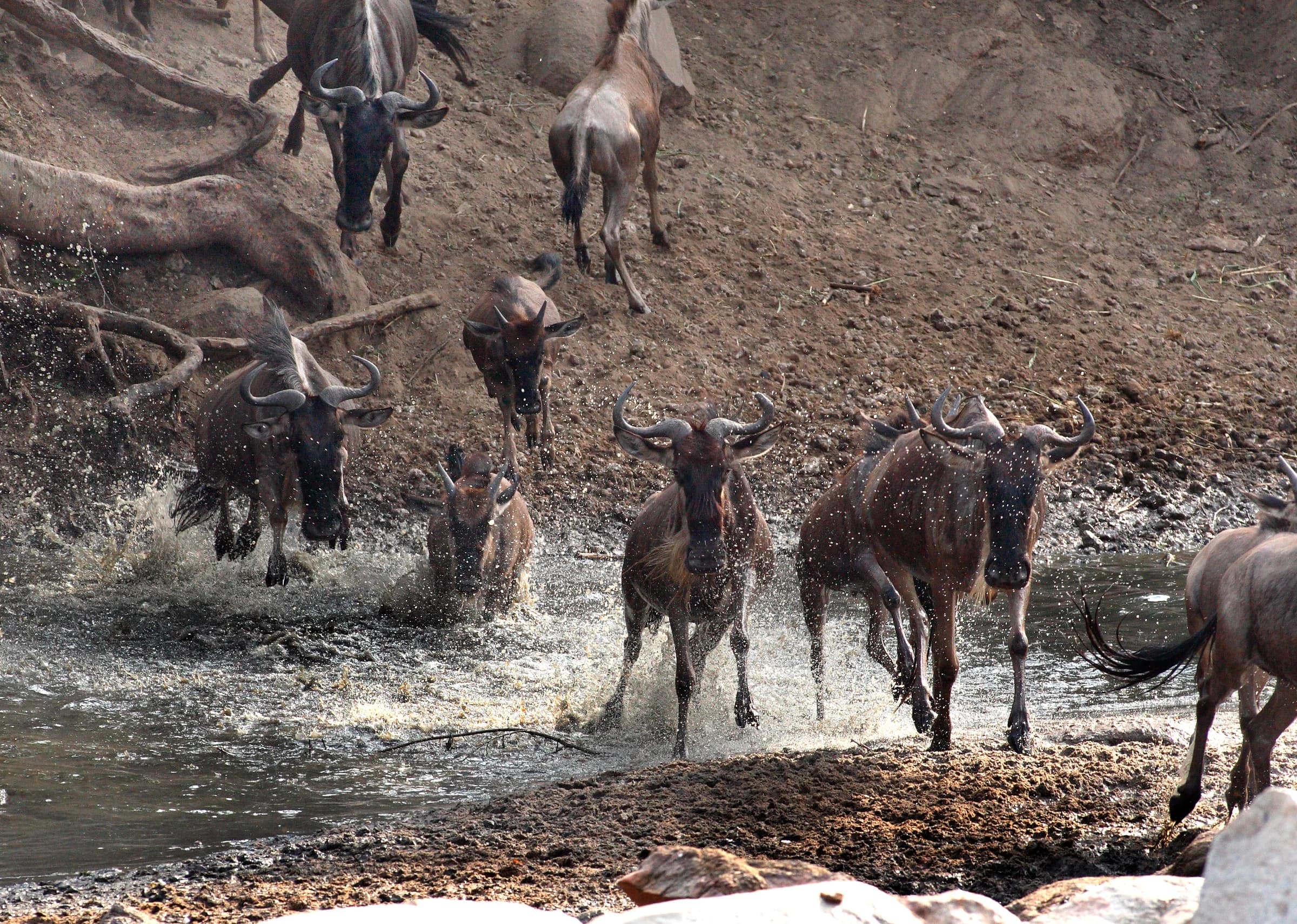
The Serengeti takes its name from the Maasai word siringet, meaning roughly 'the place where the land moves on forever' — a fitting name for a plain that hosts the largest terrestrial mammal migration on Earth, close to two million wildebeest and zebra moving in a rough circle between Tanzania and Kenya every single year.
See full guide →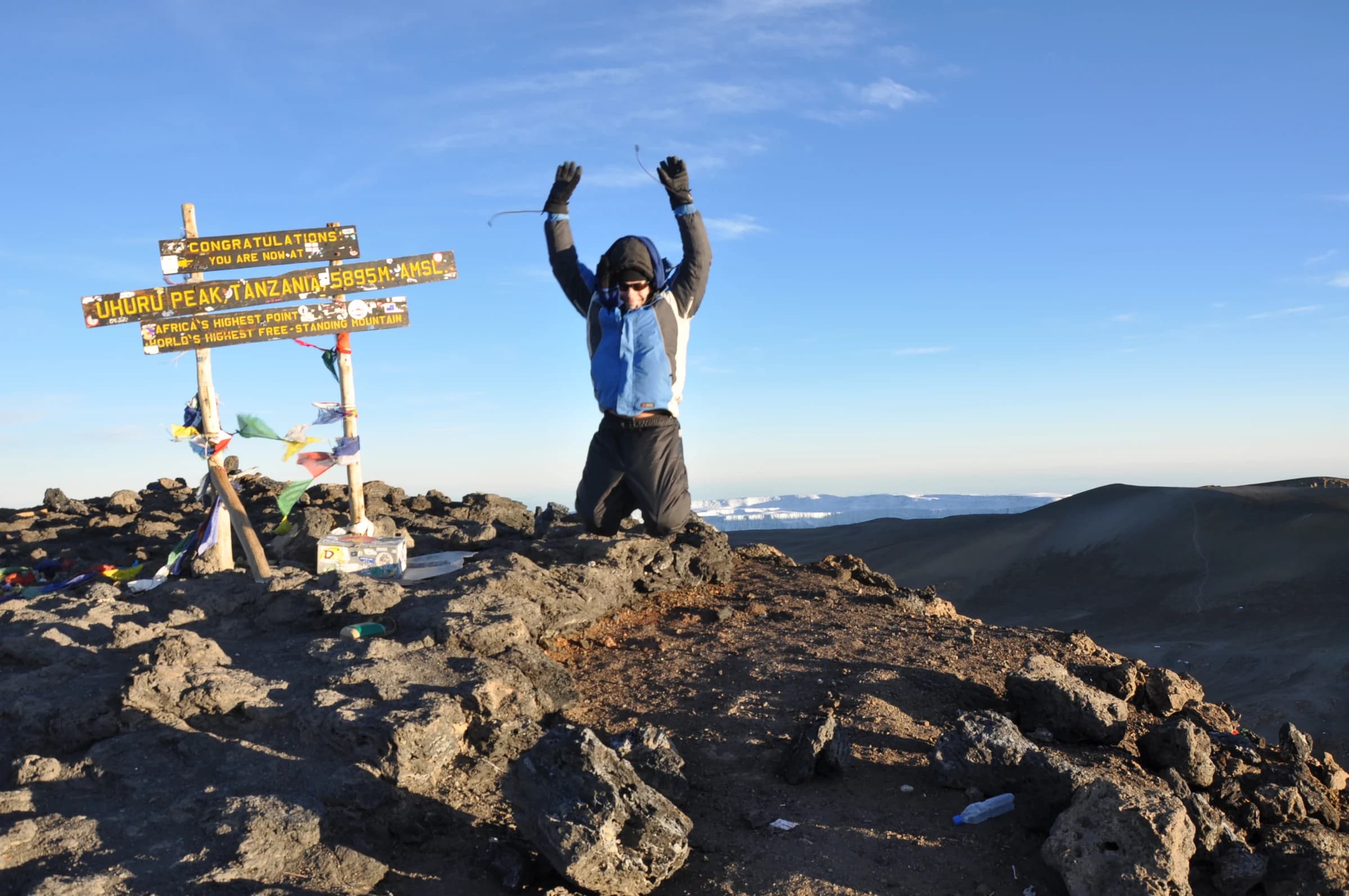 Kilimanjaro
Kilimanjaro
Tanzania
Mount Kilimanjaro is the tallest mountain on Earth that isn't part of a larger range, rising alone from the Tanzanian plains to 5,895 meters — and despite sitting just south of the equator, its summit has held glaciers for thousands of years, though they've retreated so fast in recent decades that scientists expect them to disappear entirely within the coming years.
See full guide →Comparing more than one route? See the full transport comparison guide.