Morocco · Africa
Marrakech
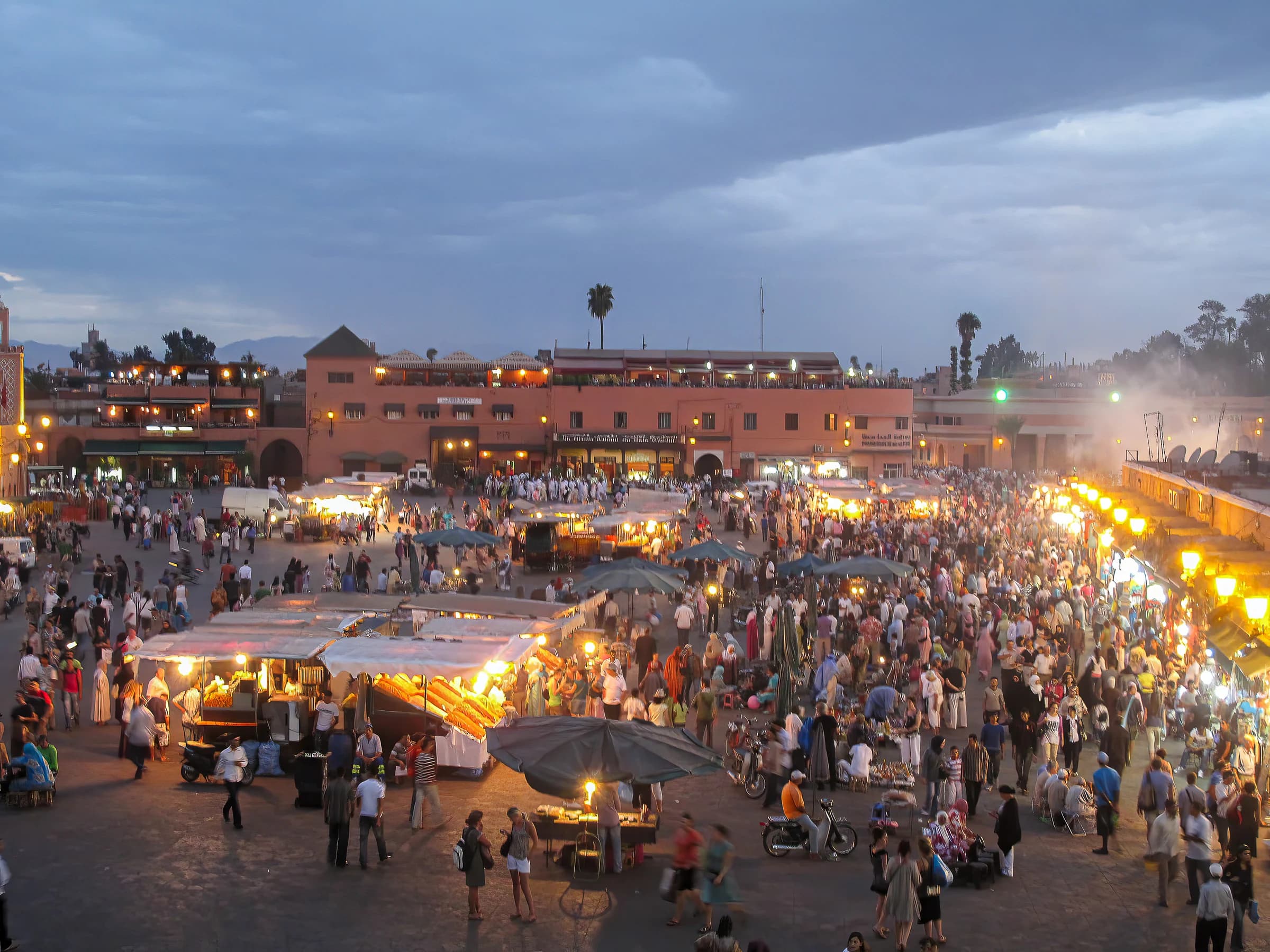
Marrakech's central square, Jemaa el-Fnaa, is recognized by UNESCO not as a building or monument but as a piece of living heritage — the storytellers, musicians, and food stalls that fill it every night are protected the same way a historic building would be.
Jemaa el-Fnaa, Marrakech's central square, holds a status few public spaces anywhere in the world share: UNESCO recognizes it not for any building surrounding it but for what happens inside it. In 2001, the square became one of the first sites added to UNESCO's list of Intangible Cultural Heritage, specifically for the storytellers, musicians, and food vendors who fill it every night, treating the ongoing cultural practice itself as the thing worth protecting rather than a structure.
By day, the square holds orange juice stalls, snake charmers, and henna artists working a mostly tourist crowd. After sunset, it turns into something closer to an open-air restaurant district, with dozens of food stalls setting up in rows and smoke rising over grilled meats, snail soup, and sweet mint tea, patronized by locals and visitors in roughly equal measure.
The medina surrounding the square, a UNESCO World Heritage Site since 1985, holds one of the most complete historic Islamic urban centers still functioning as a real, lived-in city. Its souks spread out in a genuine maze, organized loosely by trade — leather goods in one section, metalwork in another, spices in a third — a layout that developed organically over centuries rather than being planned for tourist navigation, which is exactly why getting lost in them is part of the experience rather than a failure of it.
Jardin Majorelle, a garden of cobalt-blue buildings and cacti originally created by French painter Jacques Majorelle in the 1920s and 1930s, later fell into disrepair before fashion designer Yves Saint Laurent and his partner Pierre Bergé bought and restored it in the 1980s. Saint Laurent's ashes were scattered in the garden after his death in 2008, and it remains one of Marrakech's most visited sites outside the medina itself.
Marrakech also functions as the standard launch point for trips into the Atlas Mountains and the Sahara, both a genuine change of scenery from the city's dense urban core. Multi-day desert excursions to the dunes near Merzouga or Zagora, typically including a camel trek and an overnight camp, are commonly organized as add-ons to a Marrakech stay rather than requiring a separate trip.
What a trip here actually costs
$30 / day avg.
- Riad guesthouse room in the medina
- Petit taxi fares
- Street food and tagine lunches
- Jemaa el-Fnaa and souk wandering, free
What to do at this tier
- • Jemaa el-Fnaa square by day and again after dark, when it transforms into a food market, free
- • Wander the souks of the medina, free to browse
- • Koutoubia Mosque exterior and gardens, Marrakech's largest mosque, free
$80 / day avg.
- 3-star riad with a courtyard pool
- Jardin Majorelle entry
- Sit-down Moroccan dinners
- Half-day Atlas Mountains excursion
What to do at this tier
- • Jardin Majorelle, the cobalt-blue garden restored by Yves Saint Laurent, entry fee applies
- • Bahia Palace, a 19th-century palace with elaborate tilework and courtyards
- • Half-day trip into the Atlas Mountains, including a Berber village stop
$220 / day avg.
- 4-5 star riad or resort with a private hammam
- Private guided medina and souk tour
- Multi-course tasting menu at a well-regarded restaurant
- Overnight Sahara desert camp excursion
What to do at this tier
- • Private guided tour through the medina's souks, tanneries, and historic riads
- • Overnight excursion into the Sahara desert, typically via Merzouga or Zagora, with a camel trek and desert camp
- • Traditional hammam and spa treatment at a high-end riad
These are average estimates for planning purposes, not real-time prices — actual costs vary by season, availability, and how far ahead you book.
How to get there
Click anywhere on the world map — any airport works, not just our main hubs.
Click anywhere on the map above — any airport in the world works — to see estimated travel time and cost from there.
Times and prices are planning estimates, not live fares — always check a booking site before you commit. See the full Transport Comparison guide for the general tradeoffs of each mode.
Best time to visit
March-May and October-November avoid both the intense summer heat, which regularly passes 38°C (100°F), and winter's cooler evenings.
Safety notes
Generally safe within the medina and main tourist areas with standard urban caution; persistent vendor approaches in the souks are common and best handled with a polite, firm no rather than engaging.
Visa & currency
Moroccan dirham (MAD), a closed currency that can't legally be exchanged outside the country, so plan to convert cash on arrival and spend it down before leaving. Many Western passport holders can enter visa-free for short stays, worth confirming before booking.
Questions people ask before visiting
Is Marrakech worth visiting?
Yes — the medina is one of the most intact historic Islamic cities in the world, UNESCO-listed since 1985, and Jemaa el-Fnaa square gives visitors a genuinely rare thing: a central public space that still functions as living cultural heritage rather than a preserved museum piece.
What is Jemaa el-Fnaa and why is it UNESCO-recognized?
It's Marrakech's main square, filled by day with orange juice stalls and snake charmers and transformed by night into an open-air food market with dozens of stalls, storytellers, and musicians. UNESCO added it to its Intangible Cultural Heritage list in 2001, one of the first sites recognized under that category, specifically for the ongoing cultural practices rather than any physical structure.
How many days do you need in Marrakech?
Three days covers the medina, the souks, and Jardin Majorelle at a reasonable pace. Many visitors add a fourth day for a day trip into the Atlas Mountains or a short Sahara desert excursion, both commonly organized from the city.
Is Marrakech safe to visit?
Yes for the vast majority of visitors, particularly within the medina and main tourist areas, though the souks' maze-like layout and persistent vendor approaches catch first-timers off guard more than actual safety issues do — normal precautions around valuables apply as anywhere.
Nearby destinations
 Fez
FezFez
Morocco
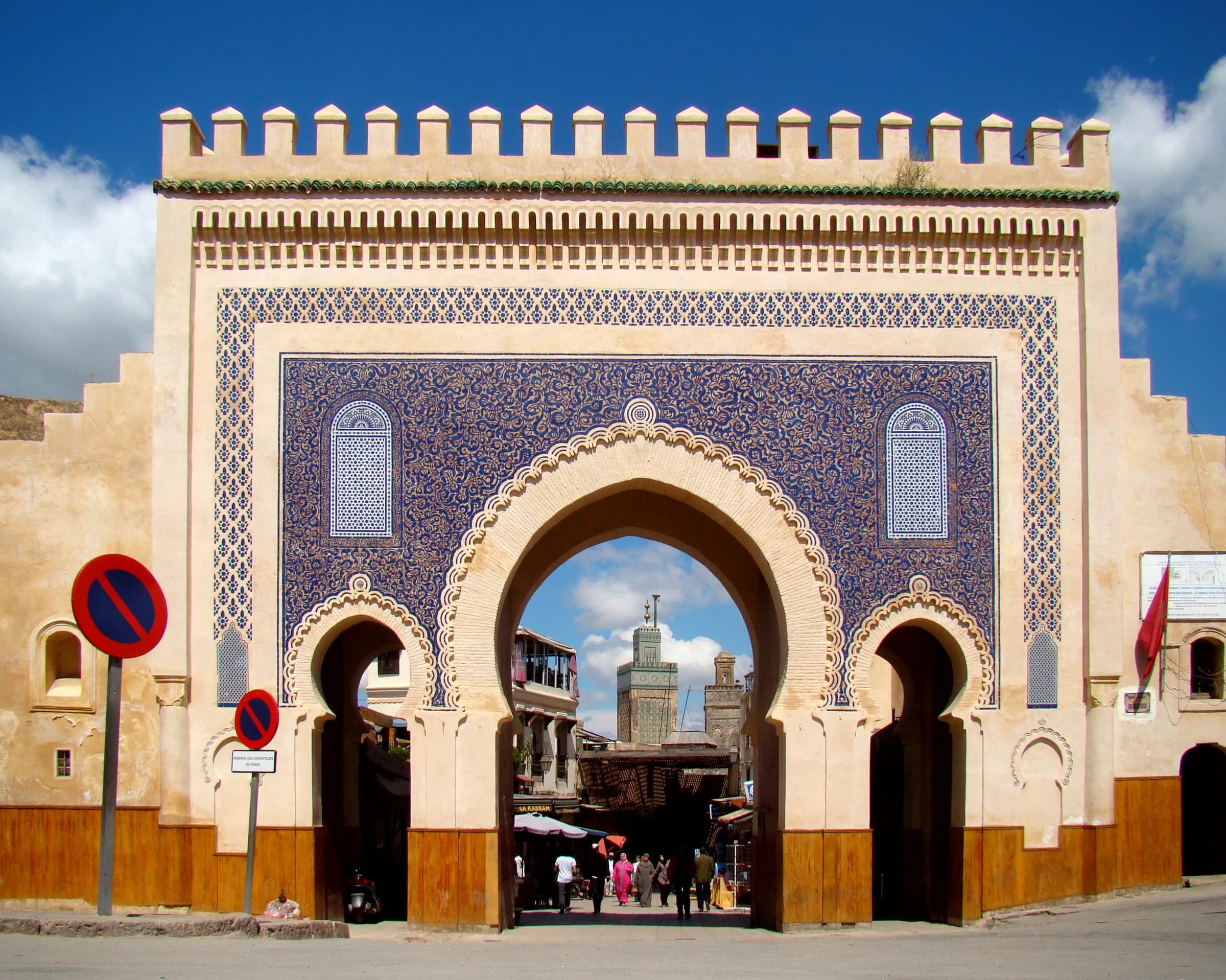
Fez's old medina is one of the largest car-free urban areas on Earth, a maze of over 9,000 narrow streets and alleys still navigated the way it has been for a thousand years — by foot, or by donkey where the load is too heavy to carry.
See full guide →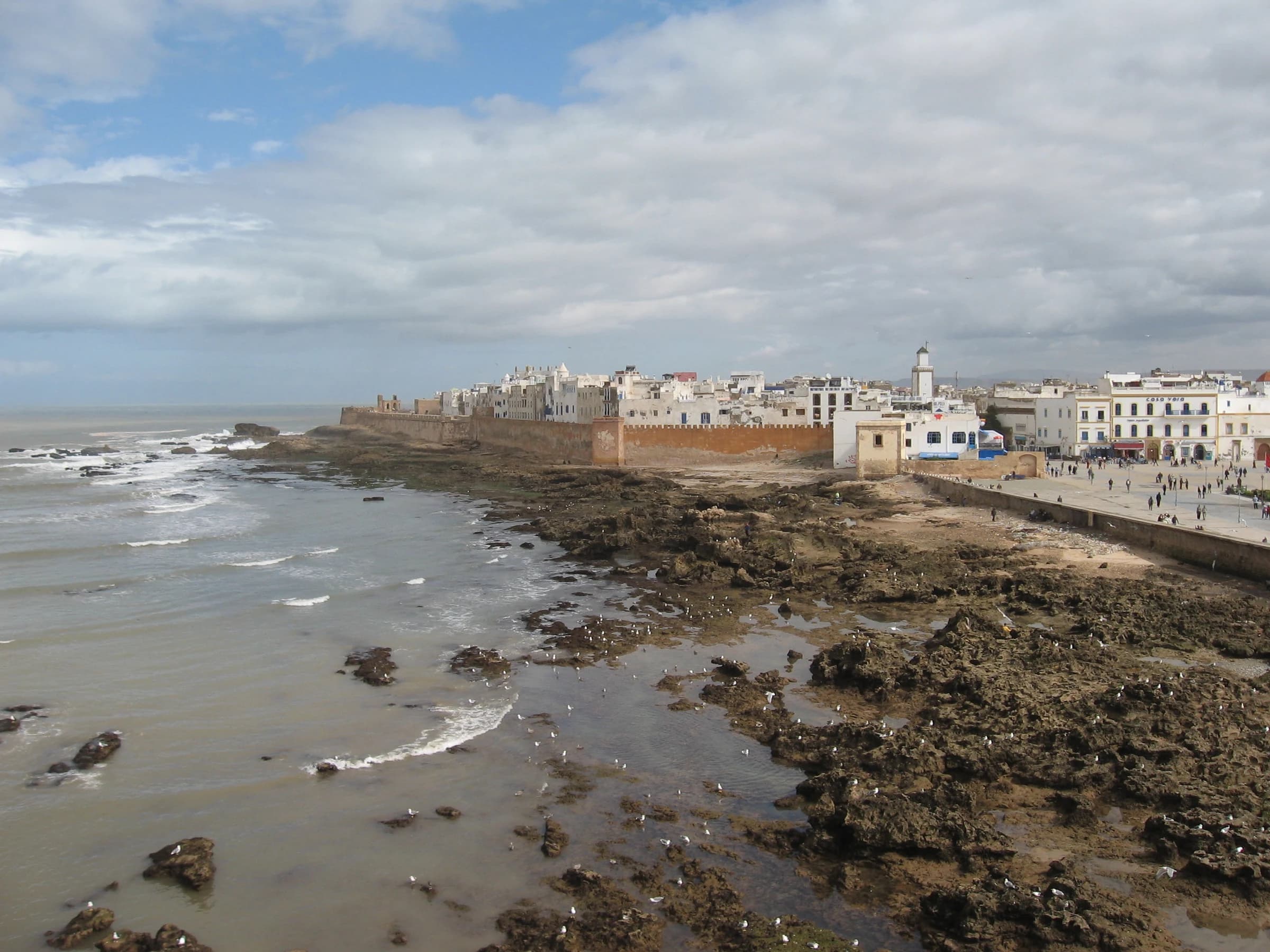 Essaouira
Essaouira
Morocco
Essaouira's near-constant Atlantic trade winds, strong enough that locals nicknamed the city 'Wind City of Africa,' turned a sleepy fishing port into one of the world's more consistent windsurfing and kitesurfing destinations without the town ever really trying to become one.
See full guide →Comparing more than one route? See the full transport comparison guide.