Morocco · Africa
Essaouira
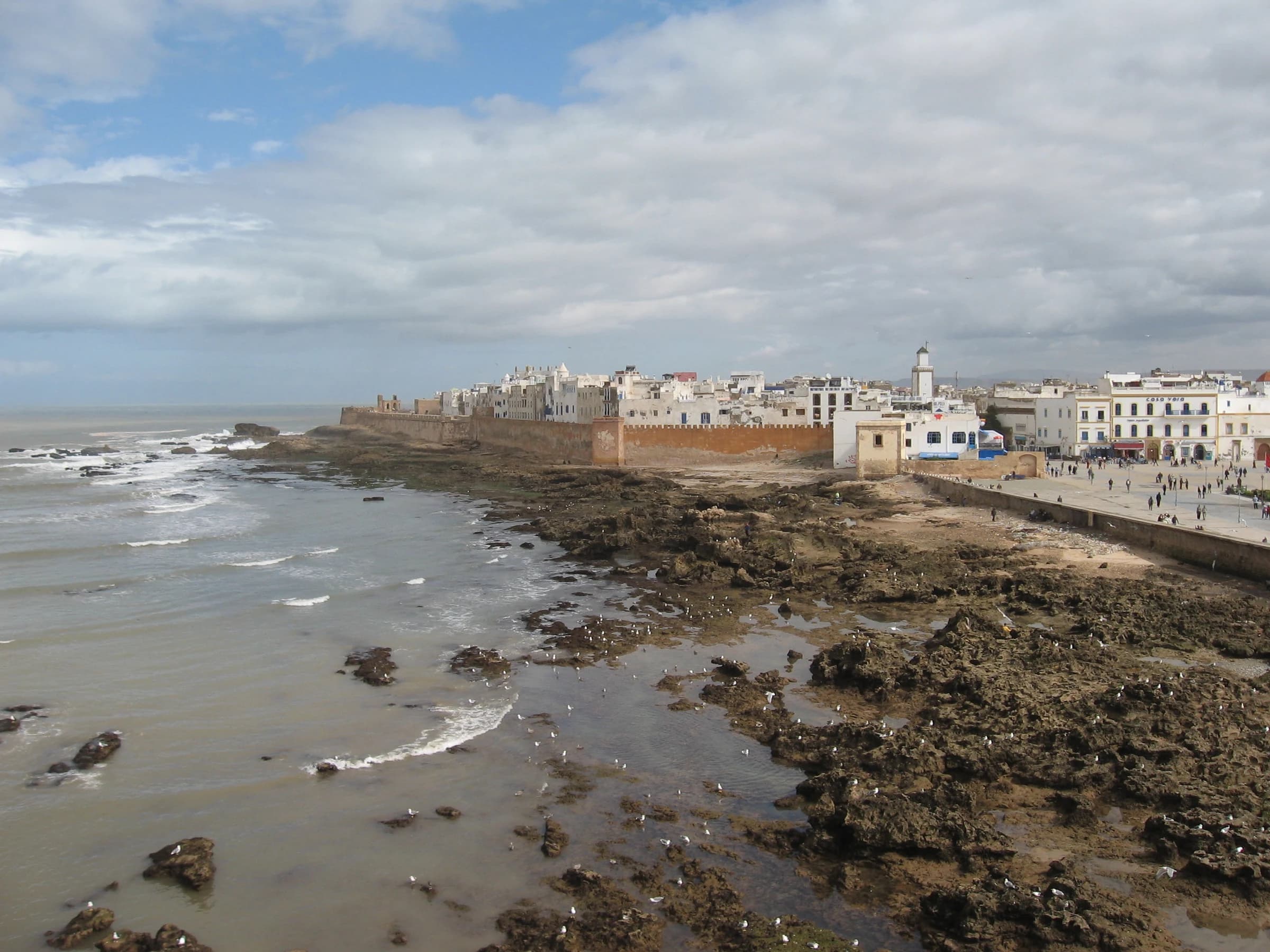
Essaouira's near-constant Atlantic trade winds, strong enough that locals nicknamed the city 'Wind City of Africa,' turned a sleepy fishing port into one of the world's more consistent windsurfing and kitesurfing destinations without the town ever really trying to become one.
Essaouira sits directly in the path of the Alizés, steady Atlantic trade winds that pick up most afternoons with enough reliability that the town has earned the nickname Wind City of Africa. That consistency turned what was historically a fishing and trading port into a genuine destination for windsurfers and kitesurfers, a reputation the town built almost by geographic accident rather than deliberate tourism strategy.
The same wind keeps Essaouira noticeably cooler than inland Morocco year-round, a real practical draw for visitors escaping Marrakech's summer heat, which regularly exceeds what the coastal town ever sees. That temperature gap, only about two and a half hours apart by road, has made Essaouira a common short add-on to a Marrakech-based trip rather than a separate journey.
The medina, fortified with sea walls known as the Skala de la Ville, earned UNESCO World Heritage status in 2001 for its well-preserved late-18th-century layout, designed by a French military architect under Sultan Mohammed III to European fortification standards but built using local materials and craftsmanship. The result is a genuinely distinct blend, visible clearly in the ramparts' rows of cannons still facing out to sea, an unusual pairing of European military design and Moroccan urban planning.
Essaouira's port remains a working fishing harbor, and the fish market and grill stalls along it give visitors about as direct a farm-to-table, or in this case sea-to-table, experience as exists in Morocco: the morning's catch gets laid out, selected, and grilled on the spot within view of the boats that brought it in.
The surrounding region also produces much of Morocco's argan oil, pressed from the nuts of a tree that grows almost exclusively in this part of the country, and several women's cooperatives near Essaouira offer visits showing the traditional hand-extraction process, a labor-intensive method still used alongside more mechanized production for cosmetic-grade oil.
What a trip here actually costs
$25 / day avg.
- Guesthouse riad in the medina
- Local bus and petit taxi fares
- Fresh seafood at the port grills
- Ramparts and medina wander, free
What to do at this tier
- • Walk the Skala de la Ville ramparts, 18th-century sea walls with cannons still in place, free
- • Port fish market and grill stalls, where the day's catch gets cooked to order
- • Wander the medina's souks, calmer and less crowded than Marrakech's
$60 / day avg.
- 3-star riad near the medina walls
- Windsurfing or kitesurfing lesson
- Sit-down seafood dinners
- Half-day trip to a nearby argan oil cooperative
What to do at this tier
- • Windsurfing or kitesurfing lesson on the beach south of the medina, taking advantage of the daily Alizés winds
- • Half-day visit to an argan oil cooperative, watching the traditional hand-extraction process
- • Sunset camel or horseback ride along the beach
These are average estimates for planning purposes, not real-time prices — actual costs vary by season, availability, and how far ahead you book.
How to get there
Click anywhere on the world map — any airport works, not just our main hubs.
Click anywhere on the map above — any airport in the world works — to see estimated travel time and cost from there.
Times and prices are planning estimates, not live fares — always check a booking site before you commit. See the full Transport Comparison guide for the general tradeoffs of each mode.
Best time to visit
April-June and September-October bring the most comfortable balance of warm days and manageable wind; summer afternoons can be genuinely blustery for anyone not there specifically for water sports.
Safety notes
Generally very safe and relaxed, among the calmer Moroccan cities for tourism, with standard urban caution in the medina and port areas.
Visa & currency
Moroccan dirham (MAD), a closed currency exchanged only within the country. Many Western passport holders can enter visa-free for short stays, worth confirming before booking.
Questions people ask before visiting
Is Essaouira worth visiting?
Yes, particularly as a coastal counterpoint to Marrakech — Essaouira's fortified medina is UNESCO-listed, the Atlantic breeze keeps temperatures noticeably cooler than inland Morocco, and the town has a genuinely different, calmer pace than the bigger imperial cities.
Why is Essaouira called the Wind City of Africa?
Essaouira sits directly in the path of strong, near-daily Atlantic trade winds known locally as the Alizés, which pick up reliably most afternoons. That consistency has made the town one of the more dependable windsurfing and kitesurfing spots in the world, drawing a dedicated water-sports crowd alongside its regular tourism.
Is Essaouira's medina a UNESCO site?
Yes — UNESCO listed the Medina of Essaouira in 2001, citing its well-preserved late-18th-century fortified town architecture, which blends European military engineering with traditional Moroccan design, a combination tied to the city's history as a planned international trading port.
How many days do you need in Essaouira?
Two days covers the medina, ramparts, and harbor at an easy pace. Many visitors treat it as a 2-3 day coastal add-on to a longer Marrakech trip rather than a standalone destination, given it's roughly a 2.5-hour drive or bus ride from Marrakech.
Nearby destinations
 Marrakech
Marrakech
Morocco
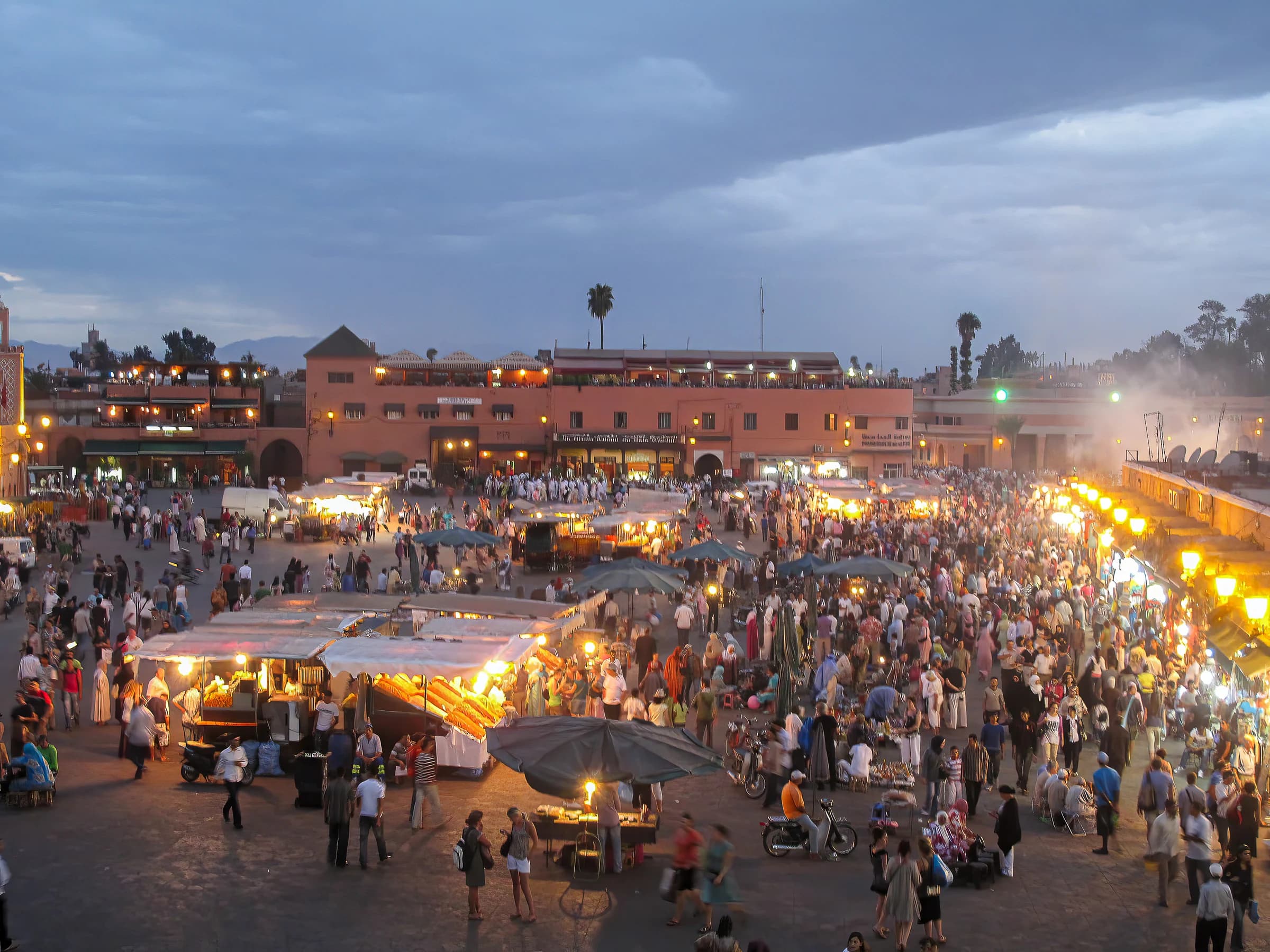
Marrakech's central square, Jemaa el-Fnaa, is recognized by UNESCO not as a building or monument but as a piece of living heritage — the storytellers, musicians, and food stalls that fill it every night are protected the same way a historic building would be.
See full guide →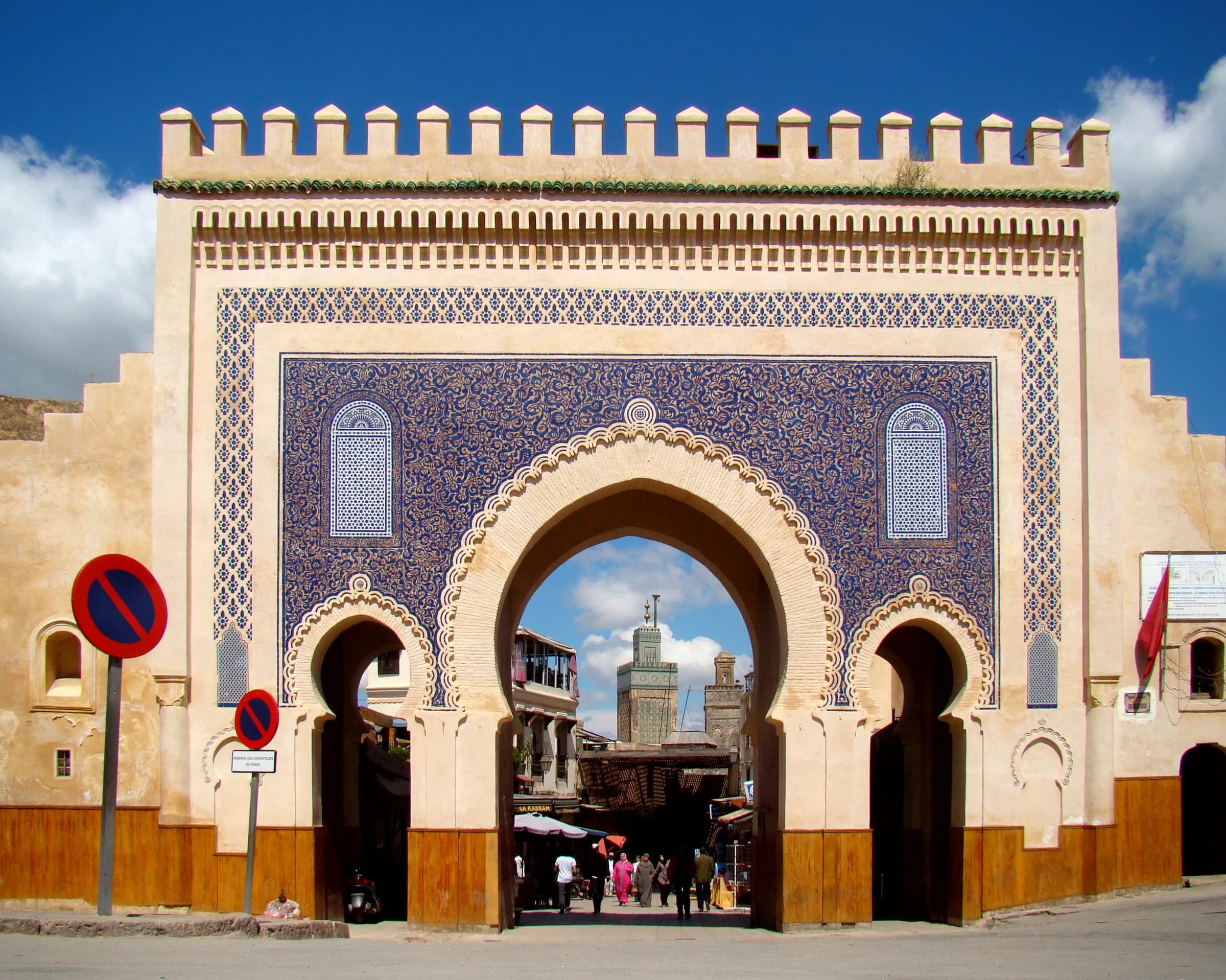 Fez
FezFez
Morocco
Fez's old medina is one of the largest car-free urban areas on Earth, a maze of over 9,000 narrow streets and alleys still navigated the way it has been for a thousand years — by foot, or by donkey where the load is too heavy to carry.
See full guide →Comparing more than one route? See the full transport comparison guide.