Morocco · Africa
Fez
Fez's old medina is one of the largest car-free urban areas on Earth, a maze of over 9,000 narrow streets and alleys still navigated the way it has been for a thousand years — by foot, or by donkey where the load is too heavy to carry.
Fes el-Bali, Fez's old medina, ranks among the largest car-free urban areas anywhere in the world, a title it holds simply by predating the automobile by roughly a thousand years. Its streets, many too narrow for two people to pass comfortably, were never built for vehicles and never retrofitted for them either, so goods still move through the medina today largely by handcart and donkey, the same basic logistics the city has run on for centuries.
The University of al-Qarawiyyin, founded in 859 CE by Fatima al-Fihri, holds a similarly outsized claim: UNESCO and Guinness World Records both recognize it as the oldest existing, continually operating institution of higher learning anywhere in the world, older than Oxford, older than Cairo's Al-Azhar. Al-Fihri built it using an inheritance from her father, a wealthy merchant, and it has functioned continuously as a center of learning ever since, now integrated into Morocco's modern state university system.
The Chouara Tannery, one of three tanneries still operating in the medina, gives visitors one of the more visceral sights in Fez: dozens of stone vats arranged in a honeycomb pattern, filled with dye and treatment solutions in white, brown, and vivid colors, where workers process leather using methods that have changed little in centuries. Viewing terraces at surrounding leather shops let visitors look down over the whole operation, usually with a sprig of mint offered on arrival to offset the smell.
Compared to Marrakech, Fez sees considerably less tourism infrastructure investment, which cuts both ways. The medina feels less adapted to visitors and more genuinely difficult to navigate without help, but it also feels less staged, with fewer areas that exist primarily for tourist consumption and more that simply continue functioning as they always have.
Fez sits inland at a higher elevation than Morocco's Atlantic coastal cities, giving it a real seasonal swing between hot, dry summers and cold, occasionally frosty winters, a contrast to the more moderate year-round climate found in Essaouira or Casablanca. That inland position also puts it within reach of the Middle Atlas mountain towns, including Ifrane, sometimes nicknamed Morocco's "Switzerland" for its alpine-style architecture, and the Roman ruins at Volubilis, both common day trips from a Fez base.
What a trip here actually costs
$25 / day avg.
- Guesthouse riad in the medina
- Petit taxi fares
- Casual Moroccan meals
- Medina wander with a hired local guide
What to do at this tier
- • Wander Fes el-Bali's souks and alleys, ideally with a hired local guide to avoid getting lost, low-cost tip
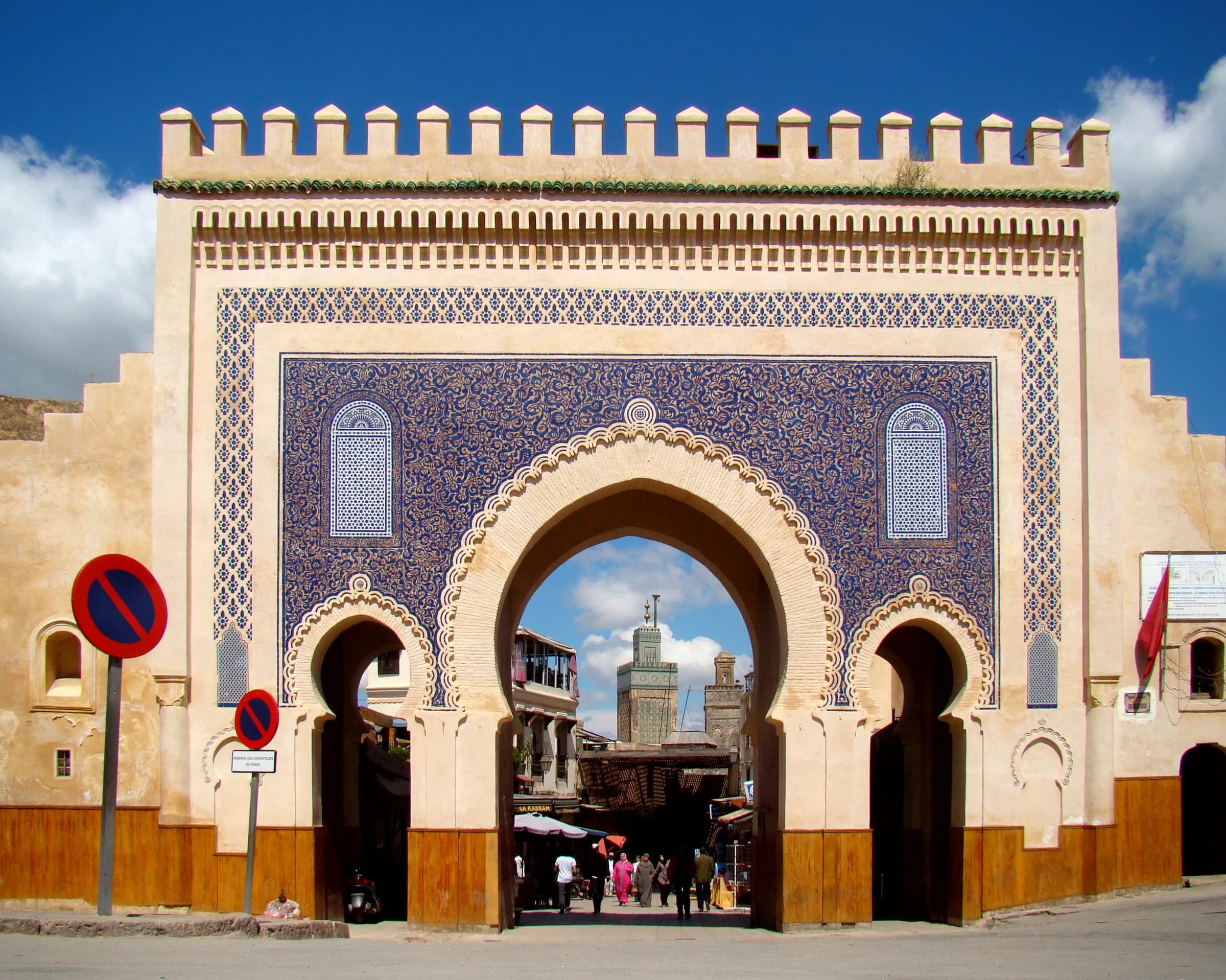
- • Bab Boujloud, the ornate blue-and-green gate marking the medina's main entrance, free
- • Al-Attarine Madrasa exterior and courtyard, entry fee applies
$65 / day avg.
- 3-star riad with a traditional courtyard
- Chouara Tannery viewing terrace and madrasa entries
- Sit-down Moroccan dinners
- Half-day guided medina tour
What to do at this tier
- • Chouara Tannery viewing terrace, watching the centuries-old leather-dyeing process from above
- • University of al-Qarawiyyin area and the attached Qarawiyyin Mosque exterior
- • Nejjarine Museum of Wooden Arts and Crafts, housed in a restored 18th-century inn
$180 / day avg.
- Upscale riad with a private hammam
- Private guide for the full medina and tanneries
- Multi-course tasting dinner
- Day trip to the Middle Atlas towns of Ifrane and Volubilis
What to do at this tier
- • Private guided full-day tour covering the tanneries, madrasas, and lesser-visited medina corners
- • Day trip to Volubilis, well-preserved Roman ruins, and the mountain town of Ifrane
- • Traditional hammam treatment at a riad spa
These are average estimates for planning purposes, not real-time prices — actual costs vary by season, availability, and how far ahead you book.
How to get there
Click anywhere on the world map — any airport works, not just our main hubs.
Click anywhere on the map above — any airport in the world works — to see estimated travel time and cost from there.
Times and prices are planning estimates, not live fares — always check a booking site before you commit. See the full Transport Comparison guide for the general tradeoffs of each mode.
Best time to visit
March-May and September-November avoid Fez's hot summers and genuinely cold winters, a bigger seasonal swing than coastal Moroccan cities given its inland, elevated position.
Safety notes
Generally safe within the medina with standard urban caution; the layout is disorienting enough that hiring a local guide for the first visit is more about not wasting hours lost than any real safety concern.
Visa & currency
Moroccan dirham (MAD), a closed currency exchanged only within the country. Many Western passport holders can enter visa-free for short stays, worth confirming before booking.
Questions people ask before visiting
Is Fez worth visiting?
Yes, especially for travelers who found Marrakech's medina compelling — Fez's old city, Fes el-Bali, is larger, older, and considerably less adapted for tourism, giving a rawer sense of how a medieval Islamic city actually functioned and still functions today.
Why is Fez's medina car-free?
Fes el-Bali predates cars by roughly a thousand years, and its streets, many barely wide enough for two people to pass, were never widened for vehicle access. Goods still move through the medina by handcart and donkey, making it one of the largest urban car-free zones anywhere in the world.
What is the University of al-Qarawiyyin?
Founded in 859 CE by Fatima al-Fihri, a scholar and daughter of a wealthy merchant, it's recognized by UNESCO and Guinness World Records as the oldest existing, continually operating institution of higher learning in the world, predating both Oxford and Cairo's Al-Azhar.
How many days do you need in Fez?
Two full days allow a reasonable pace through the medina, including the tanneries, the al-Qarawiyyin area, and at least one madrasa. Fez rewards slower, repeated wandering more than a single rushed day given how easy it is to get disoriented in the medina's layout.
Nearby destinations
 Marrakech
Marrakech
Morocco
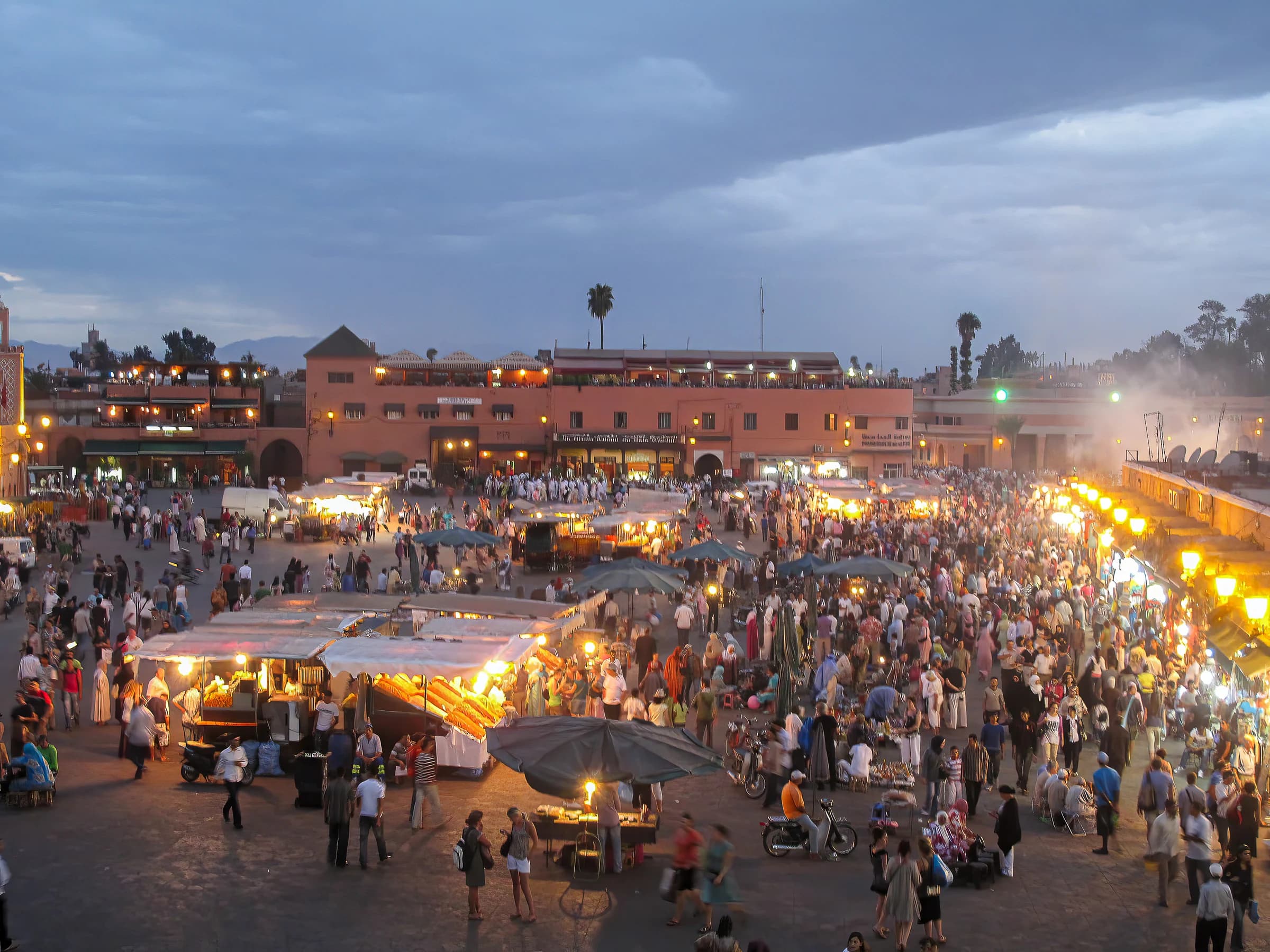
Marrakech's central square, Jemaa el-Fnaa, is recognized by UNESCO not as a building or monument but as a piece of living heritage — the storytellers, musicians, and food stalls that fill it every night are protected the same way a historic building would be.
See full guide →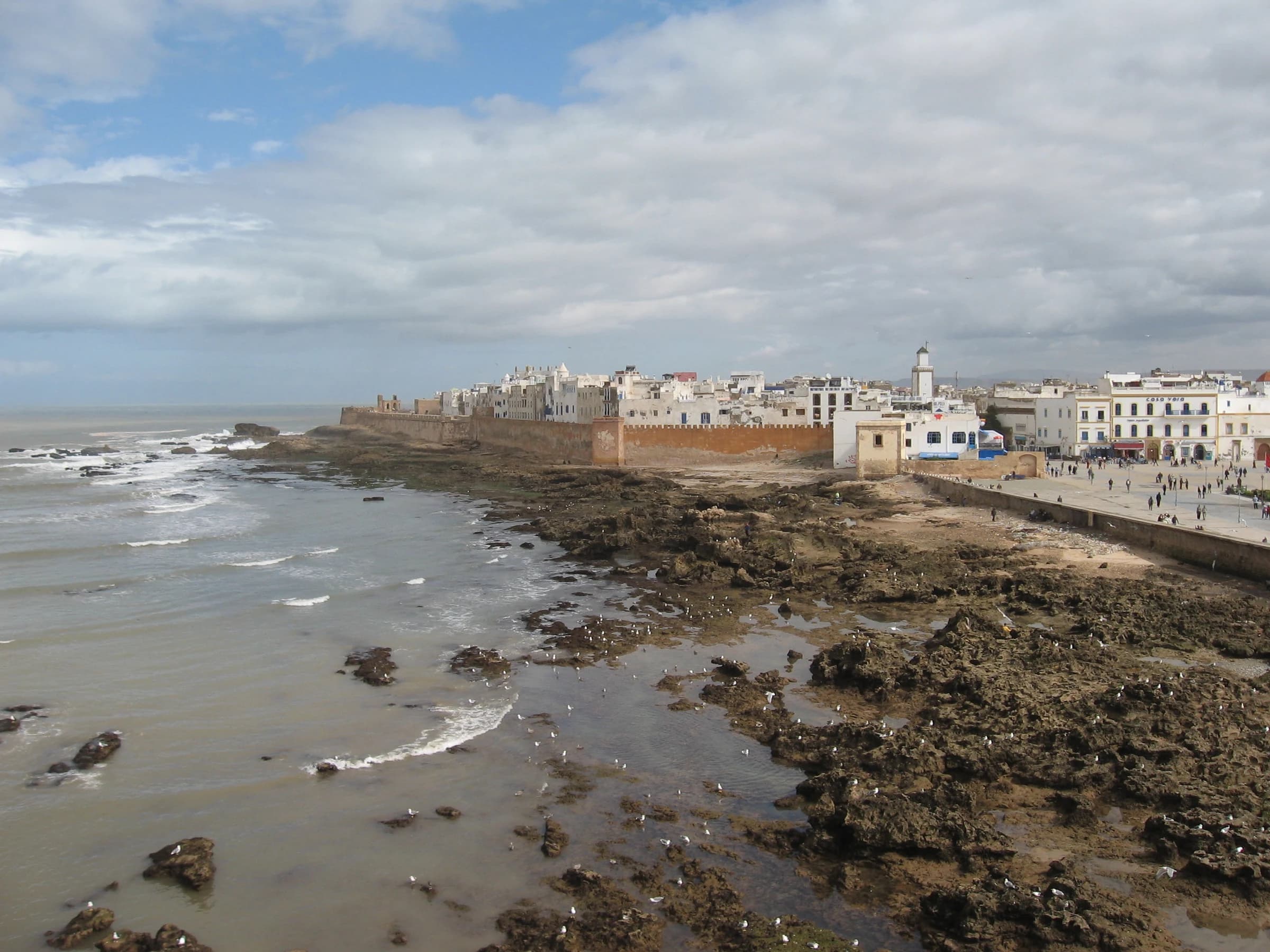 Essaouira
Essaouira
Morocco
Essaouira's near-constant Atlantic trade winds, strong enough that locals nicknamed the city 'Wind City of Africa,' turned a sleepy fishing port into one of the world's more consistent windsurfing and kitesurfing destinations without the town ever really trying to become one.
See full guide →Comparing more than one route? See the full transport comparison guide.