Kenya · Africa
Maasai Mara
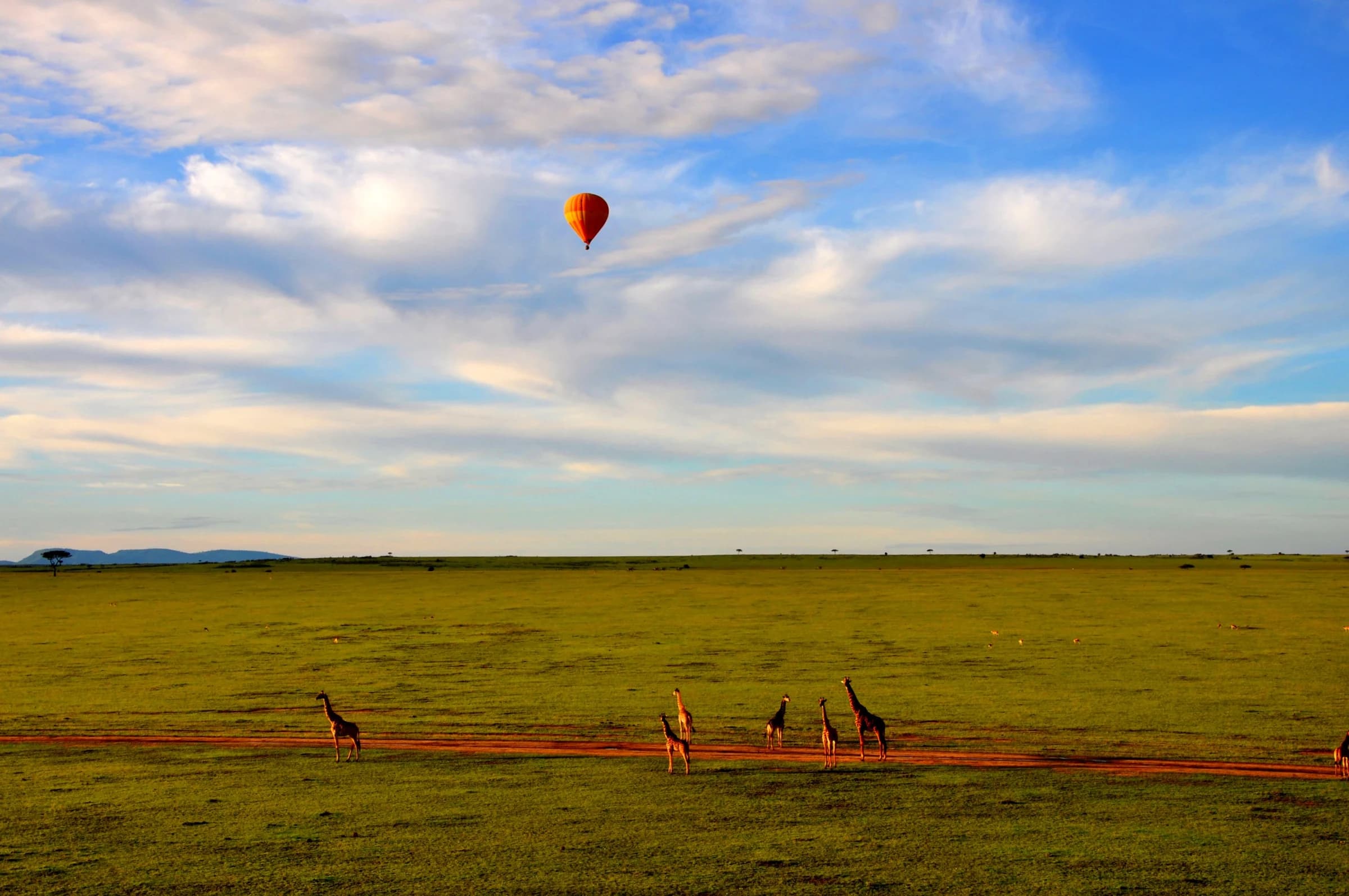
The Maasai Mara takes its name partly from the Maa word for 'spotted,' describing how the landscape looks from a distance — a patchwork of acacia trees, scrub, and cloud shadow across open grassland — and it's also where the Great Migration's most dramatic river crossings happen each year as the herds arrive from Tanzania's Serengeti.
The Maasai Mara takes its name partly from the Maa language word for "spotted," a description of how the reserve's landscape appears from a distance, acacia trees, patches of scrub, and moving cloud shadow scattered across open grassland, and partly from the Maasai people who have lived in and around this land for centuries, herding cattle across the same plains that now draw safari visitors from around the world.
Geographically, the Mara is the northern extension of the same ecosystem as Tanzania's Serengeti, split only by the Kenya-Tanzania border, and it hosts the most dramatic single moments of the Great Migration each year. Roughly July through October, as roughly 1.5 to 2 million wildebeest and zebra arrive from the Serengeti in search of fresh grazing, they must cross the Mara River, where strong currents and waiting crocodiles turn each crossing into a genuinely unpredictable, high-stakes event that draws photographers and wildlife documentarians from around the world.
Compared to the Serengeti's considerably larger total area, the Mara concentrates a dense wildlife population into a smaller space, and it holds some of the highest lion densities recorded anywhere on the African continent, a result of the reserve's rich grazing supporting large, stable prey populations year-round, migration season or not.
Maasai communities remain a genuine, ongoing presence around the reserve rather than a historical footnote, and many camps arrange visits to a nearby manyatta, a traditional homestead, where visitors can see beadwork, traditional housing construction, and the adumu, a jumping dance performed by young Maasai men. These visits typically involve a direct fee to the community, and the depth and authenticity of the experience varies considerably by operator, worth asking specific questions about before booking.
Private conservancies bordering the main reserve, run in partnership with local Maasai landowners, have become an increasingly significant part of the Mara's tourism model, offering activities like off-road game tracking and night drives that aren't permitted within the core reserve, alongside a direct economic benefit to the surrounding Maasai community that helps sustain both the wildlife and the people who have coexisted with it for generations.
What a trip here actually costs
$320 / day avg.
- Mid-range tented safari camp, full board
- Shared guided game drives
- Park entrance and conservancy fees
- Transfer from Nairobi or a nearby airstrip
What to do at this tier
- • Shared guided game drives covering the reserve's core wildlife areas
- • Visiting a nearby Maasai manyatta village for a cultural experience
- • Mara River crossing viewing during migration season (July-October)
$700 / day avg.
- Luxury tented camp, full board
- Private guided game drives with a dedicated ranger
- Hot air balloon safari over the plains at sunrise
- Maasai village cultural visit
What to do at this tier
- • Private guided game drives timed around the migration's seasonal position and river crossing activity
- • Sunrise hot air balloon safari over the plains, followed by a champagne breakfast
- • Private conservancy access, offering off-road tracking and night drives not permitted in the main reserve
These are average estimates for planning purposes, not real-time prices — actual costs vary by season, availability, and how far ahead you book.
How to get there
Click anywhere on the world map — any airport works, not just our main hubs.
Click anywhere on the map above — any airport in the world works — to see estimated travel time and cost from there.
Times and prices are planning estimates, not live fares — always check a booking site before you commit. See the full Transport Comparison guide for the general tradeoffs of each mode.
Best time to visit
July-October offers the best chance of witnessing river crossings as the migration arrives from the Serengeti; wildlife remains genuinely abundant year-round given the Mara's resident lion, elephant, and giraffe populations.
Safety notes
Very safe in terms of crime; safety protocol centers entirely on wildlife, so always follow your guide's instructions and stay inside vehicles except at designated camp areas.
Visa & currency
Kenyan shilling (KES), though safari costs and most camp rates are quoted and paid in US dollars. Kenya requires an Electronic Travel Authorization (ETA) for nearly all visitors, applied for online before arrival.
Questions people ask before visiting
Is the Maasai Mara worth visiting?
Yes — it's the northern extension of the Serengeti ecosystem and hosts the Great Migration's most dramatic river crossings each year, alongside some of the highest lion densities anywhere in Africa, making it one of the most reliable big-cat and wildlife viewing destinations on the continent.
When do the river crossings happen in the Maasai Mara?
Roughly July through October, as the Great Migration's wildebeest and zebra herds arrive from Tanzania's Serengeti and must cross the Mara River, where crocodiles and the strong current make each crossing a genuine, unpredictable event rather than a scheduled spectacle.
How is the Maasai Mara different from the Serengeti?
They're part of the same continuous ecosystem, split by the Kenya-Tanzania border, with the Mara being the smaller, northern portion. The Mara tends to have denser wildlife concentrations in a smaller area during migration season, while the Serengeti offers considerably more space and a wider range of terrain across a much larger park.
Can you visit a Maasai village near the Mara?
Yes — many camps and lodges arrange visits to a nearby Maasai manyatta (village), where visitors can see traditional homes, beadwork, and the adumu jumping dance. These visits typically involve a fee paid directly to the community, and quality and authenticity vary by operator, worth asking about in advance.
Nearby destinations
 Nairobi
Nairobi
Kenya
Nairobi is the only capital city in the world with a full national park inside its limits — lions, rhinos, and giraffes roam Nairobi National Park with the city's skyscrapers visible directly behind them, a juxtaposition that shows up in wildlife photography from almost nowhere else on Earth.
See full guide →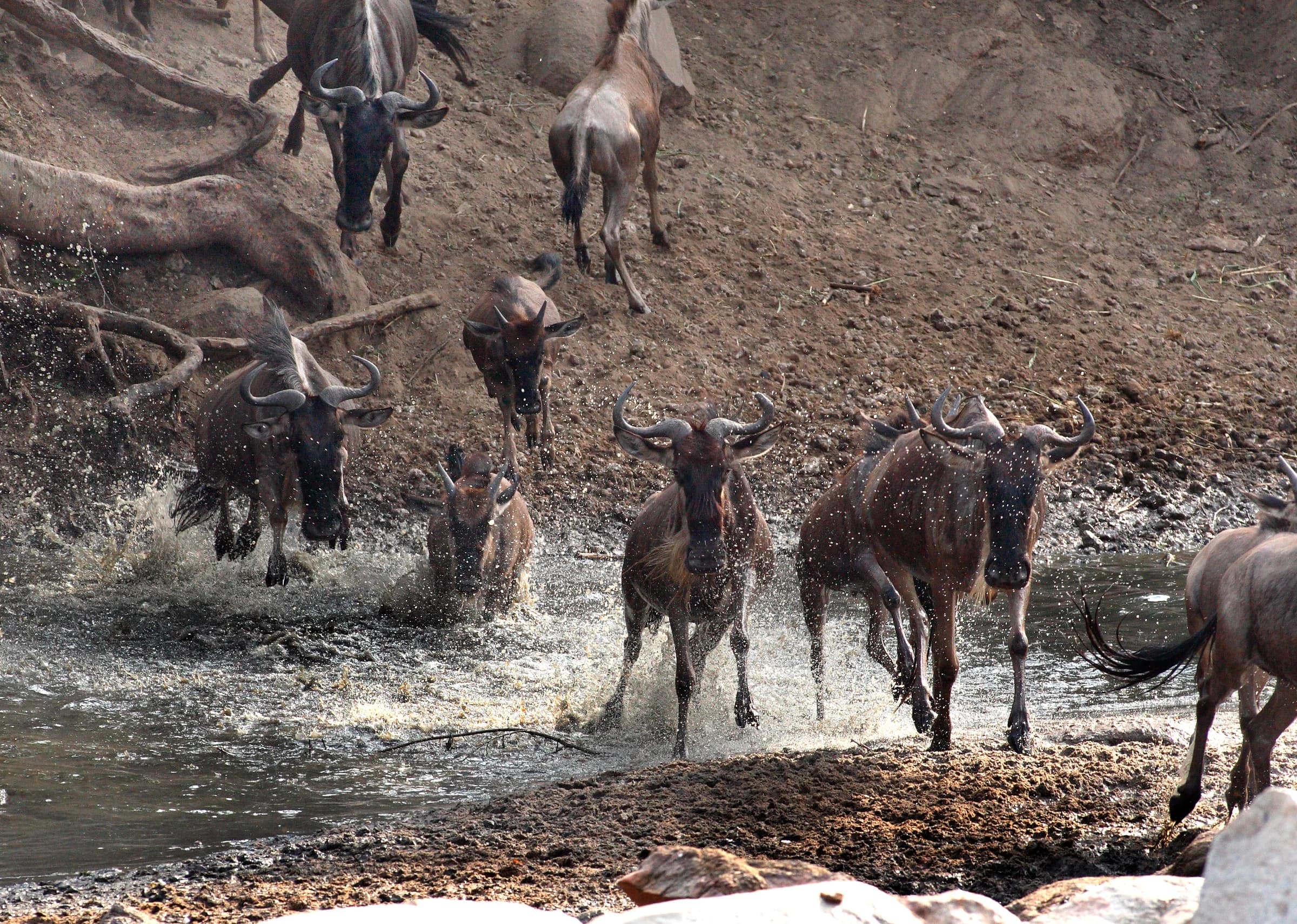 Serengeti
Serengeti
Tanzania
The Serengeti takes its name from the Maasai word siringet, meaning roughly 'the place where the land moves on forever' — a fitting name for a plain that hosts the largest terrestrial mammal migration on Earth, close to two million wildebeest and zebra moving in a rough circle between Tanzania and Kenya every single year.
See full guide →Comparing more than one route? See the full transport comparison guide.