Togo · Africa
Lomé
Lomé's Akodessewa Fetish Market is widely described as the largest Vodun market in the world, its stalls lined with animal skulls, hides, and ritual objects used by traditional healers — a genuinely unsettling sight for unprepared visitors, but a working religious supply market for a practice most Togolese still take seriously.
The Akodessewa Fetish Market in Lomé is widely described as the largest market of its kind in the world, a dense collection of stalls selling items used in Vodun religious and medicinal practice: animal skulls, hides, bones, and other ritual objects laid out for traditional healers and priests who use them in ceremonies and treatments. For unprepared visitors, the sight can be genuinely jarring, but the market functions as a real, working supply chain for a religious practice that remains seriously and widely observed across Togo, not a curated tourist spectacle.
Togo shares deep religious roots with neighboring Benin, both countries tracing Vodun's origins to the same Fon and Ewe peoples of this stretch of West African coast, a tradition that later spread across the Atlantic through the transatlantic slave trade into related practices like Haitian Vodou and Brazilian Candomblé. Togoville, a small town on the shore of Lake Togo reachable by a short boat trip from Lomé, remains one of the country's significant historical centers of that practice.
Togoville carries a second, very different layer of history as well: it's where Germany's representative signed the 1884 protectorate treaty with a local ruler that began German colonial rule over the territory that eventually became Togo, a document that set in motion the colonial period that shaped much of the country's later borders and administration.
Lomé itself sits directly on Togo's border with Ghana, close enough that the border crossing functions almost as an extension of the city's own geography, and the capital's compact size makes it genuinely easy to explore on foot or by short taxi ride, a contrast to the sprawl of larger West African capitals like Lagos or Abidjan.
The city's beachfront along the Gulf of Guinea, while not a major resort destination in its own right, gives Lomé a genuine coastal character, and the central market, alongside the more specialized Akodessewa, reflects the everyday commercial rhythm of a country that remains genuinely underexplored by international tourism relative to its immediate neighbors.
What a trip here actually costs
$25 / day avg.
- Guesthouse in central Lome
- Local taxi and shared-van fares
- Casual Togolese meals
- Akodessewa Fetish Market entry with a guide
What to do at this tier
- • Akodessewa Fetish Market, with a local guide to explain the items and their use in Vodun practice, small entry fee
- • Lomé's central market (Grand Marché), free to wander
- • Lomé's beachfront promenade along the Gulf of Guinea, free
$60 / day avg.
- 3-star hotel near the beachfront
- Guided city and market tour
- Sit-down Togolese and French-influenced dinners
- Togoville day trip by boat
What to do at this tier
- • Boat trip to Togoville on Lake Togo, a historical center of Vodun and site of Togo's colonial treaty signing
- • National Museum of Togo, covering the country's history and culture
- • Guided city tour covering Lomé's colonial-era architecture and modern landmarks
These are average estimates for planning purposes, not real-time prices — actual costs vary by season, availability, and how far ahead you book.
How to get there
Click anywhere on the world map — any airport works, not just our main hubs.
Click anywhere on the map above — any airport in the world works — to see estimated travel time and cost from there.
Times and prices are planning estimates, not live fares — always check a booking site before you commit. See the full Transport Comparison guide for the general tradeoffs of each mode.
Best time to visit
November-March is drier; the rest of the year sees heavier rain typical of Togo's coastal tropical climate.
Safety notes
Generally safe for tourists in central Lomé with standard urban caution.
Visa & currency
West African CFA franc (XOF), shared across several West African countries and pegged to the euro. Most nationalities can obtain an e-visa or visa on arrival.
Questions people ask before visiting
Is Lomé worth visiting?
Yes, particularly for travelers interested in West African Vodun tradition and a compact, easily walkable capital — Lomé sits right on the Ghana border along the Gulf of Guinea, and the Akodessewa Fetish Market gives direct, unfiltered access to a tradition rarely presented so openly elsewhere.
What is the Akodessewa Fetish Market?
A market in Lomé where traditional healers and priests sell items used in Vodun religious and medicinal practice, including animal skulls, hides, and other ritual objects. It's widely considered the largest market of its kind in the world, and vendors and on-site guides can explain the significance of specific items to visitors.
What is Togoville?
A small town on the shore of Lake Togo, a short boat ride from Lomé, considered one of the historical centers of Vodun in Togo. It's also where Germany signed the 1884 protectorate treaty that began its colonial rule over the territory, giving the town both religious and colonial-historical significance.
How many days do you need in Lomé?
Two days covers the Akodessewa Fetish Market, the central market, and the beachfront. A day trip to Togoville on Lake Togo is a common addition for visitors with extra time.
Nearby destinations
 Accra
AccraAccra
Ghana
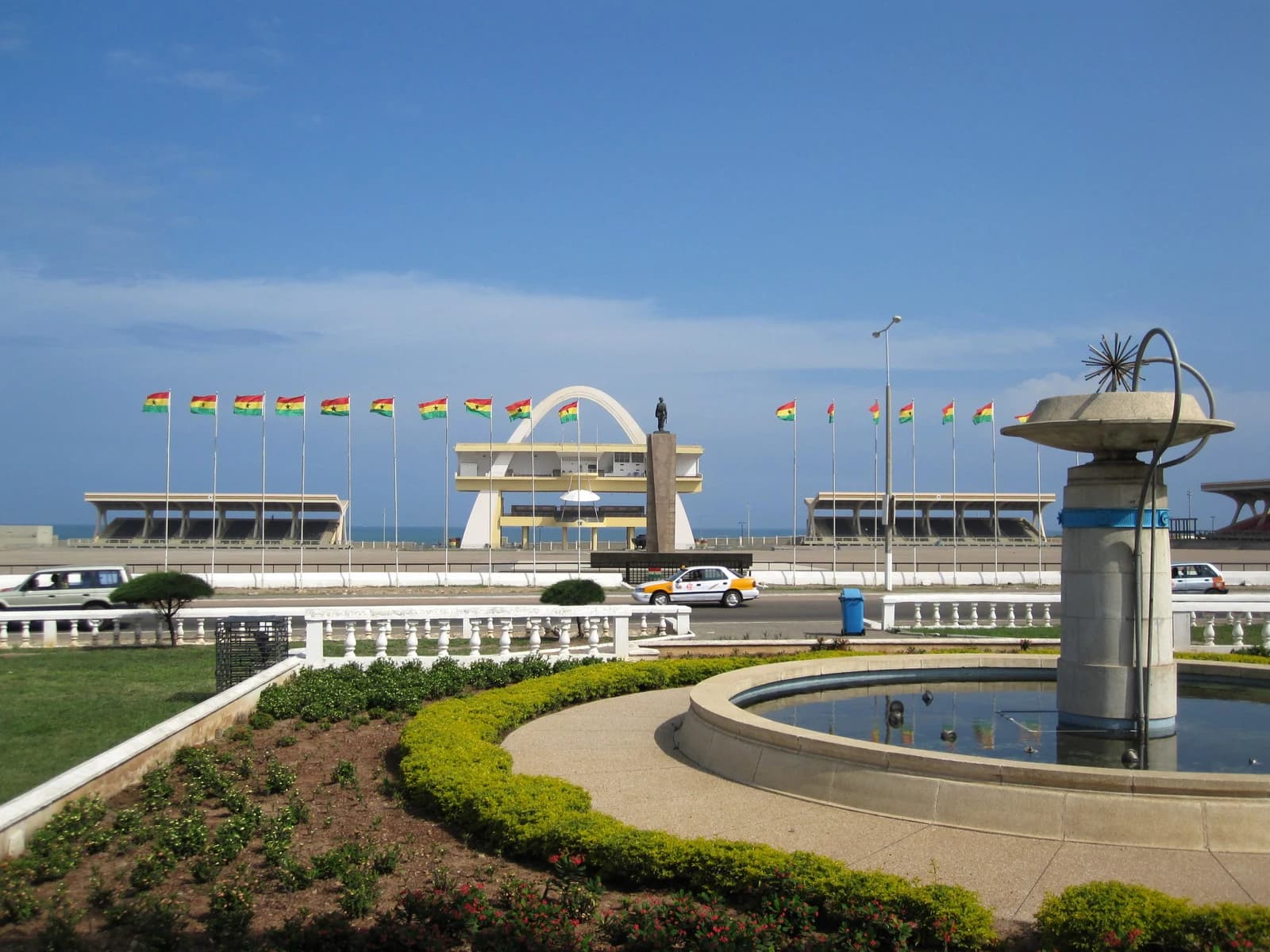
In 2019, Ghana declared a nationwide 'Year of Return' marking 400 years since the first enslaved Africans arrived in Virginia, inviting the African diaspora to reconnect with the continent — hundreds of thousands of people, many African American, took the government up on it, and Accra has been building on that momentum as a diaspora-tourism hub ever since.
See full guide →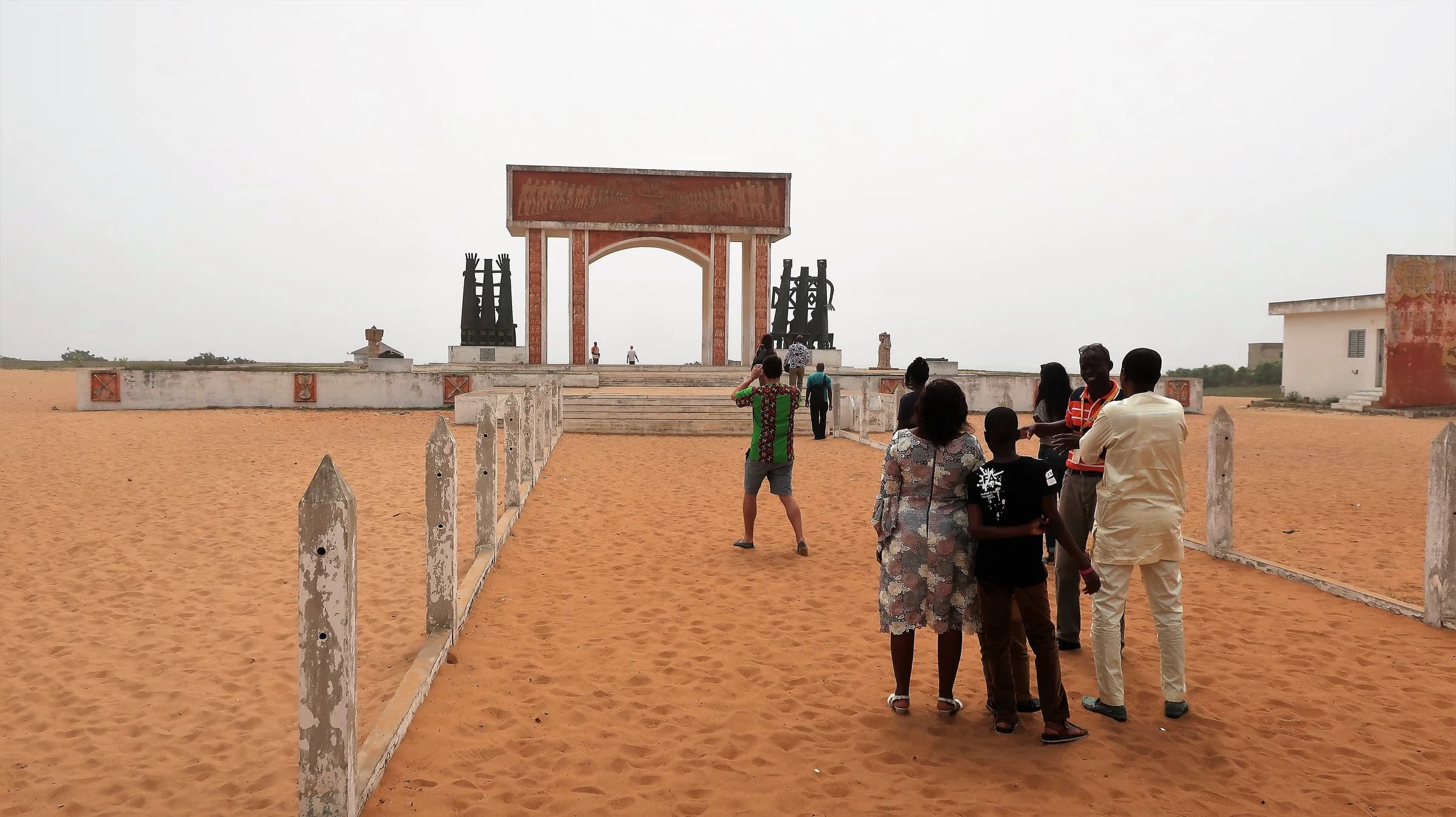 Ouidah
Ouidah
Benin
Vodun, the religion the transatlantic slave trade carried into Haitian Vodou, Brazilian Candomblé, and Louisiana Voodoo, traces its roots directly to this stretch of Benin's coast — Ouidah remains one of its living centers today, complete with a temple of sacred pythons and a national holiday devoted to it.
See full guide →Comparing more than one route? See the full transport comparison guide.