Ghana · Africa
Accra
In 2019, Ghana declared a nationwide 'Year of Return' marking 400 years since the first enslaved Africans arrived in Virginia, inviting the African diaspora to reconnect with the continent — hundreds of thousands of people, many African American, took the government up on it, and Accra has been building on that momentum as a diaspora-tourism hub ever since.
In 2019, Ghana's government declared a nationwide Year of Return, marking 400 years since the first recorded enslaved Africans arrived in the English colony of Virginia in 1619. The initiative invited the African diaspora, particularly African Americans, to visit, reconnect with the continent, and in some cases apply for citizenship or resettle, and it drew hundreds of thousands of visitors that year alone, a scale of diaspora tourism few African countries have matched before or since. Ghana has continued the effort in a modified form as "Beyond the Return," and Accra remains its practical center.
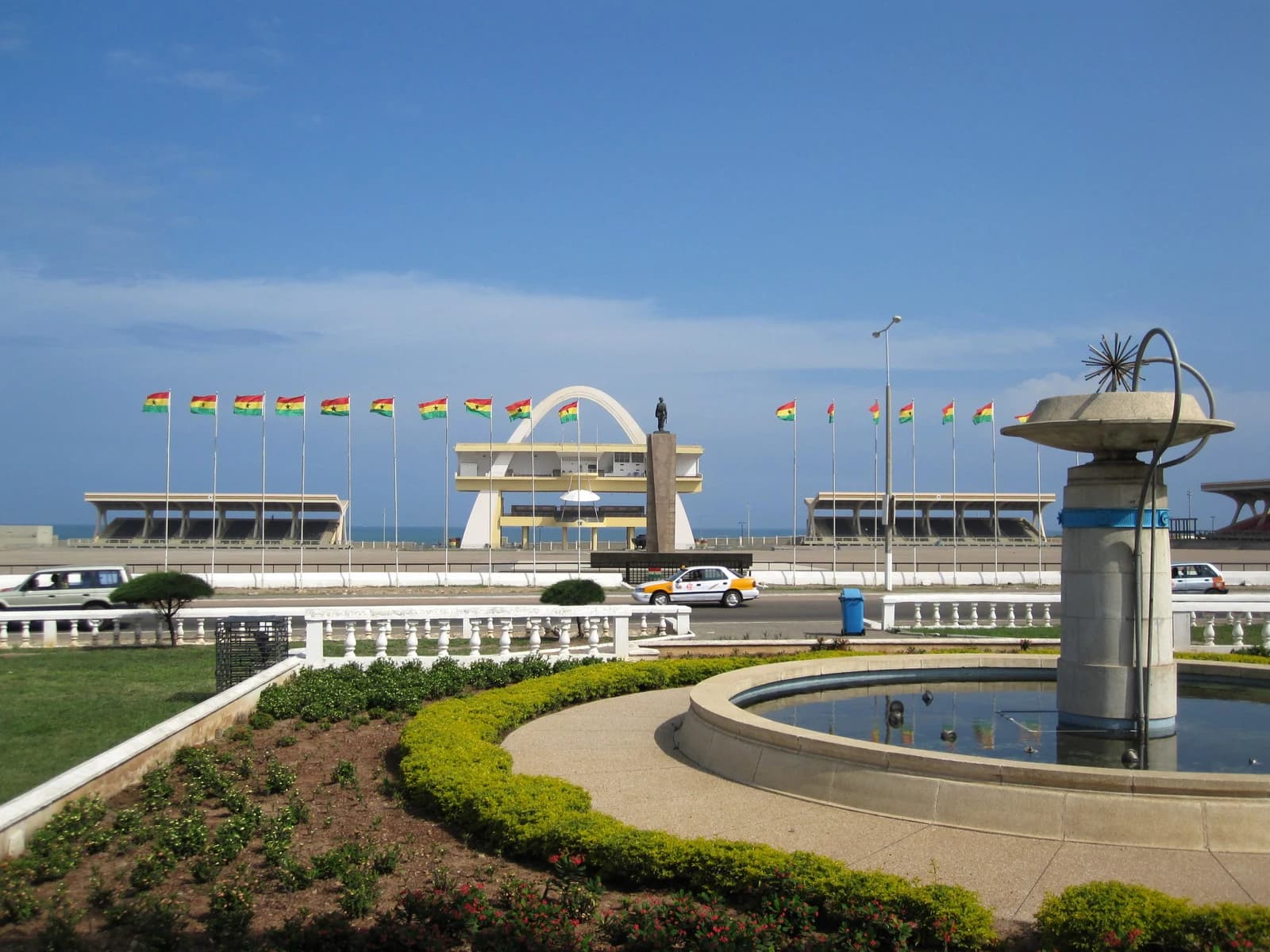
Ghana's own independence history runs alongside that diaspora narrative directly. In 1957, under the leadership of Kwame Nkrumah, Ghana became the first Sub-Saharan African country to gain independence from colonial rule, a milestone that made it a symbolic leader for the wider decolonization movement across the continent through the following decade. Independence Square and the Black Star Gate in central Accra commemorate that history directly, and Nkrumah's mausoleum, built on the site of the stadium where he declared independence, remains a significant national monument.
About two to three hours west of Accra, Cape Coast Castle and Elmina Castle, both UNESCO World Heritage Sites, stand as two of the most significant surviving structures from the transatlantic slave trade anywhere in West Africa. Elmina, built by the Portuguese in 1482, is the oldest European-built structure in Sub-Saharan Africa still standing, and both castles held enslaved people in dungeons before shipping them through the "Door of No Return" onto ships bound for the Americas — a history the sites present directly and without softening.
Jamestown, Accra's old fishing quarter and one of the city's oldest neighborhoods, retains a distinct character from the newer parts of the capital, with a colonial-era lighthouse, brightly painted fishing boats, and a dense, working-class energy that contrasts with Accra's more modern commercial districts.
Accra's contemporary arts and music scene has grown considerably in recent years, with galleries, studios, and Afrobeats-adjacent music venues drawing both local and diaspora creative communities, adding a genuinely current layer to a city otherwise known primarily for its 20th-century independence and much older colonial-era history.
What a trip here actually costs
$30 / day avg.
- Guesthouse in central Accra
- Local trotro shared minibus fares
- Casual Ghanaian meals, jollof rice and waakye
- Independence Square and Jamestown wander, free
What to do at this tier
- • Independence Square and Black Star Gate, commemorating Ghana's 1957 independence, free
- • Jamestown, Accra's old fishing quarter, including its lighthouse, free to wander
- • Makola Market, a large, dense central market for produce, textiles, and goods
$75 / day avg.
- 3-star hotel in central Accra
- Guided Cape Coast and Elmina Castle day trip
- Sit-down Ghanaian dinners
- Kwame Nkrumah Memorial Park entry
What to do at this tier
- • Kwame Nkrumah Memorial Park and Mausoleum, honoring Ghana's first president and independence leader
- • Full-day guided trip to Cape Coast Castle and Elmina Castle, UNESCO-listed former slave trade forts
- • Accra Arts Centre, a market focused on crafts, carvings, and textiles
$180 / day avg.
- 4-5 star hotel in Accra
- Private guided full-day Cape Coast and Elmina Castle tour
- Multi-course dinners at top Accra restaurants
- Private Jamestown and arts-district tour
What to do at this tier
- • Private guided full-day Cape Coast and Elmina Castle history tour with an in-depth local historian guide
- • Private tour of Jamestown and Accra's contemporary arts district, including working artist studios
- • Multi-course dinner at a leading Accra restaurant blending Ghanaian ingredients with international technique
These are average estimates for planning purposes, not real-time prices — actual costs vary by season, availability, and how far ahead you book.
How to get there
Click anywhere on the world map — any airport works, not just our main hubs.
Click anywhere on the map above — any airport in the world works — to see estimated travel time and cost from there.
Times and prices are planning estimates, not live fares — always check a booking site before you commit. See the full Transport Comparison guide for the general tradeoffs of each mode.
Best time to visit
November-March is Ghana's drier season; the rest of the year sees more frequent rain, heaviest roughly April-July.
Safety notes
Generally safe for tourists in central Accra with standard urban caution; traffic congestion is a bigger practical daily concern than crime for most visitors.
Visa & currency
Ghanaian cedi (GHS). Most visitors need a visa arranged in advance, one of the stricter entry requirements in West Africa, though Ghana has moved to ease requirements for fellow African Union nationals in recent years — apply well ahead of the trip.
Questions people ask before visiting
Is Accra worth visiting?
Yes, particularly for travelers interested in African diaspora history and modern West African culture — Ghana was the first Sub-Saharan African country to gain independence from colonial rule, and Accra combines that political history with a genuinely energetic contemporary arts, music, and food scene.
What was Ghana's Year of Return?
A 2019 government initiative marking 400 years since the first recorded enslaved Africans arrived in Virginia in 1619, inviting the African diaspora, particularly African Americans, to visit, reconnect, and in some cases resettle in Ghana. It drew hundreds of thousands of visitors and has continued in modified form as the 'Beyond the Return' initiative.
Is Cape Coast Castle near Accra?
Cape Coast Castle and the nearby Elmina Castle, two of West Africa's most significant former slave trade forts and both UNESCO World Heritage Sites, sit about a 2-3 hour drive west of Accra, commonly visited as a full-day trip from the city.
How many days do you need in Accra?
Two to three days covers Independence Square, Jamestown, and central Accra's markets and arts scene. Most visitors add a full extra day for the Cape Coast Castle and Elmina Castle day trip, given its historical significance.
Nearby destinations
Comparing more than one route? See the full transport comparison guide.