Uganda · Africa
Kampala
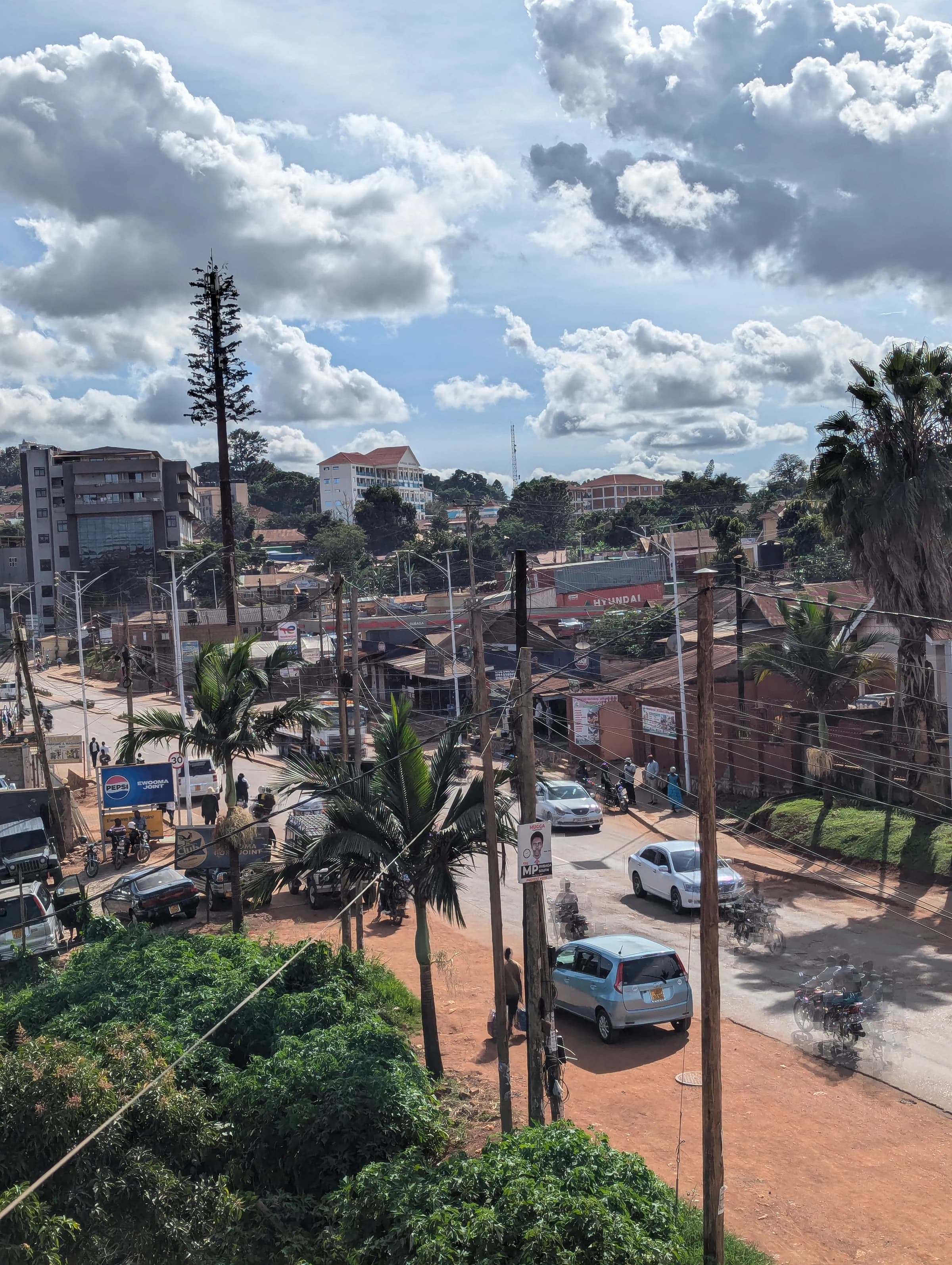
Winston Churchill nicknamed Uganda the 'Pearl of Africa' after visiting in 1908, and Kampala, built across seven hills much like Rome, still functions as the practical gateway to the country's biggest draw: mountain gorilla trekking permits that cost roughly half what neighboring Rwanda charges for essentially the same encounter.
Winston Churchill, after visiting in 1908, called Uganda the "Pearl of Africa" in his travel writing, a nickname that has stuck to the country's tourism branding ever since. Kampala, built across seven hills in a layout sometimes compared to Rome, still functions today largely as it did then: a practical, well-connected base for reaching the more dramatic natural attractions found elsewhere in the country.
The single biggest of those attractions is mountain gorilla trekking in Bwindi Impenetrable Forest, a dense, steep montane rainforest in Uganda's southwest. Permits run roughly $700-800 as of recent years, notably less than the approximately $1,500 charged for the equivalent trek in Rwanda's Volcanoes National Park, even though both parks offer access to the same broader mountain gorilla population spread across the Virunga-Bwindi region. Uganda's terrain tends to be steeper and denser, making the trek itself somewhat more physically demanding, a tradeoff many budget-conscious visitors accept for the lower permit cost.
Jinja, about two hours from Kampala, holds its own significant claim: it's where the White Nile begins its flow out of Lake Victoria, a geographic fact that took European explorers decades to confirm. British explorer John Hanning Speke identified the spot in 1862 after a long-running and famously contentious search for the Nile's source, a debate that consumed much of 19th-century exploration literature. Jinja has since developed into a genuine adventure sports hub, with the Nile's upper rapids drawing whitewater rafting operators alongside the historical draw of the source itself.
The Kasubi Tombs, a UNESCO World Heritage Site within Kampala, hold the burial grounds of past kings of the Buganda kingdom, one of Uganda's traditional monarchies that continues to exist today alongside the modern national government. The original thatched tomb structure burned down in a 2010 fire, and reconstruction using traditional building techniques has continued since, a process itself now part of the site's ongoing story.
Kampala's markets, particularly the large, dense Owino Market, give a genuinely unfiltered sense of daily Ugandan commerce, and the city's food scene, centered on dishes like matoke, a cooked green banana staple, alongside groundnut stews and grilled meats, reflects Uganda's position at a genuine crossroads of East African culinary traditions.
What a trip here actually costs
$75 / day avg.
- 3-star hotel in central Kampala
- Local boda-boda and taxi fares
- Sit-down Ugandan meals
- Kasubi Tombs entry
What to do at this tier
- • Kasubi Tombs, UNESCO-listed royal burial ground of the Buganda kings, entry fee applies
- • Owino Market, a large, dense central market for goods, textiles, and produce
- • Day trip to Jinja and the source of the Nile at Lake Victoria's outflow
$220 / day avg.
- 4-5 star hotel in Kampala
- Private guided city and Kasubi Tombs tour
- Multi-course dinners at top Kampala restaurants
- Gorilla trekking permit and transfer to Bwindi Impenetrable Forest (permit cost separate and substantial)
What to do at this tier
- • Mountain gorilla trekking in Bwindi Impenetrable Forest, a full-day excursion requiring an advance-booked permit
- • Whitewater rafting on the Nile's upper rapids near Jinja
- • Private guided city tour covering Kampala's seven hills and Buganda kingdom history
These are average estimates for planning purposes, not real-time prices — actual costs vary by season, availability, and how far ahead you book.
How to get there
Click anywhere on the world map — any airport works, not just our main hubs.
Click anywhere on the map above — any airport in the world works — to see estimated travel time and cost from there.
Times and prices are planning estimates, not live fares — always check a booking site before you commit. See the full Transport Comparison guide for the general tradeoffs of each mode.
Best time to visit
December-February and June-August are Uganda's two drier stretches, generally the most comfortable for both Kampala and gorilla trekking in Bwindi's dense forest terrain.
Safety notes
Generally safe in central Kampala with standard urban caution; traffic and boda-boda motorbike taxis are a bigger practical daily hazard than crime for most visitors.
Visa & currency
Ugandan shilling (UGX). Most nationalities need a visa, available as an e-visa applied for online before arrival — apply at least a few days ahead rather than expecting same-day processing.
Questions people ask before visiting
Is Kampala worth visiting?
Yes, both as a destination and as the practical gateway to Uganda's gorilla trekking — the city itself has a genuinely lively market and food scene, and it sits within reach of both Bwindi Impenetrable Forest and the source of the Nile at Jinja.
How does gorilla trekking in Uganda compare to Rwanda?
Uganda's Bwindi Impenetrable Forest permits cost roughly $700-800 as of recent years, notably less than Rwanda's Volcanoes National Park permits at around $1,500. Both offer genuine mountain gorilla encounters in dense montane forest; Uganda's trekking terrain is often considered somewhat more physically demanding given Bwindi's steeper, denser forest cover.
What is the source of the Nile?
Jinja, a town about 2 hours from Kampala, sits where the White Nile begins its outflow from Lake Victoria, historically confirmed as the Nile's source by British explorer John Hanning Speke in 1862 after a long-running geographic mystery. The area is now also a hub for whitewater rafting on the Nile's upper rapids.
How many days do you need in Kampala?
One to two days covers central Kampala and the Kasubi Tombs. Most visitors treat the city as a short stop before a multi-day trip to Bwindi for gorilla trekking or Jinja for the source of the Nile and rafting.
Nearby destinations
 Kigali
Kigali
Rwanda
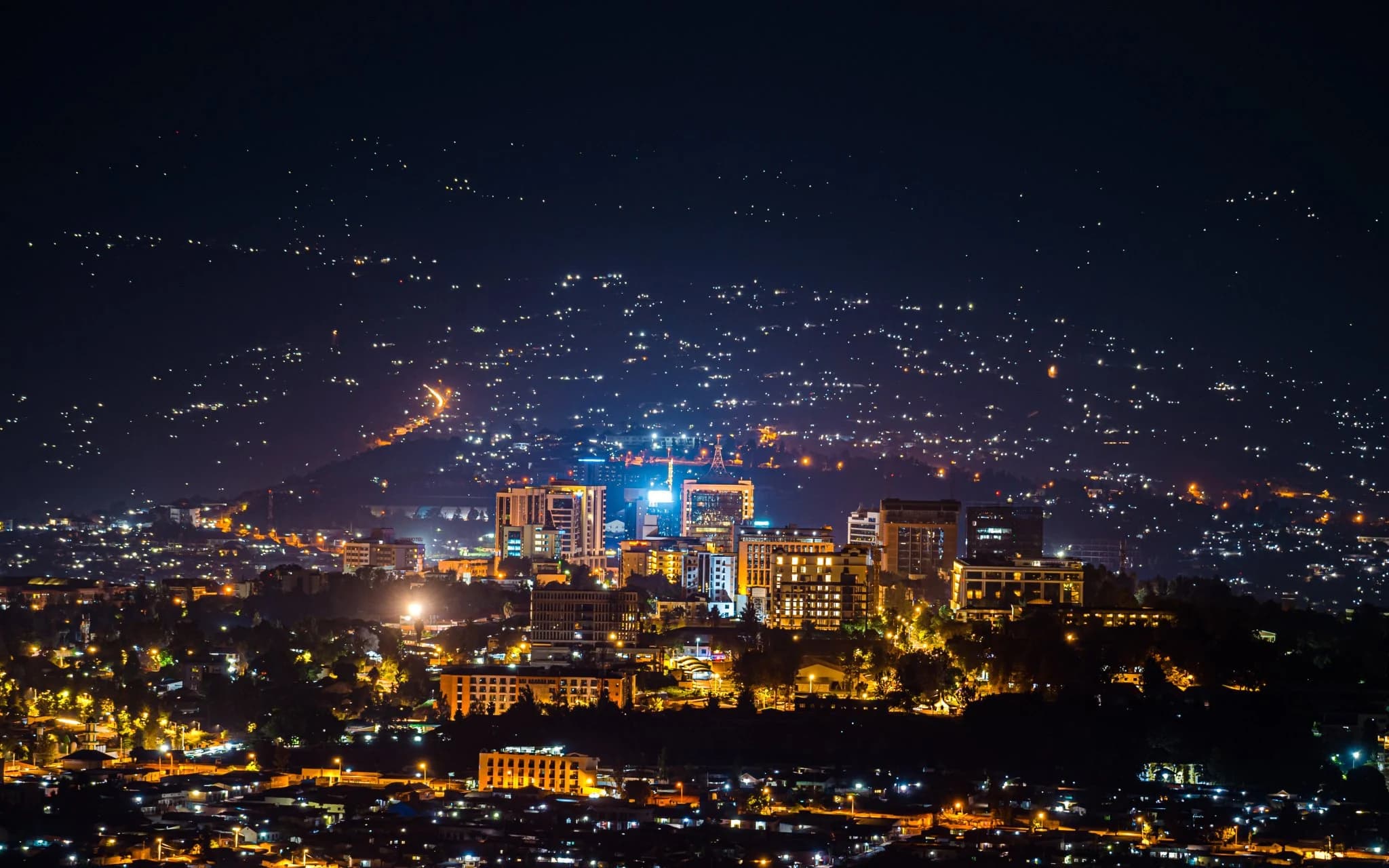
Rwanda banned plastic bags nationwide in 2008, well before most of the world took the idea seriously, and Kigali backs it up with a mandatory nationwide cleanup on the last Saturday of every month — the result is regularly cited as one of the cleanest capital cities anywhere in Africa.
See full guide → Nairobi
Nairobi
Kenya
Nairobi is the only capital city in the world with a full national park inside its limits — lions, rhinos, and giraffes roam Nairobi National Park with the city's skyscrapers visible directly behind them, a juxtaposition that shows up in wildlife photography from almost nowhere else on Earth.
See full guide →Comparing more than one route? See the full transport comparison guide.