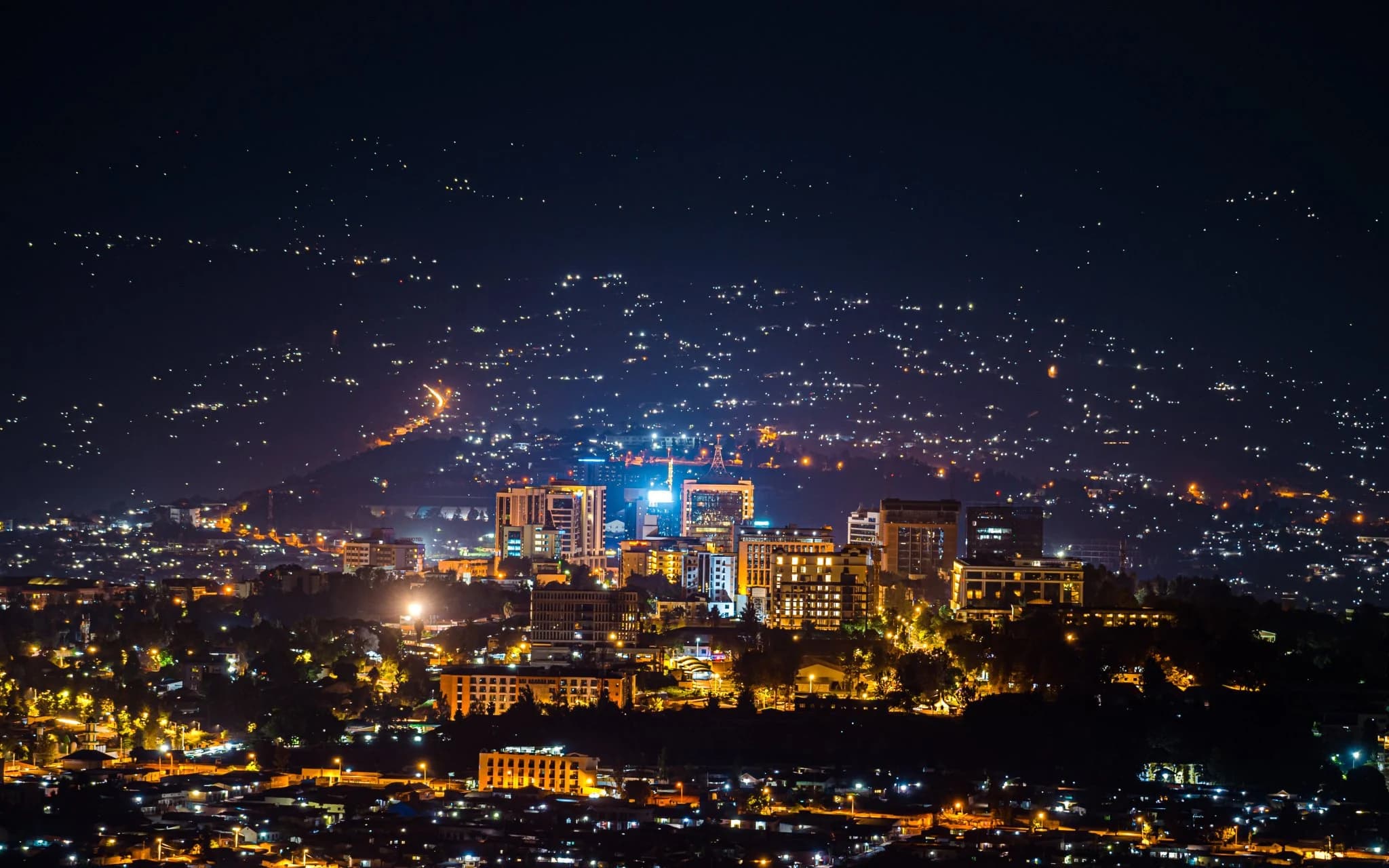
Rwanda · Africa
Kigali
Rwanda banned plastic bags nationwide in 2008, well before most of the world took the idea seriously, and Kigali backs it up with a mandatory nationwide cleanup on the last Saturday of every month — the result is regularly cited as one of the cleanest capital cities anywhere in Africa.
Rwanda banned plastic bags nationwide in 2008, years before the idea gained real traction elsewhere in the world, and Kigali backs the policy with Umuganda, a mandatory nationwide community cleanup held on the last Saturday of every month, when businesses close and residents sweep, plant, and repair public spaces together. The visible result is a capital regularly cited as one of the cleanest and best-organized in Africa, a reputation that surprises many first-time visitors who arrive expecting something closer to the chaos of some other major African cities.
That order stands in deliberate contrast to Rwanda's more recent history. The Kigali Genocide Memorial documents the 1994 genocide against the Tutsi, in which more than 800,000 people were killed by extremist Hutu militias over roughly 100 days, one of the fastest-moving mass killings of the 20th century. The memorial is also a mass grave, holding the remains of more than 250,000 victims, and its museum sets Rwanda's genocide alongside other genocides worldwide, a curatorial choice meant to place the country's specific history within a broader, harder pattern.
Rwanda's recovery since 1994 has been genuinely notable, and Kigali's transformation into a clean, safe, increasingly business-friendly capital forms a central part of that national narrative, one the government actively promotes as evidence of the country's rebuilding.
For most international visitors, though, Kigali functions primarily as the entry point to Volcanoes National Park, home to part of the world's remaining mountain gorilla population in the Virunga Mountains, the same range where primatologist Dian Fossey conducted her long-term gorilla research starting in the 1960s. Trekking permits run around $1,500 per person as of recent years, reflecting Rwanda's deliberate low-volume, high-price conservation strategy, and should be booked months in advance given the limited number issued daily.
Golden monkey trekking, offered in the same national park at a considerably lower cost than gorilla permits, gives budget-conscious visitors a primate-trekking experience without the gorilla trek's price tag, and many travelers combine both if time and budget allow during a Kigali-based Rwanda trip.
What a trip here actually costs
$80 / day avg.
- 3-star hotel in central Kigali
- Local moto-taxi and arranged transfers
- Sit-down Rwandan meals
- Kigali Genocide Memorial entry
What to do at this tier
- • Kigali Genocide Memorial, covering the 1994 genocide against the Tutsi and Rwanda's recovery since
- • Kimironko Market, a large local market for produce, textiles, and crafts
- • Inema Arts Center, a contemporary art gallery and studio space in Kigali
$220 / day avg.
- 4-5 star hotel in Kigali
- Private guided city and memorial tour
- Multi-course dinners at top Kigali restaurants
- Gorilla trekking permit and transfer to Volcanoes National Park (permit cost separate and substantial)
What to do at this tier
- • Mountain gorilla trekking in Volcanoes National Park, a full-day excursion requiring an expensive advance-booked permit
- • Private guided Kigali city and genocide history tour
- • Golden monkey trekking, a lower-cost primate trekking alternative in the same national park
These are average estimates for planning purposes, not real-time prices — actual costs vary by season, availability, and how far ahead you book.
How to get there
Click anywhere on the world map — any airport works, not just our main hubs.
Click anywhere on the map above — any airport in the world works — to see estimated travel time and cost from there.
Times and prices are planning estimates, not live fares — always check a booking site before you commit. See the full Transport Comparison guide for the general tradeoffs of each mode.
Best time to visit
June-September and December-February are Rwanda's two dry seasons, generally the most comfortable for both Kigali and gorilla trekking in Volcanoes National Park.
Safety notes
Very safe by regional standards — Kigali is consistently ranked among Africa's safest and cleanest capital cities, with low visible crime and well-maintained infrastructure.
Visa & currency
Rwandan franc (RWF). Rwanda offers visa on arrival to all nationalities, one of the more open visa policies on the continent, though applying for an e-visa in advance can speed up arrival processing.
Questions people ask before visiting
Is Kigali worth visiting?
Yes, both for its own history and as the gateway to mountain gorilla trekking — the Kigali Genocide Memorial gives essential context on Rwanda's 1994 genocide and its remarkable recovery since, and the city is clean, safe, and increasingly well set up for visitors passing through toward Volcanoes National Park.
What is the Kigali Genocide Memorial?
A memorial and museum documenting the 1994 genocide against the Tutsi, in which over 800,000 people were killed in roughly 100 days. The site is also a mass burial ground holding the remains of more than 250,000 victims, and the museum sets Rwanda's genocide within the context of other genocides worldwide.
How do you see mountain gorillas from Kigali?
Volcanoes National Park, home to Rwanda's mountain gorilla population in the Virunga Mountains, sits roughly two to three hours by road from Kigali. Trekking permits are expensive, around $1,500 per person as of recent years, and should be booked well in advance given limited daily permit numbers.
How many days do you need in Kigali?
One to two days covers the Genocide Memorial and central Kigali. Most visitors treat the city as a short stop before or after a multi-day trip to Volcanoes National Park for gorilla trekking, rather than a standalone extended destination.
Nearby destinations

Comparing more than one route? See the full transport comparison guide.