Namibia · Africa
Etosha National Park
Etosha means 'great white place' in the Ovambo language, named for the vast salt pan at its center — a dry lakebed so large it's visible from space, and so reflective under the midday sun that wildlife often appears as shimmering silhouettes against a landscape that looks almost like snow.
Etosha takes its name from the Ovambo phrase for "great white place," a direct reference to the massive salt pan at the park's center. The pan spans roughly 4,800 square kilometers, a dry ancient lakebed large enough to be visible from orbit, and its stark, reflective surface fills with water only rarely, after exceptionally heavy rains, briefly turning into a shallow lake that draws flamingos and other water birds before drying out again.
The park was first proclaimed a game reserve in 1907 under German colonial administration, making it one of the oldest formally protected wildlife areas in Africa, and its boundaries and management have shifted considerably since, but the core appeal has stayed consistent: a landscape structured around waterholes that reliably draw wildlife, particularly during the dry season when the surrounding bush offers little water elsewhere.
That structure makes Etosha genuinely well suited to self-drive safari, similar in spirit to South Africa's Kruger National Park. A well-maintained network of roads connects dozens of waterholes across the park, and rest camps offer fuel, basic shops, and floodlit waterholes where visitors can watch wildlife after dark from a safe, fenced viewing platform, no guide required, though guided options exist for those who prefer them.
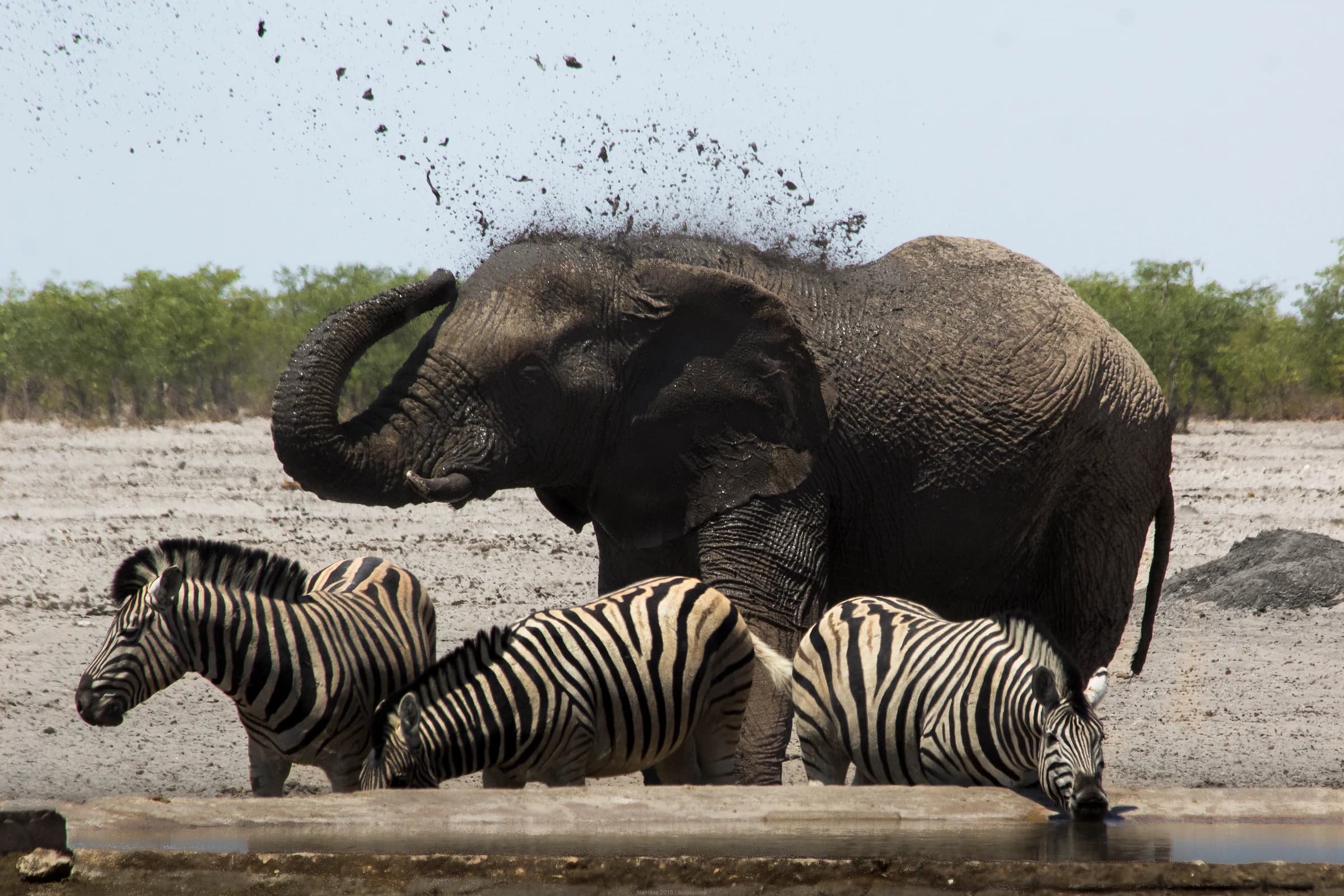
Etosha holds a genuinely wide range of wildlife, including healthy lion, elephant, giraffe, and rhino populations, alongside the black-faced impala, a subspecies found almost nowhere else in the world outside this specific pocket of Namibia and neighboring southern Angola.
The stark white pan itself, largely empty and shimmering under the midday sun, gives Etosha a visual character genuinely distinct from the greener savanna landscapes of East Africa's more famous reserves, and driving along its edge, watching heat distort the horizon into something close to a mirage, remains one of the park's more quietly memorable experiences even on days without major wildlife sightings.
What a trip here actually costs
$150 / day avg.
- Rest camp room inside the park
- Rental car for self-drive game viewing
- Park entrance fees
- Basic camp store meals
What to do at this tier
- • Self-drive game viewing along Etosha's road network, stopping at waterholes throughout the day
- • Floodlit waterhole viewing after dark at one of the park's rest camps, free with accommodation
- • Salt pan viewpoint, taking in the vast, stark white expanse of the pan itself
$400 / day avg.
- Private lodge near the park
- Guided game drives with a professional ranger
- Full-board dining at the lodge
- Night drive for nocturnal wildlife viewing
What to do at this tier
- • Private guided game drives with a professional ranger tracking the park's wildlife
- • Night drive, offering a chance to see nocturnal species rarely visible during the day
- • Guided visit to see the black-faced impala, a subspecies found almost exclusively in this part of Namibia
These are average estimates for planning purposes, not real-time prices — actual costs vary by season, availability, and how far ahead you book.
How to get there
Click anywhere on the world map — any airport works, not just our main hubs.
Click anywhere on the map above — any airport in the world works — to see estimated travel time and cost from there.
Times and prices are planning estimates, not live fares — always check a booking site before you commit. See the full Transport Comparison guide for the general tradeoffs of each mode.
Best time to visit
May-October, the dry season, brings the most reliable wildlife viewing as animals concentrate around the park's waterholes.
Safety notes
Very safe in terms of crime; the main safety rule is staying inside your vehicle except at designated rest camps, since Etosha holds genuine predator populations including lion and cheetah.
Visa & currency
Namibian dollar (NAD), pegged 1:1 to the South African rand, which is also widely accepted. Many Western passport holders can enter visa-free for short stays, worth confirming before booking.
Questions people ask before visiting
Is Etosha National Park worth visiting?
Yes — its massive salt pan and surrounding waterholes concentrate wildlife predictably enough, especially in the dry season, that Etosha offers some of the most reliable self-drive game viewing anywhere in Africa, without requiring a guided vehicle the way many East African reserves do.
Can you self-drive a safari in Etosha?
Yes, similar to Kruger National Park in South Africa — Etosha has a well-maintained road network connecting numerous waterholes, and rest camps inside the park offer fuel, shops, and floodlit waterholes where wildlife can be watched after dark from a safe, fenced viewing area.
What is the Etosha Pan?
A vast salt pan roughly 4,800 square kilometers, a dry ancient lakebed that fills only briefly after exceptional rains. It's large enough to be visible from space, and its bright, reflective surface gives the park its Ovambo name, meaning 'great white place.'
When is the best time to visit Etosha?
May-October, the dry season, concentrates wildlife predictably around the park's waterholes as other water sources dry up elsewhere, making game viewing considerably more reliable than during the wetter months when animals disperse across a much wider area.
Nearby destinations
 Sossusvlei
Sossusvlei
Namibia
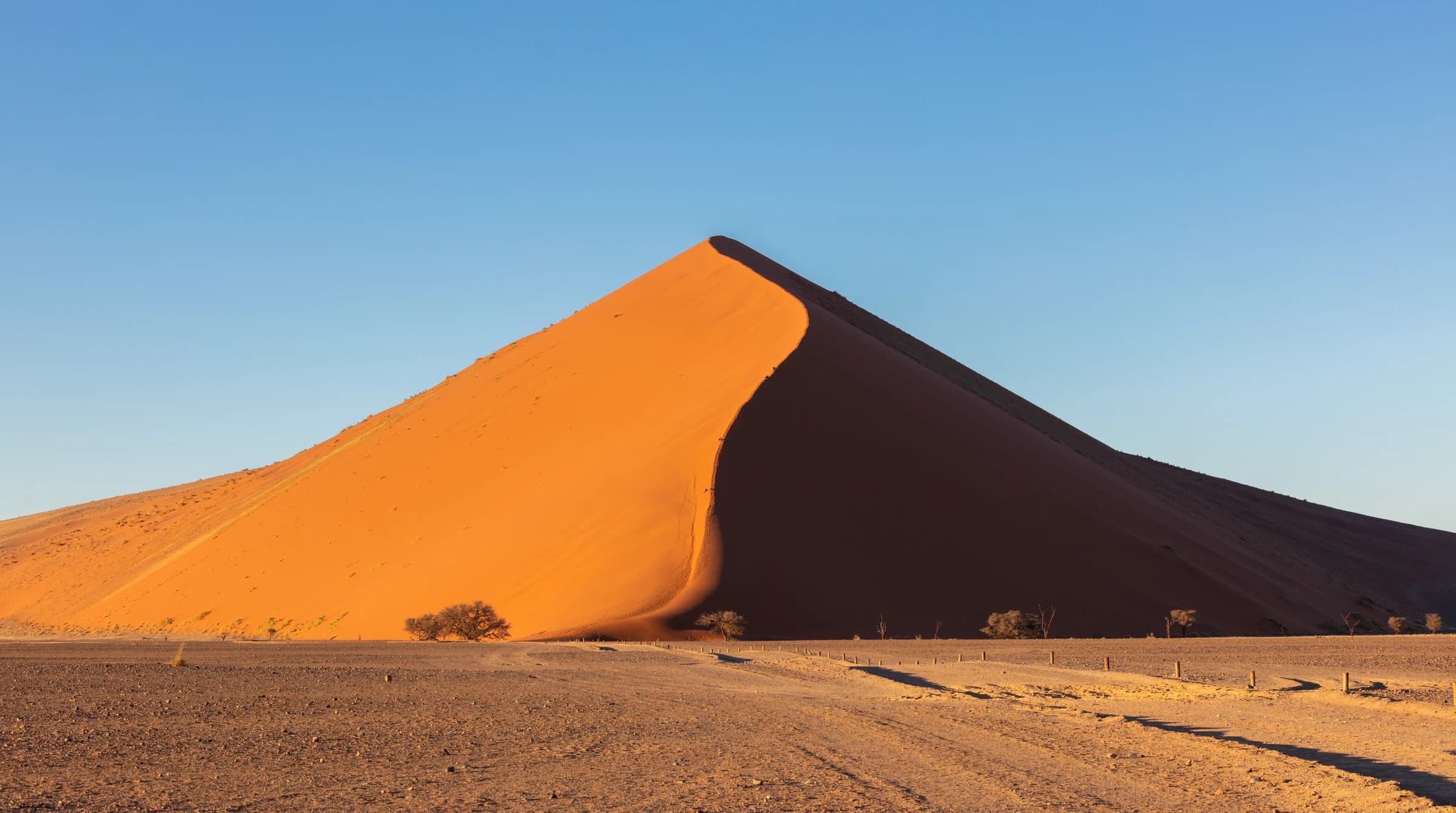
The Namib Desert is generally considered the oldest desert on Earth, arid for somewhere between 55 and 80 million years, and its towering red dunes at Sossusvlei have had that much time to grow — some rank among the tallest dunes anywhere in the world.
See full guide →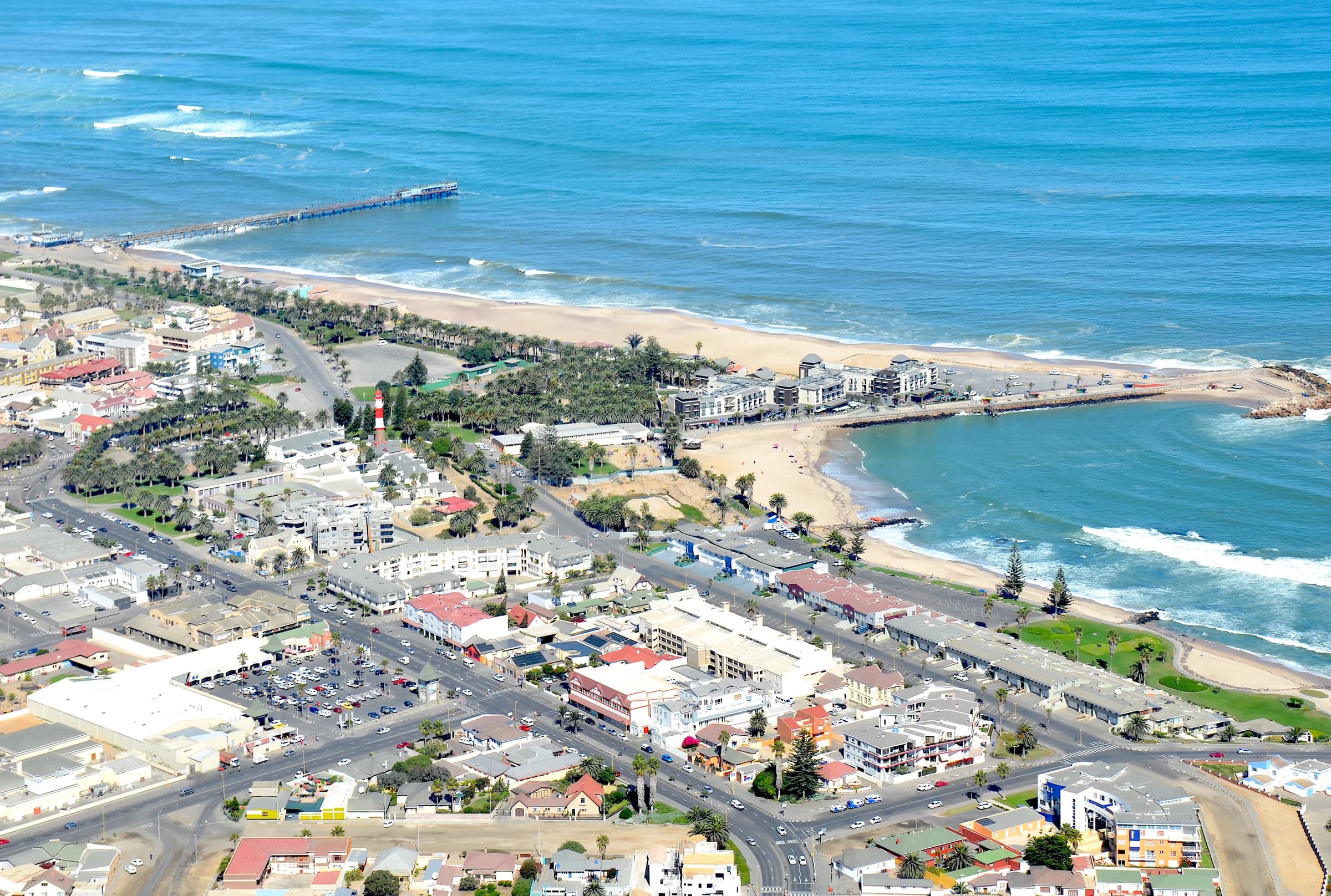 Swakopmund
Swakopmund
Namibia
Swakopmund still looks unmistakably German — half-timbered buildings, bakeries, and street names left over from its founding in 1892 as the main port of German South-West Africa — except the town sits wedged directly between the Namib Desert's dunes and the cold, foggy Atlantic, a combination that exists nowhere else quite like it.
See full guide →Comparing more than one route? See the full transport comparison guide.