Namibia · Africa
Sossusvlei
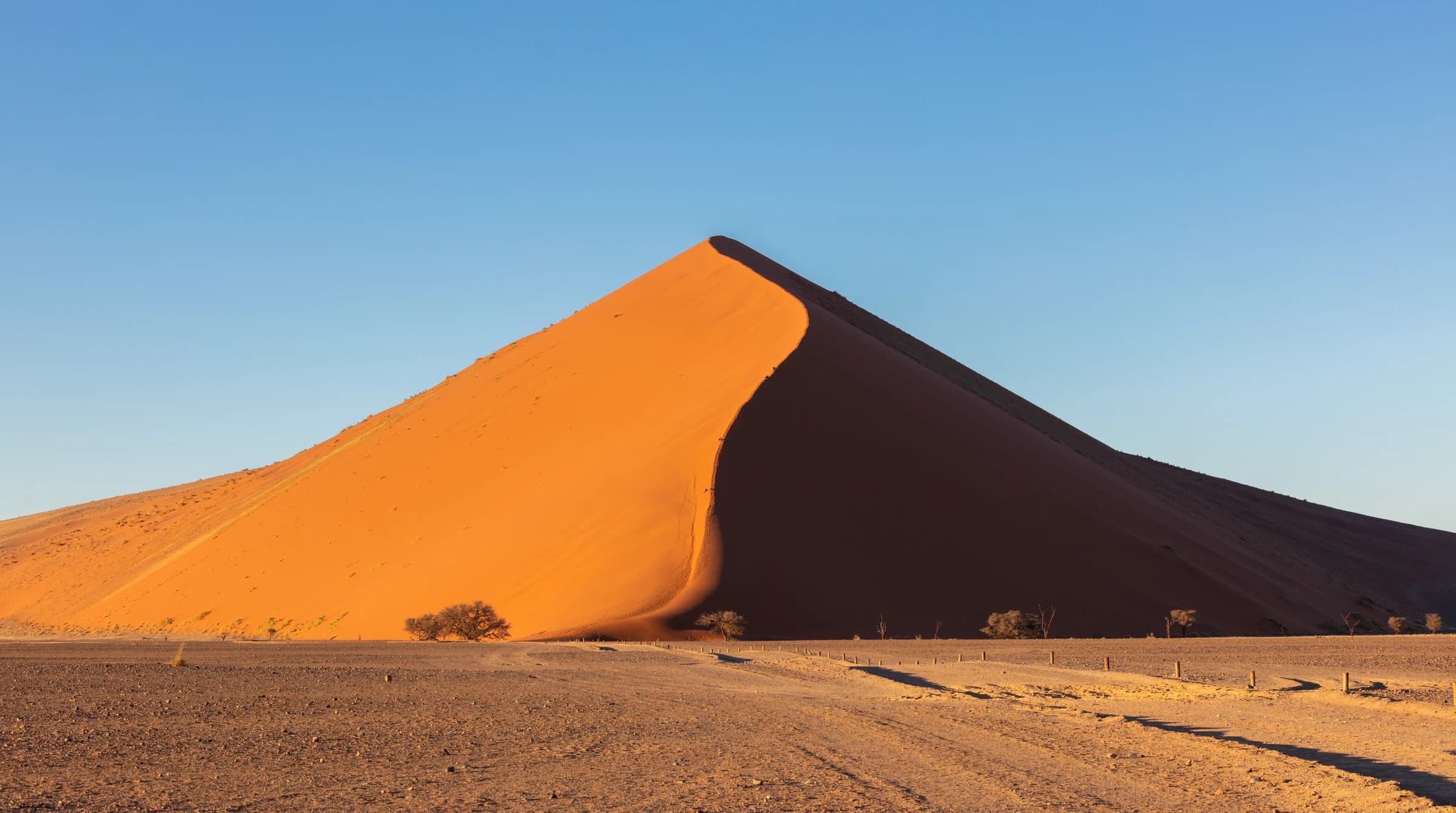
The Namib Desert is generally considered the oldest desert on Earth, arid for somewhere between 55 and 80 million years, and its towering red dunes at Sossusvlei have had that much time to grow — some rank among the tallest dunes anywhere in the world.
The Namib Desert is generally considered the oldest desert on Earth, having stayed arid for somewhere between 55 and 80 million years depending on which geological estimate you use, a timescale that dwarfs even the Sahara's roughly 7-million-year history as a true desert. That much time has let its dunes grow to genuine extremes: several near Sossusvlei rank among the tallest in the world, with Big Daddy reaching roughly 325 meters from base to crest.
Deadvlei, a stark white clay pan a short walk from the main dune field, holds the desert's most photographed feature: the blackened skeletons of camel thorn trees that died an estimated 600 to 900 years ago, when shifting dunes cut off the water that had sustained a small oasis. The climate here is dry enough that the dead wood never decomposed in any normal sense — it simply dried out and blackened under the sun, leaving trees that still stand largely intact against a backdrop of orange dunes and a sky that often reads a near-impossible shade of blue by contrast.
Sossusvlei itself is technically the clay pan at the end of this dune valley, reached only when rare heavy rains allow the Tsauchab River to flow far enough to fill it, an event that happens just a handful of times per decade. Most of what visitors photograph, the surrounding dunes and Deadvlei, is accessible regardless of whether the pan itself holds water in a given year.
Namibia runs heavily on self-drive tourism, more so than most African destinations covered in this guide, and reaching Sossusvlei reflects that: the roughly 5-hour drive from Windhoek to the Sesriem gate, followed by a further stretch into the dune field itself (the final few kilometers to Sossusvlei and Deadvlei require 4x4 or a shuttle from the 2x4 parking area), is a genuinely different kind of travel logistics than the guided-tour model common elsewhere on the continent.
The Namib-Naukluft park's extreme aridity supports a narrower but genuinely fascinating range of desert-adapted wildlife, including oryx that can survive for extended periods without drinking water directly, and the sheer scale and silence of the dune landscape itself is, for many visitors, the primary draw over any single animal sighting.
What a trip here actually costs
$150 / day avg.
- Lodge or campsite near Sesriem gate
- Rental 4x4 for self-driving
- Packed meals and basic camp cooking
- Namib-Naukluft park entry fees
What to do at this tier
- • Sunrise climb up Dune 45, one of the more accessible major dunes near the main road
- • Deadvlei walk, viewing the centuries-old dead camel thorn trees on the white clay pan
- • Sesriem Canyon, a narrow natural gorge carved into the rock near the park entrance
$400 / day avg.
- Upscale desert lodge with dune views
- Private guided dune and Deadvlei excursions
- Full-board dining at the lodge
- Scenic flight over the dune sea
What to do at this tier
- • Private guided sunrise excursion to Big Daddy, one of the tallest dunes in the area at roughly 325 meters
- • Scenic flight over the Namib dune sea, giving an aerial view of the desert's full scale
- • Guided nature drive covering the park's desert-adapted wildlife, including oryx and ostrich
These are average estimates for planning purposes, not real-time prices — actual costs vary by season, availability, and how far ahead you book.
How to get there
Click anywhere on the world map — any airport works, not just our main hubs.
Click anywhere on the map above — any airport in the world works — to see estimated travel time and cost from there.
Times and prices are planning estimates, not live fares — always check a booking site before you commit. See the full Transport Comparison guide for the general tradeoffs of each mode.
Best time to visit
May-October, Namibia's dry winter season, brings cooler daytime temperatures more comfortable for dune climbing than the intense summer heat.
Safety notes
Very safe in terms of crime; the main practical risk is heat and dehydration during dune hikes, so carrying enough water and starting climbs early in the day matters more than any security concern.
Visa & currency
Namibian dollar (NAD), pegged 1:1 to the South African rand, which is also widely accepted. Many Western passport holders can enter visa-free for short stays, worth confirming before booking.
Questions people ask before visiting
Is Sossusvlei worth visiting?
Yes — the Namib Desert's towering red dunes and the stark white clay pan of Deadvlei, with its centuries-old dead trees standing against orange sand and blue sky, make for some of the most distinctive desert scenery anywhere in the world.
What is Deadvlei?
A white clay pan within the Namib-Naukluft park holding the blackened skeletons of camel thorn trees that died roughly 600-900 years ago when shifting dunes cut off the water supply. The extremely dry climate has kept the dead trees from decomposing, so they still stand largely intact centuries later.
How do you get to Sossusvlei from Windhoek?
It's roughly a 5-hour drive from Namibia's capital, Windhoek, to the Sesriem gate near Sossusvlei, or a shorter charter flight directly to an airstrip near the dunes. Self-driving is common in Namibia and a rental 4x4 gives the most flexibility for reaching the more remote parts of the park.
How many days do you need at Sossusvlei?
Two to three days allows a sunrise dune climb, typically up Dune 45 or Big Daddy, plus a visit to Deadvlei and Sesriem Canyon. Most visitors combine it with other stops on a longer Namibia self-drive itinerary given the distances involved.
Nearby destinations
Comparing more than one route? See the full transport comparison guide.