Botswana · Africa
Chobe National Park
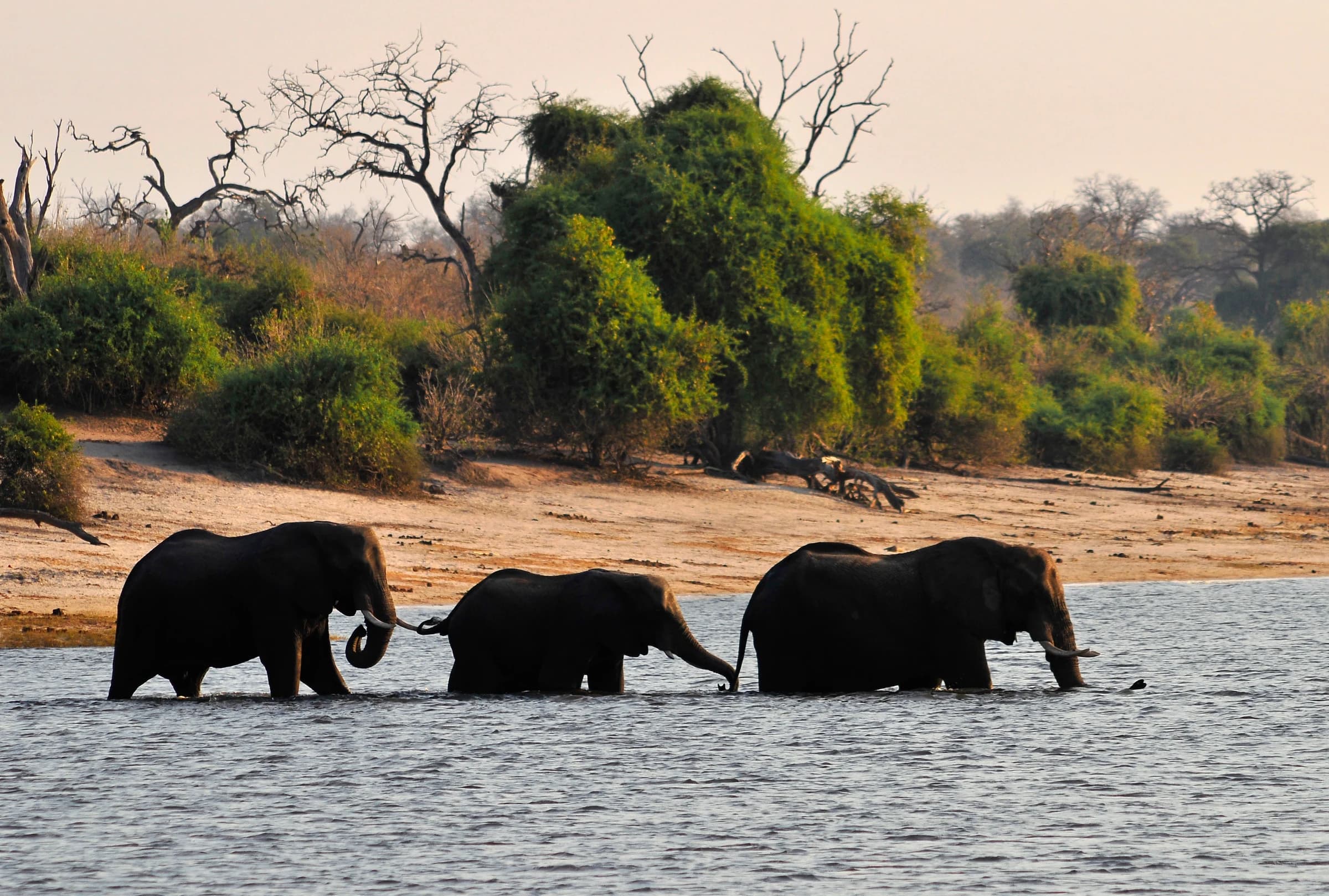
Chobe holds the highest concentration of elephants anywhere in Africa, with population estimates running well past 50,000 — enough that a sunset boat cruise along the Chobe River, watching herds wade in to drink and bathe just meters from the boat, has become one of the most reliably dramatic wildlife encounters on the continent.
Chobe National Park holds the highest concentration of elephants recorded anywhere in Africa, with current population estimates running well past 50,000 within the park's boundaries alone. The Chobe River, providing reliable year-round water in an otherwise dry stretch of Southern Africa, combined with decades of consistent anti-poaching protection across Botswana's broader conservation network, has let that population grow to a scale genuinely unmatched elsewhere on the continent.
The most distinctive way to experience that density is by boat. Sunset cruises along the Chobe River put visitors at water level as herds of elephants wade in to drink and bathe, sometimes numbering in the dozens within view at once, an encounter that plays out with a regularity few other wildlife destinations anywhere can promise so consistently.
Traditional game drives through the park's riverfront and the more remote Savuti region give a genuinely different perspective, covering drier terrain where predator activity, particularly lion and the occasional pack of African wild dog, one of the continent's more endangered predators, rounds out a fuller picture of the park's ecosystem beyond just its famous elephant herds.
Chobe sits close enough to Victoria Falls, both the Zambian and Zimbabwean sides, that a day trip combining the falls with a Chobe river cruise and game drive has become one of the more popular short circuits in the region, made considerably easier by the KAZA UniVisa's multi-country access covering Zambia, Zimbabwe, and day entry into Botswana's Kazungula border area near the park.
For visitors extending further into Botswana, Chobe pairs naturally with the Okavango Delta, connected by short charter flight, giving a combined itinerary that covers both the country's highest wildlife density at Chobe and its most distinctive wetland ecosystem at the delta within a single broader trip.
What a trip here actually costs
$280 / day avg.
- Lodge accommodation near the park, full board
- Shared river cruise and game drive
- Park entrance fees
- Transfer from Kasane or Victoria Falls
What to do at this tier
- • Shared sunset boat cruise along the Chobe River, watching elephants and other wildlife come to drink
- • Shared game drive through the Chobe riverfront and Savuti regions
- • Birdwatching along the riverfront, with Chobe hosting a genuinely wide range of water and forest bird species
$550 / day avg.
- Riverfront luxury lodge, full board
- Private river cruise and game drive
- Private guided walking safari where available
- Sunset cruise with a dedicated boat and guide
What to do at this tier
- • Private river cruise with a dedicated boat and guide, timed for optimal wildlife activity
- • Private guided game drive focused on the park's predator populations in the Savuti region
- • Combined multi-day itinerary linking Chobe with the Okavango Delta by light aircraft
These are average estimates for planning purposes, not real-time prices — actual costs vary by season, availability, and how far ahead you book.
How to get there
Click anywhere on the world map — any airport works, not just our main hubs.
Click anywhere on the map above — any airport in the world works — to see estimated travel time and cost from there.
Times and prices are planning estimates, not live fares — always check a booking site before you commit. See the full Transport Comparison guide for the general tradeoffs of each mode.
Best time to visit
May-September, the dry season, concentrates wildlife most reliably along the Chobe River as other water sources dry up elsewhere in the region.
Safety notes
Very safe in terms of crime; safety protocol centers entirely on wildlife, including strict rules around approaching elephants near water, so always follow your guide's instructions.
Visa & currency
Botswana pula (BWP). Many Western passport holders can enter visa-free for short stays; the KAZA UniVisa, covering Zambia and Zimbabwe, also permits day-trip access into Botswana's Kazungula area near Chobe.
Questions people ask before visiting
Is Chobe National Park worth visiting?
Yes — it holds the highest elephant concentration anywhere in Africa, and the combination of river boat cruises and traditional game drives gives visitors two genuinely different, complementary ways to see that wildlife up close, all within easy reach of Victoria Falls.
Why does Chobe have so many elephants?
The Chobe River provides year-round water in an otherwise dry region, and decades of strong anti-poaching protection across Botswana's broader conservation network have allowed the elephant population to grow substantially, with current estimates running well past 50,000 within the park, among the densest elephant populations recorded anywhere.
Can you visit Chobe as a day trip from Victoria Falls?
Yes — Chobe sits close enough to Victoria Falls, Zambia, and Zambia's border with Botswana that many visitors add a day trip to Chobe, typically including a river cruise and a game drive, as part of a broader Victoria Falls-based itinerary using the KAZA UniVisa's multi-country access.
How many days do you need at Chobe?
One to two days covers a river cruise and a game drive, the park's two signature activities. Many visitors combine it as a shorter add-on to a longer Botswana safari itinerary that includes the Okavango Delta, given the two destinations sit within the same broader region.
Nearby destinations
 Victoria Falls
Victoria Falls
Zimbabwe
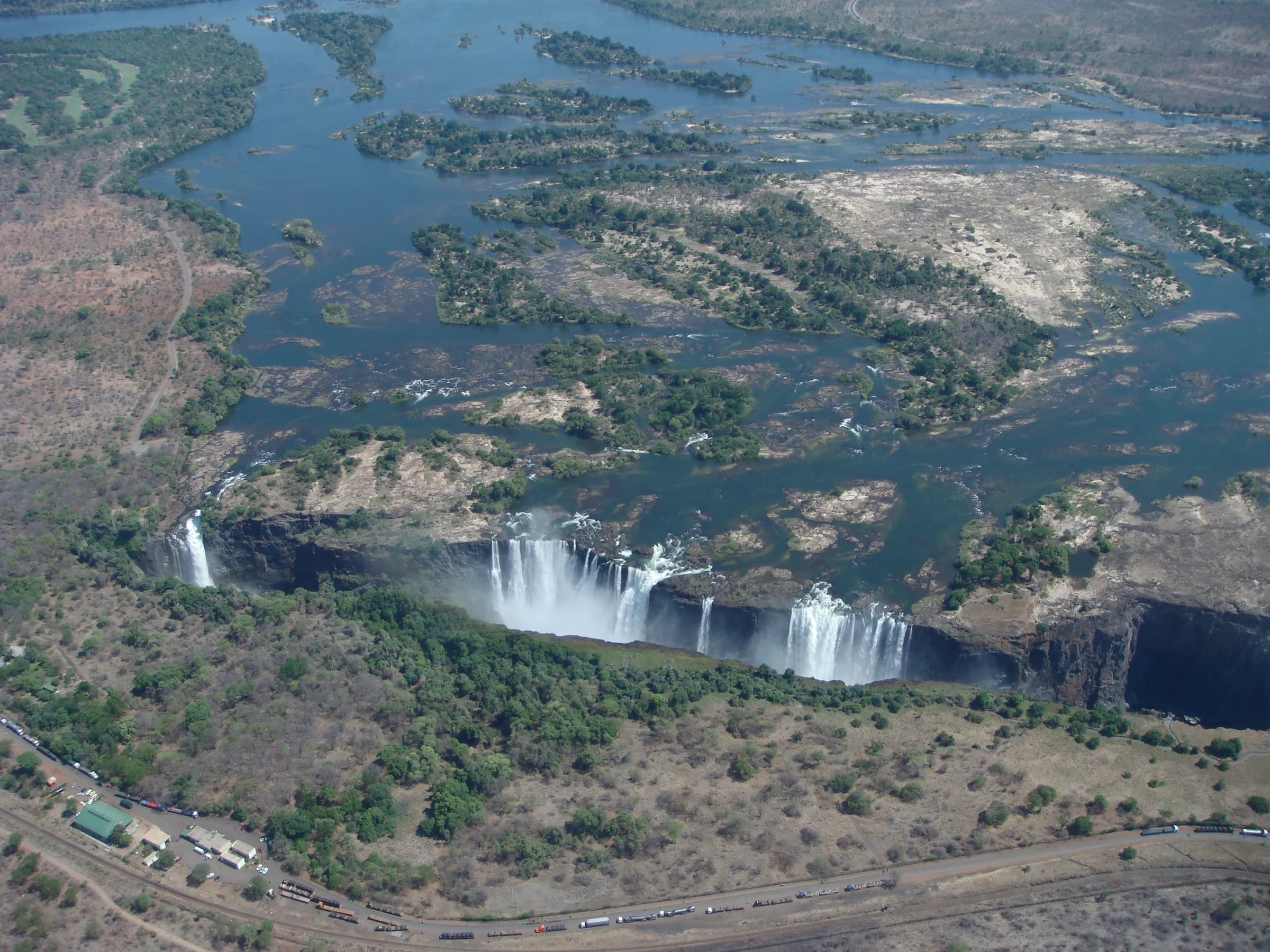
Locals called it Mosi-oa-Tunya, 'The Smoke That Thunders,' long before David Livingstone ever saw it in 1855 — the spray from the falls rises high enough to be visible from more than 20 kilometers away, which is exactly why the name stuck.
See full guide →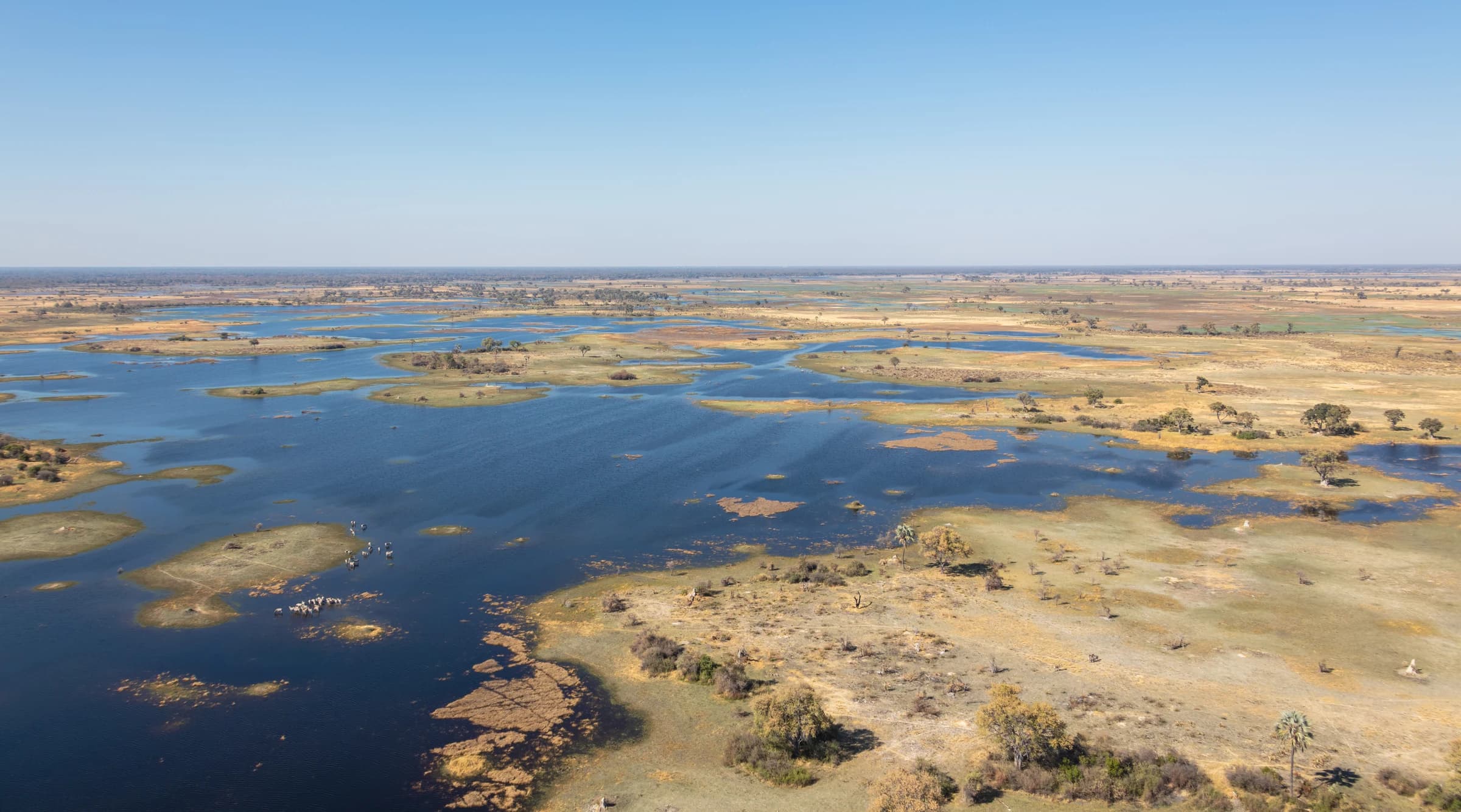 Okavango Delta
Okavango Delta
Botswana
The Okavango River flows for over a thousand kilometers out of Angola's highlands and never reaches the sea — instead it spreads out across the Kalahari Desert into a massive inland delta, and the flooding actually peaks in the dry winter months, months after the rains that caused it fell hundreds of kilometers away.
See full guide →Comparing more than one route? See the full transport comparison guide.