Morocco · Africa
Chefchaouen
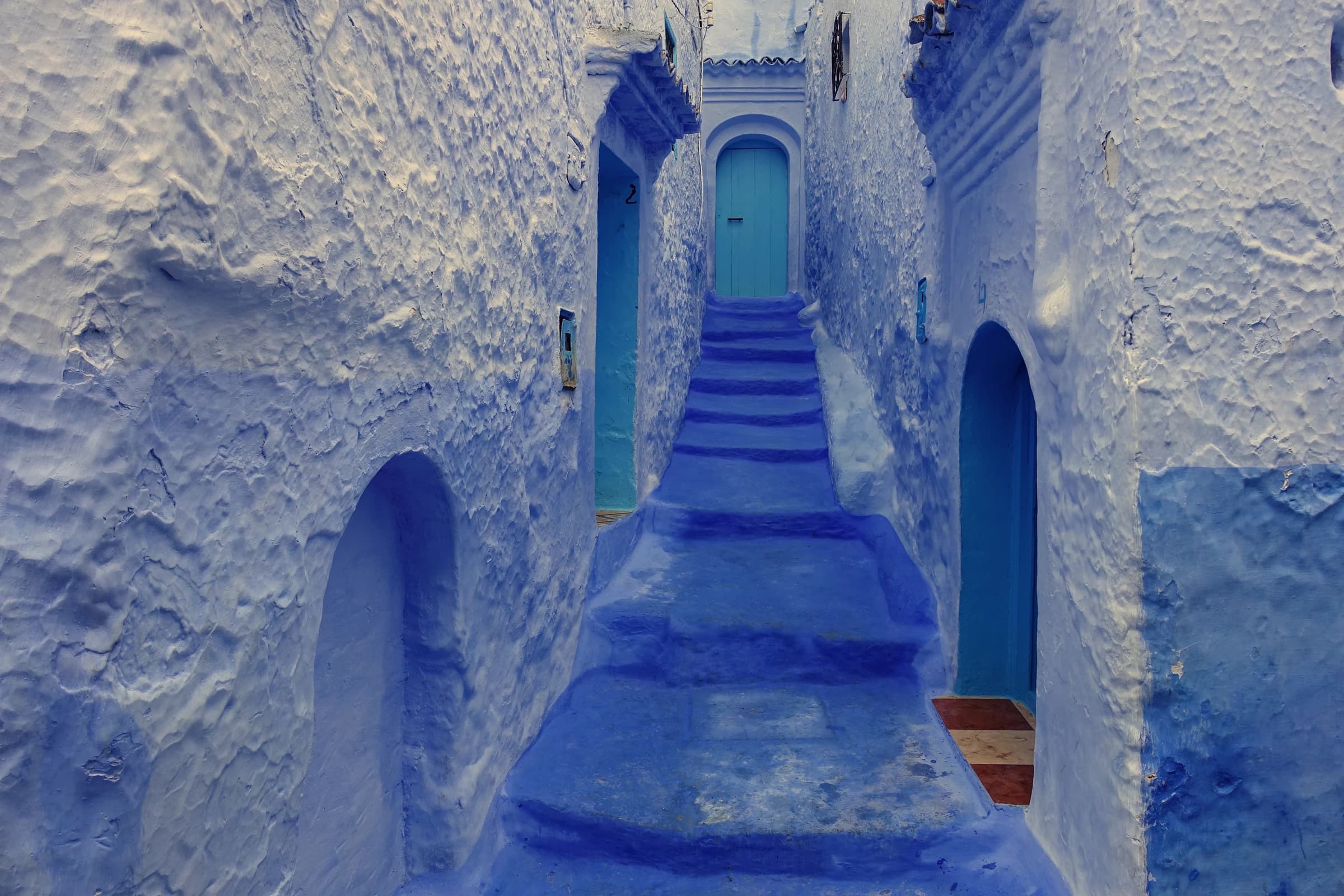
Nobody agrees on exactly why Chefchaouen is painted blue — theories range from Jewish refugees who settled here in the 1930s bringing a tradition tied to the color of the sky and heaven, to a more recent 1970s decision to keep mosquitoes away — but the result is a mountain town where entire streets, stairways, and doorframes disappear into the same shade of blue.
No one fully agrees on why Chefchaouen is blue, and that's part of what makes the town's most obvious feature also its most interesting. The most repeated theory credits Jewish refugees who settled here in the 1930s, fleeing persecution in Europe, and continued a tradition of painting buildings blue as a reference to the sky and, by extension, heaven. Other accounts place the widespread blue paint job considerably later, in the 1970s, tied to practical reasoning like repelling mosquitoes or simply giving the town a distinct identity as tourism grew. Ask three different residents and it's genuinely possible to get three different answers.
Whatever the origin, the effect is total: walls, doorframes, stairways, and even some cobblestones carry shades of blue ranging from pale sky to deep indigo, and the color shifts noticeably with the light throughout the day, brightest and most saturated in the late afternoon sun.
Chefchaouen sits in the Rif Mountains in northern Morocco, a genuinely different landscape from the desert-adjacent cities further south, and that elevation keeps its climate noticeably milder than Marrakech or Fez through the summer, with real seasonal cold in winter that catches some visitors off guard given Morocco's broader reputation for heat.
The Spanish Mosque, an abandoned mosque on a hilltop above the medina, gives the town's best overview: a roughly 30-45 minute walk up from the main square rewards visitors with a full view of the blue town spread across the hillside below, particularly striking around sunset. The mosque itself, built in the 1920s during the Spanish protectorate era, was never regularly used for worship and now functions purely as a viewpoint.
Chefchaouen's medina retains a distinctly Andalusian character, shaped by refugees who arrived from Spain following the Reconquista in the late 15th century alongside the later Jewish community, and that layered history shows up in architectural details throughout the old town that feel genuinely different from the more purely Amazigh and Arab influences found in Marrakech or Fez.
What a trip here actually costs
$22 / day avg.
- Guesthouse riad in the medina
- Local taxi and bus fares
- Casual Moroccan meals
- Medina wander and photography, free
What to do at this tier
- • Wander the blue-washed medina streets and stairways, free
- • Plaza Uta el-Hammam, the main square, free to sit and people-watch
- • Ras El Maa waterfall at the medina's edge, free
$55 / day avg.
- 3-star riad with rooftop views
- Guided hike to the Spanish Mosque viewpoint
- Sit-down Moroccan dinners
- Kasbah museum entry
What to do at this tier
- • Hike up to the Spanish Mosque, an abandoned mosque on a hill overlooking the whole blue town
- • Kasbah museum, a restored 15th-century fortress with ethnographic exhibits
- • Guided walking tour covering the medina's history and the town's Andalusian architectural influences
These are average estimates for planning purposes, not real-time prices — actual costs vary by season, availability, and how far ahead you book.
How to get there
Click anywhere on the world map — any airport works, not just our main hubs.
Click anywhere on the map above — any airport in the world works — to see estimated travel time and cost from there.
Times and prices are planning estimates, not live fares — always check a booking site before you commit. See the full Transport Comparison guide for the general tradeoffs of each mode.
Best time to visit
April-June and September-October bring comfortable temperatures; Chefchaouen sits in the Rif Mountains, so summers stay milder than Marrakech or Fez, and winters can get genuinely cold and wet.
Safety notes
Very safe and relaxed, among the calmer towns in Morocco for tourism, with standard urban caution.
Visa & currency
Moroccan dirham (MAD), a closed currency exchanged only within the country. Many Western passport holders can enter visa-free for short stays, worth confirming before booking.
Questions people ask before visiting
Is Chefchaouen worth visiting?
Yes, particularly for photography and a slower pace than Morocco's bigger imperial cities — the blue-washed medina in the Rif Mountains is genuinely distinct from anywhere else in the country, and the town is small enough to see thoroughly without feeling rushed.
Why is Chefchaouen painted blue?
There's no single confirmed explanation. The most common theory credits Jewish refugees who settled in Chefchaouen in the 1930s, continuing a tradition of painting buildings blue as a symbolic reference to the sky and heaven. Other accounts suggest the blue was popularized more recently, in the 1970s, partly to repel mosquitoes or to give the town a distinct identity for tourism. Locals themselves often give different answers.
How do you get to Chefchaouen?
Most visitors arrive by bus or grand taxi from Fez, roughly a 4-hour drive, or from Tangier or Tetouan on the northern coast. There's no train service directly to Chefchaouen, and it's commonly visited as a 2-3 day stop on a wider northern Morocco route.
How many days do you need in Chefchaouen?
Two days covers the medina thoroughly, including a hike up to the Spanish Mosque viewpoint above town. It's small enough that a rushed single day feels noticeably tighter than the town's slower pace calls for.
Nearby destinations
 Fez
FezFez
Morocco
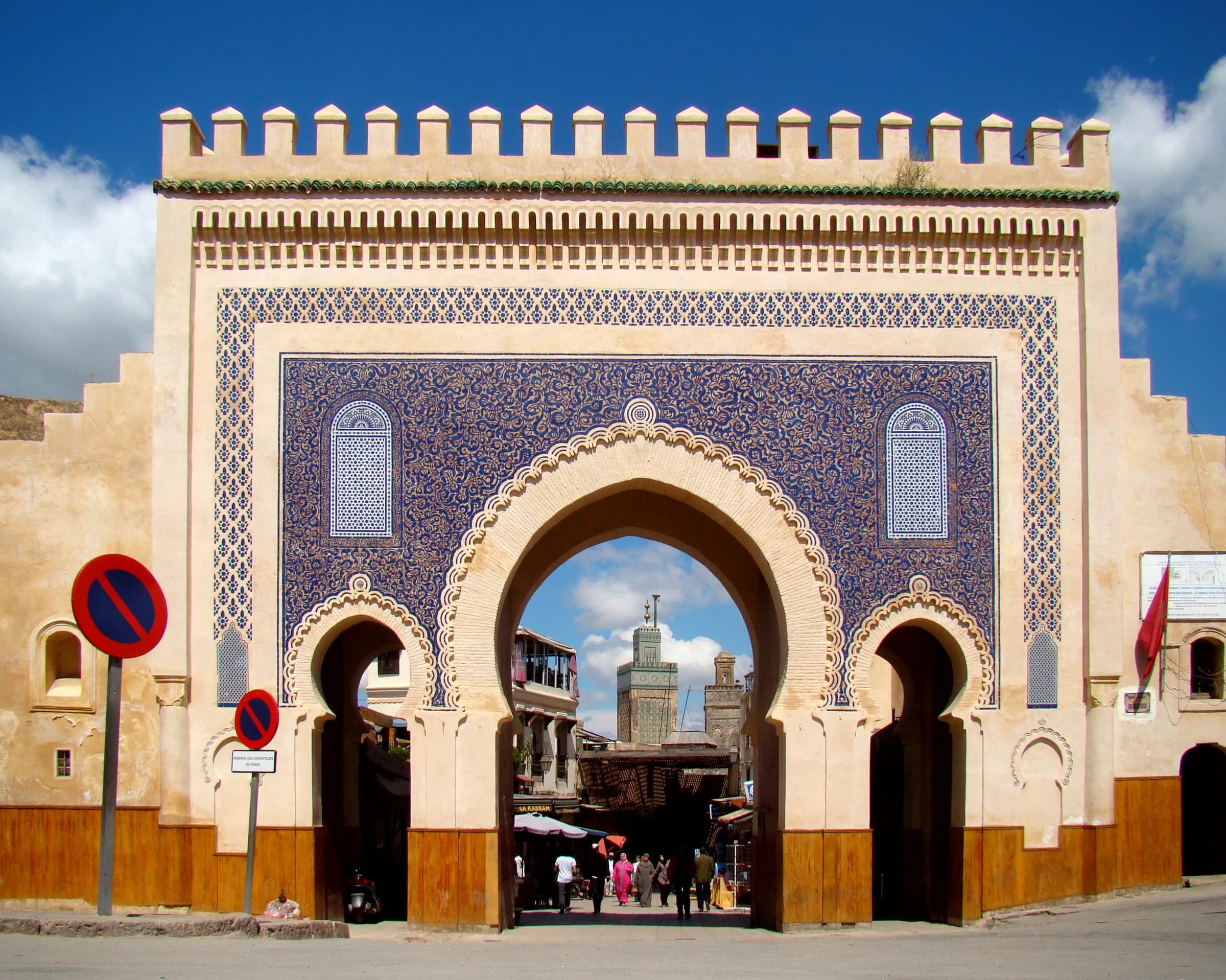
Fez's old medina is one of the largest car-free urban areas on Earth, a maze of over 9,000 narrow streets and alleys still navigated the way it has been for a thousand years — by foot, or by donkey where the load is too heavy to carry.
See full guide →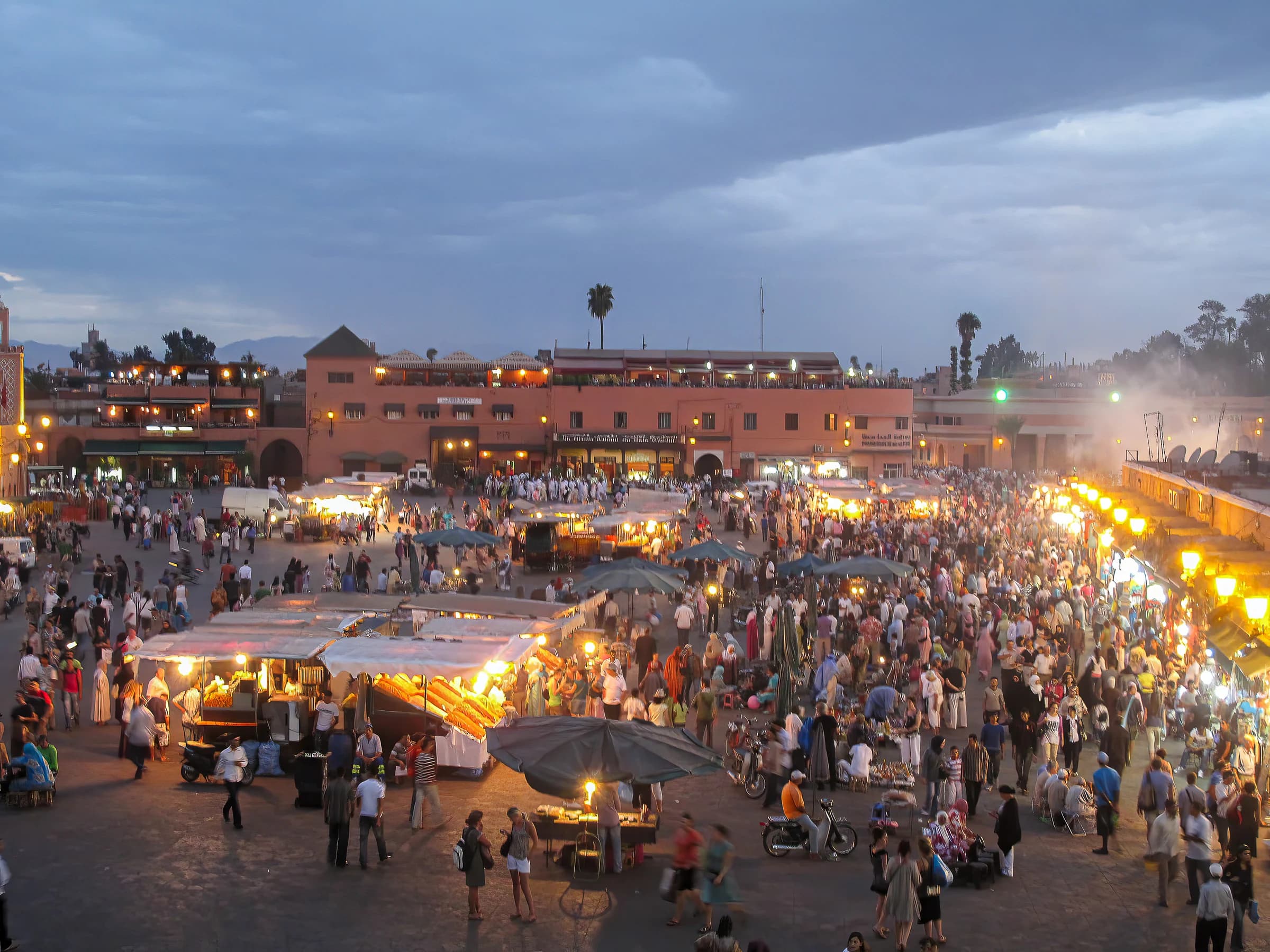 Marrakech
Marrakech
Morocco
Marrakech's central square, Jemaa el-Fnaa, is recognized by UNESCO not as a building or monument but as a piece of living heritage — the storytellers, musicians, and food stalls that fill it every night are protected the same way a historic building would be.
See full guide →Comparing more than one route? See the full transport comparison guide.