Gambia · Africa
Banjul
The Gambia is a country shaped almost entirely by a single river, a sliver of land rarely wider than 50 kilometers surrounded on three sides by Senegal, and its capital's biggest draw isn't the city itself but the Gambia River ferries and birdlife just beyond it.
The Gambia's shape on a map looks almost accidental, a narrow ribbon of land tracing the Gambia River for roughly 320 kilometers inland, rarely wider than 50 kilometers, and surrounded on three sides by Senegal. That boundary isn't accidental at all; it traces exactly how far British naval gunboats could enforce control along the river during the colonial era, while French territory claimed everything beyond effective river range. The result is Africa's smallest mainland country, built entirely around a single waterway.
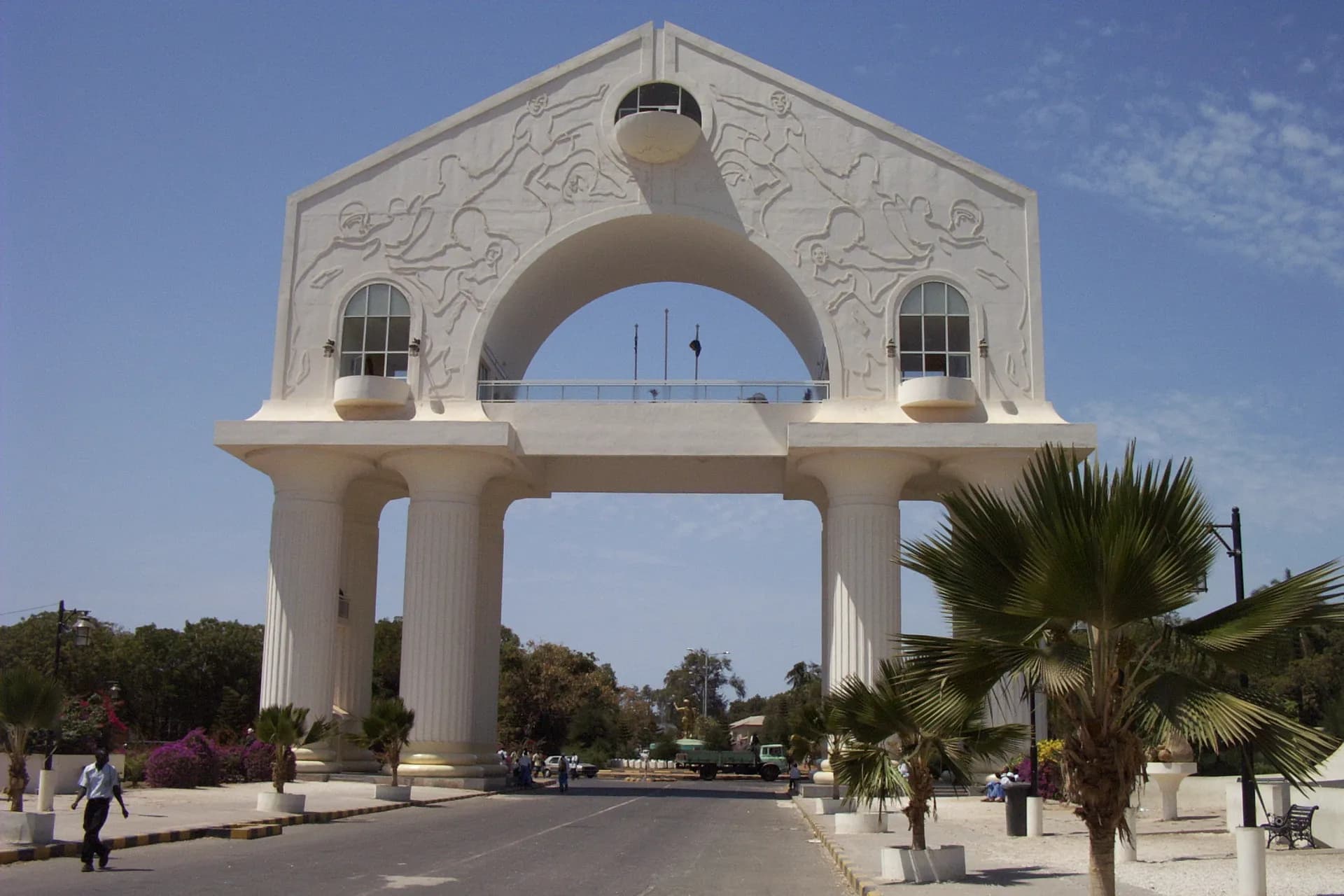
Banjul itself, the compact capital sitting where the river meets the Atlantic, functions more as an administrative and market center than the country's main visitor draw. Albert Market's dense stalls give a genuine, unpolished look at daily Gambian commerce, and Arch 22, a monument commemorating the 1994 change of government, offers a rooftop view over the low-rise city. Most visitors, though, base themselves in the resort towns along the coast just south, where UK package tourism has built up several decades of established beach hotel infrastructure.
The river is where Gambia's real draw lies. Upstream from Banjul, Kunta Kinteh Island, formerly James Island, held a British trading fort central to the transatlantic slave trade, and the island lent its name, through a fictionalized retelling, to Alex Haley's novel Roots, a connection that's made the ruins a significant pilgrimage site for African-American visitors specifically. The site holds UNESCO World Heritage status, and boat tours combine the history with the river's dense mangrove creeks beyond it.
Those same creeks make Gambia one of West Africa's most rewarding birdwatching destinations, with over 560 recorded species packed into a genuinely small geographic area, an unusually high density that's drawn dedicated birding tour operators for decades. Abuko Nature Reserve, a short drive from the coast, offers an accessible introduction without requiring a full river expedition.
Gambia's tourism industry runs almost entirely on its relationship with the UK, direct flights, English as the official language inherited from British colonial rule, and a well-worn package holiday circuit that's made it one of the more accessible, lower-friction introductions to West Africa for first-time visitors to the region, even as the country itself remains one of the continent's smallest and least internationally discussed.
What a trip here actually costs
$45 / day avg.
- Budget guesthouse in Banjul or nearby Serrekunda
- Local transport by shared taxi
- Local Gambian meals
- Albert Market visit, free
What to do at this tier
- • Albert Market wander, free
- • Arch 22 monument, small entry fee
- • Local beach time along the Atlantic coast
$100 / day avg.
- Coastal resort hotel
- Guided river birdwatching tour
- Restaurant meals
- Kunta Kinteh Island river excursion
What to do at this tier
- • Kunta Kinteh Island and Gambia River boat tour
- • Guided birdwatching in the river's mangrove creeks
- • Abuko Nature Reserve day trip
These are average estimates for planning purposes, not real-time prices — actual costs vary by season, availability, and how far ahead you book.
How to get there
Click anywhere on the world map — any airport works, not just our main hubs.
Click anywhere on the map above — any airport in the world works — to see estimated travel time and cost from there.
Times and prices are planning estimates, not live fares — always check a booking site before you commit. See the full Transport Comparison guide for the general tradeoffs of each mode.
Best time to visit
November-May is the dry season and the main tourist window; the wet season runs roughly June-October with higher humidity and rainfall.
Safety notes
Generally safe for tourists, particularly in established coastal resort areas; standard precautions apply in Banjul's busier market districts.
Visa & currency
Gambian dalasi (GMD). Many nationalities receive visa-free or visa-on-arrival entry for short stays; confirm based on passport before booking.
Questions people ask before visiting
Is Gambia worth visiting?
Yes, particularly for birdwatchers and travelers wanting an accessible, English-speaking introduction to West Africa. The Gambia River corridor holds some of the region's richest birdlife, and package tourism from the UK has built reasonably developed beach infrastructure along the Atlantic coast near Banjul.
Why is Gambia shaped the way it is?
The country's borders trace the Gambia River's course, a narrow strip rarely more than 50 kilometers wide and entirely surrounded by Senegal except for its short Atlantic coastline, a legacy of British and French colonial territorial negotiations that prioritized control of the river itself.
What is Kunta Kinteh Island?
A small island upriver from Banjul, formerly known as James Island, that held a British trading fort central to the transatlantic slave trade. It gave its name, fictionalized, to the ancestral character in Alex Haley's novel Roots, and today the ruins are a UNESCO World Heritage site reachable by river tour.
How do you get to Banjul?
Banjul International Airport receives direct flights from London and several other European cities, largely supporting the UK package tourism industry that's long been the country's main international travel market. Most visitors stay in the resort towns along the coast rather than in Banjul's compact city center itself.
Nearby destinations
 Dakar
DakarDakar
Senegal
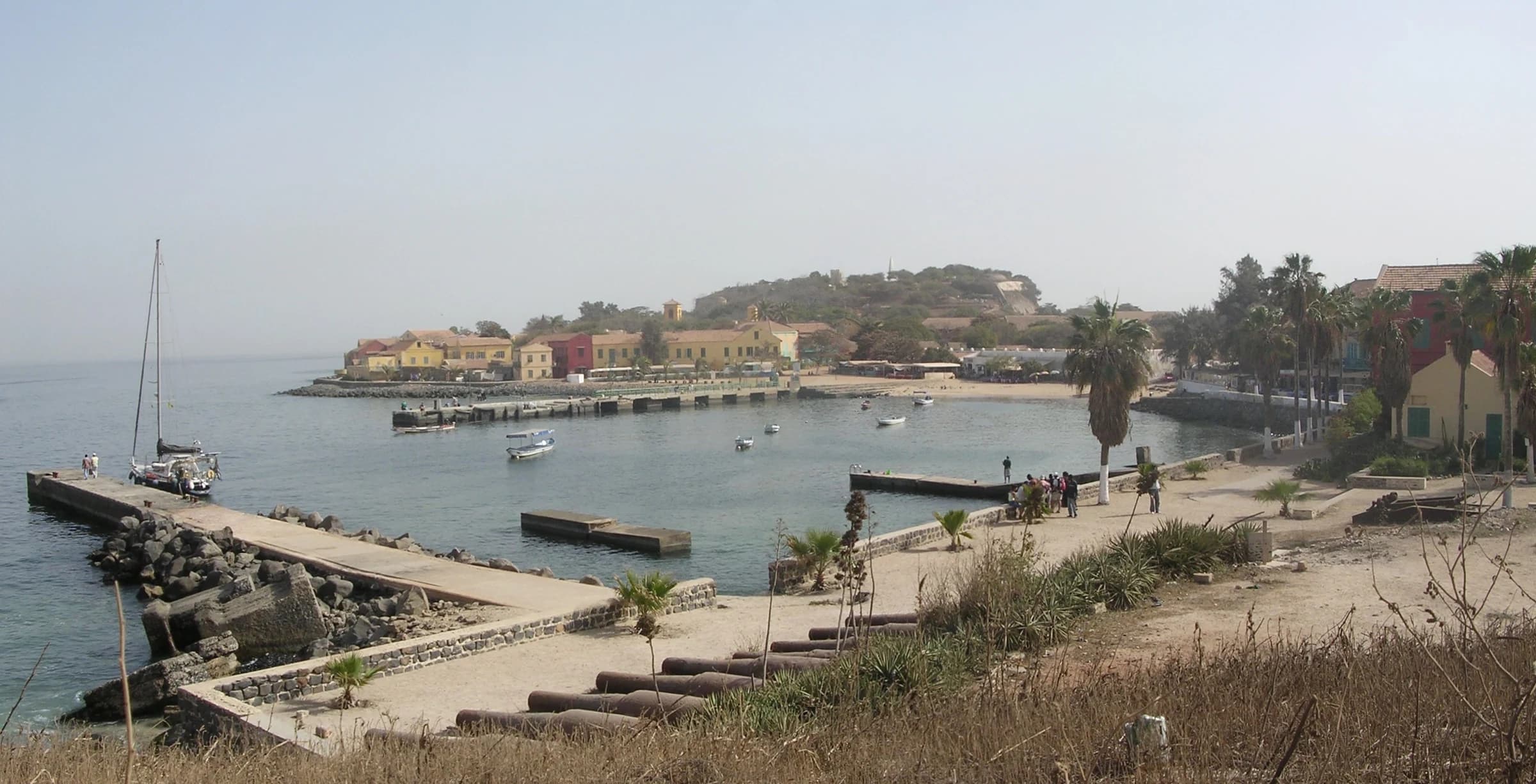
Dakar sits at the westernmost point of mainland Africa, and just offshore, Gorée Island holds a small stone doorway known as the Door of No Return — the last thing hundreds of thousands of enslaved people reportedly saw of the continent before being forced onto ships bound across the Atlantic.
See full guide →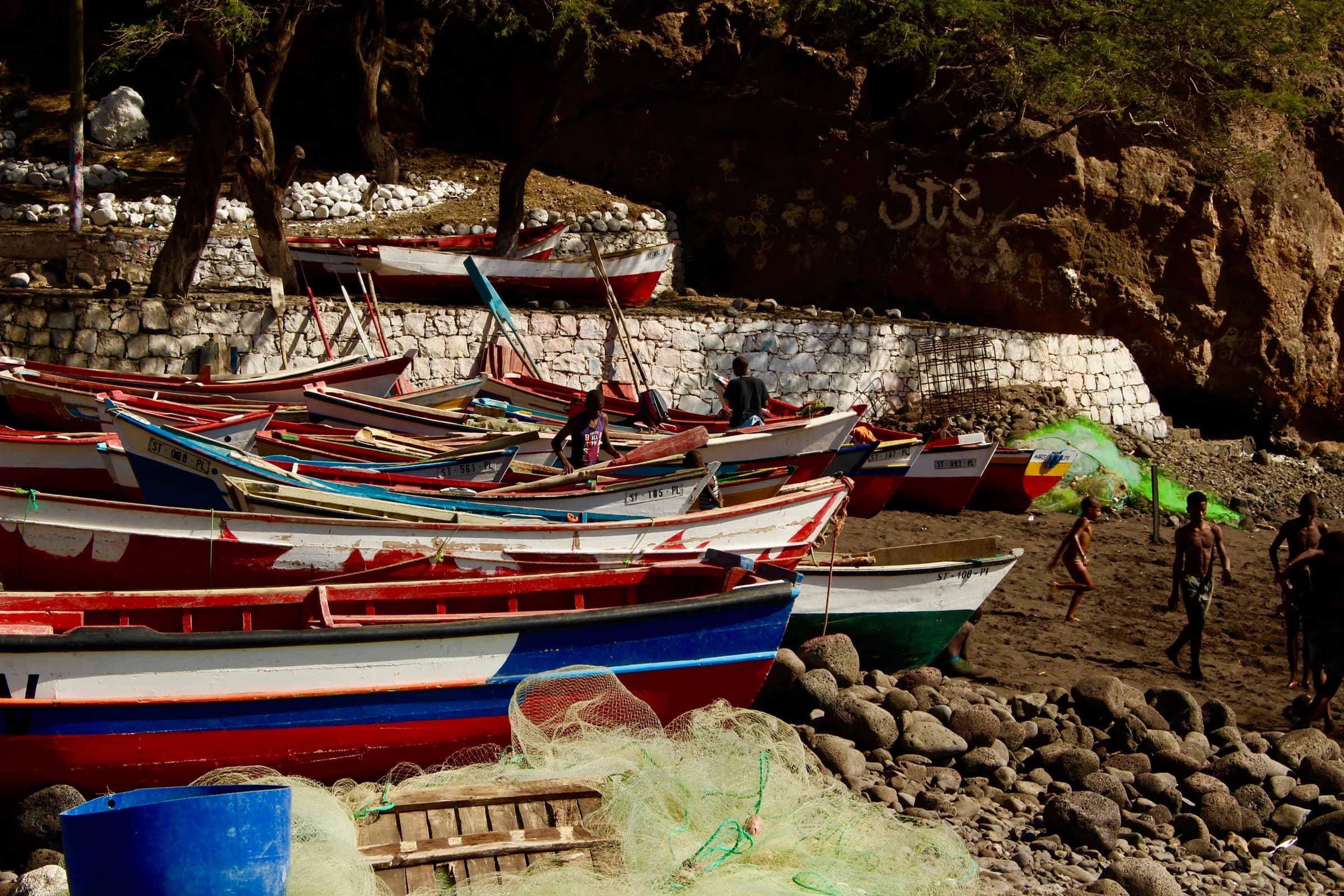 Praia
PraiaPraia
Cape Verde
More Cape Verdeans live abroad than in Cape Verde itself — centuries of drought and emigration scattered the population across Portugal, the US, and beyond, and that diaspora built morna, the melancholic musical genre made globally famous by singer Cesária Évora, into the clearest expression of what Cape Verdeans call sodade, a longing for home that doesn't fully translate into English.
See full guide →Comparing more than one route? See the full transport comparison guide.