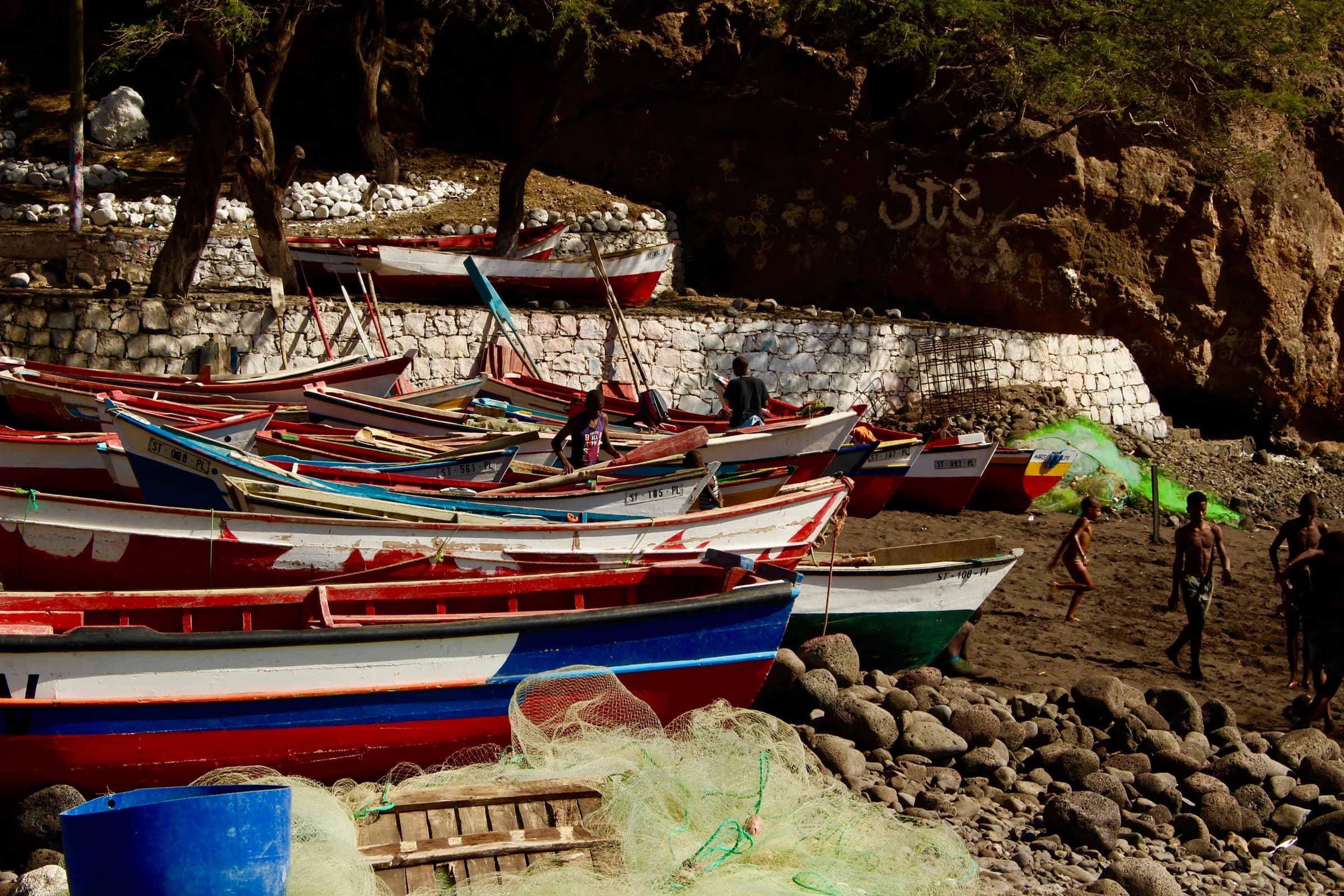
Cape Verde · Africa
Praia
More Cape Verdeans live abroad than in Cape Verde itself — centuries of drought and emigration scattered the population across Portugal, the US, and beyond, and that diaspora built morna, the melancholic musical genre made globally famous by singer Cesária Évora, into the clearest expression of what Cape Verdeans call sodade, a longing for home that doesn't fully translate into English.
More Cape Verdeans live outside the country than within it. Centuries of recurring, severe drought made subsistence farming across this arid volcanic archipelago genuinely unreliable, and waves of emigration, particularly to Portugal and the United States, especially New England's fishing and whaling communities, scattered the population abroad on a scale that consistently leaves the diaspora outnumbering the roughly half a million people who live in Cape Verde today.
That diaspora carried its longing for home into music, and morna, a slow, melancholic genre often compared to Portuguese fado, became the clearest expression of it. Cesária Évora, the singer who brought morna to genuinely global audiences from the 1990s onward, performed famously barefoot and sang often about sodade, a Cape Verdean Creole word for a deep longing that doesn't map cleanly onto any single English word, closer to nostalgia mixed with homesickness and loss all at once.
Just outside Praia, Cidade Velha holds a considerably older and heavier history. Founded in 1462 as Ribeira Grande, it was the first European colonial settlement built anywhere in the tropics, predating similar Portuguese and Spanish colonial towns elsewhere by decades. UNESCO listed it as a World Heritage Site in 2009, and its surviving ruins, an early cathedral, the hilltop Fort Real de São Filipe, and a stone pillory, trace the town's dual role as both an early colonial outpost and a significant hub in the transatlantic slave trade, a history the site presents directly rather than glossing over.
Praia itself, Cape Verde's capital on Santiago Island, sits apart from the resort-driven tourism of islands like Sal and Boa Vista, which handle the bulk of Cape Verde's beach visitors. Praia's Platô district, a compact hilltop old town, gives a more grounded, day-to-day sense of Cape Verdean urban life, markets, small businesses, and government buildings, rather than a resort-oriented experience.
Santiago Island's rugged, mountainous interior, genuinely undeveloped in large stretches, offers a different side of Cape Verde again, and rental car day trips out from Praia give visitors a look at the same dramatic, dry volcanic terrain that shaped so much of the archipelago's difficult agricultural history.
What a trip here actually costs
$30 / day avg.
- Guesthouse in Praia's Platô district
- Local hiace shared-van fares
- Casual Cape Verdean meals, cachupa stew
- Cidade Velha self-guided visit
What to do at this tier
- • Platô, Praia's historic hilltop old town, free to wander
- • Cidade Velha's ruins, including the early cathedral and hilltop Fort Real de São Filipe, entry fee applies
- • Sucupira Market, a large open-air market for produce and goods
$65 / day avg.
- 3-star hotel in central Praia
- Guided Cidade Velha history tour
- Sit-down Cape Verdean dinners with live morna music
- Rental car for the day
What to do at this tier
- • Guided Cidade Velha tour covering its role as the first European colonial settlement in the tropics
- • Evening of live morna music at a Praia venue, Cape Verde's signature musical genre
- • Day trip along Santiago Island's rugged interior mountain roads
These are average estimates for planning purposes, not real-time prices — actual costs vary by season, availability, and how far ahead you book.
How to get there
Click anywhere on the world map — any airport works, not just our main hubs.
Click anywhere on the map above — any airport in the world works — to see estimated travel time and cost from there.
Times and prices are planning estimates, not live fares — always check a booking site before you commit. See the full Transport Comparison guide for the general tradeoffs of each mode.
Best time to visit
November-June avoids the short rainy season, roughly August-October; Cape Verde's Sahel-adjacent desert climate stays warm and dry most of the year.
Safety notes
Generally safe for tourists in Praia with standard urban caution.
Visa & currency
Cape Verdean escudo (CVE). Most nationalities need an online travel authorization (EASE) rather than a full visa, a simpler process arranged before arrival — confirm current requirements before booking.
Questions people ask before visiting
Is Praia worth visiting?
Yes, particularly for travelers interested in Cape Verde's deeper history rather than just its beach resorts — nearby Cidade Velha was the first European colonial settlement built in the tropics, and Praia itself gives a genuine, unpolished sense of everyday Cape Verdean life beyond the resort islands of Sal and Boa Vista.
What is Cidade Velha?
A UNESCO World Heritage Site just outside Praia, founded in 1462 as Ribeira Grande, making it the first European colonial town built in the tropics anywhere in the world. Its ruins include an early cathedral, a hilltop fort, and a stone pillory that once marked the town's role in the transatlantic slave trade.
Why do more Cape Verdeans live abroad than at home?
Recurring severe droughts, dating back centuries and continuing periodically into the modern era, made subsistence farming on the arid islands genuinely unreliable, pushing large-scale emigration to Portugal, the United States (particularly New England), and elsewhere. Estimates consistently suggest the Cape Verdean diaspora outnumbers the roughly half a million people living in the country itself.
How many days do you need in Praia?
Two days covers Praia's Platô old town and a half-day trip to Cidade Velha. Most visitors treat Praia as a cultural and historical stop rather than the main beach destination, since the resort islands of Sal and Boa Vista handle most of Cape Verde's beach tourism.
Nearby destinations
Comparing more than one route? See the full transport comparison guide.