Morocco · Africa
Aït Benhaddou
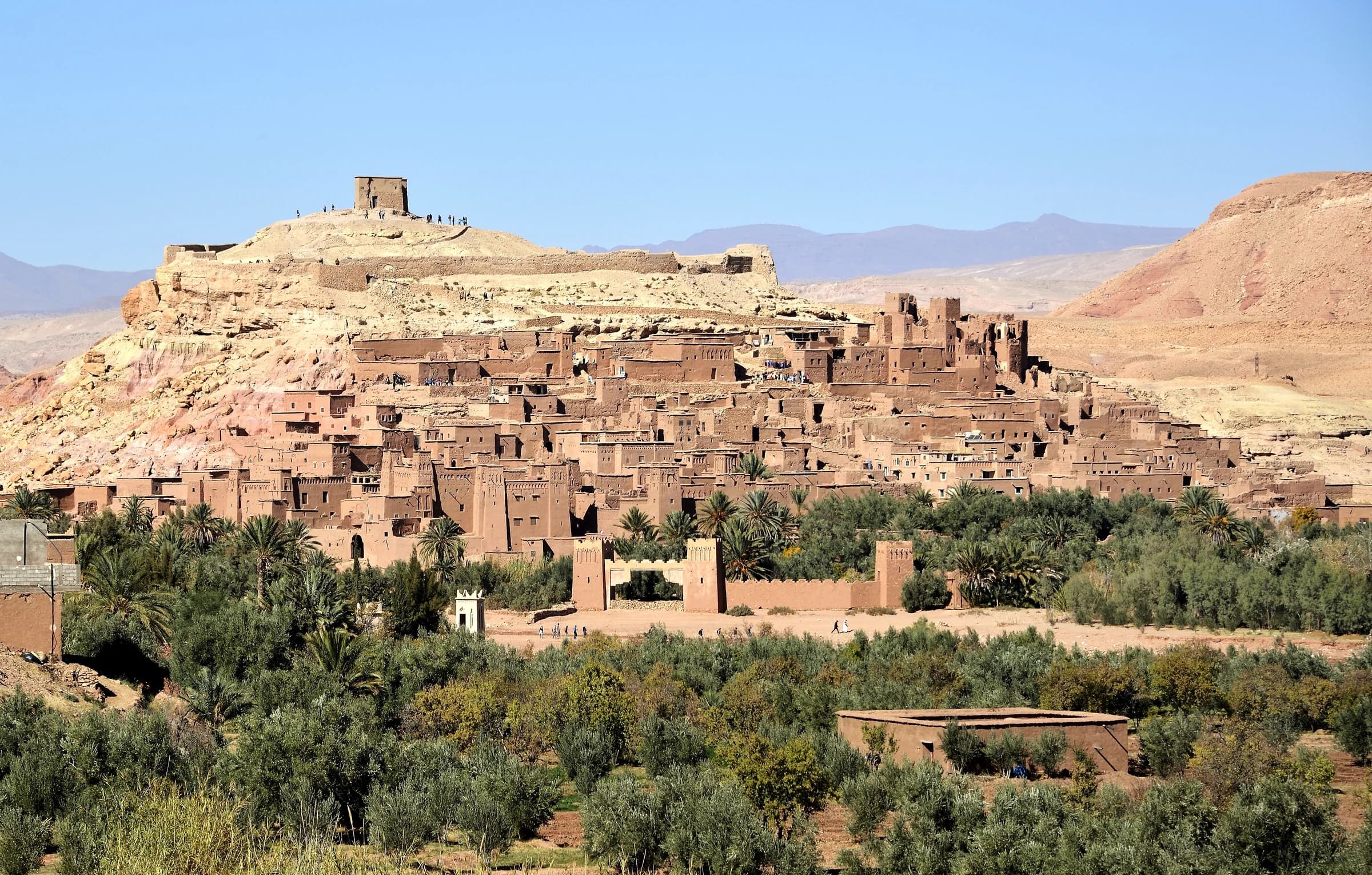
Aït Benhaddou's earthen fortress walls have played ancient Rome, biblical Egypt, and a Game of Thrones city, all without changing much — the nearby film studios in Ouarzazate have used this single UNESCO-listed ksar as a backdrop for Lawrence of Arabia, Gladiator, and dozens of other productions, earning the town the nickname 'Ouallywood.'
Aït Benhaddou's earthen buildings, clustered into a fortified ksar along a hillside above a seasonal river, have survived largely intact for centuries thanks to traditional rammed-earth construction techniques still used to maintain them today. UNESCO listed the site as a World Heritage Site in 1987, recognizing it as one of the best-preserved examples of southern Moroccan pre-Saharan architecture, built originally as a stop along the caravan route connecting the Sahara to Marrakech.
That dramatic, sun-baked architecture has made Aït Benhaddou one of the most filmed locations in Africa. Lawrence of Arabia used it in the 1960s, and productions have kept coming since, including Gladiator, Kingdom of Heaven, The Mummy, and multiple seasons of Game of Thrones, all drawn by the same combination of striking earthen walls, reliable desert light, and the practical infrastructure built up around nearby Ouarzazate's film industry over decades.
Ouarzazate itself, a short drive from the ksar, hosts Atlas Film Studios, one of the largest film studio complexes in the world by physical area, and the town's film-industry reputation has earned it the nickname "Ouallywood," a nod to Hollywood that's stuck firmly enough to show up in local tourism branding.
Very few people actually still live within the historic ksar itself; most residents relocated across the river to a newer, more modern village decades ago, leaving the old fortified town largely preserved as a living museum rather than a fully active settlement, though a handful of families and shopkeepers remain to maintain a genuine presence.
A steep path leads up to a ruined granary and fort on the hill directly above the ksar, and the climb rewards visitors with a full view over the earthen rooftops and the river valley below, a viewpoint that's become one of the most photographed in Morocco, particularly around sunset when the clay walls take on a deep, saturated red-orange glow.
What a trip here actually costs
$25 / day avg.
- Guesthouse in the newer village across the river
- Shared taxi or bus from Ouarzazate
- Casual Moroccan meals
- Ksar entry and self-guided wander
What to do at this tier
- • Cross the river (dry for much of the year, otherwise via stepping stones or a small footbridge) into the ksar and wander its narrow earthen streets, entry fee applies
- • Climb to the hilltop granary above the ksar for a full view over the fortified village
- • Explore the newer village across the river, where most current residents actually live
$60 / day avg.
- 3-star kasbah-style guesthouse
- Guided tour of the ksar and Ouarzazate film studios
- Sit-down Moroccan dinners
- Private transfer from Marrakech
What to do at this tier
- • Guided tour explaining the ksar's traditional rammed-earth construction and its centuries as a caravan stop
- • Atlas Film Studios tour in nearby Ouarzazate, walking through sets used in major film and TV productions
- • Sunset viewing from the hilltop granary, when the earthen walls turn a deep orange-red
These are average estimates for planning purposes, not real-time prices — actual costs vary by season, availability, and how far ahead you book.
How to get there
Click anywhere on the world map — any airport works, not just our main hubs.
Click anywhere on the map above — any airport in the world works — to see estimated travel time and cost from there.
Times and prices are planning estimates, not live fares — always check a booking site before you commit. See the full Transport Comparison guide for the general tradeoffs of each mode.
Best time to visit
March-May and October-November avoid the extreme summer heat common to this pre-Saharan region, which regularly exceeds 40°C (104°F) in July and August.
Safety notes
Very safe for tourists with standard precautions; the site is small and easy to navigate independently or with a local guide.
Visa & currency
Moroccan dirham (MAD), a closed currency exchanged only within the country. Many Western passport holders can enter visa-free for short stays, worth confirming before booking.
Questions people ask before visiting
Is Aït Benhaddou worth visiting?
Yes — this UNESCO-listed fortified village of earthen clay buildings, built along a former caravan route between the Sahara and Marrakech, is one of the best-preserved examples of traditional southern Moroccan architecture anywhere, and its extensive use as a film location adds a genuinely fun layer for anyone who recognizes the backdrop.
What films were shot at Ait Benhaddou?
Lawrence of Arabia, Gladiator, Kingdom of Heaven, The Mummy, and multiple seasons of Game of Thrones all filmed scenes here, drawn by the site's dramatic earthen architecture and the nearby Atlas Film Studios in Ouarzazate, one of the largest film studio complexes in the world by land area.
Why is Ouarzazate called Ouallywood?
Ouarzazate's film industry has grown substantial enough, hosting productions for decades due to its dramatic desert scenery, reliable sunlight, and low costs, that it's earned the nickname 'Ouallywood,' a play on Hollywood, and is sometimes also called the 'Hollywood of Africa' or 'Moroccowood.'
How do you get to Ait Benhaddou from Marrakech?
It's roughly a 3-4 hour drive from Marrakech, crossing the Atlas Mountains via the Tizi n'Tichka pass. Most visitors do it as a long day trip or an overnight stop en route further into the Sahara toward Merzouga.
Nearby destinations
 Marrakech
Marrakech
Morocco
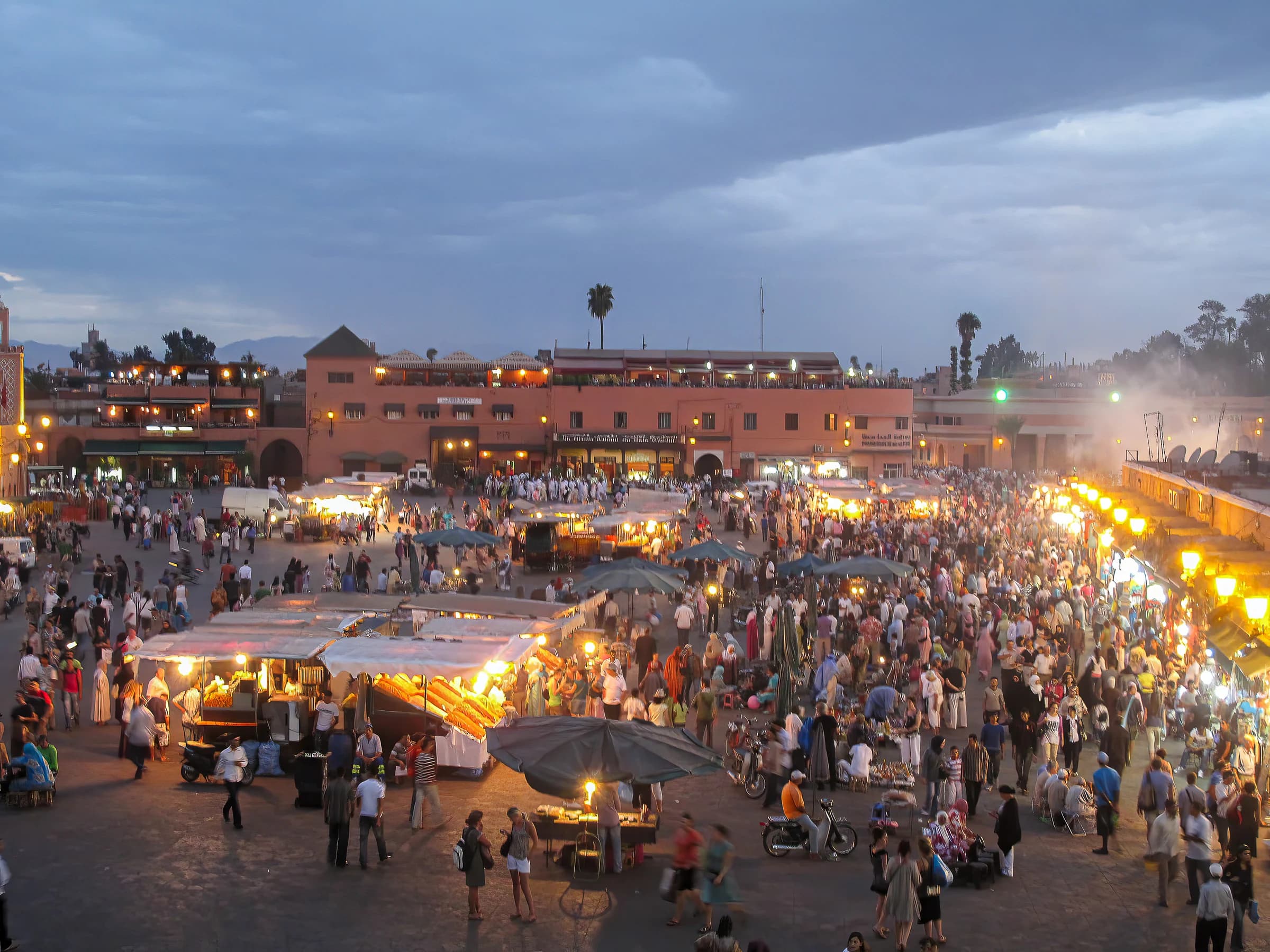
Marrakech's central square, Jemaa el-Fnaa, is recognized by UNESCO not as a building or monument but as a piece of living heritage — the storytellers, musicians, and food stalls that fill it every night are protected the same way a historic building would be.
See full guide →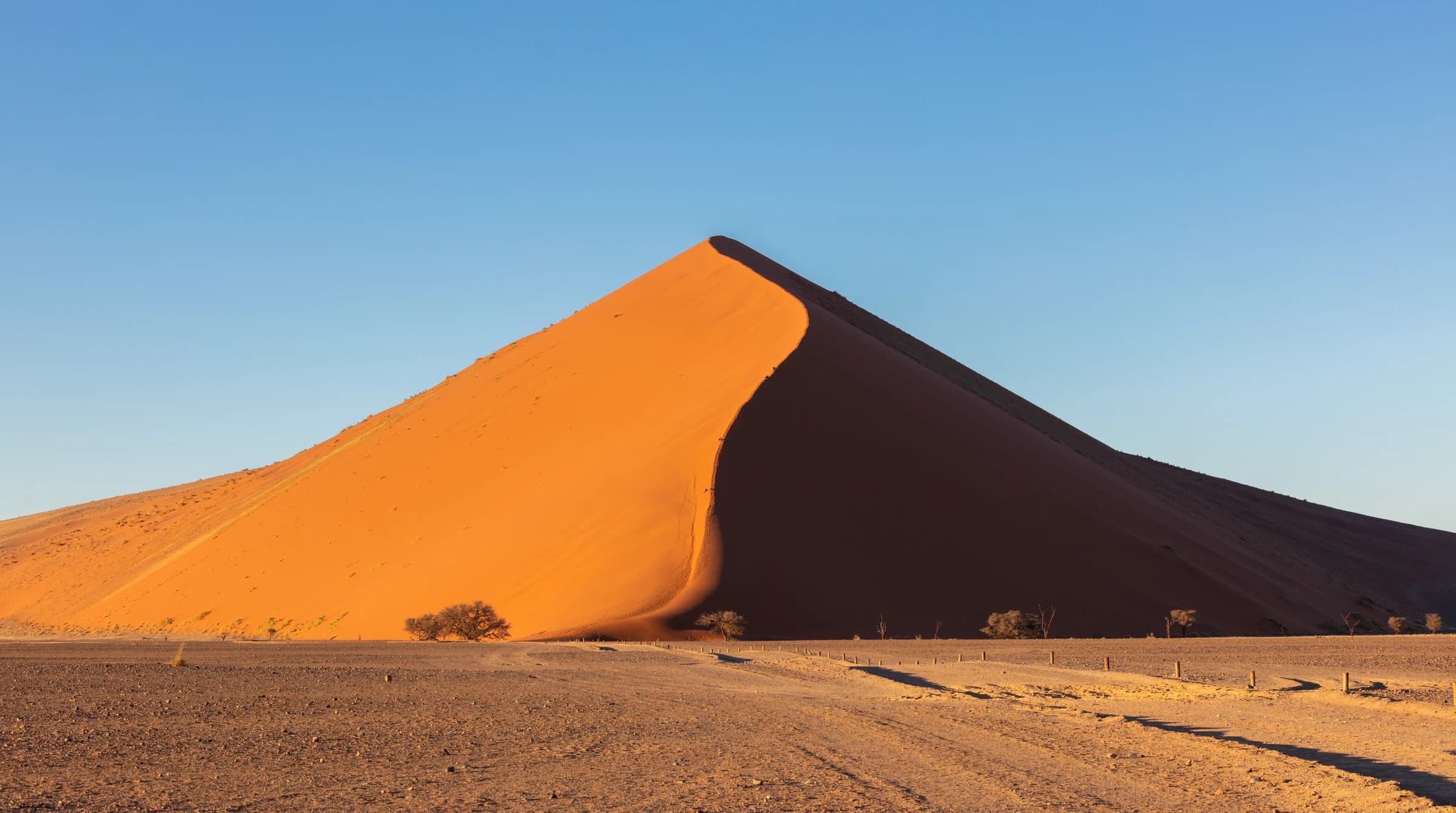 Sossusvlei
Sossusvlei
Namibia
The Namib Desert is generally considered the oldest desert on Earth, arid for somewhere between 55 and 80 million years, and its towering red dunes at Sossusvlei have had that much time to grow — some rank among the tallest dunes anywhere in the world.
See full guide →Comparing more than one route? See the full transport comparison guide.