Ivory Coast · Africa
Abidjan
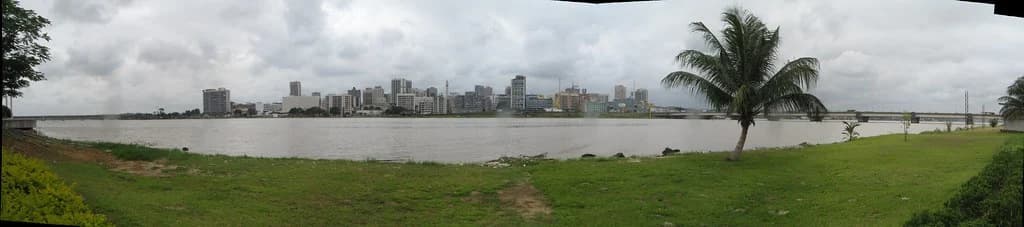
Ivory Coast produces roughly 40 percent of the entire world's cocoa supply, and Abidjan's modern glass towers, dense enough to earn the city nicknames like the 'Manhattan of West Africa,' were built largely on the wealth that trade generated even as the country's official capital moved elsewhere decades ago.
Ivory Coast produces roughly 40 percent of the entire world's cocoa supply, by far the largest share of any single country, and that trade has shaped Abidjan directly. The city's dense cluster of modern glass towers in the Plateau business district, striking enough to earn nicknames comparing it to Manhattan, grew substantially on cocoa-driven wealth, even as the industry's benefits have historically been distributed unevenly between global chocolate companies and the farmers who actually grow the crop, an imbalance still actively debated within the industry today.
Abidjan isn't even Ivory Coast's official capital. The government formally relocated the capital to Yamoussoukro in 1983, the hometown of longtime president Félix Houphouët-Boigny, but most embassies, businesses, and the country's genuine economic and cultural activity stayed concentrated in Abidjan, which functions as the country's real capital in every practical sense despite the official designation elsewhere.
The city sits along the Ebrié Lagoon, and that waterfront setting shapes much of daily life across Abidjan's various districts, from the dense modern Plateau to the more residential, university-adjacent Cocody neighborhood, each with a genuinely distinct character despite sitting within the same metropolitan area.
Cathédrale Saint-Paul, a striking modern cathedral overlooking the lagoon and completed in the 1980s, gives Abidjan one of its more architecturally distinctive landmarks, a deliberate departure from more traditional colonial-era church design found in many other former French West African capitals.
Abidjan's nightlife and music scene has a genuine, longstanding reputation across West Africa, and the city has historically served as a launching point for regional music styles and artists, giving it an energy that extends well past the daytime business district into a genuinely active after-dark culture.
What a trip here actually costs
$32 / day avg.
- Guesthouse in a central neighborhood
- Local taxi and woro-woro shared-taxi fares
- Casual Ivorian meals, attieke and grilled fish
- Plateau district wander, free
What to do at this tier
- • Plateau district skyline wander, Abidjan's dense modern business core, free
- • Treichville market, a large, lively market for produce, textiles, and goods
- • Ebrié Lagoon waterfront, free to walk
$80 / day avg.
- 3-star hotel in Cocody or Plateau
- Guided city and lagoon tour
- Sit-down Ivorian dinners
- St. Paul's Cathedral and Plateau skyline viewpoint visit
What to do at this tier
- • Cathédrale Saint-Paul, a distinctive modern cathedral overlooking the lagoon
- • Guided tour covering Abidjan's colonial and post-independence economic history
- • Boat trip on the Ebrié Lagoon
$210 / day avg.
- 4-5 star hotel in central Abidjan
- Private guided city history tour
- Multi-course dinners at top Abidjan restaurants
- Evening out at an established Abidjan nightlife venue
What to do at this tier
- • Private guided city history tour combining the Plateau, Cocody, and lagoon waterfront
- • Multi-course dinner at a leading Abidjan restaurant blending Ivorian and French cuisine
- • Evening at an established Abidjan nightlife venue, reflecting the city's genuinely active music and club scene
These are average estimates for planning purposes, not real-time prices — actual costs vary by season, availability, and how far ahead you book.
How to get there
Click anywhere on the world map — any airport works, not just our main hubs.
Click anywhere on the map above — any airport in the world works — to see estimated travel time and cost from there.
Times and prices are planning estimates, not live fares — always check a booking site before you commit. See the full Transport Comparison guide for the general tradeoffs of each mode.
Best time to visit
November-March is Ivory Coast's drier season; the rest of the year sees heavier rain, peaking roughly June-July.
Safety notes
Generally safe for tourists in central Abidjan neighborhoods with standard urban caution; check current travel advisories given the country's history of periodic political instability.
Visa & currency
West African CFA franc (XOF), shared across several West African countries and pegged to the euro. Most nationalities need a visa, available as an e-visa applied for online before arrival.
Questions people ask before visiting
Is Abidjan worth visiting?
Yes, particularly for travelers interested in West African economic and cultural energy — the city's modern skyline, lagoon setting, and lively nightlife and food scene give it a genuinely different character from more historically-focused West African capitals, even though it sees relatively few international tourists.
Why isn't Abidjan the official capital of Ivory Coast?
The government officially moved the capital to Yamoussoukro in 1983, the hometown of then-president Félix Houphouët-Boigny, though most embassies, businesses, and the country's real economic activity remained concentrated in Abidjan, which functions as the de facto capital in practice.
How significant is cocoa to Ivory Coast's economy?
Ivory Coast produces roughly 40 percent of the world's cocoa, making it by far the largest producer globally, and the industry remains central to the national economy, even as questions about fair pricing for farmers and child labor in parts of the supply chain remain active, ongoing concerns within the industry.
How many days do you need in Abidjan?
Two to three days covers the Plateau business district, the Cocody neighborhood, and the city's markets and nightlife. Most visitors treat Abidjan as an economic and cultural stop rather than the historical centerpiece of a wider Ivory Coast itinerary.
Nearby destinations
 Accra
AccraAccra
Ghana
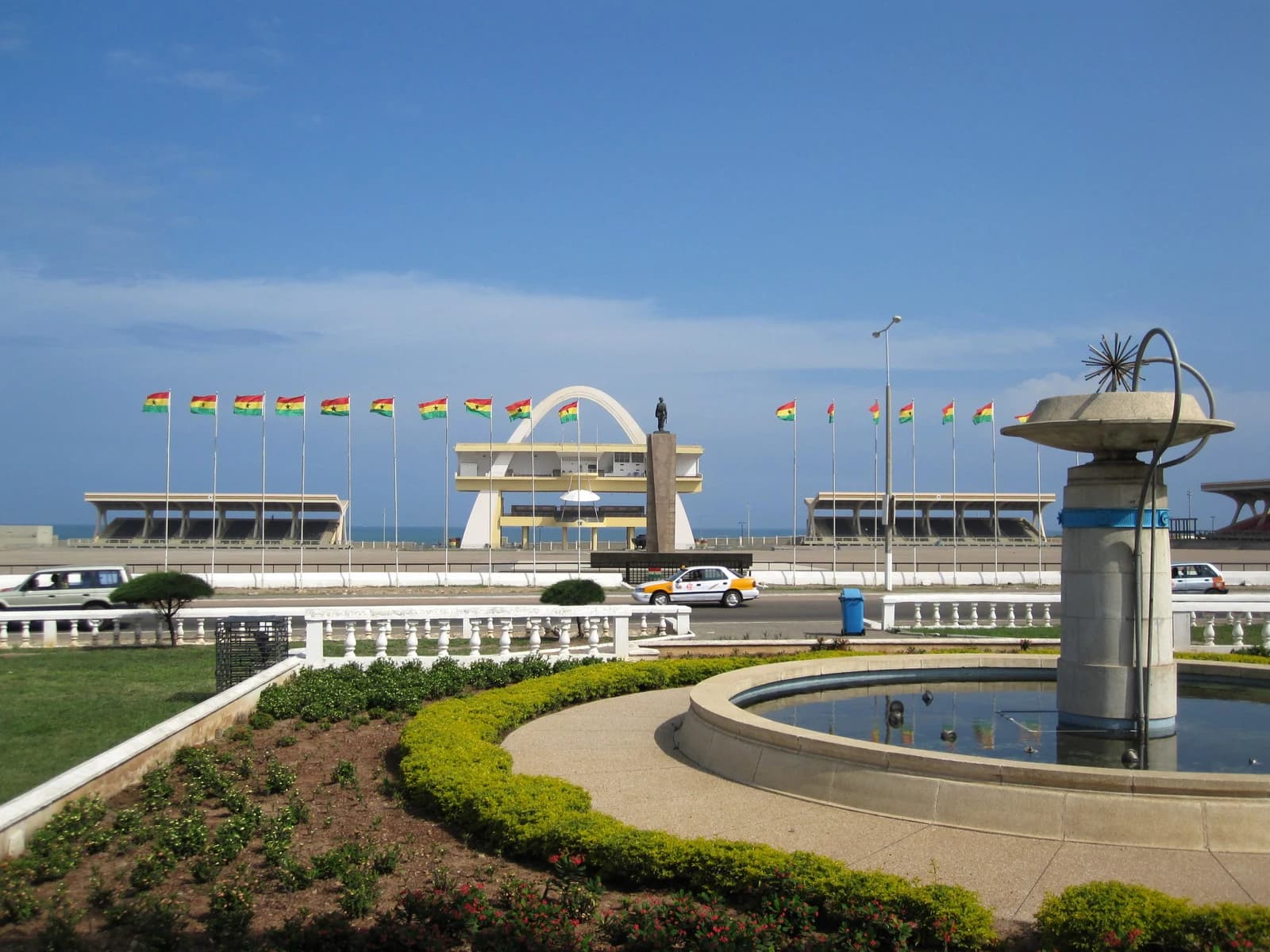
In 2019, Ghana declared a nationwide 'Year of Return' marking 400 years since the first enslaved Africans arrived in Virginia, inviting the African diaspora to reconnect with the continent — hundreds of thousands of people, many African American, took the government up on it, and Accra has been building on that momentum as a diaspora-tourism hub ever since.
See full guide →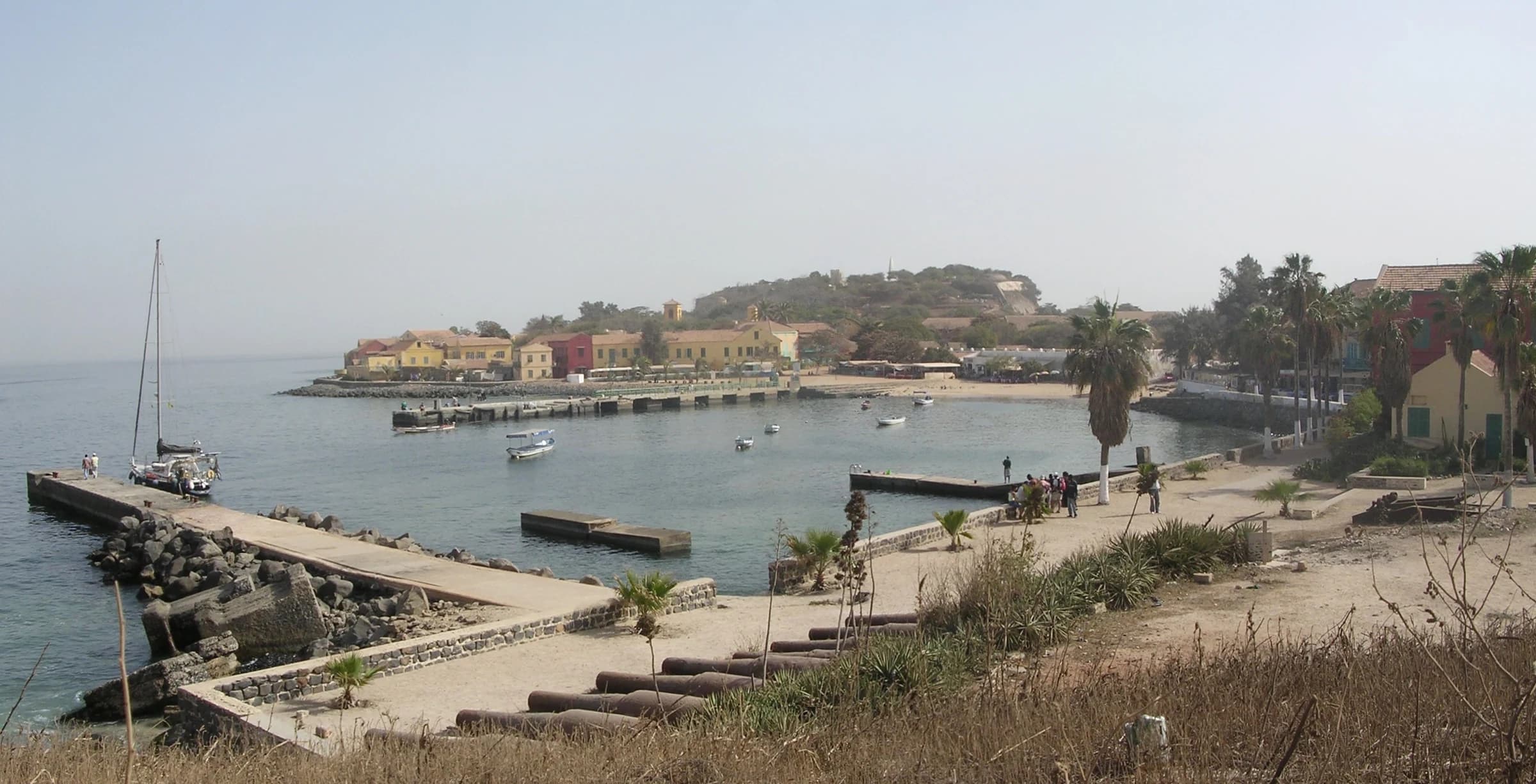 Dakar
DakarDakar
Senegal
Dakar sits at the westernmost point of mainland Africa, and just offshore, Gorée Island holds a small stone doorway known as the Door of No Return — the last thing hundreds of thousands of enslaved people reportedly saw of the continent before being forced onto ships bound across the Atlantic.
See full guide →Comparing more than one route? See the full transport comparison guide.