Chile · South America
Torres del Paine
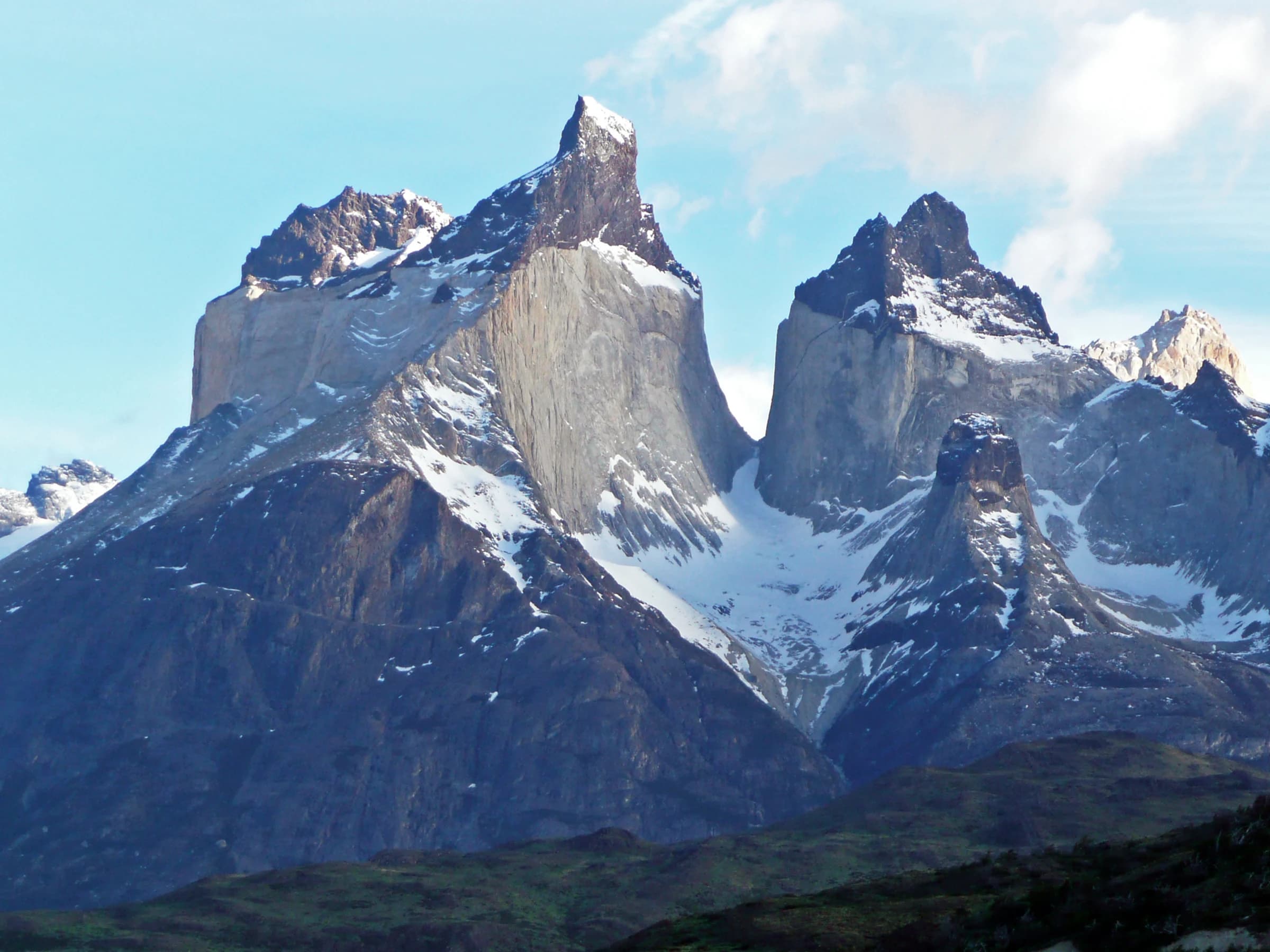
The three granite towers that give Torres del Paine its name took roughly 12 million years to form, pushed up from the Earth's crust and then carved into their current spires by glaciers — and the wind here is strong enough on a bad day to knock a hiker off their feet.
The three granite spires that give Torres del Paine National Park its name formed over roughly 12 million years, pushed upward as magma cooled beneath the Earth's surface, then exposed and sculpted into their current shape by advancing and retreating glaciers. What's left is a cluster of towers rising more than 2,500 meters above the surrounding steppe, visible from miles away on a clear day and often wrapped in cloud on the many days that aren't.
Wind defines the experience of hiking here as much as the scenery does. Patagonia sits in the path of near-constant westerly winds that pick up speed crossing the open ocean and steppe with nothing to slow them down, and gusts in the park regularly reach speeds strong enough to make walking difficult, occasionally forcing trail closures. Hikers plan around it rather than against it, timing exposed sections for calmer parts of the day where possible.
The W Trek, named for the shape it traces on a map, covers the park's core highlights over four to five days: the towers themselves, the French Valley with views of hanging glaciers on both sides, and Grey Glacier at the trek's far end, where icebergs calve directly into Lake Grey. The longer O Circuit adds a remote, less-trafficked back side of the massif, extending the full loop to eight or ten days and requiring more self-sufficient camping.
Puma sightings in the park have increased noticeably over the past decade, a shift tied partly to conservation efforts across Chilean Patagonia and partly to the animals growing more accustomed to the presence of hikers and specialized tracking guides. Torres del Paine is now one of the more reliable places in the world to see wild pumas, alongside guanacos, Andean condors, and, in the park's wetter corners, the occasional huemul, an endangered native deer.
Puerto Natales, a small town about two hours from the park entrance, functions as the practical base for almost everyone visiting, with buses running into the park most mornings during the summer season and a growing number of gear rental shops catering to trekkers arriving without their own equipment.
What a trip here actually costs
$110 / day avg.
- Refugio bunk with meals included
- Park entrance fee
- Day-hike access to the towers viewpoint
- Bus transfer from Puerto Natales
What to do at this tier
- • Day hike to the Torres del Paine base viewpoint, roughly 8-9 hours round trip
- • Boat trip on Lake Grey toward Grey Glacier, viewing floating icebergs
- • French Valley lookout hike, a shorter alternative with mountain and glacier views
$380 / day avg.
- Full-board lodge just outside the park
- Private guide for day hikes
- All meals at the lodge restaurant
- Private transfer from Punta Arenas or El Calafate
What to do at this tier
- • Private guided multi-day trek with a dedicated support vehicle
- • Puma tracking excursion with a specialized wildlife guide, increasingly common as the park's puma population has grown
- • Full-board lodge stay with daily changing day-hike routes planned by staff
These are average estimates for planning purposes, not real-time prices — actual costs vary by season, availability, and how far ahead you book.
How to get there
Click anywhere on the world map — any airport works, not just our main hubs.
Click anywhere on the map above — any airport in the world works — to see estimated travel time and cost from there.
Times and prices are planning estimates, not live fares — always check a booking site before you commit. See the full Transport Comparison guide for the general tradeoffs of each mode.
Best time to visit
November-March, Patagonia's summer, brings the longest daylight and most stable weather, though wind remains a constant factor year-round and can reach speeds strong enough to affect hiking safety.
Safety notes
Generally safe with good trail infrastructure; the main risks are weather-related, including sudden wind, rain, and temperature swings, so proper layered gear matters more here than personal safety concerns.
Visa & currency
Chilean peso (CLP). Most Western passport holders can enter Chile visa-free for short stays, worth confirming before booking; park entrance and refugio bookings should be arranged well in advance during peak season.
Questions people ask before visiting
Is Torres del Paine worth visiting?
Yes, for travelers with a genuine interest in hiking or Patagonian landscapes — the granite towers, glacial lakes, and open steppe here rank among the most striking scenery in South America, and increasing puma sightings in recent years have made it one of the more reliable places in the world to see wild pumas.
What's the difference between the W Trek and the O Circuit?
The W Trek is a four-to-five-day route covering the park's main highlights, including the towers themselves, the French Valley, and Grey Glacier, done point to point with refugio or camping accommodation along the way. The O Circuit adds a remote back side of the park, extending the trip to eight to ten days for a full loop around the massif.
How do you get to Torres del Paine?
Most visitors fly into Punta Arenas or El Calafate in Argentina, then take a bus or transfer to Puerto Natales, the gateway town about two hours from the park entrance. From Puerto Natales, buses run directly into the park most mornings during peak season.
How many days do you need in Torres del Paine?
A minimum of three to four days allows day hikes to the base of the towers and around Lake Pehoé without committing to a multi-day trek. Serious hikers typically budget four to five days for the W Trek or eight to ten for the full O Circuit.
Nearby destinations
 El Calafate
El Calafate
Argentina
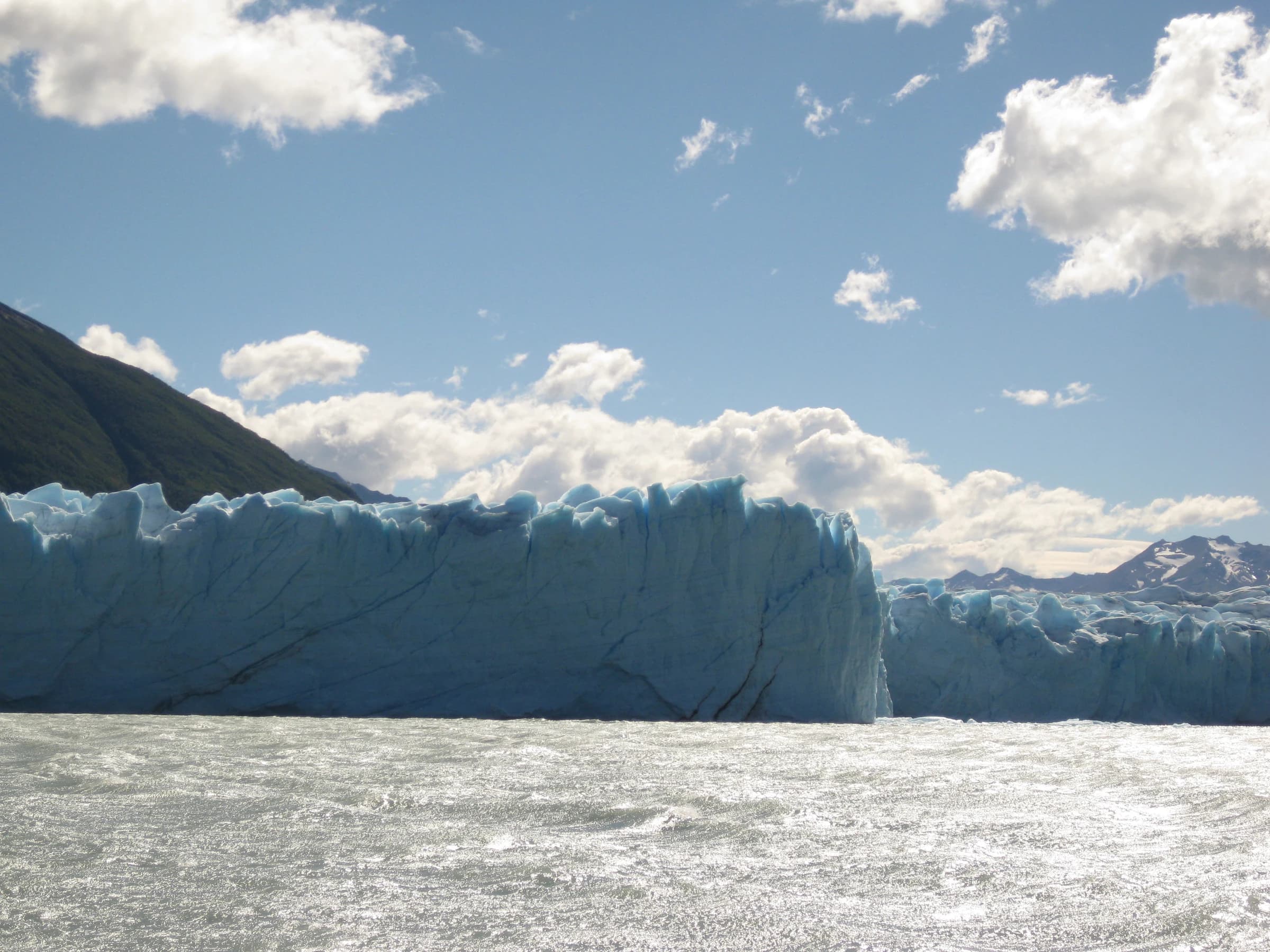
The Perito Moreno Glacier is one of the very few glaciers on Earth that isn't retreating — it advances roughly two meters a day in places, and when massive chunks of ice calve off its 5-kilometer face into the lake below, the crack echoes across the water loud enough to hear from the viewing platforms hundreds of meters away.
See full guide →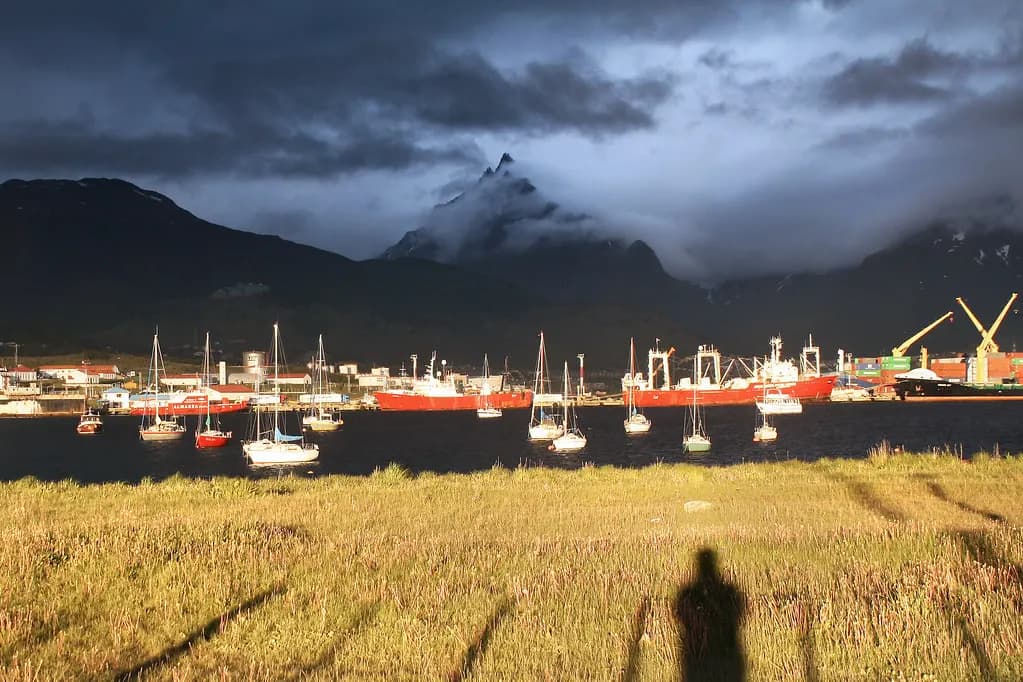 Ushuaia
Ushuaia
Argentina
Ushuaia calls itself "the end of the world," and the claim holds up better than most marketing slogans — it's the southernmost city on Earth with a real airport and hotels, closer to Antarctica than to most of the rest of Argentina.
See full guide →Comparing more than one route? See the full transport comparison guide.