Venezuela · South America
Mount Roraima
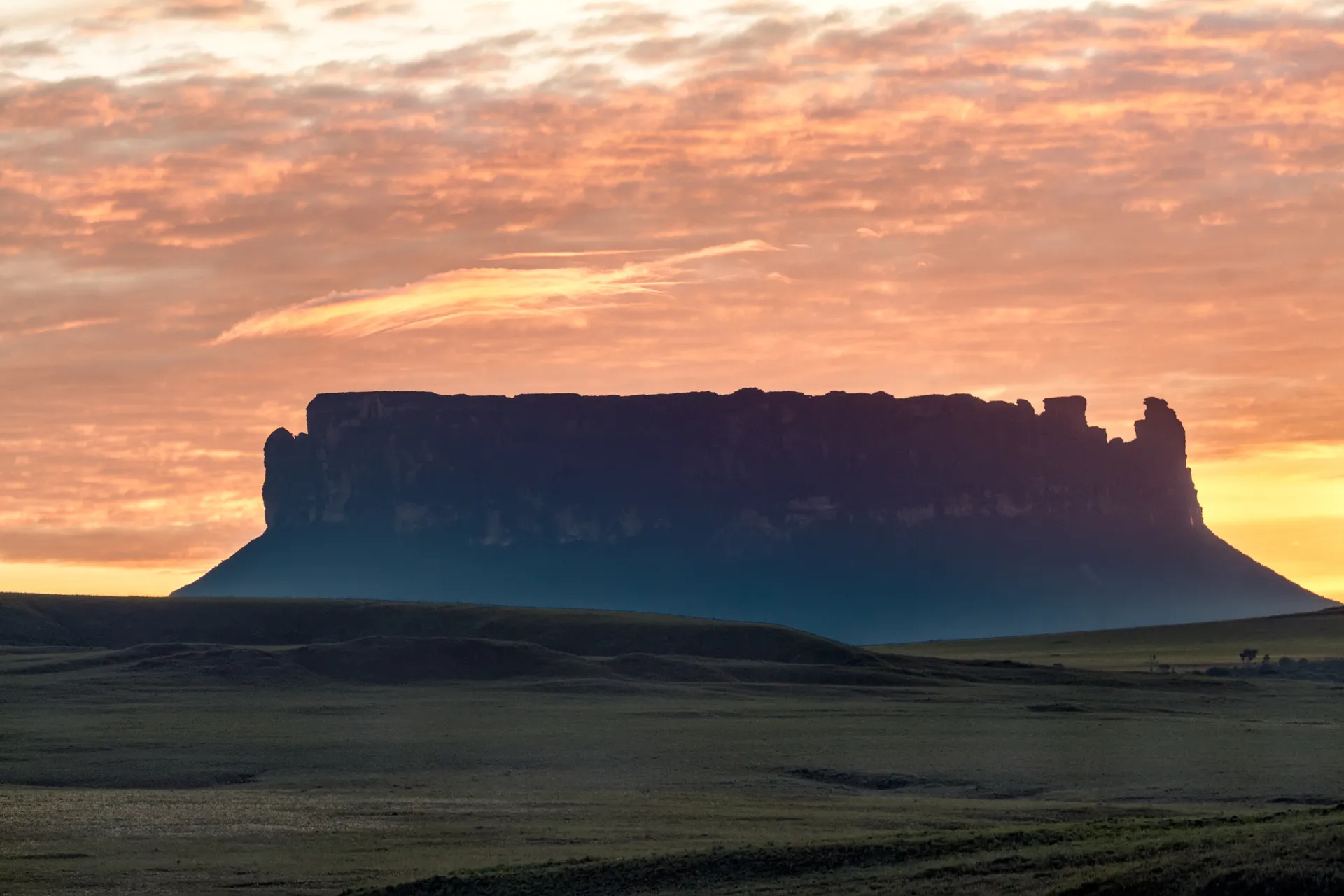
Mount Roraima's sheer, flat-topped summit rises so abruptly from the surrounding jungle, and stayed so geologically isolated for so long, that it's widely credited as the direct inspiration for Arthur Conan Doyle's 1912 novel The Lost World, and reaching the top still requires a genuine multi-day trek across three countries' shared border.
Mount Roraima rises so abruptly from the surrounding savanna, sheer cliff faces on every side climbing to a flat summit plateau roughly 31 square kilometers in area, that it looks less like a mountain and more like a piece of geology that doesn't belong at ground level. That isolation is genuine, not just visual: Roraima's summit ecosystem evolved in enough separation from the surrounding lowlands that a meaningful share of its plant and animal species exist nowhere else on Earth, cut off atop the plateau for millions of years.
That isolation is widely credited as the direct inspiration for Arthur Conan Doyle's 1912 novel The Lost World, in which explorers discover dinosaurs surviving on an isolated South American plateau. European naturalists were actively documenting Roraima and the wider tepui region in the decades before the book's publication, and the mountain's genuine strangeness, a summit environment where dinosaurs surviving in isolation felt at least imaginable, gave Conan Doyle a real geological foundation for the fiction.
Roraima sits at the exact point where Venezuela, Brazil, and Guyana meet, and the standard trek departs from Paraitepuy, a Pemón indigenous village on the Venezuelan side. The full round trip runs six days, roughly two days of hiking across savanna and cloud forest to reach the base of the final ascent, a genuinely steep scramble up a natural crack in the cliff face to the summit, one to two days exploring the plateau's crystal valleys and eerie rock formations, and two days back down. Guides from the Pemón cooperative are mandatory, both by regulation and by practical necessity given the route's remoteness.
It's necessary to address Venezuela's broader situation honestly before recommending this trip. The country has experienced serious economic and political instability in recent years, and most government travel advisories reflect real, ongoing caution for the country as a whole. The Roraima trek specifically, run through an established, regulated indigenous guide system with a consistent track record, has generally operated with more stability than the wider country's conditions might suggest, similar to how Canaima's tourism infrastructure has continued functioning despite broader national difficulty. Current conditions are still worth checking closely and specifically before booking rather than assuming either the best or worst case.
For travelers who make the trip, Roraima's summit delivers something genuinely rare: an alien, isolated landscape, quartz formations, natural pools, and near-constant mist, that lives up to the fictional world it helped inspire, reached only by the kind of sustained physical effort that's kept it from becoming another checklist stop.
What a trip here actually costs
$130 / day avg.
- Guided 6-day trek with porters
- Camping equipment and tents
- Full-board meals during the trek
- Mandatory Pemón guide fees
What to do at this tier
- • 6-day guided Roraima summit trek
- • Exploring the summit's crystal valleys and unique rock formations
- • Swimming in the summit's natural pools, weather permitting
These are average estimates for planning purposes, not real-time prices — actual costs vary by season, availability, and how far ahead you book.
How to get there
Click anywhere on the world map — any airport works, not just our main hubs.
Click anywhere on the map above — any airport in the world works — to see estimated travel time and cost from there.
Times and prices are planning estimates, not live fares — always check a booking site before you commit. See the full Transport Comparison guide for the general tradeoffs of each mode.
Best time to visit
December-April is the drier season, offering more reliable trekking conditions; the wet season brings frequent rain and can make the ascent considerably more difficult.
Safety notes
Check current Venezuela travel advisories closely before booking; the trek itself runs through an established, regulated guide system based in Paraitepuy with a solid safety track record independent of the wider country's situation.
Visa & currency
Venezuelan bolívar (VES), though US dollars are widely used in practice given the bolívar's volatility. Confirm current visa requirements based on passport before booking.
Questions people ask before visiting
Is it safe to visit Venezuela for the Roraima trek?
Venezuela has experienced significant economic and political instability in recent years, and most travel advisories recommend real caution for the country broadly. The Roraima trek specifically, run through established indigenous Pemón guide cooperatives from the town of Paraitepuy, has maintained a more consistent safety record than much of the rest of the country, but current conditions are worth checking closely before booking.
How long does the Mount Roraima trek take?
The standard round-trip trek takes 6 days, roughly 2 days of hiking to reach the summit plateau, 1-2 days exploring the top, and 2 days back down, covering around 60 kilometers total through savanna, cloud forest, and the mountain's sheer final ascent.
What inspired The Lost World novel?
Arthur Conan Doyle's 1912 novel, about explorers discovering dinosaurs surviving on an isolated plateau, is widely believed to have drawn direct inspiration from Mount Roraima and the wider tepui (tabletop mountain) region, whose sheer, isolated summits were being explored and documented by European naturalists in the decades before the book's publication.
Do you need a guide to climb Mount Roraima?
Yes, guides are mandatory by regulation, arranged through indigenous Pemón cooperatives based in Paraitepuy, the trek's starting village. This isn't a bureaucratic formality; the route crosses genuinely remote terrain where local knowledge is essential.
Nearby destinations
 Canaima
Canaima
Venezuela
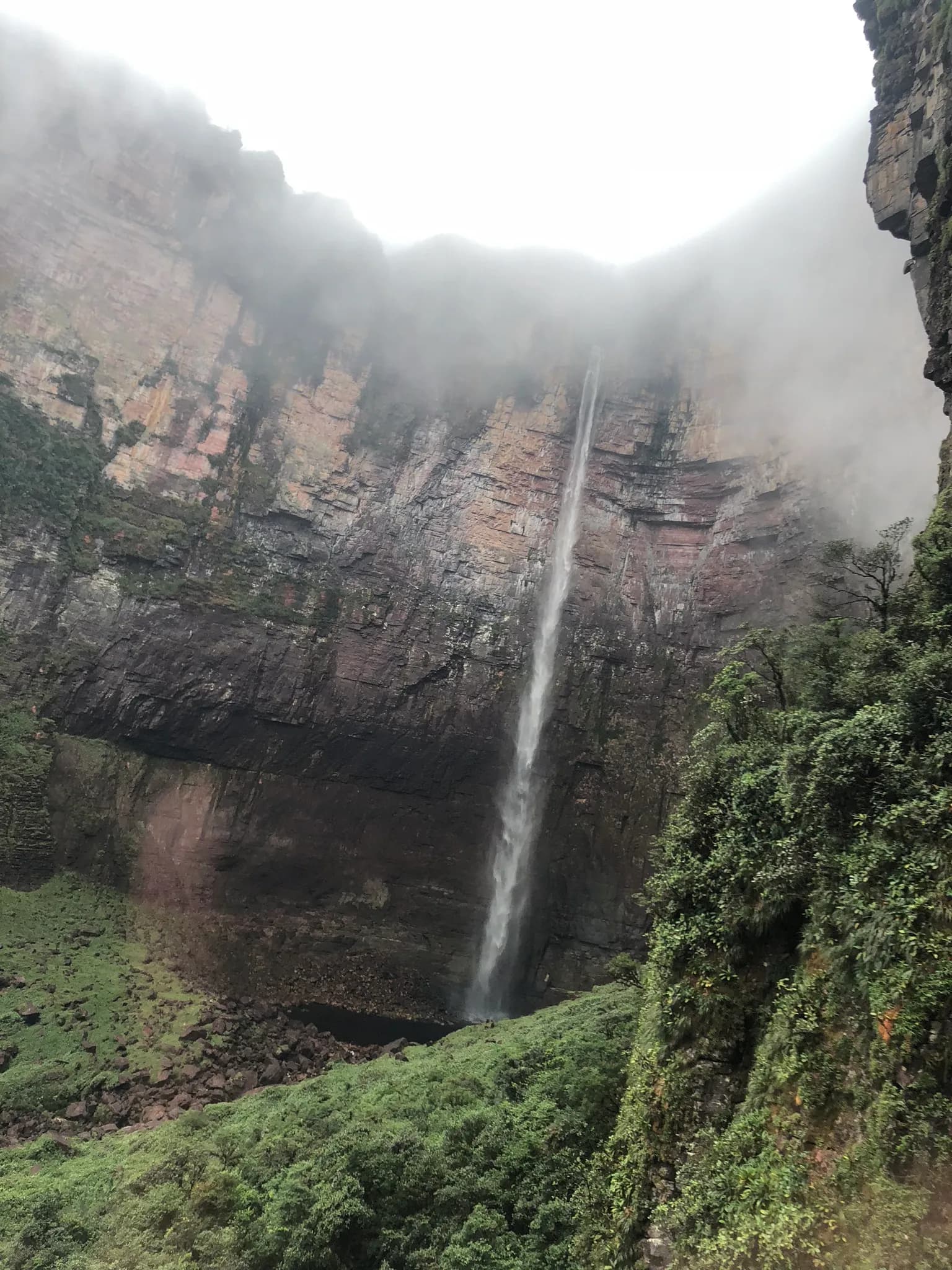
Angel Falls drops 979 meters in a single uninterrupted fall, the tallest waterfall on Earth, and the distance is so great that much of the water turns to mist and blows away on the wind before it ever reaches the pool below — named after an American aviator who spotted it from his plane in 1933 and later crash-landed near its base.
See full guide →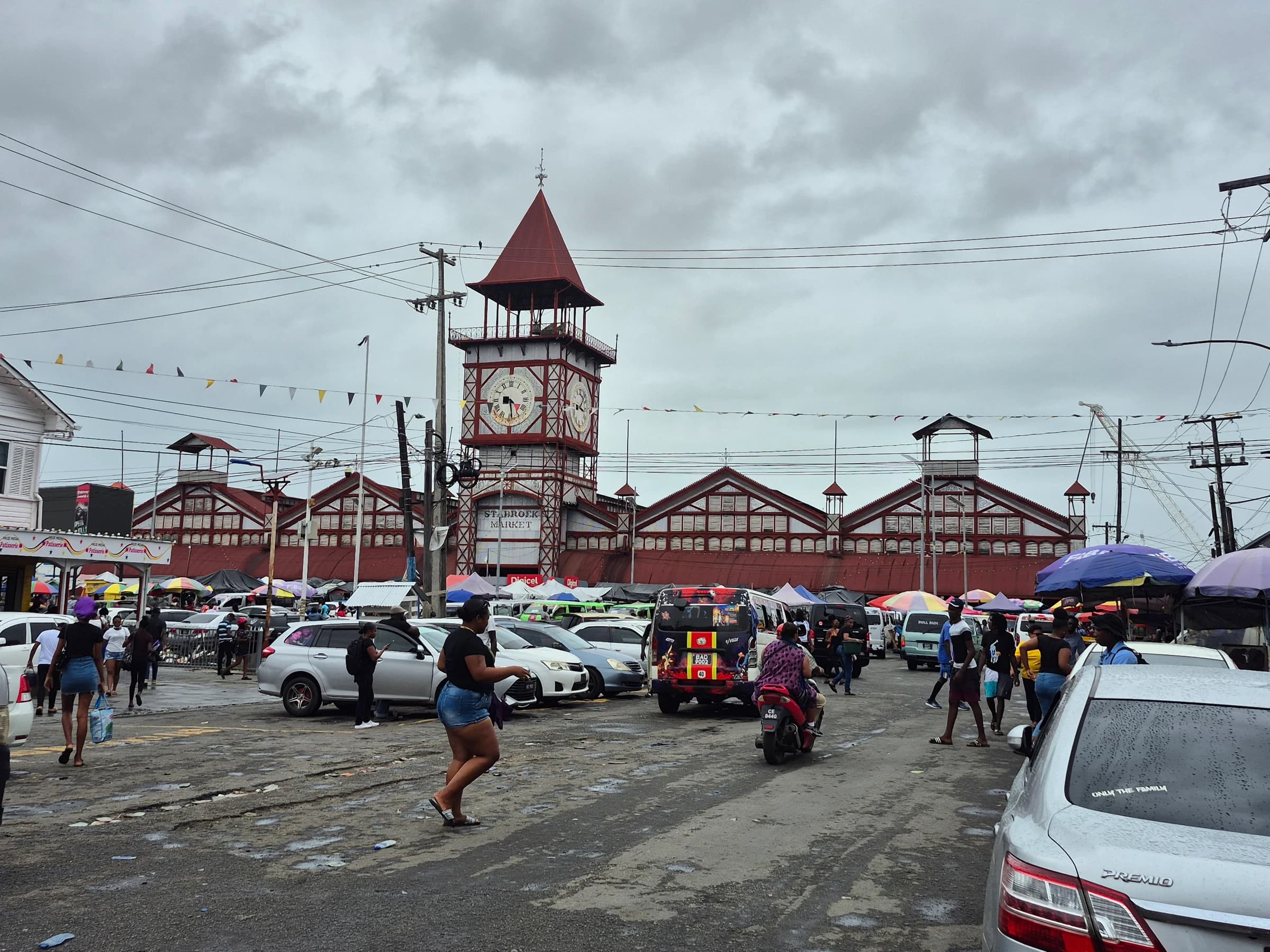 Georgetown
Georgetown
Guyana
Guyana is the only country in South America where English is the official language, a legacy of British rule that also left Georgetown with St. George's Cathedral, one of the tallest wooden buildings on Earth, built entirely without structural steel.
See full guide →Comparing more than one route? See the full transport comparison guide.