Fiji · Oceania
Savusavu
Hot springs bubble up through the middle of town in Savusavu, steam rising from vents beside the market where locals still cook food underground in the volcanic heat, a working reminder that Vanua Levu's second-largest town sits directly on the geothermal seam that shapes everything around it.
Steam rises out of the ground within walking distance of Savusavu's central market, a visible, everyday reminder that this town sits directly on an active geothermal seam running through Vanua Levu. Locals have long used that heat practically, cooking food in underground pits warmed by volcanic vents rather than buried coals, a variation on Pacific earth-oven cooking adapted to a genuinely unusual geological feature that most visitors don't expect to find in the middle of a working town.
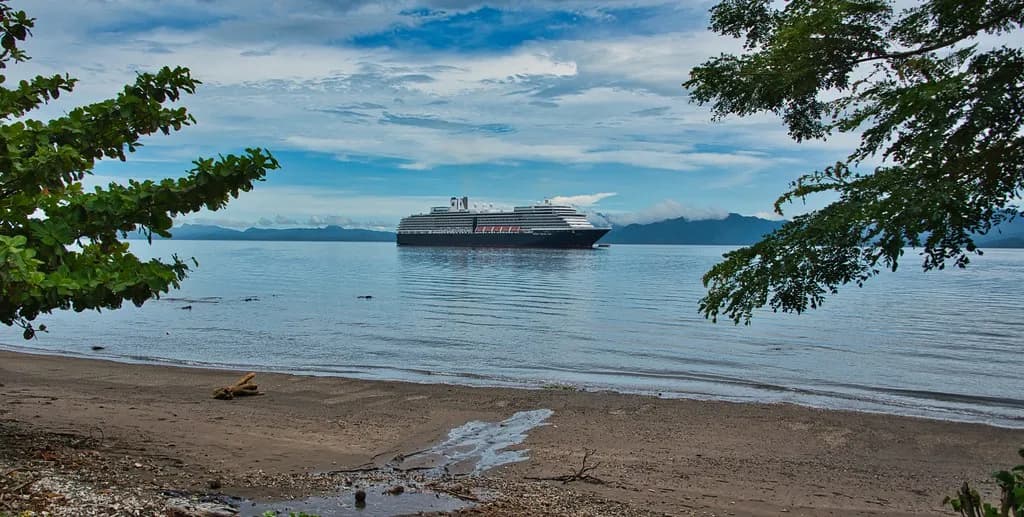
Savusavu Bay itself, a deep, well-sheltered natural harbor, has made the town a favored stop for sailing yachts crossing the South Pacific, giving the waterfront a low-key, slightly cosmopolitan feel distinct from more insulated Fijian tourist towns. That yacht traffic sits alongside a genuinely local commercial center rather than replacing it, the market, hardware stores, and small eateries serving residents first and visitors second.
The bay's clean, sheltered water has also built Savusavu into a recognized center of black pearl cultivation, one of the more distinctive small industries in the South Pacific. Farm tours walk visitors through the cultivation process, from seeding oysters to harvesting pearls that rank among the more sought-after in the region, and give a concrete look at an industry most travelers only otherwise encounter in a jewelry display case.
Beyond town, Vanua Levu's interior holds rainforest reserves like Waisali, a patch of native forest protected by the National Trust of Fiji, and the offshore Namena Marine Reserve delivers some of the country's most consistently praised diving and snorkeling, a soft coral wall dropping into deep water that draws a fraction of the crowds found around Fiji's more heavily marketed dive sites.
Savusavu never developed the resort density that defines Fiji's main tourist circuit around Nadi and the Coral Coast, a combination of harder access, no direct international flights, and a town that's kept its working economy, market, port, pearl farms, intact rather than restructuring around tourism. That's kept the pace genuinely local, hot springs steaming through daily commerce rather than roped off as an attraction.
What a trip here actually costs
$140 / day avg.
- Boutique guesthouse or small resort
- Local transport by taxi or rental car
- Local restaurant meals
- Hot springs viewing, free
What to do at this tier
- • Hot springs and market walk, free
- • Black pearl farm tour
- • Snorkeling Namena Marine Reserve
- • Waisali Rainforest Reserve walk
These are average estimates for planning purposes, not real-time prices — actual costs vary by season, availability, and how far ahead you book.
How to get there
Click anywhere on the world map — any airport works, not just our main hubs.
Click anywhere on the map above — any airport in the world works — to see estimated travel time and cost from there.
Times and prices are planning estimates, not live fares — always check a booking site before you commit. See the full Transport Comparison guide for the general tradeoffs of each mode.
Best time to visit
May-October is the drier season with lower humidity; November-April brings higher rainfall and cyclone risk.
Safety notes
Generally safe and low-key; hot spring vents near the market can reach scalding temperatures, so keep a respectful distance from active steam sources.
Visa & currency
Fijian dollar (FJD). Many nationalities receive visa-free entry for short stays; confirm based on passport before booking.
Questions people ask before visiting
Is Savusavu worth visiting?
For travelers wanting Fiji without the resort density of the main tourist areas around Nadi and the Coral Coast, yes. Savusavu offers natural hot springs steaming right through town, a sheltered yacht-friendly bay, black pearl farms, and a genuinely local pace with far fewer visitors than Viti Levu's west coast.
What causes the hot springs in Savusavu?
The town sits on an active geothermal seam tied to Vanua Levu's volcanic geology, producing natural hot springs that surface directly within the town, including vents near the market that locals have long used for underground cooking, called lovo-style cooking adapted to constant volcanic heat rather than buried coals.
How do you get to Savusavu?
Domestic flights connect from Nadi and Suva to Savusavu's small airport, roughly 45 minutes to an hour, or a longer ferry and road combination from Suva via Natovi Landing across the Koro Sea, which takes closer to a full day.
What is Savusavu known for producing?
Black pearls. Savusavu Bay's sheltered, clean waters support several pearl farms, and the town has become one of the South Pacific's notable centers for cultured black pearl production, with farm tours available for visitors.
Nearby destinations
 Suva
SuvaSuva
Fiji
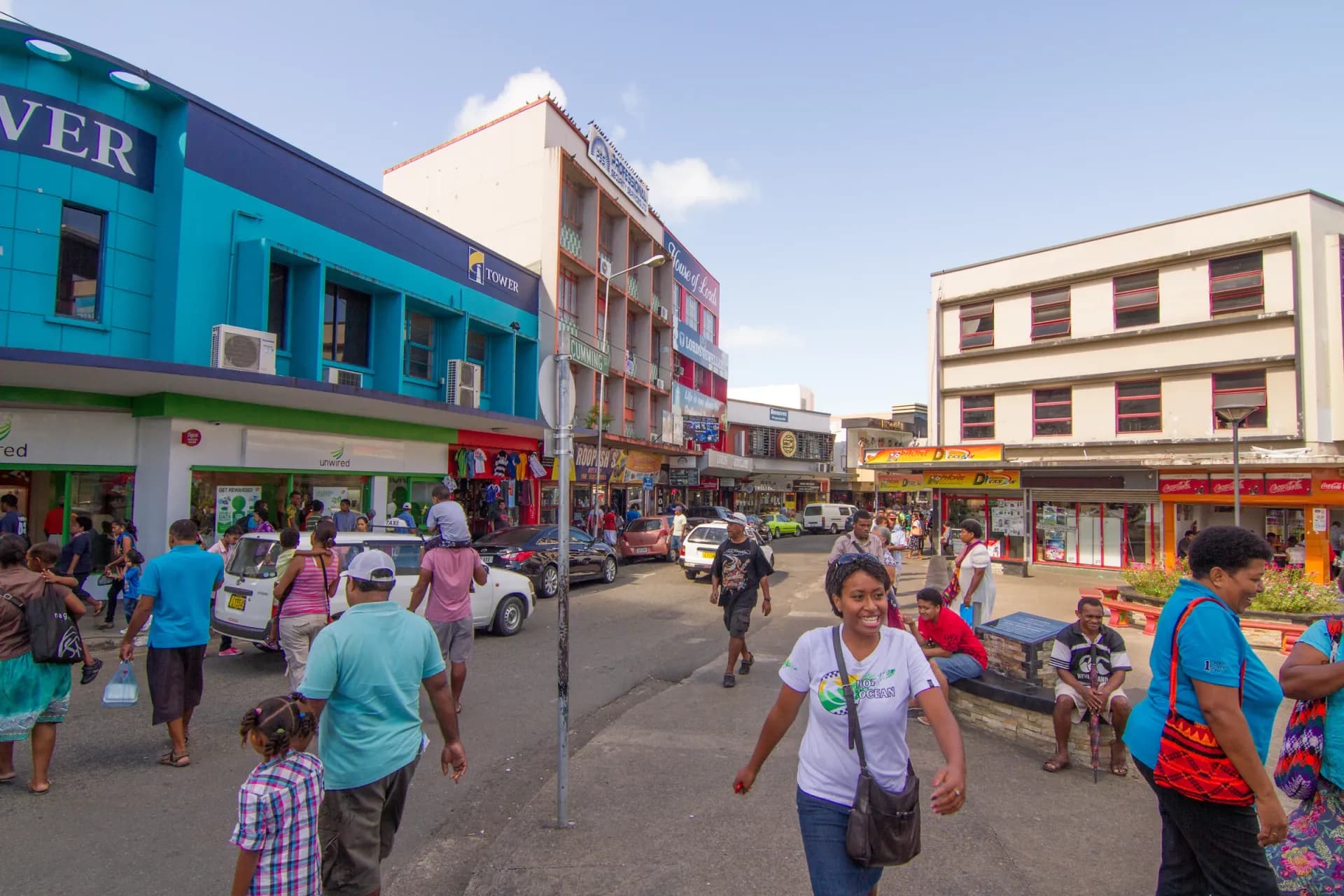
Suva is widely considered the wettest major city in the South Pacific, and rather than fight that reputation, the capital has grown into it, hosting the main campus of the University of the South Pacific, a regional university serving twelve Pacific Island nations, and a genuinely multicultural population that most visiting Fiji's resort islands never actually see.
See full guide →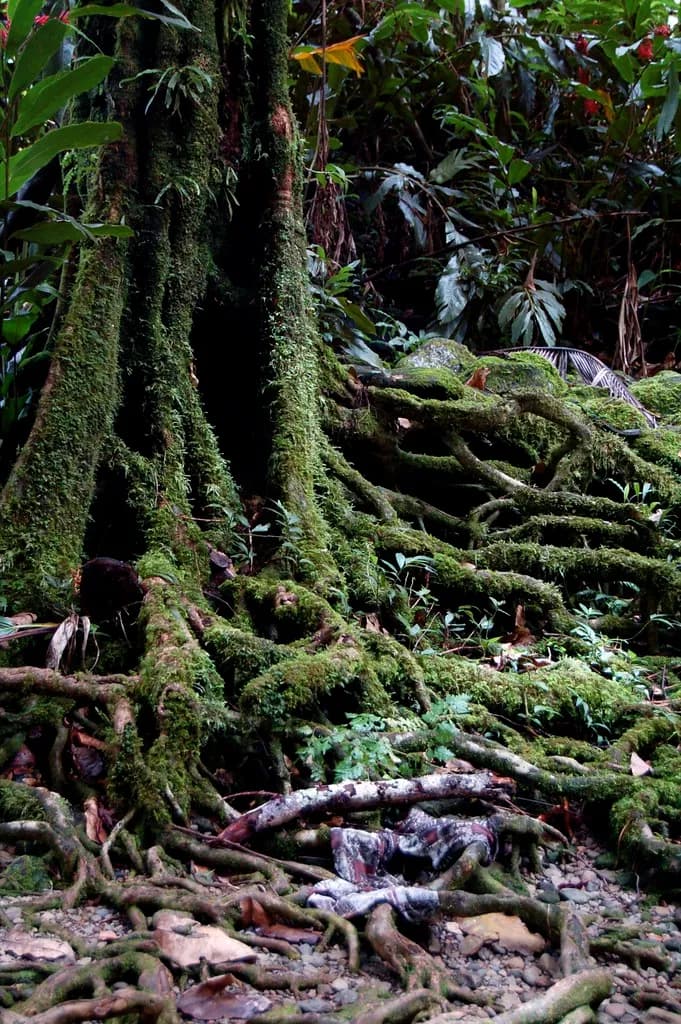 Taveuni
Taveuni
Fiji
The 180th meridian, the line used to mark the International Date Line, runs directly through Taveuni, letting visitors stand with one foot theoretically in today and the other in tomorrow at a small monument built for exactly that photo — a fitting curiosity for an island known locally as the "Garden Island" for rainforest so dense it barely lets the sunlight through.
See full guide →Comparing more than one route? See the full transport comparison guide.