Northern Mariana Islands · Oceania
Saipan
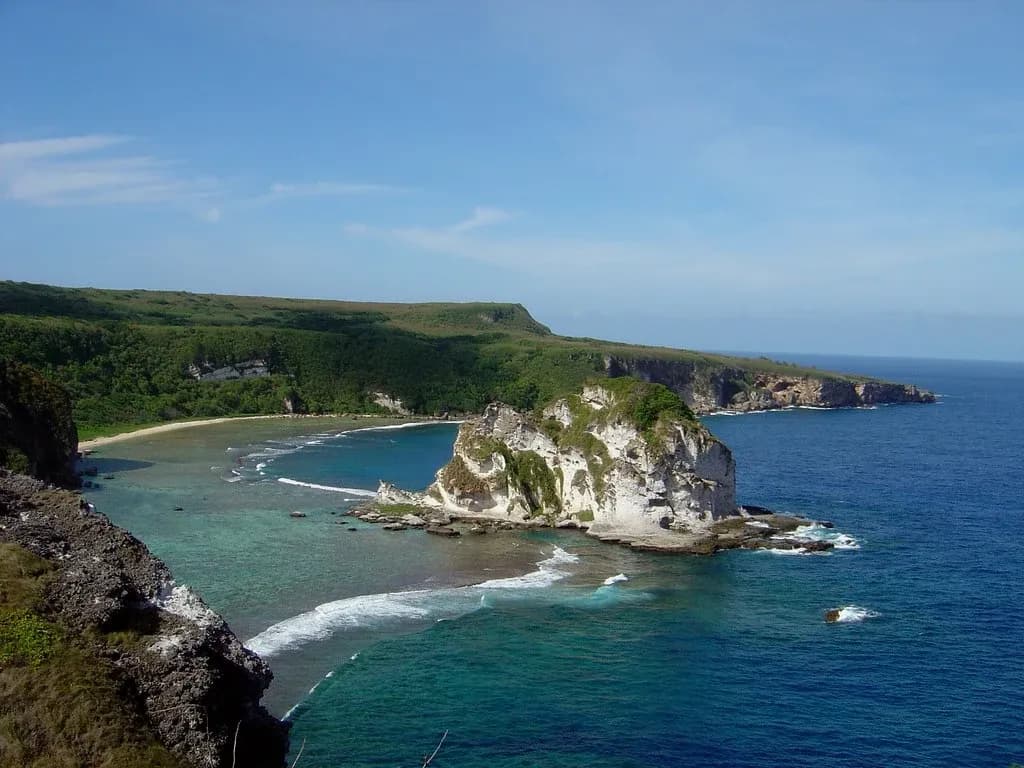
During the 1944 Battle of Saipan, hundreds of Japanese civilians and soldiers jumped to their deaths from cliffs now named Banzai Cliff and Suicide Cliff rather than surrender to advancing American forces, one of the grimmest chapters of the entire Pacific War, and the sites remain preserved today as memorials rather than simply scenic overlooks.
The 1944 Battle of Saipan ranks among the fiercest and most consequential engagements of the Pacific War, and its final days produced one of the conflict's grimmest chapters: hundreds of Japanese civilians and soldiers jumped to their deaths from cliffs now named Banzai Cliff and Suicide Cliff rather than surrender, following wartime propaganda that portrayed capture as a fate worse than death. Memorial markers from Japan, Korea, and other nations now stand at both sites, preserved as places of remembrance rather than simply scenic overlooks.
American Memorial Park, established to honor both American and Chamorro and Carolinian lives lost during the battle, sits near Garapan, Saipan's main town, and includes a museum detailing the campaign's history alongside the broader story of the Northern Mariana Islands under Japanese, then American, administration.
Beneath the island's more sobering history, Saipan's natural surroundings draw a steady stream of divers and snorkelers specifically for the Grotto, a natural limestone cave with an opening to the ocean, reached by descending a steep staircase into a sunken pool of striking blue water. Its combination of cave structure, clear visibility, and dramatic light filtering down from the surface opening has made it one of the more distinctive dive sites anywhere in Micronesia.
Managaha Island, a small uninhabited islet a short boat ride from Saipan's main coast, offers a shallow, calm lagoon well suited to snorkeling and swimming, and it's become the standard day-trip destination for visitors wanting a straightforward beach outing between historical sites.
Saipan forms part of the Commonwealth of the Northern Mariana Islands, a US territory since the 1970s and 1980s following a UN trusteeship period after WWII, giving it the same kind of familiar currency and infrastructure found on Guam, its larger neighbor to the south, while retaining a distinctly quieter, less developed island character.
What a trip here actually costs
$45 / day avg.
- Budget hotel in Garapan
- Local rental car or taxi
- Local and casual restaurant meals
- Banzai Cliff and American Memorial Park, free
What to do at this tier
- • Banzai Cliff and Suicide Cliff memorials, free
- • American Memorial Park, free
- • Garapan waterfront walk, free
$110 / day avg.
- 3-star beachfront hotel
- Managaha Island day trip
- Guided WWII historical tour
- Diving or snorkeling excursion at the Grotto
What to do at this tier
- • Managaha Island day trip with snorkeling
- • Guided WWII historical sites tour
- • The Grotto diving or snorkeling excursion
These are average estimates for planning purposes, not real-time prices — actual costs vary by season, availability, and how far ahead you book.
How to get there
Click anywhere on the world map — any airport works, not just our main hubs.
Click anywhere on the map above — any airport in the world works — to see estimated travel time and cost from there.
Times and prices are planning estimates, not live fares — always check a booking site before you commit. See the full Transport Comparison guide for the general tradeoffs of each mode.
Best time to visit
December-June is the dry season and most comfortable; the wet season runs roughly July-November, with typhoon risk peaking later in that window.
Safety notes
Very safe with low crime; the Grotto's staircase and entry point can be slippery, so caution matters for snorkeling and diving access.
Visa & currency
US dollar (USD). US citizens need no passport; many other nationalities can use the Guam-CNMI Visa Waiver Program for short stays.
Questions people ask before visiting
Is Saipan worth visiting?
Yes — Saipan holds some of the most significant and sobering WWII history in the Pacific, at sites like Banzai Cliff and Suicide Cliff, alongside excellent cave and wall diving at the Grotto, and Managaha Island's clear lagoon waters, all within a compact, easy-to-navigate island.
What happened at Banzai Cliff and Suicide Cliff?
During the 1944 Battle of Saipan, hundreds of Japanese civilians and soldiers jumped from these cliffs rather than surrender to American forces, following wartime propaganda that portrayed surrender as more dishonorable than death. Memorials from multiple nations now mark both sites.
What is the Grotto in Saipan?
A natural limestone cave with an opening to the ocean, accessible by a steep staircase down into a sunken pool, considered one of the best cave diving and snorkeling sites in the Pacific for its clear water and dramatic underwater rock formations.
How many days do you need in Saipan?
Two to three days covers the main WWII historical sites, a day trip to Managaha Island, and snorkeling or diving at the Grotto at a relaxed pace.
Nearby destinations
 Guam
GuamGuam
Guam
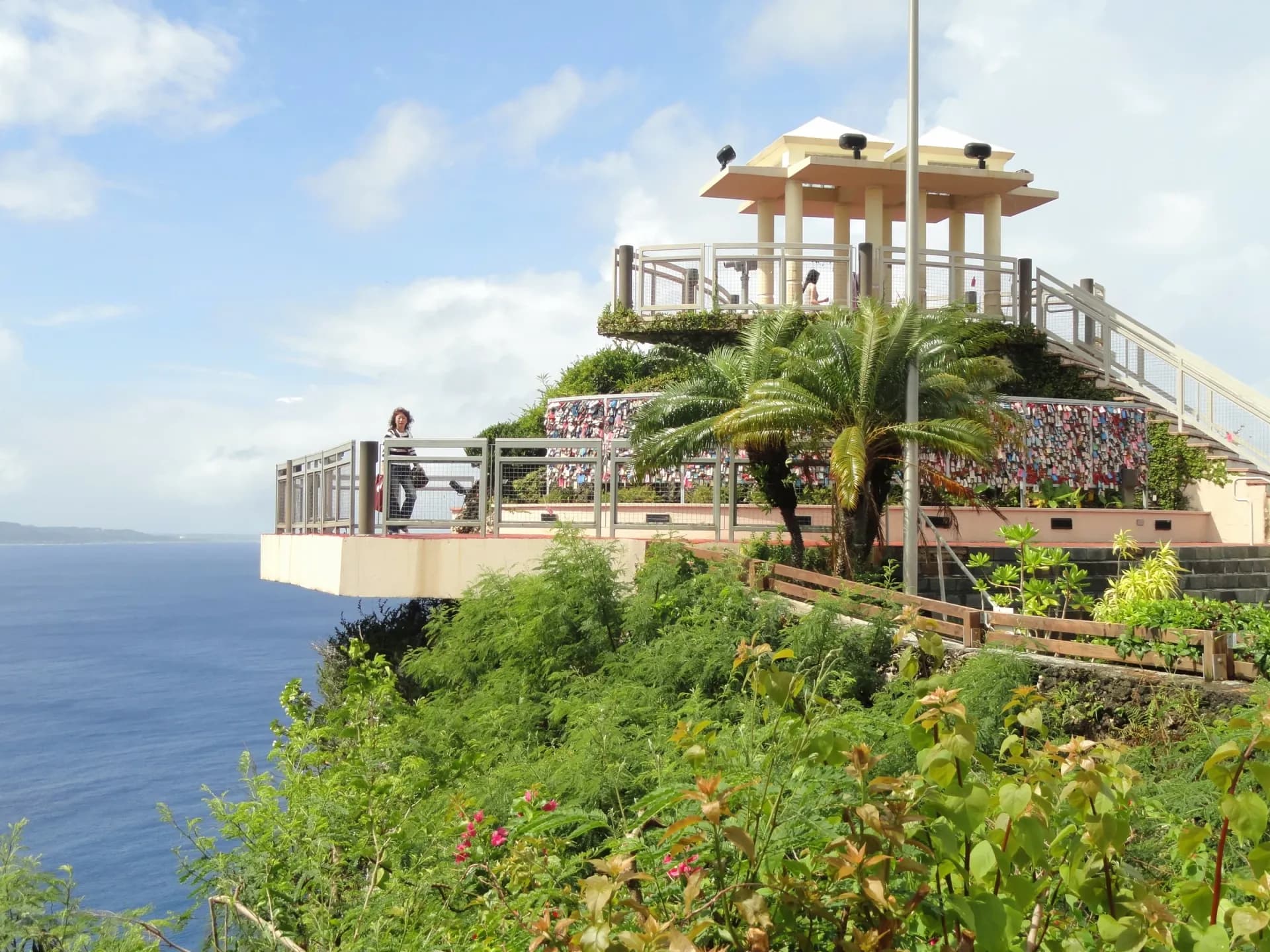
Guam spent roughly 300 years as a Spanish colony before the United States took control in 1898, and ancient latte stones, the carved pillar bases that once supported traditional Chamorro houses, still stand scattered across the island as a reminder that its history runs thousands of years deeper than either colonial chapter.
See full guide →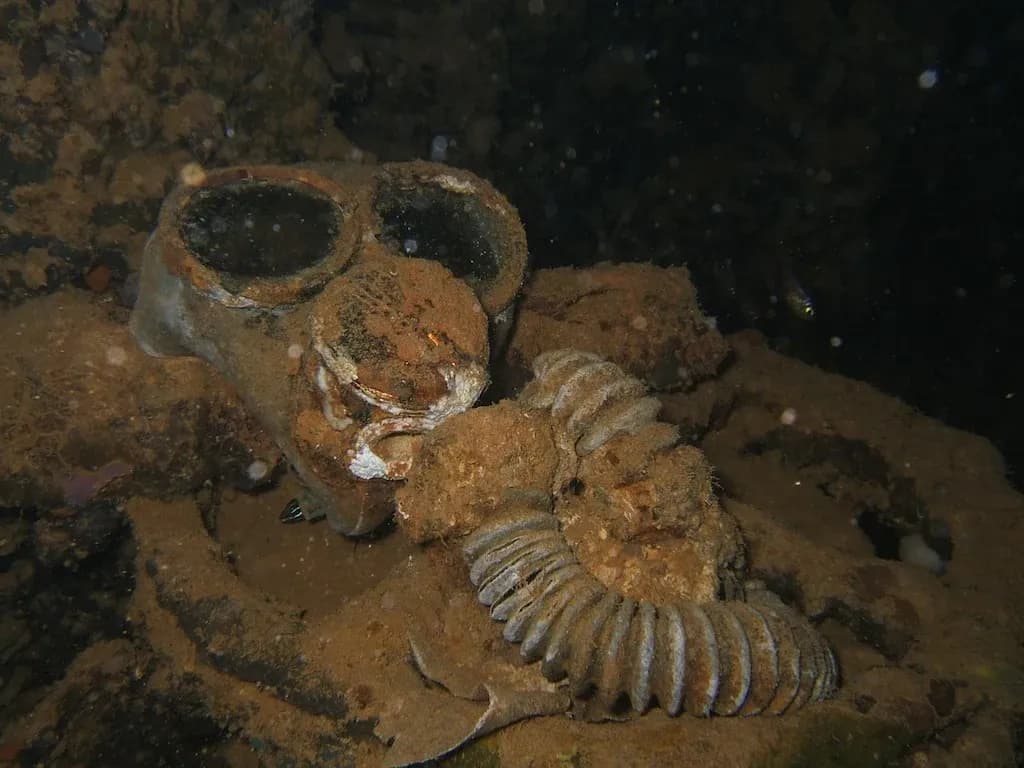 Chuuk
ChuukChuuk
Micronesia
In February 1944, US forces sank more than 60 Japanese ships in a single surprise air raid on Chuuk Lagoon, and most of that fleet still sits on the seafloor today, cargo, planes, and personal effects intact, making this remote stretch of Micronesia one of the largest and most complete wreck-diving sites anywhere in the world.
See full guide →Comparing more than one route? See the full transport comparison guide.