Palau · Oceania
Palau
Jellyfish Lake, a marine lake cut off from the ocean for thousands of years, holds millions of golden jellyfish that evolved to lose most of their sting once their predators disappeared — one reason Palau has built its entire tourism identity around protecting the water it sits in, including a legally required pledge every visitor signs on arrival.
Jellyfish Lake, a marine lake separated from the surrounding ocean for thousands of years, holds millions of golden jellyfish that migrate across its surface daily, following the sun. Cut off from the predators that once hunted them, the jellyfish evolved to lose most of their sting, letting snorkelers swim directly among them in a way that would be unthinkable almost anywhere else in the ocean.
That kind of unusual, carefully protected ecosystem defines much of Palau's approach to tourism. Every visitor who arrives must sign the Palau Pledge, a conservation commitment stamped directly into their passport, believed to be the first legally binding environmental pledge written into any country's immigration law. It's less a formality than a genuine reflection of how central marine protection is to Palau's identity and economy.
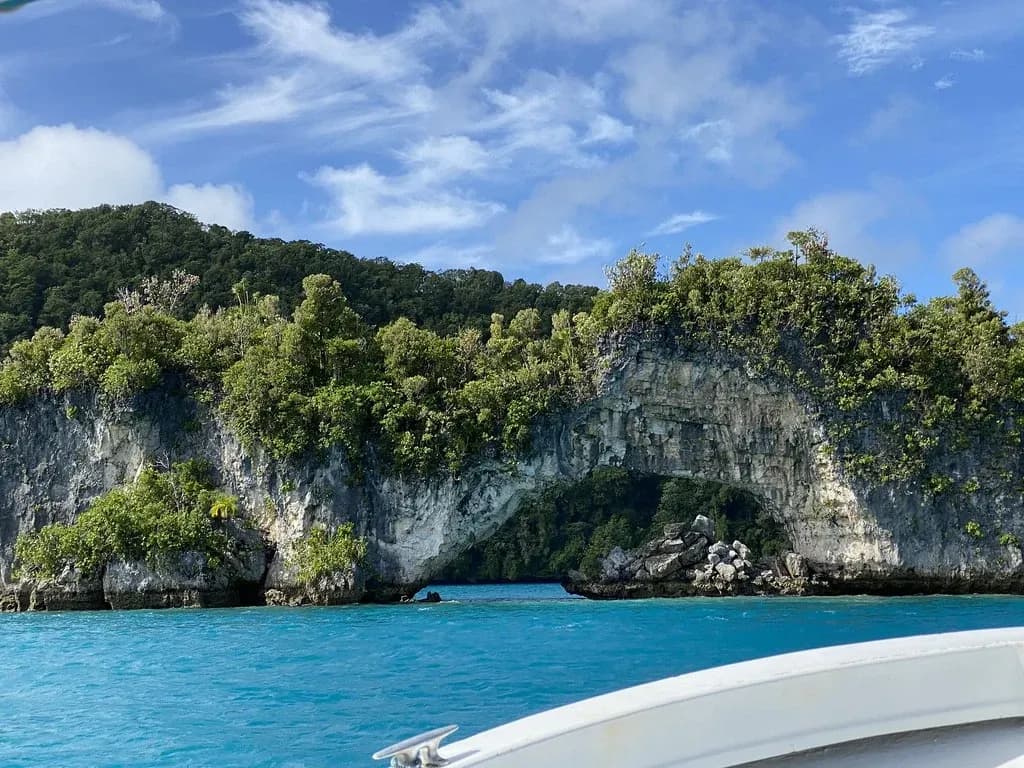
The Rock Islands Southern Lagoon, a UNESCO World Heritage Site, holds roughly 445 mushroom-shaped limestone islands rising out of turquoise water, their bases eroded narrower than their tops by centuries of wave action. Boat tours weave between them, stopping at hidden lagoons, secluded beaches, and snorkel sites along the way, and the formation is considered one of the most visually striking landscapes anywhere in the Pacific.
Palau's diving reputation extends well beyond Jellyfish Lake, with sites like Blue Corner and German Channel drawing divers specifically for reliable encounters with manta rays, reef sharks, and dense schools of pelagic fish along dramatic wall drop-offs. Palau established the world's first shark sanctuary in 2009 and later created the Palau National Marine Sanctuary in 2015, one of the largest fully protected marine areas anywhere, banning commercial fishing across roughly 80 percent of its exclusive economic zone.
That level of protection has kept Palau's reefs in noticeably better condition than many other heavily dived destinations, a direct result of policy choices made well before ocean conservation became a mainstream travel consideration elsewhere. For visitors, it means diving and snorkeling that consistently deliver on Palau's reputation rather than falling short of it.
What a trip here actually costs
$180 / day avg.
- 3-star hotel in Koror
- Rock Islands Southern Lagoon boat tour with Jellyfish Lake
- Shared dive boat, two-tank dive
- Local and tourist restaurant meals
What to do at this tier
- • Rock Islands Southern Lagoon boat tour with Jellyfish Lake snorkeling
- • Shared two-tank dive at Blue Corner or German Channel
- • Koror town and local market visit
$450 / day avg.
- 4-5 star resort
- Private boat charter for Rock Islands and Jellyfish Lake
- Multi-day liveaboard diving package
- Fine dining at a top Koror restaurant
What to do at this tier
- • Private boat charter covering the Rock Islands and Jellyfish Lake
- • Multi-day liveaboard diving trip covering Palau's outer reefs
- • Fine dining at a top Koror restaurant
These are average estimates for planning purposes, not real-time prices — actual costs vary by season, availability, and how far ahead you book.
How to get there
Click anywhere on the world map — any airport works, not just our main hubs.
Click anywhere on the map above — any airport in the world works — to see estimated travel time and cost from there.
Times and prices are planning estimates, not live fares — always check a booking site before you commit. See the full Transport Comparison guide for the general tradeoffs of each mode.
Best time to visit
November-April brings the driest conditions and best visibility for diving and snorkeling; the wet season runs May-October with more frequent rain.
Safety notes
Very safe with low crime; water safety and reef etiquette matter more here than most destinations, since Palau's economy and law are built directly around marine conservation.
Visa & currency
US dollar (USD). Many nationalities can enter visa-free for tourism, and every visitor must sign the Palau Pledge on arrival.
Questions people ask before visiting
Is Palau worth visiting?
Yes — Palau combines Jellyfish Lake's swimmable millions of nearly stingless jellyfish, the UNESCO-listed Rock Islands Southern Lagoon's roughly 445 mushroom-shaped limestone islands, and some of the best wall and channel diving in the Pacific, including regular manta ray and shark sightings.
What is the Palau Pledge?
A conservation pledge every visitor signs and has stamped into their passport on arrival, committing to act in an ecologically responsible way during their stay. It's a legally binding, Palau-drafted commitment, believed to be the first of its kind written into a country's immigration law.
Can you still swim in Jellyfish Lake?
Yes, snorkeling in Jellyfish Lake remains open and is one of Palau's signature experiences, though scuba diving is prohibited to protect the lake's ecosystem. The jellyfish have lost most of their sting due to the lake's isolation from predators, making close contact generally safe.
How many days do you need in Palau?
Five to seven days lets you cover Jellyfish Lake, a Rock Islands boat tour, and at least two or three dive or snorkel sites at a reasonable pace, since much of Palau's appeal requires boat access rather than a single walkable itinerary.
Nearby destinations
Comparing more than one route? See the full transport comparison guide.