Norfolk Island · Oceania
Norfolk Island
Norfolk Island carries two entirely separate colonial histories layered on top of each other — brutal convict ruins from an era so harsh it was called the place "of the doubly damned," and a population descended from Bounty mutineers resettled from overcrowded Pitcairn Island in 1856, who brought with them a language still spoken nowhere else on Earth.
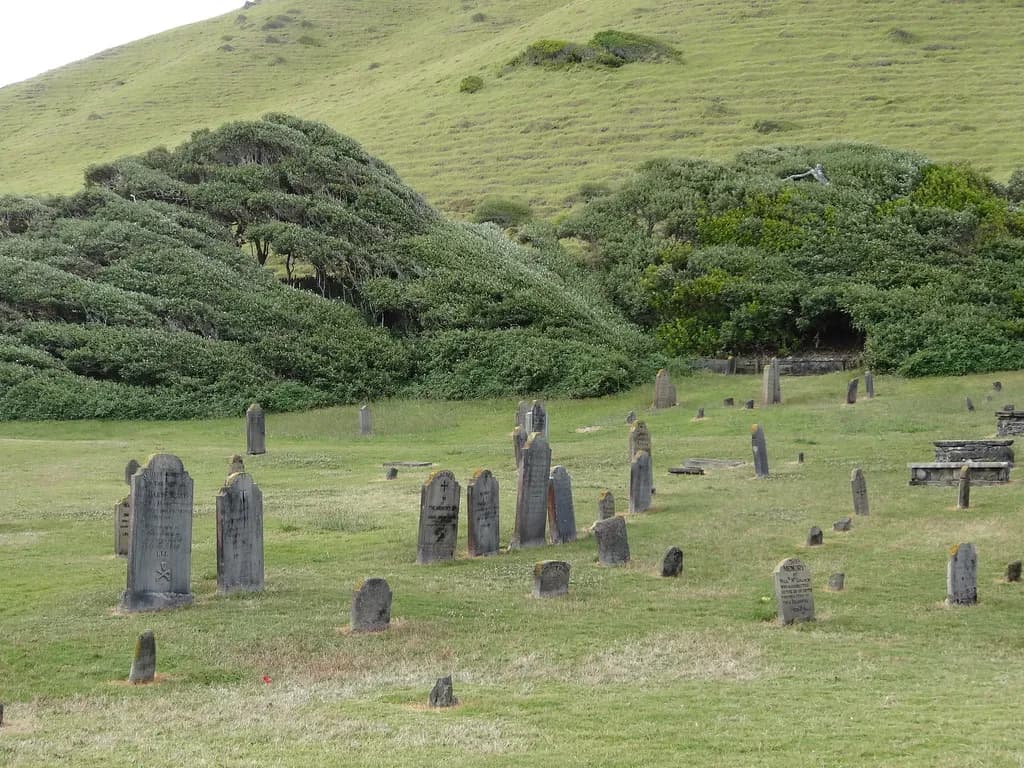
Norfolk Island carries two entirely separate colonial histories, layered directly on top of each other across a landmass smaller than most cities. The Kingston and Arthur's Vale Historic Area preserves the remains of a penal settlement so brutal in its era that it earned the description "place of the doubly damned," reserved for repeat offenders whose behavior in mainland Australian penal colonies was considered beyond redemption. UNESCO recognizes the site today as one of Australia's Convict Sites, its stone ruins standing as a direct, unromanticized record of that punishment.
That grim history sits alongside a genuinely different story entirely. In 1856, the entire population of Pitcairn Island, descendants of the HMS Bounty mutineers and the Tahitian companions who joined them after the 1789 mutiny, resettled to Norfolk Island after outgrowing Pitcairn's tiny landmass. Many residents today still carry the same family surnames as those original settlers and speak Norfuk, a language blending 18th-century English with Tahitian that exists nowhere else on Earth, a living linguistic artifact of one of history's most famous naval mutinies.
That dual heritage, brutal convict punishment and a genuinely singular immigrant culture, gives Norfolk Island a historical density that's hard to find on an island this small anywhere else in the Pacific. Cultural shows and traditional Sunday feasts organized around Norfuk traditions let visitors engage directly with a culture that's remained distinct rather than assimilating fully into either British Australian or broader Pacific Islander identity.
Norfolk Island National Park protects a significant portion of the island's remaining subtropical rainforest, including Norfolk Island pine, a species that's become globally recognizable as an ornamental tree despite originating from this single small landmass, alongside endemic bird species found nowhere else.
The island's small size and modest visitor numbers have kept its infrastructure genuinely low-key, a handful of guesthouses and family-run accommodations rather than large resorts, and that quiet pace, paired with its layered, unusual history, gives Norfolk Island a character distinct from almost anywhere else Wayfarly covers in the Pacific.
What a trip here actually costs
$150 / day avg.
- 3-star guesthouse or cottage
- Rental car for island exploration
- Local and casual restaurant meals
- Kingston Historic Area, low entry fee
What to do at this tier
- • Kingston and Arthur's Vale Historic Area convict ruins
- • Norfolk Island National Park walking trails
- • Norfuk cultural show and traditional Sunday feast
These are average estimates for planning purposes, not real-time prices — actual costs vary by season, availability, and how far ahead you book.
How to get there
Click anywhere on the world map — any airport works, not just our main hubs.
Click anywhere on the map above — any airport in the world works — to see estimated travel time and cost from there.
Times and prices are planning estimates, not live fares — always check a booking site before you commit. See the full Transport Comparison guide for the general tradeoffs of each mode.
Best time to visit
October-April brings the mildest, most comfortable weather; winters are cooler but rarely extreme given the island's subtropical location.
Safety notes
Very safe with very low crime; the island's small size makes it easy to navigate by rental car.
Visa & currency
Australian dollar (AUD), the currency used on Norfolk Island as an Australian external territory. Most nationalities need the same entry authorization required for mainland Australia.
Questions people ask before visiting
Is Norfolk Island worth visiting?
Yes — Norfolk Island holds the Kingston and Arthur's Vale Historic Area, a UNESCO-listed convict settlement ruin, alongside a genuinely unique living culture descended from Bounty mutineers resettled from Pitcairn Island in 1856, who still speak Norfuk, a language found nowhere else.
Who are the Bounty mutineer descendants on Norfolk Island?
In 1856, the entire population of Pitcairn Island, descendants of the 1789 HMS Bounty mutineers and their Tahitian companions, resettled to Norfolk Island after outgrowing Pitcairn's small size. Many Norfolk Island residents today still carry those same family names and speak Norfuk, a blend of 18th-century English and Tahitian.
What was Norfolk Island's convict history?
Norfolk Island served as a secondary penal settlement for repeat offenders under British colonial rule, developing a reputation as one of the harshest penal colonies in the empire. The Kingston and Arthur's Vale Historic Area preserves ruins from this period and holds UNESCO World Heritage status as one of Australia's Convict Sites.
How many days do you need on Norfolk Island?
Three to four days covers the Kingston historic area, a walk through the island's national park, and time to experience Norfuk culture and language, a comfortable pace for an island this compact.
Nearby destinations
 Nouméa
Nouméa
New Caledonia
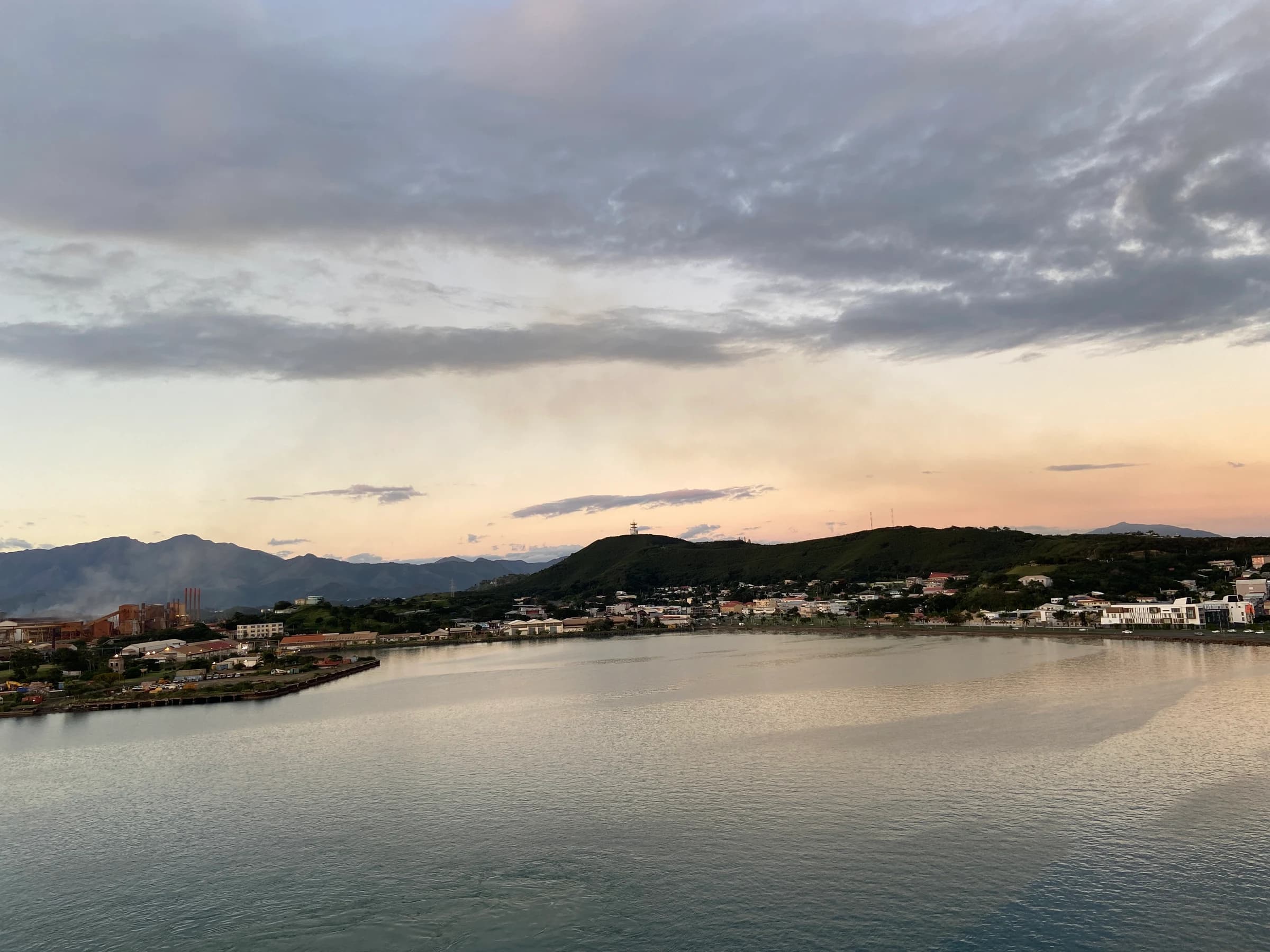
New Caledonia is a full region of France sitting in the South Pacific, and it wraps around the largest lagoon on Earth, a UNESCO World Heritage Site so vast that a genuine barrier reef circles the entire main island — a genuinely strange combination of French bureaucracy and one of the planet's biggest coral ecosystems.
See full guide → Auckland
Auckland
New Zealand
Auckland is built directly on top of an active volcanic field — around 50 volcanic cones dot the city and its surroundings, and while most are considered dormant rather than truly extinct, a new eruption could theoretically happen almost anywhere within the field, including somewhere that isn't currently a volcano at all.
See full guide →Comparing more than one route? See the full transport comparison guide.