Australia · Oceania
Ningaloo Reef
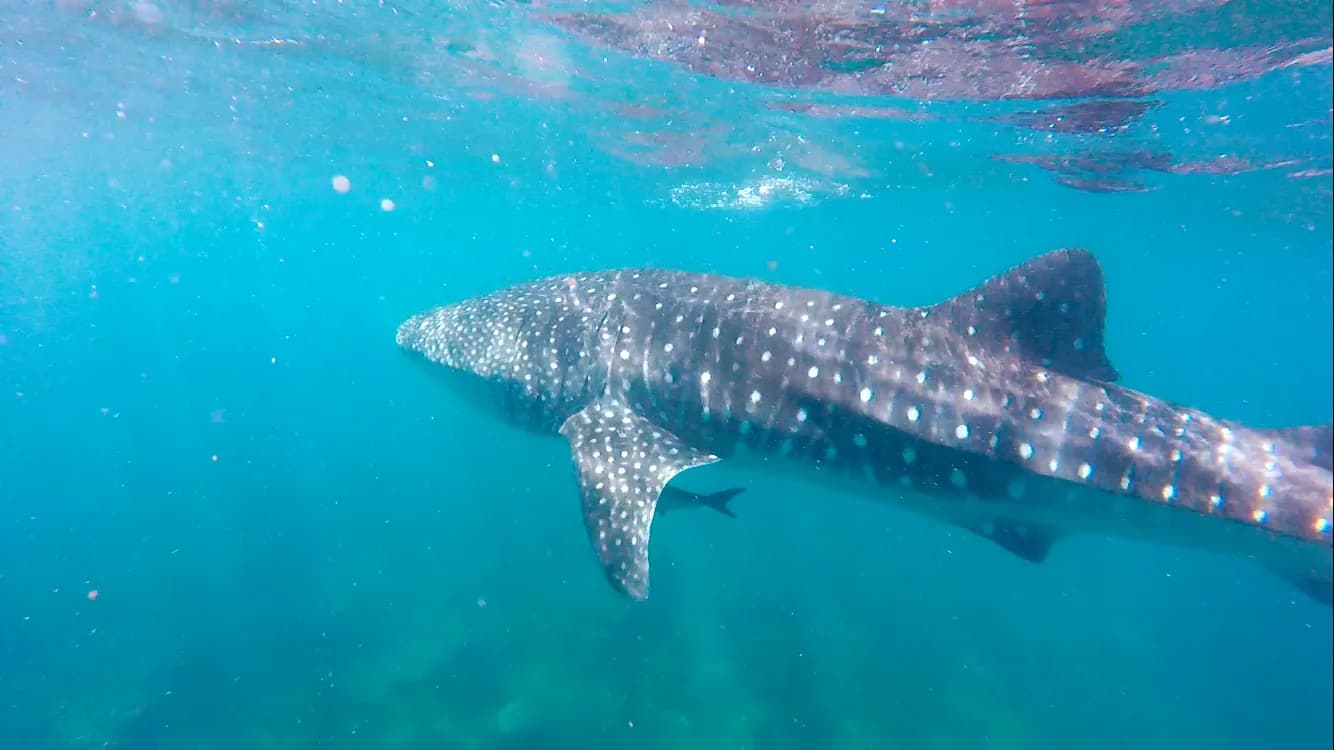
Unlike the Great Barrier Reef, which sits far enough offshore to require a boat, Ningaloo Reef runs close enough to Western Australia's coastline that swimmers can walk directly from the beach into coral, and between March and August it becomes one of the most reliable places on Earth to swim alongside whale sharks, the largest fish in the ocean.
Ningaloo Reef runs close enough to Western Australia's coastline that swimmers can walk directly from the beach into coral at several points along its length, a fundamentally different setup from the Great Barrier Reef, which sits far enough offshore that boat access is essentially required. That proximity, combined with UNESCO World Heritage status recognizing both its ecological significance and remarkable condition, has made Ningaloo one of the most accessible major reef systems in the world for anyone willing to make the trip to Western Australia's remote coast.
Between roughly March and August, Ningaloo becomes one of the most reliable places on Earth to swim alongside whale sharks, the largest fish species in the ocean, drawn to the area by coral spawning events and resulting plankton blooms. Guided swim tours, operating under strict protocols to avoid disturbing the animals, let visitors enter the water near these genuinely massive but harmless filter feeders, an experience that's become the primary reason many travelers make the long journey to this part of Australia at all.
The reef's relative remoteness, well north along Western Australia's coast from Perth, has kept visitor numbers considerably lower than the Great Barrier Reef, preserving both the reef's condition and a genuinely quieter, less developed atmosphere across the small towns of Exmouth and Coral Bay that serve as the main gateways.
Cape Range National Park, sitting directly adjacent to the reef, adds a dramatically different landscape to a Ningaloo visit, red limestone gorges and canyons carved into arid terrain, home to wallabies and a range of bird species, offering a genuine contrast between the desert interior and the reef just a short walk away.
Beyond whale sharks, Ningaloo's waters host manta rays, sea turtles, and, during the migration season roughly June through November, humpback whales passing along the coast, giving the reef a range of large marine wildlife encounters that few other reef systems anywhere can match within such an accessible, shore-based setting.
What a trip here actually costs
$180 / day avg.
- 3-star accommodation in Exmouth or Coral Bay
- Rental car for reef access points
- Casual restaurant meals
- Guided whale shark swim tour, seasonal
What to do at this tier
- • Beach-entry snorkeling at Turquoise Bay or Coral Bay, free
- • Guided whale shark swim tour, seasonal (March-August)
- • Cape Range National Park gorge walks
$420 / day avg.
- Beachfront resort accommodation
- Private whale shark and manta ray swim charter
- Fine dining at a top regional restaurant
- Private snorkeling tour of multiple reef sites
What to do at this tier
- • Private whale shark and manta ray swim charter
- • Private multi-site snorkeling or diving tour
- • Fine dining at a top Exmouth restaurant
These are average estimates for planning purposes, not real-time prices — actual costs vary by season, availability, and how far ahead you book.
How to get there
Click anywhere on the world map — any airport works, not just our main hubs.
Click anywhere on the map above — any airport in the world works — to see estimated travel time and cost from there.
Times and prices are planning estimates, not live fares — always check a booking site before you commit. See the full Transport Comparison guide for the general tradeoffs of each mode.
Best time to visit
March-August is whale shark season and generally the most comfortable weather; humpback whales also pass through roughly June-November.
Safety notes
Generally safe with standard reef and sun precautions; the region is remote, so plan fuel, water, and supplies carefully when driving between sites.
Visa & currency
Australian dollar (AUD). Most nationalities need an eVisitor or ETA arranged online before arrival.
Questions people ask before visiting
Is Ningaloo Reef worth visiting?
Yes — Ningaloo is a UNESCO World Heritage-listed fringing reef close enough to shore for beach-entry snorkeling, and its seasonal aggregation of whale sharks, the largest fish species on Earth, makes it one of the most reliable places anywhere to swim alongside them.
How does Ningaloo Reef differ from the Great Barrier Reef?
Ningaloo is a fringing reef sitting close to the Western Australian coastline, often reachable by swimming directly from the beach, while the Great Barrier Reef sits much farther offshore and generally requires a boat trip. Ningaloo also receives far fewer visitors, giving it a noticeably quieter, less developed feel.
When can you swim with whale sharks at Ningaloo?
Whale sharks gather seasonally at Ningaloo roughly between March and August, drawn by coral spawning and plankton blooms, making this one of the most reliable and well-studied locations in the world for guided whale shark swim tours.
How many days do you need at Ningaloo Reef?
Four to five days lets you fit in a whale shark tour (seasonal), beach snorkeling at multiple entry points, and time to explore nearby Cape Range National Park, a reasonable pace given the region's remoteness.
Nearby destinations
 Margaret River
Margaret River
Australia
Margaret River's wine potential wasn't seriously identified until geological surveys in the 1960s suggested its soil and climate rivaled Bordeaux, and within a couple of decades the same stretch of coastline had also become one of Australia's premier surf destinations, a genuinely rare region where world-class wine and championship-level waves sit within a short drive of each other.
See full guide → Perth
PerthPerth
Australia
Perth is one of the most isolated major cities on Earth — it sits closer to Jakarta, Indonesia than to Sydney, and the nearest city of comparable size, Adelaide, is a two-and-a-half-hour flight away across a genuinely empty stretch of desert.
See full guide →Comparing more than one route? See the full transport comparison guide.